
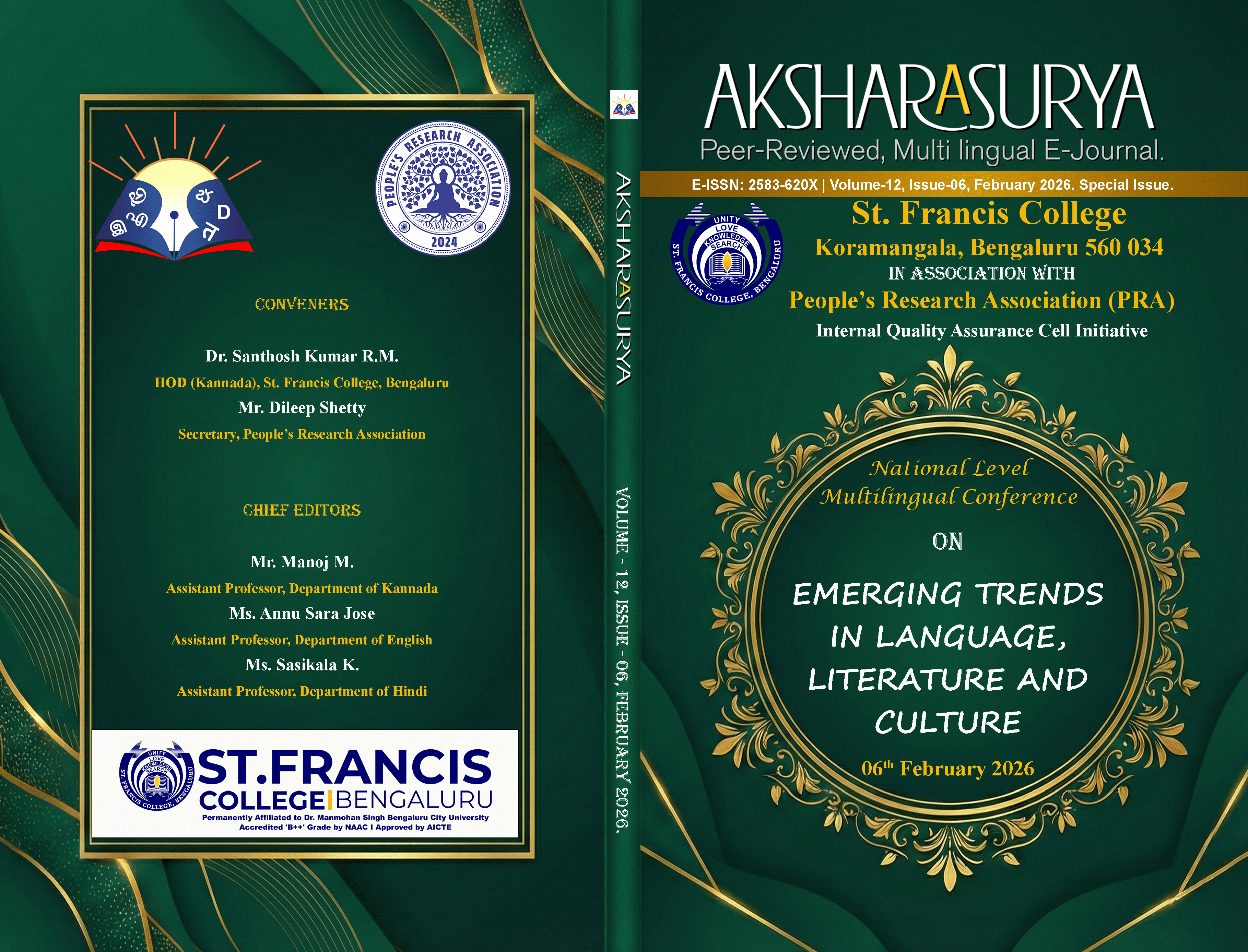
Published: 2026-02-28
Table of Contents
Research Articles
ಜನಪದ ಪರಂಪರೆ ಮತ್ತು ಆಧುನಿಕ ಪ್ರಭಾವಗಳು
01 to 06
ಸಾಹಿತ್ಯ ಪ್ರಕಾರಗಳಲ್ಲಿಯೇ ಅತ್ಯಂತ ಪ್ರಾಚೀನ ಸಾಹಿತ್ಯ ಪ್ರಕಾರವೆಂದರೆ ಜನಪದ. ಇದರ ಮೂಲ ಜನರು. ಇವರು ರಚಿಸಿದ ಸಾಹಿತ್ಯವೇ ಜನಪದ ಸಾಹಿತ್ಯ. ಈ ಸಾಹಿತ್ಯ ಪರಂಪರೆ ಮನುಷ್ಯನಷ್ಟೇ ಪ್ರಾಚೀನವಾದದ್ದು. ಜನಪದ ಪರಂಪರೆ ಪ್ರತಿಹಂತದಲ್ಲಿಯೂ ಮನುಷ್ಯನೊಂದಿಗೆ ಬೆಳೆದು ಬಂದಿರುವಂತಹದ್ದು. ಜನಪದರ ಬದುಕು ಒಂದು ಕಲೆ. ಜನಪದರು ಜೀವನದ ಉತ್ಸಾಹ ಪಡೆಯಲು ದೈವಾರಾಧನೆಯ ಹಿನ್ನೆಲೆಯಲ್ಲಿ ಜನಪದ ಹಾಡು, ಲಾವಣಿ, ಒಗಟು, ಕುಣಿತಗಳನ್ನು ಮೈಗೂಡಿಸಿಕೊಂಡು ಈ ಪರಂಪರೆಯನ್ನು ಅಂದಿನಿಂದ ಇಂದಿನವರೆಗೂ ಮುಂದುವರೆಸಿಕೊಂಡು ಬಂದಿದ್ದಾರೆ. ಜನಪದರ ಬದುಕು ಒಂದು ವಿಶೇಷ. ತಮ್ಮ ನಿತ್ಯದ ದುಡಿಮೆಯ ಆಯಾಸ, ಬದುಕಿನ ಏಕತಾನತೆ, ಆಸರಿಕೆ, ಬೇಸರಿಕೆಗಳಿಂದ ಹೊರಬರಲು ಪ್ರಾಚೀನ ಜನರು ಕಂಡುಕೊಂಡ ವಿಧಾನವಿದು. ಈ ಪರಂಪರೆಯನ್ನು ಯಾರು ಬೆಳೆಸಿದರು, ಯಾವಾಗ ಬೆಳೆದು ಬಂತು ಎಂದು ಹೇಳುವುದು ಕಷ್ಟ. ಸಾಮಾನ್ಯವಾಗಿ ಹೇಳುವುದಾದರೆ ಸಾಮಾನ್ಯ ಜನರು, ಅದರಲ್ಲೂ ಅನಕ್ಷರಸ್ಥ ಜನರು ಅದನ್ನು ಬೆಳೆಸಿ-ಉಳಿಸಿಕೊಂಡು ಬಂದದ್ದು ಒಂದು ವಿಶೇಷ. ಜನಪದ ಪರಂಪರೆ ತುಂಬಾ ವಿಶಾಲವಾಗಿದ್ದು ಗ್ರಾಮೀಣ ಜನರ ಬದುಕಿನೊಂದಿಗೆ ಬೆಸೆದುಕೊಂಡು ಬಂದಿದೆ. ಮನುಷ್ಯ ಜೀವನದ ಸಾಂಸ್ಕೃತಿಕ ಆಚರಣೆಗಳಾದ ಹಬ್ಬ, ಜಾತ್ರೆ, ಮದುವೆ, ಉತ್ಸವ ಮೊದಲಾದ ಸಂದರ್ಭಗಳು ಈ ಪರಂಪರೆ ಹುಟ್ಟಿಗೆ ಕಾರಣವಾಗಿದೆ. ಹಾಗೆಯೇ ಆಧುನಿಕ ಪ್ರಭಾವವು ಜನಪದ ಪರಂಪರೆಯ ಮೇಲೆ ಹೇಗೆ ಆಗಿದೆ ಎಂಬುದನ್ನು ಪ್ರಸ್ತುತ ಲೇಖನ ತಿಳಿಸುತ್ತದೆ.
ವಚನ ಸಾಹಿತ್ಯದಲ್ಲಿ ಹಸಿರು ಚಿಂತನೆ ಮತ್ತು ಪರಿಸರ ಪ್ರಜ್ಞೆ
07 to 14
ವಚನ ಸಾಹಿತ್ಯವು ಕೇವಲ ಭಕ್ತಿಪರ ಅಥವಾ ಸಾಮಾಜಿಕ ಸುಧಾರಣೆಯ ಅಭಿವ್ಯಕ್ತಿಯಷ್ಟೇ ಅಲ್ಲದೆ, ಮಾನವ–ಪ್ರಕೃತಿ ಸಂಬಂಧವನ್ನು ಆಳವಾಗಿ ಚಿಂತಿಸುವ ಸಮಗ್ರ ಜೀವನ ತತ್ತ್ವವನ್ನು ಒಳಗೊಂಡಿದೆ. ಬಸವಣ್ಣನವರಿಂದ ಆರಂಭಗೊಂಡ ಶರಣ ಪರಂಪರೆಯ ವಚನಗಳಲ್ಲಿ ಪ್ರಕೃತಿ, ಜೀವಜಾಲ, ನೆಲ–ನೀರು–ಗಾಳಿ–ಅಗ್ನಿ ಮೊದಲಾದ ಪಂಚಭೂತಗಳೊಂದಿಗೆ ಮಾನವನ ನೈತಿಕ ಸಂಬಂಧವನ್ನು ಸ್ಪಷ್ಟವಾಗಿ ಗುರುತಿಸಬಹುದು. ಈ ಲೇಖನವು ವಚನ ಸಾಹಿತ್ಯದಲ್ಲಿರುವ ಹಸಿರು ಚಿಂತನೆ ಮತ್ತು ಪರಿಸರ ಪ್ರಜ್ಞೆಯನ್ನು ತಾತ್ವಿಕ, ಸಾಂಸ್ಕೃತಿಕ ಮತ್ತು ಸಾಮಾಜಿಕ ಆಯಾಮಗಳಲ್ಲಿ ವಿಶ್ಲೇಷಿಸುತ್ತದೆ. ಶರಣರ ವಚನಗಳು ಪ್ರಕೃತಿಯನ್ನು ಕೇವಲ ಉಪಯೋಗದ ವಸ್ತುವಾಗಿ ನೋಡದೆ, ಮಾನವನ ಅಸ್ತಿತ್ವದ ಅವಿಭಾಜ್ಯ ಅಂಗವಾಗಿ ಪರಿಗಣಿಸುತ್ತವೆ ಎಂಬುದನ್ನು ಈ ಅಧ್ಯಯನ ಪ್ರತಿಪಾದಿಸುತ್ತದೆ. ಆಧುನಿಕ ಪರಿಸರ ಸಂಕಟಗಳ ಹಿನ್ನೆಲೆಯಲ್ಲಿ ವಚನ ಸಾಹಿತ್ಯವು ನೀಡುವ ಪರಿಸರ ನೈತಿಕತೆ, ಸಂಯಮ, ಸಮತೋಲನ ಮತ್ತು ಸಹಜ ಜೀವನದ ಸಂದೇಶಗಳು ಇಂದಿನ ಕಾಲಕ್ಕೂ ಅತ್ಯಂತ ಪ್ರಸ್ತುತವಾಗಿವೆ ಎಂಬುದನ್ನು ಈ ಲೇಖನ ತೋರಿಸುತ್ತದೆ.
ದುರಗಮುರಗಿಯರ ಸಾಂಸ್ಕೃತಿಕ ಬದುಕು: ಆಧುನಿಕತೆಯ ಪ್ರಭಾವ
15 to 24
ಉತ್ತರ ಕರ್ನಾಟಕದ ಗ್ರಾಮೀಣ ಭಾಗದ ವಿಶಿಷ್ಟ ಅಲೆಮಾರಿ ಸಮುದಾಯವಾದ ದುರಗಮುರಗಿಯರ ಸಾಂಸ್ಕೃತಿಕ ಬದುಕು ಮತ್ತು ಬದಲಾದ ಕಾಲಘಟ್ಟದಲ್ಲಿ ಅವರು ಎದುರಿಸುತ್ತಿರುವ ಸವಾಲುಗಳನ್ನು ಇಲ್ಲಿ ವಿಶ್ಲೇಷಿಸಲಾಗಿದೆ. ಶಕ್ತಿದೇವತೆಗಳಾದ ದುರ್ಗಮ್ಮ ಮತ್ತು ಮರಗಮ್ಮನ ಆರಾಧಕರಾದ ಇವರು, ಭಿಕ್ಷಾಟನೆಯನ್ನೇ ಮೂಲವೃತ್ತಿಯನ್ನಾಗಿ ಸ್ವೀಕರಿಸಿದವರು. ಬುರುಬುರು ವಾದ್ಯದೊಂದಿಗೆ ಪೋತರಾಜನು ಮಾಡುವ ಭಯಂಕರ ಕುಣಿತ, ಮೈಮೇಲೆ ಮಾಡಿಕೊಳ್ಳುವ ಗಾಯಗಳು ಮತ್ತು ಅವರು ಪಾಲಿಸುವ ಕಟ್ಟುನಿಟ್ಟಾದ ಸಂಪ್ರದಾಯಗಳು ಈ ಸಮುದಾಯದ ಅನನ್ಯತೆಯನ್ನು ಸಾರುತ್ತವೆ. ಆದರೆ ಜಾಗತೀಕರಣ ಹಾಗೂ ಆಧುನಿಕತೆಯ ಪ್ರಭಾವದಿಂದಾಗಿ ಈ ಕಲೆಗೆ ಮನ್ನಣೆ ಕಡಿಮೆಯಾಗುತ್ತಿದ್ದು, ಹೊಟ್ಟೆಪಾಡಿಗಾಗಿ ಕೂಲಿ, ಕಾರ್ಖಾನೆ ಕೆಲಸಗಳಿಗೆ ವಲಸೆ ಹೋಗುವ ಅನಿವಾರ್ಯತೆ ಒದಗಿಬಂದಿದೆ. ಆರ್ಥಿಕ ಸಂಕಷ್ಟ ಮತ್ತು ಬದಲಾದ ಸಾಮಾಜಿಕ ದೃಷ್ಟಿಕೋನದಿಂದಾಗಿ ಈ ಶ್ರೀಮಂತ ಜಾನಪದ ಕಲೆಯು ನೇಪಥ್ಯಕ್ಕೆ ಸರಿಯುತ್ತಿರುವ ಆತಂಕವನ್ನು ಈ ಅಧ್ಯಯನವು ವ್ಯಕ್ತಪಡಿಸುತ್ತದೆ.
ಜನಪದ ಪರಂಪರೆ ಮತ್ತು ಆಧುನಿಕ ಪ್ರಭಾವಗಳು
25 to 35
ಮೌಖಿಕ ಸಂಪ್ರದಾಯದ ಮೂಲಕ ತಲೆಮಾರಿನಿಂದ ತಲೆಮಾರಿಗೆ ಹರಿದುಬಂದ ಜನಪದ ಪರಂಪರೆಯು ಆಧುನಿಕ ಜಗತ್ತಿನ ಪ್ರಭಾವದಿಂದ ಎದುರಿಸುತ್ತಿರುವ ಸವಾಲುಗಳು ಮತ್ತು ಪಡೆದುಕೊಳ್ಳುತ್ತಿರುವ ಹೊಸ ರೂಪಗಳನ್ನು ಇಲ್ಲಿ ವಿಶ್ಲೇಷಿಸಲಾಗಿದೆ. ಕಂಸಾಳೆ, ಯಕ್ಷಗಾನ, ಡೊಳ್ಳುಕುಣಿತದಂತಹ ಕಲೆಗಳು, ದೇಸಿ ಕ್ರೀಡೆ ಹಾಗೂ ವೈದ್ಯ ಪದ್ಧತಿಗಳು ನಗರೀಕರಣ ಮತ್ತು ತಂತ್ರಜ್ಞಾನದ ಅಬ್ಬರದಲ್ಲಿಯೂ ಸಾಮಾಜಿಕ ಜಾಲತಾಣಗಳ ಮೂಲಕ ಜಾಗತಿಕ ಮನ್ನಣೆ ಪಡೆಯುತ್ತಿರುವ ಬಗೆಯನ್ನು ಚರ್ಚಿಸಲಾಗಿದೆ. ಮೂಲ ಸತ್ವವನ್ನು ಉಳಿಸಿಕೊಂಡು ಆಧುನಿಕ ಮಾಧ್ಯಮಗಳೊಂದಿಗೆ ಸಮನ್ವಯ ಸಾಧಿಸುವ ಮೂಲಕ ಜಾನಪದವನ್ನು ಪುನರುಜ್ಜೀವನಗೊಳಿಸುವ ಅಗತ್ಯವನ್ನು ಈ ಅಧ್ಯಯನ ಪ್ರತಿಪಾದಿಸುತ್ತದೆ.
ಬಿ.ಟಿ. ಲಲಿತಾ ನಾಯಕ್ ಮತ್ತು ಗೀತಾ ನಾಗಭೂಷಣರವರ ಕಥಾ ಸಾಹಿತ್ಯದಲ್ಲಿ ಸಾಮಾಜಿಕ ಚಿಂತನೆ
36 to 49
ಸಾಹಿತ್ಯ ಪ್ರಕಾರಗಳಲ್ಲಿ ಸಣ್ಣಕಥೆಗೆ ಒಂದು ಸೂಕ್ಷ್ಮತೆ ಇದೆ. ಕಥೆ ಹೇಳುವ, ಕೇಳುವ ಪ್ರಕ್ರಿಯೆ ಯಾವಾಗ ಪ್ರಾರಂಭವಾಯಿತು ಎಂಬುದನ್ನು ಖಚಿತವಾಗಿ ಹೇಳಲಾಗದು. ಸಾಹಿತ್ಯದ ಯಾವುದೇ ಪ್ರಕಾರವನ್ನು ತೆಗೆದುಕೊಂಡಾಗ, ಅದರ ಸಾರಾಂಶ ಏನು? ಕಥೆ ಏನು? ಎಂಬ ಪ್ರಶ್ನೆ ಉದ್ಭವವಾಗುತ್ತದೆ. ಈ ಹಿನ್ನೆಲೆಯಲ್ಲಿ ಕಥೆಗೆ ತನ್ನದೇ ಆದ ಮಹತ್ವದ ಸ್ಥಾನವಿದೆ. ಆಧುನಿಕ ಸಣ್ಣ ಕಥೆಯ ಇತಿಹಾಸ ನೂರು ವರ್ಷದಷ್ಟಿದೆ. ದಲಿತ ಕಥಾಸಾಹಿತ್ಯದ ಹೆಗ್ಗಳಿಕೆ ಏನೆಂದರೆ ಅವರು ಬರವಣಿಗೆಗಳ ಮೂಲಕ ದಲಿತ ಸಮುದಾಯದಲ್ಲಿ ಆತ್ಮವಿಶ್ವಾಸವನ್ನು ಹುಟ್ಟಿಸಿದರು. ದಲಿತರ ನೋವು-ನಲಿವನ್ನು ವಿವರಿಸಿದರು. ದಲಿತ ಕಥೆಗಾರರು ದಲಿತ ಸಂವೇದನೆಯ ಮೂಲಕ, ಬದುಕನ್ನು ನೋಡುತ್ತಾ ಒಂದು ಕಲಾ ಮಾಧ್ಯಮಕ್ಕೆ ಹೊಸ ಆಯಾಮವನ್ನು ನೀಡಿದರು.
ಗೀತಾ ನಾಗಭೂಷಣ ಮತ್ತು ಬಿ.ಟಿ. ಲಲಿತಾ ನಾಯಕ್ರವರ ಕಥಾ ಸಾಹಿತ್ಯದಲ್ಲಿ ಸಾಮಾಜಿಕ ಚಿಂತನೆ ಬಗ್ಗೆ ಒಂದು ಭಿನ್ನವಾದ ನೋಟವಿದೆ. ಅದು ಹೇಗೆ? ಯಾವ ಸ್ವರೂಪದ್ದು? ಎಂದು ತಿಳಿಯಬೇಕಾದದ್ದು ಮಹತ್ವದ ವಿಚಾರ. ನಮ್ಮ ಪುರುಷಪ್ರಧಾನ ಸಮಾಜದ ಚಿಂತನೆಗಳು ಹೆಣ್ಣಿನ ಅಸ್ಮಿತೆಯನ್ನು ದಾಖಲಿಸದೆ ಹೋಗಿವೆ. ಸಂಸ್ಕೃತಿಯ ಇತಿಹಾಸದಲ್ಲಿ ಹೆಣ್ಣಿನ ಈ ಗೈರುಹಾಜರಿ ಅತ್ಯಂತ ಮುಖ್ಯವಾದ ಪ್ರಶ್ನೆಗಳನ್ನು ಎತ್ತುತ್ತದೆ. ಸಮಾಜದಲ್ಲಿ ಆಕೆಯ ಸಂಬಂಧದ ಕುರಿತು ನೋಡಬೇಕಾಗಿದೆ. ಈ ಬದುಕಿನ ಕ್ರೌರ್ಯದ ಬಗ್ಗೆ, ಹಿಂಸೆಯ ಬಗ್ಗೆ, ತಳ ಸಮುದಾಯದ ಸಾಮಾಜಿಕ ಚಿತ್ರಣದ ಬಗ್ಗೆ, ಪುರುಷ ಪ್ರಧಾನ ವ್ಯವಸ್ಥೆ ಹುಟ್ಟು ಹಾಕಿರುವ ಹೆಂಗಸರ ಶೋಷಣೆಯ ಬಗ್ಗೆ, ರೀತಿ ರಿವಾಜುಗಳ ಬಗ್ಗೆ, ಪುರುಷ ಸಮುದಾಯದ ಹುನ್ನಾರಗಳ ಬಗ್ಗೆ, ಮತಾಂತರ ಮತ್ತು ಮತಾಂತರಗೊಂಡವರ ಮನಸ್ಸಿನ ಬೇಗುದಿಗಳನ್ನು ವಿವರಿಸುವ ಚಿತ್ರಣ ಹಾಗೂ ಧರ್ಮದ ಚಿತ್ರಣದ ಬಗ್ಗೆ ತಮ್ಮ ಕಥೆಗಳಲ್ಲಿ ವಿವರಿಸುತ್ತಾರೆ. 80ರ ದಶಕಗಳ ನಂತರದಿಂದ ಹೆಣ್ಣು ಮಕ್ಕಳು ಎದುರಿಸುವ ಸಮಸ್ಯೆ ಮತ್ತು ಸವಾಲುಗಳನ್ನು ವಿವರಿಸುತ್ತಾ, ಹೆಣ್ಣುಮಕ್ಕಳ ನೋವಿಗೆ ಧ್ವನಿಯಾಗುತ್ತಾ ಸಮಾಜದ ವ್ಯವಸ್ಥೆಗೆ, ಸನಾತನವಾದಿಗಳಿಗೆ ಸವಾಲನ್ನು ಹಾಕುತ್ತಾ ಗೀತಾ ನಾಗಭೂಷಣ ಮತ್ತು ಬಿ.ಟಿ. ಲಲಿತಾ ನಾಯಕ್ರವರು ಬರೆಯತೊಡಗಿದರು.
ಹೀಗಾಗಿ ಗೀತಾ ನಾಗಭೂಷಣ ಮತ್ತು ಬಿ.ಟಿ. ಲಲಿತಾ ನಾಯಕ್ರವರ ಕಥಾ ಸಾಹಿತ್ಯದಲ್ಲಿನ ಸಾಮಾಜಿಕ ಸಂಬಂಧದ ಸ್ವರೂಪದ ಅಧ್ಯಯನವನ್ನು ಮಾಡಬೇಕಾದ ಪ್ರಸ್ತುತತೆ ಇರುವುದರಿಂದ, ಅವರ ಕೆಲವು ಕಥೆಗಳನ್ನು ಗಮನಿಸಿ ಅವುಗಳನ್ನು ವಿಶ್ಲೇಷಣಾತ್ಮಕ ವಿಧಾನದಿಂದ ನೋಡುವುದೇ ಈ ಪ್ರಬಂಧದ ಮುಖ್ಯ ಗುರಿ ಹಾಗೂ ಉದ್ದೇಶವಾಗಿದೆ.
ʼಶೂದ್ರ ತಪಸ್ವಿʼಯ ಸಂಬೋಧನೆಗಳು
50 to 60
ವಿಶ್ವ ಸಾಹಿತ್ಯ ಜಗತ್ತು ಕಂಡ ಅಪರೂಪದ ಪ್ರತಿಭೆ ಕುವೆಂಪು. ಕವಿ, ಲೇಖಕ, ವಿಮರ್ಶಕ, ಮಹಾಕವಿ, ನಾಟಕಕಾರ, ಕಾದಂಬರಿಕಾರ ಹೀಗೆ ಸಾಹಿತ್ಯದ ಎಲ್ಲ ಪ್ರಕಾರಗಳಲ್ಲೂ ಅಸದೃಶ ಕೊಡುಗೆ ನೀಡಿರುವ ಅವರ ಸುಪ್ರಸಿದ್ಧ ನಾಟಕಗಳಲ್ಲಿ ʼಶೂದ್ರತಪಸ್ವಿʼಯೂ ಒಂದು. ಕನ್ನಡ ಸಾಹಿತ್ಯಲೋಕದಲ್ಲಿ ವಿಶಿಷ್ಟ ಸ್ಥಾನ ಗಳಿಸಿಕೊಂಡಿರುವ ಈ ನಾಟಕ, ಮನುನಿರ್ಮಿತ ವರ್ಣವ್ಯವಸ್ಥೆಯ ಅಮಾನವೀಯತೆಯನ್ನು ಪ್ರಶ್ನಿಸುವ ಮತ್ತು ಅದಕ್ಕೊಂದು ಸೌಹಾರ್ದ ಪರಿಹಾರ ನೀಡುವ ಮೂಲಕ ತಿದ್ದುವ ಒಂದು ಪ್ರಯತ್ನವೂ ಆಗಿದೆ. ರಾಮಾಯಣದ ಉಪಕತೆಗಳಲ್ಲಿ ಒಂದಾದ ʼಶಂಬೂಕನ ವಧೆʼಯಲ್ಲಿ ಶೂದ್ರನಾದ ಶಂಬೂಕ ತಪಸ್ಸು ಮಾಡುತ್ತಿರುವುದನ್ನು ತಿಳಿದ ಶ್ರೀರಾಮ ‘ಲೋಕಕಲ್ಯಾಣ’ಕ್ಕಾಗಿ ಅವನನ್ನು ಕೊಲ್ಲುತ್ತಾನೆ, ದೇವತೆಗಳಿಂದ ಹರಸಲ್ಪಡುತ್ತಾನೆ. ಪ್ರಸ್ತುತ ʼಶೂದ್ರತಪಸ್ವಿʼ ನಾಟಕದಲ್ಲಿ ಈ ಘಟನೆಯನ್ನು ವಿಶ್ವಮಾನವ ದೃಷ್ಟಿಯಿಂದ ವಿವೇಚಿಸಲಾಗಿದ್ದು, ಶ್ರೀರಾಮ ಶಂಬೂಕನನ್ನು ಕೊಲ್ಲದೆ ಅವನ ವಿರುದ್ಧ ದೂರು ತಂದ ಬ್ರಾಹ್ಮಣನಲ್ಲಿ ಮನುಷ್ಯತ್ವವನ್ನು ಮೂಡಿಸುವಲ್ಲಿ ಯಶಸ್ವಿಯಾಗುತ್ತಾನೆ. ಇಲ್ಲಿ ತಪೋನಿರತನಾದ ಶಂಬೂಕನ ಸುತ್ತ ಸುತ್ತುವ ಪಾತ್ರಗಳು ಪರಸ್ಪರ ತಮ್ಮನ್ನು ಸಂಬೋಧಿಸಿಕೊಳ್ಳುವ ರೀತಿಯನ್ನು, ಅವುಗಳ ಸ್ವಾರಸ್ಯವನ್ನು ಹಾಗೂ ವೈಶಿಷ್ಟ್ಯವನ್ನು ಅನ್ವೇಷಿಸುವುದೇ ಈ ಲೇಖನದ ಉದ್ದೇಶವಾಗಿದೆ.
ತತ್ವಪದಕಾರ್ತಿಯರ ಗುರು-ಶಿಷ್ಯ ಸಂಬಂಧ
61 to 68
ಕರ್ನಾಟಕದ ಮಹಿಳಾ ತತ್ವಪದಕಾರ್ತಿಯರ ಸಾಹಿತ್ಯ-ಸಾಧನೆಯಲ್ಲಿ ಗುರು-ಶಿಷ್ಯ ಸಂಬಂಧವು ಪ್ರಮುಖ ಆಧ್ಯಾತ್ಮಿಕ ಕೇಂದ್ರಬಿಂದು ಮತ್ತು ಅರಿವಿನ ಚೇತನ. ಇವರಿಗೆ ಗುರುವು ಕೇವಲ ಬೋಧಕನಲ್ಲ; ಬದಲಾಗಿ ಜ್ಞಾನ, ಮುಕ್ತಿ, ದೀಕ್ಷೆ, ಭಾವಪರಿವರ್ತನೆ ಮತ್ತು ಆತ್ಮಸ್ವರೂಪದ ಅರಿವನ್ನು ನೀಡುವ ಪರಮಚೇತನವಾಗಿ ಕಂಡುಬಂದಿದ್ದಾನೆ. ನಾಥಪಂಥ, ಸೂಫಿಪಂಥ, ಅವಧೂತ, ಶರಣಪಂಥ, ವೀರಶೈವ ತತ್ವಾನುಸಂಧಾನಗಳ ಪ್ರಭಾವದಲ್ಲಿ ಬೆಳೆದ ಇವರ ಕೃತಿಗಳು ಅನುಭಾವಾಶ್ರಯ ಮತ್ತು ಅನುಸಂಧಾನಾಶ್ರಯವಾದ ಆಧ್ಯಾತ್ಮಿಕ ಮಾರ್ಗವನ್ನು ಬಿಂಬಿಸುತ್ತವೆ.
ತುರುವಿಕೆರೆ ವೀರದಾಸಮ್ಮ, ಜತ್ತದ ಶಿವಲಿಂಗವ್ವ, ರಾಯಚೂರಿನ ಹನುಮಂತವ್ವ, ಹುಬ್ಬಳ್ಳಿಯ ವಂಗಿ ಚಂದ್ರಮ್ಮ, ಬಿದನೂರಿನ ಗಂಗಮ್ಮ, ಯನಗುಂಟಿ ವೀರಮ್ಮ, ಗೂಡೂರು ತುಳುಜಾಬಾಯಿ, ಮಥುರಾಬಾಯಿ ಮೊದಲಾದ ತತ್ವಪದಕಾರ್ತಿಯರಿಗೆ ಗುರುವು ಕೆಲವೊಮ್ಮೆ ತಂದೆ-ತಾಯಿ-ಗಂಡ-ಸ್ನೇಹಿತ-ತಂಗಿ ಎಂಬ ಲೌಕಿಕ ರೂಪಗಳಲ್ಲಿ ವ್ಯಕ್ತಗೊಂಡಿದ್ದರೂ, ಅಂತಿಮವಾಗಿ ‘ಅರಿವು’ ಎಂಬ ಅಲೌಕಿಕ ರೂಪಕ್ಕೆ ಏರಿದ್ದಾನೆ. ದೀಕ್ಷೆ, ಗುರುಬೋಧೆ, ಗುರೂಪದೇಶ ಮತ್ತು ಶರಣಾಗತಿಯ ಮೂಲಕ ಗುರುವು ಶಿಷ್ಯೆಯ ಬದುಕಿನ ಜಾತಿ, ಲಿಂಗ, ಸಂಪ್ರದಾಯ, ವಿಧವೆತನ ಮತ್ತು ಸಾಮಾಜಿಕ ನಿರ್ಬಂಧಗಳನ್ನು ಕರಗಿಸಿ, ಆಧ್ಯಾತ್ಮಿಕ ಸ್ವಾವಲಂಬನೆಗೆ ದಾರಿ ಮಾಡಿಕೊಟ್ಟಿದ್ದಾನೆ.
ಇವರ ತತ್ವಪದಗಳು ಗುರುದರ್ಶನದಿಂದ ಪಡೆದ ಭಾವಾನುಭವವನ್ನು ಕಾವ್ಯ, ಭಜನೆ ಮತ್ತು ವಚನಶೈಲಿಯ ಮೂಲಕ ವ್ಯಕ್ತಪಡಿಸುತ್ತವೆ. ಬದುಕಿನ ನೋವು, ದುಃಖ, ದೇಹ-ಮನಸ್ಸಿನ ಬಯಕೆಗಳು, ಲೌಕಿಕ ಬಂಧನ ಮತ್ತು ಸಾಮಾಜಿಕ ಚಿತ್ರಣಗಳ ನಡುವೆ ಗುರುಸ್ವರೂಪವು ವಿಮೋಚನೆಯ ಬಿಂಬವಾಗಿ ಹೊಳೆಯುತ್ತದೆ. ಹೀಗಾಗಿ ಮಹಿಳಾ ತತ್ವಪದಕಾರ್ತಿಯರ ಪರಂಪರೆಯಲ್ಲಿ ಗುರು-ಶಿಷ್ಯ ಸಂಬಂಧವು ಆತ್ಮಾನ್ವೇಷಣೆ, ಆತ್ಮಜ್ಞಾನ ಮತ್ತು ಜೀವನ್ಮುಕ್ತಿಯ ಸಾಧ್ಯತೆಯನ್ನು ಬಲಪಡಿಸುವ ಆಧ್ಯಾತ್ಮಿಕ ಅಕ್ಷವಾಗಿ ಮೌಲ್ಯೀಕರಿಸಬಹುದು.
ಮಕ್ಕಳ ಸಾಹಿತ್ಯದಲ್ಲಿ ಶಿಷ್ಟ ಭಾಷಾ ಬಳಕೆಯ ಪರಂಪರೆ - ಸಂವಹನ
69 to 76
ಕನ್ನಡ ಮಕ್ಕಳ ಸಾಹಿತ್ಯದ ಉಗಮ ಮತ್ತು ವಿಕಾಸವನ್ನು ಅವಲೋಕಿಸಿದಾಗ, ಆರಂಭದಿಂದಲೂ ಶಿಷ್ಟ ಕನ್ನಡದ ಬಳಕೆಯೇ ಪ್ರಧಾನವಾಗಿ ಕಂಡುಬರುತ್ತದೆ. ಕರ್ನಾಟಕದ ವಿವಿಧ ಪ್ರಾದೇಶಿಕ ಹಿನ್ನೆಲೆಯ ಮಕ್ಕಳಿಗೆ ಸಾಹಿತ್ಯವು ಸುಲಭವಾಗಿ ಅರ್ಥವಾಗಬೇಕು ಮತ್ತು ಸಂವಹನ ಪರಿಣಾಮಕಾರಿಯಾಗಿರಬೇಕು ಎಂಬ ಉದ್ದೇಶವೇ ಈ ಏಕರೂಪದ ಭಾಷಾ ಶೈಲಿಗೆ ಮುಖ್ಯ ಕಾರಣವಾಗಿದೆ. ಮುದ್ರಣ ಮಾಧ್ಯಮದ ಬೆಳವಣಿಗೆ ಮತ್ತು ಶೈಕ್ಷಣಿಕ ಪಠ್ಯಕ್ರಮಗಳು ಈ ಪ್ರಮಾಣ ಭಾಷೆಯ ಬಳಕೆಯನ್ನು ಮತ್ತಷ್ಟು ಗಟ್ಟಿಗೊಳಿಸಿವೆ. ಪಂಜೆ ಮಂಗೇಶರಾಯರು, ಕುವೆಂಪು ಮುಂತಾದವರಿಂದ ಹಿಡಿದು ಸಮಕಾಲೀನ ಲೇಖಕರವರೆಗೆ, ಪ್ರಾದೇಶಿಕ ಭಾಷಾ ವೈವಿಧ್ಯತೆಯ ನಡುವೆಯೂ ಎಲ್ಲರಿಗೂ ತಲುಪುವ ದೃಷ್ಟಿಯಿಂದ ಶಿಷ್ಟ ಮಾದರಿಯನ್ನೇ ಅನುಸರಿಸಿಕೊಂಡು ಬಂದಿರುವ ಬಗೆಯನ್ನು ಇಲ್ಲಿ ವಿಶ್ಲೇಷಿಸಲಾಗಿದೆ. ಮಕ್ಕಳ ಭಾಷಾ ಜ್ಞಾನ ಮತ್ತು ಪದಕೋಶವನ್ನು ವಿಸ್ತರಿಸುವಲ್ಲಿ ಹಾಗೂ ಸಾಹಿತ್ಯಿಕ ಮೌಲ್ಯಗಳ ಪ್ರಸರಣದಲ್ಲಿ ಈ ಶಿಷ್ಟ ಭಾಷಾ ಪರಂಪರೆಯು ನಿರ್ಣಾಯಕ ಪಾತ್ರ ವಹಿಸುತ್ತದೆ.
ಭಾಷೆಯ ಮೇಲೆ ಸಾಮಾಜಿಕ ಮಾಧ್ಯಮಗಳ ಪ್ರಭಾವ
77 to 81
ಪ್ರಸ್ತುತ ಲೇಖನವು ಆಧುನಿಕ ಸಾಮಾಜಿಕ ಮಾಧ್ಯಮಗಳು ಭಾವ, ಭಾಷೆ ಮತ್ತು ಸಂವಹನದ ಸ್ವರೂಪವನ್ನು ಹೇಗೆ ರೂಪಾಂತರಗೊಳಿಸುತ್ತಿವೆ ಎಂಬುದನ್ನು ವಿಶ್ಲೇಷಿಸುತ್ತದೆ. ಮಾನವನು ಸಮಾಜಜೀವಿಯಾಗಿರುವುದರಿಂದ ತನ್ನ ಭಾವನೆಗಳು, ಆಲೋಚನೆಗಳು ಮತ್ತು ಅನುಭವಗಳನ್ನು ಭಾಷೆಯ ಮೂಲಕ ವ್ಯಕ್ತಪಡಿಸುತ್ತಾನೆ. ಕಾಲಕ್ರಮೇಣ ಸಂವಹನದ ಮಾಧ್ಯಮಗಳು ಬದಲಾಗುತ್ತಾ ಬಂದಿದ್ದು, ಇಂದಿನ ಡಿಜಿಟಲ್ ಯುಗದಲ್ಲಿ ಸಾಮಾಜಿಕ ಮಾಧ್ಯಮಗಳು ಅತ್ಯಂತ ಪ್ರಭಾವಶಾಲಿ ಮಾಧ್ಯಮಗಳಾಗಿ ಪರಿಣಮಿಸಿವೆ. ಸಾಮಾಜಿಕ ಮಾಧ್ಯಮಗಳು ಭಾಷೆಯ ಬಳಕೆಯಲ್ಲಿ ಸರಳೀಕರಣ, ಸಂಕ್ಷಿಪ್ತತೆ, ಹೊಸ ಪದಗಳ ಸೃಷ್ಟಿ, ಬಹುಭಾಷಾ ಮಿಶ್ರಣ ಮತ್ತು ಲಿಪಿಯ ಬದಲಾವಣೆಗಳಂತಹ ಪ್ರಮುಖ ಬದಲಾವಣೆಗಳನ್ನು ತಂದಿವೆ. ವಿಶೇಷವಾಗಿ ಕನ್ನಡ ಭಾಷೆಯ ದೃಷ್ಟಿಯಿಂದ ಸಾಮಾಜಿಕ ಮಾಧ್ಯಮಗಳು ಭಾಷೆಯ ವ್ಯಾಪ್ತಿ ಮತ್ತು ಜನಪ್ರಿಯತೆಯನ್ನು ಜಾಗತಿಕ ಮಟ್ಟದಲ್ಲಿ ವಿಸ್ತರಿಸಿದರೂ, ಭಾಷಾ ಶುದ್ಧತೆ, ಲಿಪಿಯ ಬಳಕೆ ಮತ್ತು ಪರಂಪರೆಯ ಸಂರಕ್ಷಣೆಗೆ ಸವಾಲುಗಳನ್ನು ಎಸೆದಿವೆ. ಈ ಅಧ್ಯಯನವು ಸಾಮಾಜಿಕ ಮಾಧ್ಯಮಗಳ ಧನಾತ್ಮಕ ಹಾಗೂ ಋಣಾತ್ಮಕ ಪ್ರಭಾವಗಳನ್ನು ಸಮತೋಲನದ ದೃಷ್ಟಿಕೋನದಿಂದ ವಿಶ್ಲೇಷಿಸಿ, ತಂತ್ರಜ್ಞಾನವನ್ನು ಭಾಷೆಯ ಅಭಿವೃದ್ಧಿಗೆ ಸಹಾಯಕ ಸಾಧನವಾಗಿ ಜವಾಬ್ದಾರಿಯಿಂದ ಬಳಸುವ ಅಗತ್ಯವಿದೆ ಎಂಬ ನಿರ್ಣಯಕ್ಕೆ ಬರುತ್ತದೆ.
Mountains as a Space of Otherness: Feluda in the Mountain Terrain
82 to 90
Mountains as a space have been explored in various forms of literature, either through a realist lens to portray living conditions or through a romanticised lens that highlights the otherness of the mountain terrain. In the context of detective fiction featuring Feluda set in the mountain terrain, Ray manipulates the image of the mountain through the lens of a city dweller. The urban curiosity and the sense of otherness in the binary of populated, commercialised plains and the scarcely inhabited mountain play a pivotal role. The proposed paper aims to study the detective fictions of the Feluda series set in the mountains through the lens of ecocriticism and the otherness of mountain terrain.
More Human Than Human: Memory, Affect, and AI in Blade Runner 2049
91 to 98
Blade Runner 2049 reimagines artificial intelligence not as a mere technological artifact but as a sentient and ethical presence embedded within a technologically mediated society. This paper examines the film as a significant cultural and literary text that interrogates the nature of machine consciousness, posthuman identity, and the fragile boundaries between the human and the artificial. Situated within the framework of technological mediation and posthuman theory, the study explores how the film represents artificial beings as emotional, moral, and narrative subjects. Drawing on posthumanism, memory studies, and media theory, the paper analyses the role of implanted memory as a central mechanism through which identity and selfhood are constructed. The replicant protagonist K emerges as a figure of existential struggle, whose emotional vulnerability, ethical agency, and desire for authenticity challenge anthropocentric definitions of humanity. The film further complicates notions of consciousness through the character of Joi, an artificial companion whose programmed intimacy exposes the commodification of emotion and the mediated nature of desire in digital culture. The dystopian urban landscape of Blade Runner 2049 functions as an extension of technological consciousness, reinforcing themes of surveillance, alienation, and environmental decay. By portraying artificial beings as capable of empathy and moral reasoning while humans appear ethically diminished, the film reverses traditional hierarchies between creator and creation. This ethical inversion foregrounds questions of responsibility, autonomy, and the future of coexistence between humans and intelligent machines. This paper argues that Blade Runner 2049 articulates a posthuman vision in which humanity is no longer defined by biological origin but by memory, affect, and ethical choice. Through its exploration of artificial consciousness and technological mediation, the film emerges as a critical reflection on contemporary anxieties surrounding identity, agency, and meaning in an age of intelligent machines.
Queering the Canon: LGBTQ+ Representation through Post-colonial and Postmodern Frameworks
99 to 106
This paper explores the intersections of gender, sexuality, LGBTQ+ representation, post-colonialism, and postmodernism within contemporary literature and cultural discourse. Literature, as both a mirror and a critique of society, has increasingly served as a platform for marginalized voices, challenging normative constructions of identity and power. The research foregrounds how gender and sexuality are not fixed categories but rather socially constructed and historically contingent, shaped by the interplay of cultural, political, and linguistic forces. Within post-colonial frameworks, literary texts destabilize Eurocentric narratives by reclaiming subaltern voices, interrogating colonial legacies, and articulating hybrid identities. Simultaneously, postmodernist aesthetics disrupt grand narratives, foregrounding fragmentation, multiplicity, and the fluidity of meaning, thereby enabling new spaces for representing LGBTQ+ experiences and non-normative identities. By engaging with feminist theory, queer studies, and postcolonial criticism, this paper analyses select literary works that embody resistance, negotiation, and re-imagination of selfhood. The study highlights how narratives of gender and sexuality intersect with questions of race, class, nation, and diaspora, reflecting broader struggles for recognition and justice. Ultimately, this paper argues that the convergence of these discourses-post-colonialism, postmodernism, and LGBTQ+ representation-reshapes the literary landscape, offering critical insights into identity politics and cultural transformation in the twenty-first century.
Impact of Social Media Abbreviations on Academic Writing
107 to 116
As technology evolves, students are increasingly immersed in social media, and many carry its language into their academic work at school. Although educators frequently perceive a decline in formal writing standards, the empirical evidence synthesized in this study indicates that the direct intrusion of social media vernacular-such as abbreviations, phonetic spellings, and non-standard grammar-into academic assignments remains limited. This discrepancy suggests that instructor concerns may be shaped more by anecdotal experiences and broader cultural anxieties about digital communication than by measurable linguistic trends. Importantly, the reviewed literature consistently identifies the central issue not as linguistic incompetence but as difficulty in register control. Students demonstrate the ability to use both informal and formal language forms; however, they often struggle to switch appropriately between these registers depending on context. This finding aligns with sociolinguistic theories of code-switching, which emphasize that effective communication requires situational awareness rather than mere grammatical knowledge. From a pedagogical perspective, these results indicate the need for a shift in instructional approach. Rather than relying on punitive measures or viewing informal language use as evidence of declining literacy, educators should emphasize explicit instruction in register awareness and contextual language choice. Teaching students to recognize and adapt to the expectations of academic discourse can foster linguistic flexibility and strengthen overall writing competence.
Overall, this study contributes to the ongoing debate on digital media’s impact on academic literacy by reframing the issue as an instructional challenge rather than a linguistic deficit. Addressing students’ code-switching abilities may therefore be a more effective and sustainable strategy for maintaining academic writing standards in digitally mediated learning environments.
Online to Everyday: How Internet Slang Goes Mainstream
117 to 126
This paper investigates the process by which internet slang enters mainstream English, using Gretchen McCulloch’s Because Internet: Understanding the New Rules of Language (2019) as its primary text. It tests the hypothesis that slang adoption follows a structured pathway shaped by digital platform design and social validation, rather than occurring randomly. The research paper applies McCulloch’s “spectrum of formality” concept to trace the journey of selected terms such as “selfie,” “ghosting,” and “stan” from online origins to formal acceptance. This analysis is supported by dictionary entry dates, and first appearances in social media. The research paper is trying to indicate that successful adoption depends on a term’s ability to name a new digital-era behavior, gain amplification through influencers or news outlets, and achieve practical utility in everyday communication. The research concludes that the movement of internet slang into common usage is a predictable and legitimized form of contemporary language change, reflecting the deepening integration of digital culture into daily life.
Eco-Gendered Perspectives: Nature, Identity, and Power in Anita Rau Badami’s Novels
127 to 134
Recent advancements in literary studies highlight the significance of ecocriticism, green theory, and gender perspectives as frameworks for understanding the complex interplay between culture, power, and the environment. This essay focuses on two of Anita Rau Badami’s seminal works, Tell It to the Trees and Can You Hear the Nightbird Call? Although Badami is celebrated for her nuanced explorations of history, migration, and familial bonds, her fiction simultaneously demonstrates a profound ecological and gendered conscience.
This study investigates how remote locations, specific flora, and natural landscapes serve as active forces that influence moral dilemmas, cultural identities, and emotional experiences rather than merely serving as static narrative settings. The interdependence of human existence and the environment is reinforced by nature acting as a “mute spectator” to human trauma, relocation, and violence. By applying an ecofeminist lens, the paper highlights the similarities between environmental exploitation and the patriarchal marginalization of women. The endurance, silence, and perseverance exhibited by female protagonists reflect the ways patriarchal frameworks govern both women’s bodies and natural spaces. Ecological displacement is shown to exacerbate feelings of alienation and vulnerability in diasporic environments, linking environmental loss with gendered distress. Ultimately, the paper illustrates how Badami’s novels challenge anthropocentrism by positioning land and nature as archives of memory and suffering. By emphasizing the relationship between gender, environment, and narrative representation, this ecocritical and gender-oriented reading adds to current discussions on new developments in language, literature, and culture.
Folk Literature and Modern Influences in The Works of R.K. Narayan
135 to 142
Indian folk literature has been molded by many eminent writers who have ensured that these folk narratives are not only cherished but also remain relevant in the modern world. Folk literature in the form of short stories, novels, dramas, myths, legends, ballads, and songs helps us learn and imbibe human values. It has also helped in shaping the Indian consciousness and tradition even today. Indian folk literature is an ocean of wisdom, experiences, and beliefs of people across generations. Folk literature addresses universal human concerns, such as love, injustice, bravery, and survival, while remaining deeply rooted in its cultural context. R.K. Narayan is renowned for capturing the essence of Indian life in his works. This research paper explores the works of R.K. Narayan and how they influence the modern world. His works symbolize a blanket that is woven and blended with modernity, culture, and tradition. His novel ‘The Guide’ portrays the stories of individuals caught between a society that is deeply rooted in traditional values, superstitious beliefs, and modern values. Malgudi Days also showcases the tension between modernity and tradition. Narayan exposes the intricacies of human nature in his works. His works are a perfect example of how people are influenced and impacted by Western tradition. His stories reflect on the issues of tradition, modernity, and identity that are relatable in India even today.
The Algorithmic Voice: Synthesizing Language, Technology, and Artificial Intelligence in Modern Marketing
143 to 149
The convergence of language, technology, and Artificial Intelligence (AI) has fundamentally reshaped the marketing discipline, moving it from a broadcast model to one of algorithmic conversation. This paper presents a comprehensive literature review exploring how AI technologies-specifically Natural Language Processing (NLP), Generative AI, and Conversational Interfaces-are altering the relationship between brands and consumers. By synthesizing insights from 130 seminal and contemporary texts, the review identifies three primary shifts: the transformation of unstructured language data into predictive consumer insights, the automation of creative content production through Large Language Models (LLMs), and the rise of anthropomorphic interfaces that simulate human empathy. The analysis highlights a critical tension in the literature between the efficiency of automation and the necessity of authenticity. While AI offers unprecedented scale in personalization, it introduces significant ethical risks regarding privacy, bias, and the “uncanny valley” of synthetic interaction. The paper concludes that the future of marketing lies in a hybrid “Human-in-the-Loop” framework, where technology provides the linguistic velocity, but human oversight ensures ethical resonance and strategic alignment.
Ecocriticism and Green Thought in Shakespeare’s As You Like It: A Pastoral Reading
150 to 157
Ecocriticism is a literary method that investigates the connection between literature and the natural environment. William Shakespeare’s As You Like It is examined through the lens of ecocriticism, focusing on how the concept of ecological awareness and green thought is expressed. The setting of the Forest of Arden is central to the analysis, contrasting the corrupt, hierarchical court life with a progressive, harmonious natural world. From an ecocritical perspective, the forest functions not merely as a pastoral backdrop but as an active space that enables moral renewal, social equality, and sustainable coexistence between humans and nature. Characters such as Duke Senior and Rosalind gain ethical clarity and emotional freedom through their interaction with nature, suggesting Shakespeare’s critique of anthropocentric power structures and artificial social norms. The play emphasizes green thought by portraying nature as a teacher and healer rather than a resource to exploit. Images of seasonal change, animal life, and rural labour emphasize the interdependence between humans and the non-human world. Jaques’ reflections on the wounded deer reveal a proto-ecological sensitivity to animal suffering, anticipating modern concerns about environmental ethics and compassion. Furthermore, Arden offers an alternative ecological model grounded in simplicity, balance, and communal living, resisting the excesses of political ambition and material greed associated with court life. By applying ecocritical theory, this play challenges human dominance over nature and celebrates ecological harmony.
Library Services in Higher Education: Issues and Future Directions
158 to 173
Academic libraries play a crucial role in supporting higher education by providing access to information resources, facilitating research activities, and enhancing teaching and learning processes. In recent years, library services in higher education institutions have undergone significant transformation due to rapid advancements in information and communication technologies, changing user expectations, and the growth of digital information resources. Despite these developments, academic libraries continue to face numerous challenges related to finance, infrastructure, technology, skilled manpower, and user engagement.
The present study aims to examine the existing library services in higher education institutions, identify the major issues affecting effective service delivery, and explore future directions for the development of academic library services. A survey-based research methodology was adopted, and data were collected from library professionals working in higher education institutions using a structured questionnaire. The findings of the study reveal that while academic libraries are increasingly adopting digital and user-centric services, several challenges hinder their optimal performance. The study suggests strategic planning, continuous professional development, technological integration, and institutional support as key measures to strengthen library services in higher education. The paper concludes by emphasizing the need for innovative and sustainable library services to meet the evolving information needs of academic communities.
Changing Dimensions of Language and Culture in Contemporary Commerce
174 to 182
Contemporary commerce is undergoing a profound transformation driven by globalization, rapid digitalization, and evolving consumer expectations. In this highly competitive and interconnected environment, language and culture have emerged as critical strategic resources that shape business communication, branding, and consumer engagement. Language in commerce has moved far beyond its traditional transactional role to become persuasive, interactive, and emotionally resonant, while cultural values, symbols, narratives, and identities increasingly influence how consumers interpret messages and make purchasing decisions. This paper examines the changing dimensions of language and culture in contemporary commerce through an interdisciplinary lens that integrates insights from commerce, linguistics, marketing, sociology, and cultural studies. It explores how globalization and digital platforms have altered commercial discourse, enabling businesses to reach diverse audiences while simultaneously demanding higher levels of linguistic adaptability and cultural sensitivity. The study also analyzes the growing importance of localized communication, multilingual strategies, storytelling, and culturally embedded branding in enhancing consumer trust, engagement, and long-term brand loyalty. Drawing on an extensive review of existing literature and contemporary commercial practices, the paper argues that the effective integration of language and culture provides organizations with a sustainable competitive advantage in multicultural and digital markets. By emphasizing the strategic relevance of linguistic innovation and cultural awareness, the study contributes to academic discourse and offers practical implications for businesses, educators, and policymakers seeking to understand and respond to modern consumer behaviour. The paper further highlights the need to systematically incorporate linguistic and cultural perspectives into commerce education, research, and managerial practice.
New Media Literacy in the Digital Dimension: Challenges for Modern Communication
183 to 190
The rapid expansion of new media technologies has fundamentally transformed modern communication, introducing a digital dimension characterized by interactivity, speed, and participatory culture. While these developments have enhanced access to information and communication channels, they have also generated significant challenges related to misinformation, algorithmic control, superficial engagement, and declining critical communication skills. This study examines the concept of new media literacy within the context of modern communication, focusing on the challenges users face in navigating digital media environments effectively. Using a qualitative secondary data approach, the research analyzes existing scholarly literature, theoretical models, and institutional reports to identify key trends and gaps in current understandings of new media literacy. The findings reveal that technological proficiency alone is insufficient for effective digital communication; instead, critical thinking, ethical awareness, and evaluative competencies are essential components of media literacy in the digital dimension. The study highlights the growing need to conceptualize media literacy frameworks to address the complexities of contemporary communication technologies. By synthesizing existing research, this paper contributes to communication theory by clarifying the relationship between new media literacy and communication quality and offers practical implications for education, media policy, and digital communication practices.
हिंदी उपन्यासों में पर्यावरण चेतना और मानव–प्रकृति संबंध नेहा एन.
191 to 198
विज्ञान और तकनीकी के अत्यधिक प्रचलन ने समकालीन मानव जीवन को यांत्रिक बना दिया है, जिससे प्रकृति के साथ उसका नैसर्गिक संबंध क्षीण होता जा रहा है। हिंदी उपन्यासों में मशीनीकरण से उत्पन्न कुंठा, पर्यावरण प्रदूषण और मानव अस्तित्व के संकट को प्रमुखता से उभारा गया है। ‘एक उम्मीद और’, ‘जंगली फूल’ और ‘दीवार में एक खिड़की रहती थी’ जैसी कृतियों के माध्यम से यह संदेश दिया गया है कि मानसिक शांति और अस्तित्व रक्षा के लिए ‘प्रकृति की ओर वापसी’ ही एकमात्र विकल्प है। साहित्य न केवल इन समस्याओं का चित्रण करता है, बल्कि भावी पीढ़ी में पर्यावरण संरक्षण, प्लास्टिक मुक्त जीवन और प्रकृति-केंद्रित जीवनशैली के प्रति दायित्व बोध भी जगाता है।
प्रयोजनमूलक हिंदी में राजभाषा, संचारी भाषा और मातृभाषा का स्वरूप और भूमिका
199 to 207
प्रयोजनमूलक हिंदी (Functional Hindi) के संदर्भ में राजभाषा, संचार भाषा और मातृभाषा का स्वरूप और उनकी भूमिका अत्यंत महत्वपूर्ण है। प्रयोजनमूलक हिंदी वह हिंदी है जिसका प्रयोग हम किसी विशेष उद्देश्य या काम (जैसे- प्रशासन, विज्ञान, तकनीक, विधि आदि) के लिए करते हैं।
कृत्रिम बुद्धिमत्ता का मानव जीवन पर प्रभाव
208 to 215
इक्कीसवीं सदी के तीसरे दशक में कदम रखते हुए मानवता एक ऐसे तकनीकी मोड़ पर खड़ी है, जहाँ ‘बुद्धिमत्ता’ अब केवल जैविक मस्तिष्क तक सीमित नहीं रह गई है। आर्टिफिशियल इंटेलिजेंस (कृत्रिम बुद्धिमत्ता) या कृत्रिम बुद्धिमत्ता, जो कभी विज्ञान कथाओं और हॉलीवुड फिल्मों का हिस्सा हुआ करती थी, आज हमारे दैनिक जीवन की अपरिहार्य वास्तविकता बन चुकी है। सुबह की शुरुआत में स्मार्टफोन को ‘फेस अनलॉक’ करने से लेकर, कार्यस्थल पर जटिल डेटा विश्लेषण और चिकित्सा के क्षेत्र में सटीक निदान तक, कृत्रिम बुद्धिमत्ता ने मानवीय क्षमताओं को एक नया आयाम दिया है।
कृत्रिम बुद्धिमत्ता ने मानव जीवन के लगभग हर क्षेत्र में व्यापक प्रभाव डाला है। स्वास्थ्य, शिक्षा, रोजगार, सामाजिक व्यवहार, निजता, नैतिकता और आर्थिक ढाँचे के क्षेत्र में कृत्रिम बुद्धिमत्ता ने क्रांतिकारी परिवर्तन लाए हैं। यह तकनीक न केवल कार्यों को स्वचालित कर रही है, बल्कि जीवन गुणवत्ता, निर्णय-प्रक्रिया और सामाजिक संरचनाओं को भी पुनर्परिभाषित कर रही है। इस शोध पत्र में कृत्रिम बुद्धिमत्ता के सकारात्मक और नकारात्मक प्रभावों का व्यापक विश्लेषण किया गया है। स्वास्थ्य क्षेत्र में सटीक निदान और व्यक्तिगत चिकित्सा, शिक्षा में अनुकूल शिक्षण, रोजगार में नए अवसर एवं जोखिम, तथा डेटा गोपनीयता व नैतिक चुनौतियों पर विचार प्रस्तुत किये गये हैं। साथ ही, कृत्रिम बुद्धिमत्ता के सामाजिक असमानता, नैतिकता और भविष्य के जोखिमों के संदर्भ में आवश्यक नीति और नियमन के सुझाव भी दिए गए हैं। यह शोध कृत्रिम बुद्धिमत्ता को एक आवश्यक तकनीकी प्रगति के रूप में प्रस्तुत करते हुए सशक्त और जिम्मेदार उपयोग पर जोर देता है।
कृत्रिम बुद्धिमत्ता का मानव सभ्यता पर प्रभाव: एक विश्लेषणात्मक अध्ययन
216 to 224
इक्कीसवीं सदी में कृत्रिम बुद्धिमत्ता (AI) तकनीकी जिज्ञासा से आगे बढ़कर मानव सभ्यता को परिभाषित करने वाली एक युगांतकारी शक्ति बन गई है। यह शोध पत्र आर्थिक संरचना, स्वास्थ्य सेवा, शिक्षा और सामाजिक मूल्यों पर AI के बहुआयामी प्रभावों का विश्लेषणात्मक अध्ययन प्रस्तुत करता है। अध्ययन यह रेखांकित करता है कि AI केवल उत्पादन का एक साधन न होकर एक ‘संज्ञानात्मक क्रांति’ है, जो मानव अस्तित्व को नई चुनौतियाँ दे रही है। जहाँ एक ओर यह चिकित्सा और उत्पादकता में अभूतपूर्व प्रगति का मार्ग प्रशस्त करता है, वहीं दूसरी ओर एल्गोरिद्मिक पूर्वाग्रह, निजता के हनन और रोजगार विस्थापन जैसे गंभीर जोखिम भी उत्पन्न करता है। अंततः, यह आलेख तकनीकी प्रगति और मानवीय मूल्यों के मध्य संतुलन स्थापित करने हेतु एक वैश्विक विनियामक ढांचे और मानव-केंद्रित दृष्टिकोण की वकालत करता है।
समकालीन हिंदी साहित्य: उभरती प्रवृत्तियाँ और नवीन विमर्श
225 to 230
इक्कीसवीं सदी के तीसरे दशक में हिंदी साहित्य भूमंडलीकरण, बाज़ारवाद और डिजिटल क्रांति के प्रभावस्वरूप पारंपरिक ढांचों से मुक्त होकर वैश्विक क्षितिज पर विस्तारित हो रहा है। समकालीन लेखन अब आदर्शवाद या मोहभंग तक सीमित न रहकर अस्मिता की खोज और हाशिये के समाज के प्रतिरोध का सशक्त स्वर बन गया है। इसमें दलित, आदिवासी और स्त्री विमर्श के साथ-साथ किन्नर, वृद्ध और पर्यावरण जैसे नवीन विमर्शों की प्रबल उपस्थिति दर्ज की जा रही है। भाषा में संकरता और विधाओं के संलयन ने कथ्य और शिल्प को लोकतांत्रिक बनाया है, जिससे साहित्य सामाजिक हस्तक्षेप का एक प्रामाणिक दस्तावेज सिद्ध हो रहा है।
मानव विवेक से एल्गोरिदमिक निर्णय तक: कृत्रिम बुद्धिमत्ता और निर्णय-संस्कृति का रूपांतरण
231 to 239
कृत्रिम बुद्धिमत्ता (Artificial Intelligence – AI) को सामान्यतः दक्षता, गति और सटीकता के उपकरण के रूप में देखा जाता है; किंतु प्रस्तुत शोध पत्र इस प्रचलित दृष्टिकोण से भिन्न, निर्णय-संस्कृति (Decision Culture) के गहरे संरचनात्मक रूपांतरण पर केंद्रित है। यह अध्ययन इस मूल प्रश्न को केंद्र में रखता है कि जब निर्णय मानवीय विवेक, अनुभव और नैतिक संदर्भ से हटकर एल्गोरिदमिक तर्क, सांख्यिकीय संभाव्यता और डेटा-आधारित अनुशंसा पर आधारित होने लगते हैं, तब संस्थागत निर्णयों की प्रकृति किस प्रकार परिवर्तित होती है।
शोध पत्र में न्याय, प्रशासन, शिक्षा और प्रबंधन जैसे क्षेत्रों में AI आधारित निर्णय प्रणालियों का तुलनात्मक विश्लेषण प्रस्तुत किया गया है। अध्ययन यह रेखांकित करता है कि AI न केवल निर्णय लेने की प्रक्रिया को स्वचालित कर रहा है, बल्कि निर्णय की उत्तरदायित्व संरचना, विवेकशीलता और मानवीय हस्तक्षेप की सीमाओं को भी पुनर्परिभाषित कर रहा है। विशेष रूप से, यह शोध इस उभरती प्रवृत्ति की ओर संकेत करता है जिसमें मानव निर्णयकर्ता से अधिक एल्गोरिदमिक सत्यापनकर्ता (Algorithmic Validator) की भूमिका में सिमटता जा रहा है।
प्रस्तुत अध्ययन का केंद्रीय तर्क यह है कि AI का प्रभाव केवल “बेहतर निर्णय” तक सीमित नहीं है, बल्कि यह निर्णय-संस्कृति के नैतिक, दार्शनिक और संस्थागत आधारों को पुनर्संरचित कर रहा है। शोध पत्र यह भी विवेचन करता है कि विवेक, संदर्भ और करुणा जैसे मानवीय तत्वों का स्थान क्या केवल दक्षता और पूर्वानुमान ले सकते हैं।
निष्कर्षतः, यह शोध पत्र यह प्रतिपादित करता है कि AI आधारित निर्णय व्यवस्था को तकनीकी नवाचार के साथ-साथ मानव विवेक-केंद्रित नियामक ढाँचे के अंतर्गत समझना और संतुलित करना अनिवार्य है।