
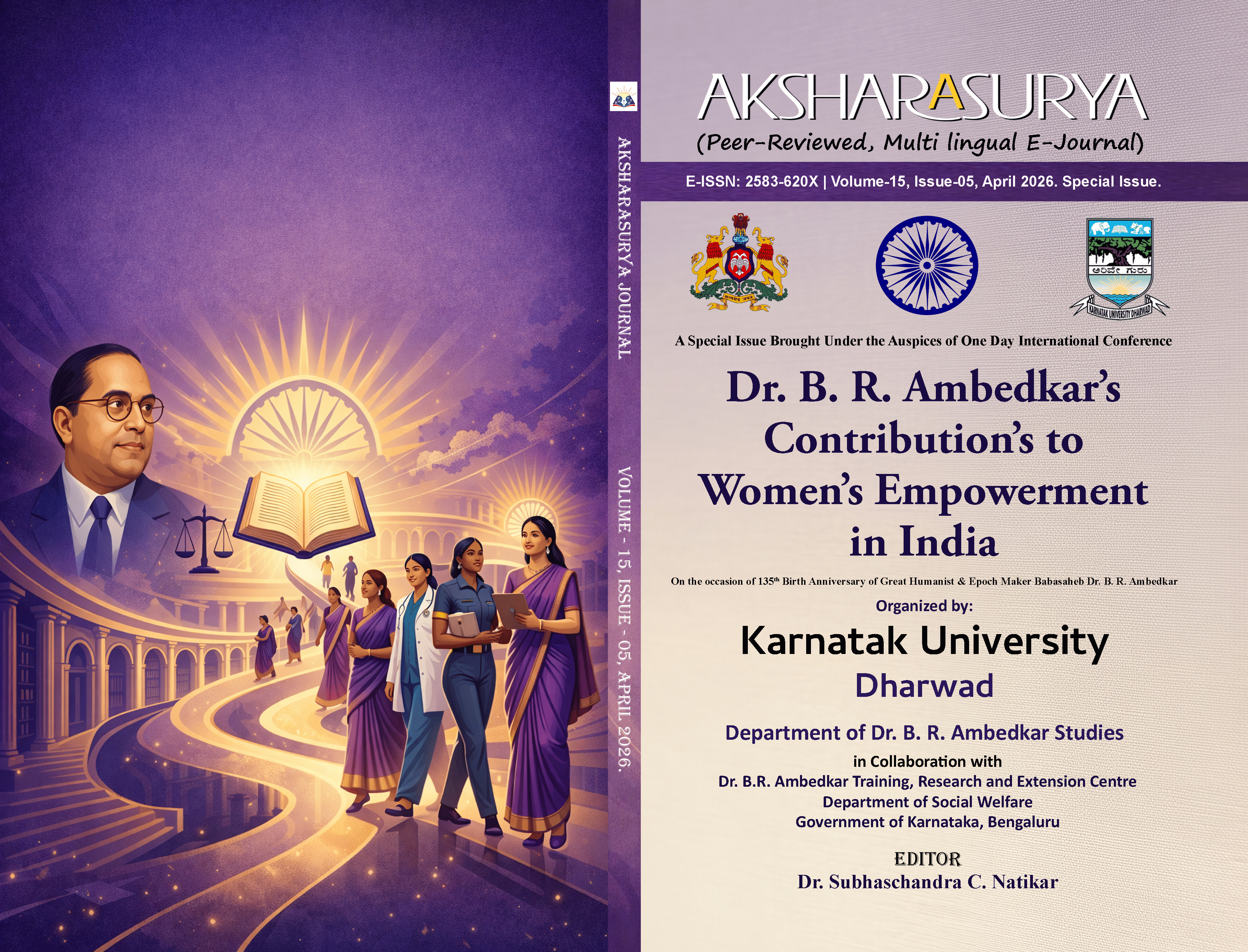
Published: 2026-04-30
Table of Contents
Research Articles
ಸಂವಿಧಾನಾತ್ಮಕ ನೈತಿಕತೆ ಮತ್ತು ಸಾಮಾಜಿಕ ನ್ಯಾಯ: ಪರಿಶಿಷ್ಟ ಜಾತಿ ಮತ್ತು ಪರಿಶಿಷ್ಟ ಪಂಗಡಗಳ ಮೇಲಿನ ದೌರ್ಜನ್ಯ ನಿಯಂತ್ರಣದ ಸಮಾಜಶಾಸ್ತ್ರೀಯ ಆಯಾಮಗಳು
01 to 08
ಭಾರತೀಯ ಸಮಾಜವು ಬಹುಕಾಲದಿಂದ ಶ್ರೇಣೀಕೃತ ಅಸಮಾನತೆಯ ಆಧಾರದ ಮೇಲೆ ರಚನೆಯಾಗಿದ್ದು, ಇದು ತಳಸಮುದಾಯಗಳ ಶೋಷಣೆಗೆ ಸಾಂಸ್ಥಿಕ ರೂಪವನ್ನು ನೀಡಿದೆ. ಇಂತಹ ಶೋಷಣೆಗಳನ್ನು ತಡೆಗಟ್ಟಿ, ಪ್ರತಿಯೊಬ್ಬರಿಗೂ ಘನತೆಯ ಬದುಕನ್ನು ಖಾತರಿಪಡಿಸುವ ಉದ್ದೇಶದಿಂದ ಭಾರತದ ಸಂವಿಧಾನವು ಸಾಮಾಜಿಕ ನ್ಯಾಯದ ಪರಿಕಲ್ಪನೆಯನ್ನು ಬಲವಾಗಿ ಅಳವಡಿಸಿಕೊಂಡಿದೆ. ಆದರೂ, ಸ್ವತಂತ್ರ ಭಾರತದಲ್ಲಿ ದಶಕಗಳು ಕಳೆದರೂ ಪರಿಶಿಷ್ಟ ಜಾತಿ ಮತ್ತು ಪರಿಶಿಷ್ಟ ಪಂಗಡಗಳ ಮೇಲಿನ ದೌರ್ಜನ್ಯಗಳು ನಿರಂತರವಾಗಿ ನಡೆಯುತ್ತಿರುವುದು ಅತ್ಯಂತ ಆತಂಕಕಾರಿ ವಿಷಯವಾಗಿದೆ. ಕಾನೂನಾತ್ಮಕ ರಕ್ಷಣೆಗಳು ಮತ್ತು ಕಟ್ಟುನಿಟ್ಟಾದ ನಿಯಮಾವಳಿಗಳ ಹೊರತಾಗಿಯೂ, ದೌರ್ಜನ್ಯಗಳು ಮರುಕಳಿಸುತ್ತಿರುವುದರ ಹಿಂದಿನ ಸಮಾಜಶಾಸ್ತ್ರೀಯ ಕಾರಣಗಳನ್ನು ವಿಶ್ಲೇಷಿಸುವುದು ಪ್ರಸ್ತುತ ಸಂಶೋಧನಾ ಲೇಖನದ ಮುಖ್ಯ ಉದ್ದೇಶವಾಗಿದೆ. ಸಂವಿಧಾನಾತ್ಮಕ ನೈತಿಕತೆಯು ಕೇವಲ ಸರ್ಕಾರದ ಕಾರ್ಯಾಂಗ, ಶಾಸಕಾಂಗ ಮತ್ತು ನ್ಯಾಯಾಂಗ ವ್ಯವಸ್ಥೆಗಳಿಗೆ ಮಾತ್ರ ಸೀಮಿತವಾಗದೆ, ನಾಗರಿಕರ ದೈನಂದಿನ ಬದುಕಿನ ಅವಿಭಾಜ್ಯ ಅಂಗವಾಗಬೇಕಾದ ಅನಿವಾರ್ಯತೆಯನ್ನು ಈ ಅಧ್ಯಯನವು ಸಮಗ್ರವಾಗಿ ವಿವರಿಸುತ್ತದೆ. ಗ್ರಾಮೀಣ ಮತ್ತು ನಗರ ಪ್ರದೇಶಗಳೆರಡರಲ್ಲೂ ಕಂಡುಬರುವ ಜಾತಿ ಆಧಾರಿತ ತಾರತಮ್ಯಗಳು, ಆರ್ಥಿಕ ಹಾಗೂ ಸಾಮಾಜಿಕ ಅಧಿಕಾರದ ಅಸಮತೋಲನ, ಮತ್ತು ಸಾಮಾಜಿಕ ಬಹಿಷ್ಕಾರದಂತಹ ಅಮಾನವೀಯ ಘಟನೆಗಳು ನಮ್ಮ ಪ್ರಸ್ತುತ ಸಾಮಾಜಿಕ ಸನ್ನಿವೇಶದಲ್ಲಿ ಇನ್ನೂ ಜೀವಂತವಾಗಿವೆ. ನ್ಯಾಯಾಂಗ ಮತ್ತು ಪೊಲೀಸ್ ವ್ಯವಸ್ಥೆಗಳಲ್ಲಿ ಅಡಗಿರುವ ಜಾತಿಪೂರ್ವಗ್ರಹಗಳು ಕಾನೂನಿನ ಪರಿಣಾಮಕಾರಿ ಜಾರಿಗೆ ಹೇಗೆ ಪ್ರಬಲ ಅಡ್ಡಿಯಾಗುತ್ತಿವೆ ಎಂಬುದನ್ನು ಸಮಾಜಶಾಸ್ತ್ರೀಯ ನೆಲೆಯಲ್ಲಿ ವಿಮರ್ಶಿಸಲಾಗಿದೆ. ಜಾಗತೀಕರಣ ಮತ್ತು ಆಧುನೀಕರಣವು ತಂದಿರುವ ಬದಲಾವಣೆಗಳು ದಲಿತ ಮತ್ತು ಆದಿವಾಸಿ ಸಮುದಾಯಗಳ ಬದುಕಿನ ಮೇಲೆ ಬೀರಿದ ಪ್ರಭಾವ, ಹಾಗೂ ಈ ಆರ್ಥಿಕ ಬದಲಾವಣೆಗಳು ಸಮಾಜದಲ್ಲಿ ಹೊಸ ಸ್ವರೂಪದ ಸಂಘರ್ಷ ಮತ್ತು ದೌರ್ಜನ್ಯಗಳಿಗೆ ಹೇಗೆ ಕಾರಣವಾಗಿವೆ ಎಂಬುದನ್ನೂ ಸಹ ಲೇಖನವು ಆಳವಾಗಿ ಚರ್ಚಿಸುತ್ತದೆ. ಒಟ್ಟಾರೆಯಾಗಿ, ಕೇವಲ ದಂಡನಾತ್ಮಕ ಕಾನೂನುಗಳಿಂದ ಸಮಾಜವನ್ನು ಬದಲಾಯಿಸಲು ಸಾಧ್ಯವಿಲ್ಲ; ಬದಲಾಗಿ ಸಾಂವಿಧಾನಿಕ ಮೌಲ್ಯಗಳನ್ನು ಜನರ ಆಂತರಿಕ ಸಾಮಾಜಿಕ ಮೌಲ್ಯಗಳನ್ನಾಗಿ ಪರಿವರ್ತಿಸುವ ಮೂಲಕ ಮಾತ್ರ ನೈಜ ಸಾಮಾಜಿಕ ನ್ಯಾಯವನ್ನು ಒದಗಿಸಲು ಮತ್ತು ದೌರ್ಜನ್ಯ ಮುಕ್ತ ಸಮಾಜವನ್ನು ನಿರ್ಮಿಸಲು ಸಾಧ್ಯ ಎಂಬ ದೃಢವಾದ ನಿರ್ಧಾರಕ್ಕೆ ಈ ಅಧ್ಯಯನವು ಬರುತ್ತದೆ. ಇದು ಸಂವಿಧಾನ, ಸಮಾಜಶಾಸ್ತ್ರ ಮತ್ತು ಸಾಮಾಜಿಕ ವಾಸ್ತವಗಳ ನಡುವಿನ ಸಂಕೀರ್ಣ ಸಂಬಂಧಗಳನ್ನು ಬಿಡಿಸಿಡುತ್ತದೆ.
ಭಾರತೀಯ ಮಹಿಳೆಯರ ಆಶಾಕಿರಣ - ಡಾ. ಬಿ. ಆರ್. ಅಂಬೇಡ್ಕರ್
09 to 13
ಪ್ರಾಚೀನ ಕಾಲದಿಂದಲೂ ಪುರುಷಪ್ರಧಾನ ಸಮಾಜದಲ್ಲಿ ಶೋಷಣೆ, ತಾರತಮ್ಯ ಮತ್ತು ಅಜ್ಞಾನದ ಅಂಧಕಾರಕ್ಕೆ ದೂಡಲ್ಪಟ್ಟಿದ್ದ ಭಾರತೀಯ ಮಹಿಳೆಯರ ವಿಮೋಚನೆಗಾಗಿ ಡಾ. ಬಿ. ಆರ್. ಅಂಬೇಡ್ಕರ್ ಅವರು ನಡೆಸಿದ ಅವಿರತ ಹೋರಾಟ ಮತ್ತು ಅವರ ಕಾನೂನಾತ್ಮಕ ಕೊಡುಗೆಗಳ ಸಮಗ್ರ ಅವಲೋಕನ ಇಲ್ಲಿದೆ. ಶಿಕ್ಷಣದಿಂದ ವಂಚಿತರಾಗಿ ಎರಡನೇ ದರ್ಜೆಯ ಪ್ರಜೆಗಳಾಗಿದ್ದ ಮಹಿಳೆಯರಿಗೆ ಸಮಾನತೆ, ಸ್ವಾತಂತ್ರ್ಯ ಮತ್ತು ಭ್ರಾತೃತ್ವದ ತಳಹದಿಯ ಮೇಲೆ ಹೊಸ ಬದುಕನ್ನು ಕಟ್ಟಿಕೊಡುವಲ್ಲಿ ಸಂವಿಧಾನದ ಪಾತ್ರ ಅತ್ಯಮೂಲ್ಯವಾದದ್ದು. ಹಿಂದೂ ಕೋಡ್ ಬಿಲ್ ಮೂಲಕ ಮಹಿಳೆಯರಿಗೆ ಆಸ್ತಿ ಹಕ್ಕು, ವಿವಾಹ, ವಿಚ್ಛೇದನ ಹಾಗೂ ದತ್ತು ಸ್ವೀಕಾರದಂತಹ ಕ್ರಾಂತಿಕಾರಿಕ ಹಕ್ಕುಗಳನ್ನು ಒದಗಿಸಿದ ಅಂಬೇಡ್ಕರ್ ಅವರ ವೈಚಾರಿಕ ನಿಲುವುಗಳನ್ನು ಇಲ್ಲಿ ವಿಶ್ಲೇಷಿಸಲಾಗಿದೆ. ಸಂವಿಧಾನದ ವಿವಿಧ ಅನುಚ್ಛೇದಗಳ ಮೂಲಕ ಸ್ತ್ರೀ ಸಬಲೀಕರಣಕ್ಕೆ ನಾಂದಿ ಹಾಡಿದ ಅವರ ದೂರದೃಷ್ಟಿ ಹಾಗೂ ಮಹಿಳಾಪರ ಕಾಳಜಿಯನ್ನು ಎತ್ತಿತೋರಿಸುತ್ತಾ, ಅಂಬೇಡ್ಕರ್ ಅವರನ್ನು ನೈಜ ಸ್ತ್ರೀವಾದಿ ನಾಯಕರನ್ನಾಗಿ ಬಿಂಬಿಸಲಾಗಿದೆ.
ಜಾತಿ, ಸಮಾನತೆ ಮತ್ತು ಪ್ರಜಾಸತ್ತಾತ್ಮಕತೆ: ಅಂಬೇಡ್ಕರ್ ಅವರ ಚಿಂತನೆಗಳ ಪ್ರಸ್ತುತತೆ
14 to 24
ಡಾ. ಬಿ. ಆರ್. ಅಂಬೇಡ್ಕರ್ ಅವರ ಪ್ರಜಾಸತ್ತಾತ್ಮಕ ವಿಚಾರಗಳು ಜಾತಿ, ಸಮಾನತೆ ಮತ್ತು ಸಾಮಾಜಿಕ ನ್ಯಾಯದ ಸಮಕಾಲೀನ ಚರ್ಚೆಗಳಲ್ಲಿ ಆಳವಾಗಿ ಬೇರೂರಿದೆ ಮತ್ತು ಅತ್ಯಂತ ಪ್ರಸ್ತುತವಾಗಿದೆ. ಜಾತಿ ಆಧಾರಿತ ಶ್ರೇಣಿಗಳನ್ನು ಕಿತ್ತುಹಾಕಲು ಅವರು ನೀಡಿದ ಒತ್ತು ಅಂತರ್ಗತ ಪ್ರಜಾಪ್ರಭುತ್ವದ ಚೌಕಟ್ಟಿನ ಅಡಿಪಾಯವನ್ನು ರೂಪಿಸುತ್ತದೆ. ಸಾಮಾಜಿಕ ಮತ್ತು ಆರ್ಥಿಕ ಪ್ರಜಾಪ್ರಭುತ್ವವಿಲ್ಲದೆ ರಾಜಕೀಯ ಪ್ರಜಾಪ್ರಭುತ್ವವು ಯಶಸ್ವಿಯಾಗಲು ಸಾಧ್ಯವಿಲ್ಲ ಎಂದು ಅಂಬೇಡ್ಕರ್ ವಾದಿಸಿದರು, ಈ ತತ್ವವು ಇಂದಿನ ಸುಧಾರಣಾ ಪ್ರಯತ್ನಗಳಿಗೆ ಮಾರ್ಗದರ್ಶನ ನೀಡುತ್ತಲೇ ಇದೆ. ಹೆಚ್ಚುತ್ತಿರುವ ಸಾಮಾಜಿಕ ಅಸಮಾನತೆಯ ಹಿನ್ನೆಲೆಯಲ್ಲಿ, ಸಾಂವಿಧಾನಿಕ ನೈತಿಕತೆ ಮತ್ತು ಮಾನವ ಘನತೆಯ ಕುರಿತಾಗಿ ಅವರ ಕರೆಯು ಹೊಸ ಮಹತ್ವವನ್ನು ಗಳಿಸಿದೆ. ಜಾತಿ ತಾರತಮ್ಯ ಮತ್ತು ಪ್ರಜಾಪ್ರಭುತ್ವದ ಭಾಗವಹಿಸುವಿಕೆಯಲ್ಲಿ ಇರುವಂತಹ ಸವಾಲುಗಳನ್ನು ಅಂಬೇಡ್ಕರ್ ಅವರ ಆಲೋಚನೆಗಳು ಹೇಗೆ ಎದುರಿಸುತ್ತವೆ ಎಂಬುದನ್ನು ಈ ಲೇಖನವು ಪರಿಶೋಧಿಸುತ್ತದೆ. ಇದು ಅಂಬೇಡ್ಕರ್ ಚಿಂತನೆಯಲ್ಲಿ ಬೇರೂರಿರುವ ಸಾಂಸ್ಥಿಕ ಸುಧಾರಣೆಗಳು ಮತ್ತು ಸಾರ್ವಜನಿಕ ಜಾಗೃತಿಯ ನಿರಂತರ ಅಗತ್ಯವನ್ನು ಎತ್ತಿ ತೋರಿಸುತ್ತದೆ. ಅವರ ವಿಧಾನವನ್ನು ಅರ್ಥಮಾಡಿಕೊಳ್ಳುವ ಮೂಲಕ, ಸಮಕಾಲೀನ ಸಮಾಜವು ನಿಜವಾದ ಸಮಾನತಾವಾದಿ ಪ್ರಜಾಪ್ರಭುತ್ವವನ್ನು ಸಾಕಾರಗೊಳಿಸಲು ಪ್ರಯತ್ನಿಸಬಹುದು.
ಮಹಿಳೆಯರ ದೃಷ್ಟಿಯಲ್ಲಿ ಅಂಬೇಡ್ಕರ್
25 to 31
ಅಂಬೇಡ್ಕರ್ ಅವರ ದೃಷ್ಟಿಯಲ್ಲಿ ಮಹಿಳೆಯು ಒಂದು ಅದ್ಭುತ ಶಕ್ತಿಯಾಗಿದ್ದಾಳೆ. ಅವಳ ಏಳಿಗೆಗಾಗಿ ಹಾಗೂ ಸಾಮಾಜಿಕ ನ್ಯಾಯ, ಸಮಾನತೆ ಮತ್ತು ಗೌರವಗಳನ್ನು ಒದಗಿಸಿಕೊಡುವಲ್ಲಿ ಅಂಬೇಡ್ಕರ್ ಅವರ ಹೋರಾಟವು ಇಂದಿಗೂ ನೆನಪಿನಲ್ಲಿ ಉಳಿಯುವಂತಹುದು. ಭಾರತದಲ್ಲಿ ಮಹಿಳೆಯರು ‘ತಾನಿಲ್ಲದೆ ಸಮಾಜವಿಲ್ಲ’ ಎಂಬಂತೆ ಎಂದಿಗೂ ಬದುಕಲೇ ಇಲ್ಲ; ಮತ್ತು ಈ ಸಮಾಜವು ಆಕೆಗೆ ‘ನೀನು ಸಮಾಜದಲ್ಲಿ ಅತ್ಯಮೂಲ್ಯವಾದ ಪಾತ್ರವನ್ನು ನಿರ್ವಹಿಸುತ್ತಿರುವೆ’ ಎಂಬ ಸತ್ಯವನ್ನು ತಿಳಿಸಲಿಲ್ಲ. ಇಂತಹ ಸಂದರ್ಭದಲ್ಲಿದ್ದ ಮಹಿಳೆಯ ಸ್ಥಿತಿಯನ್ನು ಬದಲಾಯಿಸಬೇಕೆಂದು ಅಂಬೇಡ್ಕರ್ ಅವರು ಹೋರಾಟ ಹಾಗೂ ಚಳುವಳಿಗಳನ್ನು ರೂಪಿಸಿದರು. ಇದರಿಂದ ಮಹಿಳೆಯರ ಸ್ಥಾನಮಾನ ಹಾಗೂ ಸಾಮಾಜಿಕ ಸಮಾನತೆಯಲ್ಲಿ ಬದಲಾವಣೆಗಳಾದವು. ಮಹಿಳೆಯರಿಗಾಗಿಯೇ ಸಂವಿಧಾನದಲ್ಲಿ ಹಲವಾರು ಕಾನೂನುಗಳನ್ನು ಜಾರಿಗೆ ತಂದರು; ಅವುಗಳಲ್ಲಿ 14ನೇ ವಿಧಿ ಸಮಾನತೆಗಾಗಿ, 15ನೇ ವಿಧಿ ತಾರತಮ್ಯ ನಿವಾರಣೆಗಾಗಿ, ಅಸ್ಪೃಶ್ಯತೆ ನಿವಾರಣೆ ಹಾಗೂ 39(ಡಿ) ವಿಧಿಗಳು ಪ್ರಮುಖವಾಗಿವೆ ಮತ್ತು ಮಹಿಳೆಯರಿಗಾಗಿ ರಾಜಕೀಯ ಮೀಸಲಾತಿಯನ್ನು ಒದಗಿಸಿದರು. ಇಷ್ಟೆಲ್ಲಾ ಕಾರ್ಯಗಳನ್ನು ನಿರ್ವಹಿಸಿದ ಅಂಬೇಡ್ಕರ್ ಅವರನ್ನು ಮಹಿಳೆಯರು ಮಾರ್ಗದರ್ಶಕರಾಗಿ ಮತ್ತು ಸ್ಫೂರ್ತಿದಾಯಕರಾಗಿ ಸ್ವೀಕರಿಸಿ, ಹಲವಾರು ಸಾಧನೆಗಳನ್ನು ಮಾಡಿದ್ದಾರೆ. ಮಹಿಳೆಯರು ಅವರನ್ನು ತಮ್ಮ ದೃಷ್ಟಿಕೋನದಲ್ಲಿ ಒಬ್ಬ ಧೀಮಂತ ನಾಯಕನನ್ನಾಗಿ ನೋಡುತ್ತಿರುವುದನ್ನು ನಾವು ಕಾಣಬಹುದಾಗಿದೆ. ಮಹಿಳೆಯರ ಸಾಮರ್ಥ್ಯದ ಬಗ್ಗೆ ಅರಿವಿಲ್ಲದ ಸಮಾಜಕ್ಕೆ, ಮಹಿಳಾ ಶಕ್ತಿಯನ್ನು ತೋರಿಸಿಕೊಟ್ಟ ಮಹಾನ್ ನಾಯಕರಲ್ಲಿ ಅಂಬೇಡ್ಕರ್ ಅವರು ಪ್ರಮುಖರಾಗಿದ್ದಾರೆ. ಮಹಿಳಾ ಶಿಕ್ಷಣಕ್ಕಾಗಿ ಅವರು ಹಲವಾರು ಚಳುವಳಿಗಳನ್ನು ರೂಪಿಸಿದರು. ಮಹಿಳೆಯರು ತಮ್ಮ ಸ್ಥಾನಮಾನಗಳನ್ನು ಬದಲಾಯಿಸಿಕೊಳ್ಳಲು ಶಿಕ್ಷಣವು ಅತ್ಯಗತ್ಯ ಎಂಬುದನ್ನು ಅವರಿಗೆ ಮನವರಿಕೆ ಮಾಡಿಕೊಡುವಲ್ಲಿ ಅಂಬೇಡ್ಕರ್ ಯಶಸ್ವಿಯಾದರು. ಅದೇ ರೀತಿ ‘ಹಿಂದೂ ಕೋಡ್ ಬಿಲ್’ ಮೂಲಕ ಮಹಿಳೆಯರಿಗೆ ಉತ್ತರಾಧಿಕಾರದ ಹಕ್ಕು ಮತ್ತು ವಿಧವಾ ಪುನರ್ವಿವಾಹ ಕಾಯ್ದೆಯನ್ನು ತಂದು ಮಹಿಳೆಯನ್ನು ಸಮಾಜದ ಶಕ್ತಿಯನ್ನಾಗಿ ರೂಪಿಸಿದರು. ಲಿಂಗ ಅಸಮಾನತೆಯನ್ನು ಹೋಗಲಾಡಿಸಲು ಸಮಾನ ವೇತನ ಕಾಯ್ದೆಯನ್ನು ಜಾರಿಗೆ ತಂದರು. ಕಾರ್ಖಾನೆಗಳಲ್ಲಿ ದುಡಿಯುವ ಮಹಿಳೆಯರಿಗಾಗಿ ಕಾರ್ಖಾನೆಗಳು ಕಡ್ಡಾಯವಾಗಿ ಮೂಲಸೌಕರ್ಯಗಳನ್ನು ಹೊಂದಿರಬೇಕೆಂದು ನಿಯಮ ರೂಪಿಸಿದರು. ಮಹಿಳೆಯರ ಸಮಸ್ಯೆಗಳ ಕುರಿತು ಕಾರ್ಖಾನೆ ಮಾಲೀಕರಿಗೆ ಮನವರಿಕೆ ಮಾಡಿಕೊಡುವ ಮುಖಾಂತರ ಅಲ್ಲಿನ ವ್ಯವಸ್ಥೆಯನ್ನು ಬದಲಾಯಿಸಿದರು. ಅದೇ ರೀತಿ ತಮ್ಮ ಚಳುವಳಿಗಳಲ್ಲಿಯೂ ಮಹಿಳೆಯರು ಭಾಗವಹಿಸುವಂತೆ ಪ್ರೋತ್ಸಾಹಿಸಿದರು. ಇದರಿಂದಾಗಿ ಹಲವಾರು ಮಹಿಳೆಯರು ಸ್ವಾತಂತ್ರ್ಯ ಚಳುವಳಿಗಳಲ್ಲಿ ಭಾಗವಹಿಸಿದರು ಮತ್ತು ಅಂಬೇಡ್ಕರ್ ಅವರೊಂದಿಗಿನ ಹೋರಾಟಗಳಲ್ಲಿಯೂ ಸಕ್ರಿಯವಾಗಿ ಪಾಲ್ಗೊಳ್ಳಲು ಪ್ರಾರಂಭಿಸಿದರು. ದಕ್ಷಿಣ ಏಷ್ಯಾದ ದೇಶಗಳಲ್ಲಿಯೇ ಮೊದಲ ಬಾರಿಗೆ ಇಂತಹ ಕಾಯ್ದೆಗಳನ್ನು ಜಾರಿಗೆ ತಂದ ಕೀರ್ತಿ ಭಾರತಕ್ಕೆ ಸಲ್ಲುತ್ತದೆ ಮತ್ತು ಇದರ ಸಂಪೂರ್ಣ ಶ್ರೇಯಸ್ಸು ನೇರವಾಗಿ ಅಂಬೇಡ್ಕರ್ ಅವರಿಗೆ ಸಲ್ಲುತ್ತದೆ. ಇಂತಹ ಹಲವಾರು ಮಹತ್ಕಾರ್ಯಗಳನ್ನು ನಿರ್ವಹಿಸಿದ ಅಂಬೇಡ್ಕರ್ ಅವರು ಇಂದು ಮಹಿಳೆಯರ ಆಲೋಚನೆಗಳಲ್ಲಿ ಜೀವಂತವಾಗಿದ್ದಾರೆ. ಸಮಾಜದ ಪ್ರತಿಯೊಬ್ಬ ಸದಸ್ಯರೂ ಇವರ ಕಾರ್ಯಗಳ ಮಹತ್ವವನ್ನು ಅರಿತು, ತಮ್ಮದೇ ಆದ ದೃಷ್ಟಿಕೋನದಲ್ಲಿ ಅವರನ್ನು ಗೌರವಿಸುತ್ತಿರುವುದಕ್ಕೆ ಮತ್ತು ಮಾರ್ಗದರ್ಶಕರಾಗಿ ಸ್ವೀಕರಿಸಿರುವುದಕ್ಕೆ ಹಲವಾರು ಉದಾಹರಣೆಗಳು ನಮಗೆ ಸಿಗುತ್ತವೆ.
ಡಾ. ಬಾಬಾಸಾಹೇಬ್ ಅಂಬೇಡ್ಕರ್ ಅವರ ಮಹಿಳಾ ಚಿಂತನೆಗಳು
32 to 37
ಭಾರತೀಯ ಸಮಾಜದಲ್ಲಿ ಪ್ರಾಚೀನ ಕಾಲದಿಂದಲೂ ದ್ವಿತೀಯ ದರ್ಜೆಯ ಪ್ರಜೆಗಳಾಗಿ, ಧಾರ್ಮಿಕ ಕಟ್ಟುಪಾಡುಗಳಿಂದ ಶೋಷಣೆಗೆ ಒಳಗಾಗಿದ್ದ ಮಹಿಳೆಯರ ವಿಮೋಚನೆಗಾಗಿ ಡಾ. ಬಿ.ಆರ್. ಅಂಬೇಡ್ಕರ್ ಅವರು ರೂಪಿಸಿದ ತಾತ್ವಿಕ ಮತ್ತು ಕಾನೂನಾತ್ಮಕ ನೆಲೆಗಟ್ಟುಗಳನ್ನು ಇಲ್ಲಿ ವಿಶ್ಲೇಷಿಸಲಾಗಿದೆ. ದಲಿತ ಮತ್ತು ಹಿಂದುಳಿದ ವರ್ಗಗಳ ವಿಮೋಚನೆಯ ಜೊತೆಗೆ, ಸಮಸ್ತ ಮಹಿಳಾ ಸಮುದಾಯದ ಶಿಕ್ಷಣ, ಸಮಾನತೆ ಮತ್ತು ಸ್ವಾಭಿಮಾನದ ಬದುಕಿಗಾಗಿ ಅವರು ನಡೆಸಿದ ಮಹಾಡ್ ಸತ್ಯಾಗ್ರಹ ಹಾಗೂ ದೇವದಾಸಿ ಪದ್ಧತಿ ವಿರೋಧಿ ಹೋರಾಟಗಳ ಮಹತ್ವವನ್ನು ಗುರುತಿಸಲಾಗಿದೆ. ಮಾತೃತ್ವ ರಜೆ, ಕುಟುಂಬ ಕಲ್ಯಾಣ ಯೋಜನೆಗಳ ಪ್ರತಿಪಾದನೆ ಹಾಗೂ ಕ್ರಾಂತಿಕಾರಕ ‘ಹಿಂದೂ ಕೋಡ್ ಬಿಲ್’ ಮೂಲಕ ಆಸ್ತಿ, ವಿವಾಹ ಮತ್ತು ದತ್ತು ಹಕ್ಕುಗಳನ್ನು ಕಲ್ಪಿಸಲು ಅವರು ಪಟ್ಟ ಶ್ರಮವನ್ನು ಕಟ್ಟಿಕೊಡಲಾಗಿದೆ. ಸಂವಿಧಾನದ 14, 15, 16ನೇ ಅನುಚ್ಛೇದಗಳ ಮೂಲಕ ಸಾಂವಿಧಾನಿಕ ಹಕ್ಕುಗಳನ್ನು ನೀಡಿ, ಭಾರತೀಯ ಸ್ತ್ರೀವಾದಿ ಚಿಂತನೆಗೆ ಹಾಗೂ ಮಹಿಳಾ ಸಬಲೀಕರಣಕ್ಕೆ ಅಂಬೇಡ್ಕರ್ ಅವರು ಹಾಕಿಕೊಟ್ಟ ಭದ್ರ ಬುನಾದಿಯನ್ನು ಮರುಮೌಲ್ಯಮಾಪನ ಮಾಡಲಾಗಿದೆ.
ಮಹಿಳಾ ಸಬಲೀಕರಣಕ್ಕೆ ಡಾ. ಬಿ. ಆರ್. ಅಂಬೇಡ್ಕರ್ ರವರ ಕೊಡುಗೆ
38 to 43
ಭಾರತೀಯ ಸಂವಿಧಾನದ ಪಿತಾಮಹರೆನಿಸಿದ ಡಾ. ಭೀಮರಾವ್ ರಾಮ್ ಜಿ ಅಂಬೇಡ್ಕರ್ (1891-1956) ರವರು ಓರ್ವ ಮಹಾನ್ ನ್ಯಾಯಶಾಸ್ತ್ರಜ್ಞ, ಸಮಾಜಶಾಸ್ತ್ರಜ್ಞ ಹಾಗೂ ಒಟ್ಟಾರೆಯಾಗಿ ಜಗತ್ತು ಕಂಡ ಮಹಾನ್ ಸುಧಾರಕರು ಆಗಿದ್ದರು. ಅದಲ್ಲದೆ ಆಧುನಿಕ ಭಾರತದಲ್ಲಿ ಮಹಿಳಾ ಹಕ್ಕುಗಳ ಪ್ರಮುಖ ಪ್ರತಿಪಾದಕರಲ್ಲಿ ಒಬ್ಬರಾಗಿ ಮಹಾನ್ ಸ್ತ್ರೀವಾದಿ ಎನಿಸಿಕೊಂಡರು; ಸಮಾನತೆ, ಪ್ರಜಾಪ್ರಭುತ್ವ ಮತ್ತು ನ್ಯಾಯದ ಅವರ ದೃಷ್ಟಿಕೋನವು ಭಾರತೀಯ ಮಹಿಳೆಯರ ನೈಜ ಸ್ವಾತಂತ್ರ್ಯಕ್ಕೆ ಕಾರಣವಾಯಿತು. ಧರ್ಮ ಮತ್ತು ಸಮಾಜದಲ್ಲಿ ಹುದುಗಿರುವ ಮನುವಾದವನ್ನು ಹಾಗೂ ಪಿತೃ ಪ್ರಧಾನ ಸಂಪ್ರದಾಯಗಳನ್ನು ಅಂಬೇಡ್ಕರ್ ಪ್ರಶ್ನಿಸಿದರು, ಮಹಿಳೆಯರ ಶಿಕ್ಷಣ, ಕಾರ್ಮಿಕ ಹಕ್ಕುಗಳು ಮತ್ತು ಆಸ್ತಿ ಮಾಲೀಕತ್ವಕ್ಕಾಗಿ ಹೋರಾಡಿದರು ಮತ್ತು ಭಾರತೀಯ ಸಂವಿಧಾನದಲ್ಲಿ ಲಿಂಗ ಸಮಾನತೆಯನ್ನು ಪ್ರತಿಷ್ಠಾಪಿಸಿದರು. ಆದ್ದರಿಂದ ಈ ಪ್ರಬಂಧವು ಡಾ. ಬಿ. ಆರ್. ಅಂಬೇಡ್ಕರ್ ರವರ ಬರಹಗಳು, ಶಾಸಕಾಂಗ ಪ್ರಯತ್ನಗಳು ಮತ್ತು ಸಾಂವಿಧಾನಿಕ ತತ್ವಗಳ ಮೂಲಕ ಮಹಿಳಾ ಸಬಲೀಕರಣಕ್ಕೆ ಅವರ ಬಹು ಆಯಾಮದ ಕೊಡುಗೆಗಳನ್ನು ಪರಿಶೋಧಿಸುತ್ತದೆ ಮತ್ತು ಇಂದಿನ ಆಧುನಿಕ ಭಾರತದಲ್ಲಿ ಅವುಗಳ ಪ್ರಸ್ತುತತೆಯನ್ನು ನಿರ್ಣಯಿಸುತ್ತದೆ.
ಡಾ. ಬಿ. ಆರ್. ಅಂಬೇಡ್ಕರ್ ಮತ್ತು ಕೃಷಿ ಮಹಿಳೆ
44 to 48
ಡಾ. ಬಿ.ಆರ್. ಅಂಬೇಡ್ಕರ್ ಅವರು ಸಮಾನತೆ, ಸಾಮಾಜಿಕ ನ್ಯಾಯ ಹಾಗೂ ಮಹಿಳೆಯರ ಹಕ್ಕುಗಳ ಕುರಿತು ಅನೇಕ ಚಳುವಳಿ ಮತ್ತು ಹೋರಾಟಗಳನ್ನು ರೂಪಿಸಿದವರು. ಅವರ ದೃಷ್ಟಿಯಲ್ಲಿ ಮಹಿಳೆಯರು ಕೂಡ ಈ ದೇಶದ ಪ್ರಮುಖ ಆರ್ಥಿಕ ಶಕ್ತಿಯಾಗಿದ್ದಾರೆ; ಕೃಷಿಯು ಆರಂಭದಿಂದಲೇ ಮಹಿಳೆಯರ ಪ್ರಮುಖ ಕಾರ್ಯಕ್ಷೇತ್ರವಾಗಿ ಕಾಣಿಸುತ್ತದೆ. ಕೃಷಿ ಉತ್ಪಾದನೆಯಲ್ಲಿ ಮಹಿಳೆಯರ ಪಾಲು ಗಣನೀಯವಾಗಿದ್ದರೂ, ಭೂ ಒಡೆತನ ಮತ್ತು ನಿರ್ಧಾರ ತೆಗೆದುಕೊಳ್ಳುವ ಪ್ರಕ್ರಿಯೆಯಲ್ಲಿ ಅವರು ಇಂದಿಗೂ ಹಿಂದುಳಿದಿದ್ದಾರೆ. ಜಾತಿ, ಲಿಂಗ ಮತ್ತು ವರ್ಗಗಳ ನೆಲೆಯಲ್ಲಿ ಕೃಷಿ ಮಹಿಳೆಯರು ಎದುರಿಸುತ್ತಿರುವ ಶೋಷಣೆಯನ್ನು ಅಂಬೇಡ್ಕರ್ ಅವರ ಚಿಂತನೆಗಳು, ವಿಶೇಷವಾಗಿ ‘ಹಿಂದೂ ಕೋಡ್ ಬಿಲ್’ ಮತ್ತು ‘ರಾಜ್ಯ ಸಮಾಜವಾದ’ದ ಪರಿಕಲ್ಪನೆಗಳ ಮೂಲಕ ಈ ಲೇಖನವು ವಿಶ್ಲೇಷಿಸುತ್ತದೆ.
ಅಂಬೇಡ್ಕರ್ರವರ ದೃಷ್ಟಿಕೋನದಲ್ಲಿ ಮಹಿಳಾ ಸಬಲೀಕರಣ: ಸ್ವಾತಂತ್ರ್ಯ, ಗೌರವ ಮತ್ತು ಸಾಮಾಜಿಕ ನ್ಯಾಯದ ದಿಕ್ಕುಗಳು
49 to 54
ಈ ಲೇಖನವು ಡಾ. ಬಿ. ಆರ್. ಅಂಬೇಡ್ಕರ್ ಅವರ ಮಹಿಳಾ ಸಬಲೀಕರಣದ ದೃಷ್ಟಿಕೋನವನ್ನು ಸ್ಪಷ್ಟವಾಗಿ ವಿಶ್ಲೇಷಿಸುತ್ತದೆ. ಭಾರತೀಯ ಸಮಾಜದಲ್ಲಿ ಮಹಿಳೆಯರು ಪಿತೃತ್ವ ವ್ಯವಸ್ಥೆ, ಜಾತಿ ಆಧಾರಿತ ಅಸಮಾನತೆ ಮತ್ತು ಸಾಮಾಜಿಕ ಅನ್ಯಾಯಗಳಿಂದ ದೀರ್ಘಕಾಲದಿಂದ ಹಿಂಸೆಗೆ ಒಳಗಾಗಿದ್ದಾರೆ. ಈ ಸಂದರ್ಭದಲ್ಲಿ ಅಂಬೇಡ್ಕರ್ ಅವರು ಮಹಿಳಾ ಮುಕ್ತಿಯನ್ನು ಸಾಮಾಜಿಕ ನ್ಯಾಯದ ಕೇಂದ್ರ ವಿಷಯವನ್ನಾಗಿ ಪರಿಗಣಿಸಿ, ಮಹಿಳೆಯರಿಗೆ ಶಿಕ್ಷಣ, ಸಮಾನ ಹಕ್ಕುಗಳು ಮತ್ತು ಗೌರವಯುತ ಜೀವನದ ಅವಕಾಶಗಳನ್ನು ಒದಗಿಸುವ ಅಗತ್ಯವನ್ನು ಒತ್ತಿಹೇಳಿದರು. ಅವರು ಭಾರತೀಯ ಸಂವಿಧಾನದ ಮೂಲಕ ಸಮಾನತೆ ಮತ್ತು ನ್ಯಾಯದ ಮೌಲ್ಯಗಳನ್ನು ಸ್ಥಾಪಿಸಿ, ಮಹಿಳೆಯರಿಗೆ ಕಾನೂನು ರಕ್ಷಣೆ ನೀಡಿದರು. ಹಿಂದೂ ಕೋಡ್ ಬಿಲ್ ಮೂಲಕ ಮಹಿಳೆಯರಿಗೆ ವಿವಾಹ, ವಿಚ್ಛೇದನ ಮತ್ತು ಸ್ವತ್ತು ಹಕ್ಕುಗಳನ್ನು ನೀಡಲು ಪ್ರಯತ್ನಿಸಿದರು. ಜೊತೆಗೆ, ಮಹಿಳಾ ಕಾರ್ಮಿಕರ ಹಕ್ಕುಗಳು, ಮಾತೃತ್ವ ರಕ್ಷಣೆ ಮತ್ತು ಸಮಾನ ವೇತನದ ಪರವಾಗಿ ಕಾರ್ಯನಿರ್ವಹಿಸಿದರು. ಈ ಲೇಖನವು ಅಂಬೇಡ್ಕರ್ ಅವರ ಚಿಂತನೆಗಳು ಇಂದಿನ ಸಮಾಜದಲ್ಲಿಯೂ ಹೇಗೆ ಪ್ರಸ್ತುತವಾಗಿವೆ ಎಂಬುದನ್ನು ವಿವರಿಸುತ್ತದೆ. ಮಹಿಳೆಯರ ವಿರುದ್ಧ ಹಿಂಸೆ, ಅಸಮಾನತೆ ಮತ್ತು ಅನ್ಯಾಯಗಳು ಇನ್ನೂ ಮುಂದುವರಿದಿರುವ ಹಿನ್ನೆಲೆಯಲ್ಲಿ, ಅವರ ತತ್ವಗಳು ಸಮಾನತೆ ಮತ್ತು ಸಾಮಾಜಿಕ ಪರಿವರ್ತನೆಗೆ ಮಾರ್ಗದರ್ಶಕವಾಗಿವೆ. ಹೀಗಾಗಿ, ಮಹಿಳಾ ಸಬಲೀಕರಣವು ಕೇವಲ ಹಕ್ಕುಗಳ ವಿಷಯವಲ್ಲ, ಅದು ಸಮಗ್ರ ಸಮಾಜದ ಅಭಿವೃದ್ಧಿಗೆ ಅಗತ್ಯವಾದ ಪ್ರಕ್ರಿಯೆಯಾಗಿದೆ.
ಹಿಂದೂ ಕೋಡ್ ಬಿಲ್: ಡಾ.ಬಿ.ಆರ್. ಅಂಬೇಡ್ಕರ್ & ಸಾಮಾಜಿಕ ನ್ಯಾಯ
55 to 61
ಸ್ವಾತಂತ್ರ್ಯ ನಂತರದ ಭಾರತದಲ್ಲಿ ಹಿಂದೂ ವೈಯಕ್ತಿಕ ಕಾನೂನನ್ನು ಸುಧಾರಿಸಲು ಮತ್ತು ಅದನ್ನು ಲಿಂಗ ಭೇದವಿಲ್ಲದೆ ಏಕೀಕರಿಸಲು ಮಾಡಿದ ಅತ್ಯಂತ ಮಹತ್ವದ ಶಾಸಕಾಂಗ ಪ್ರಯತ್ನಗಳಲ್ಲಿ ಒಂದಾಗಿದೆ, ಅದರಲ್ಲೂ ಪ್ರಮುಖವಾಗಿ ಸಮಾನತೆಯ ಹರಿಕಾರರೆಂದೇ ಪ್ರಸಿದ್ಧರಾದ ಡಾ. ಬಿ. ಆರ್. ಅಂಬೇಡ್ಕರ್ ಅವರ ಪಾತ್ರ ಹಿಂದೂ ಕೋಡ್ ಬಿಲ್ ಜಾರಿಯಲ್ಲಿ ಐತಿಹಾಸಿಕವಾದದ್ದು. ಭಾರತದ ಮೊದಲ ಕಾನೂನು ಸಚಿವರಾಗಿ ಅಧಿಕಾರ ಸ್ವೀಕರಿಸಿದ ಡಾ. ಬಾಬಾಸಾಹೇಬ್ ಅಂಬೇಡ್ಕರ್ ಅವರು ಪಿತೃಪ್ರಭುತ್ವದ ಸಾಮಾಜಿಕ ರಚನೆಯನ್ನು ಕೆಡವಲು ಮತ್ತು ಮಹಿಳೆಯರಿಗೂ ಸಹ ಪುರುಷ ಸಮಾನ ಸ್ಥಾನಮಾನ ಕಲ್ಪಿಸಲು ಮಾಡಿದ ಪ್ರಯತ್ನ ಅವಿಸ್ಮರಣೀಯವಾದದ್ದು. ಮಸೂದೆಯು ಪ್ರಮುಖವಾಗಿ ವೈವಿಧ್ಯಮಯವಾಗಿದ್ದ ಹಿಂದೂ ಕಾನೂನುಗಳನ್ನು ಒಂದೇ ಸ್ಪಷ್ಟ ಮತ್ತು ಸಮಾನ ಸಂಹಿತೆಯಾಗಿ ಕ್ರೋಢೀಕರಿಸುವ ಗುರಿಯನ್ನು ಹೊಂದಿತ್ತು ಹಾಗೂ ಅದನ್ನು ಡಾ. ಬಿ. ಆರ್. ಅಂಬೇಡ್ಕರ್ ಅವರು “ಮಹಿಳೆಯರ ಹಕ್ಕುಗಳ ಚಾರ್ಟರ್” ಎಂದೇ ಪರಿಗಣಿಸಿದರು. ಇದರಲ್ಲಿ ಅವರು ಹೆಣ್ಣುಮಕ್ಕಳಿಗೆ ಸಮಾನ ಆಸ್ತಿ, ಅನುವಂಶೀಯತೆ, ಮದುವೆಯಲ್ಲಿ ಜಾತಿ ಅಡೆತಡೆಗಳನ್ನು ನಿರ್ಮೂಲನೆ ಮಾಡುವುದು ಮತ್ತು ವಿಚ್ಛೇದನಕ್ಕೆ ಕಾನೂನುಬದ್ಧ ಹಕ್ಕು ಮುಂತಾದ ಕ್ರಾಂತಿಕಾರಿ ಬದಲಾವಣೆಗಳನ್ನು ಪರಿಚಯಿಸಿದರು; ಆದ್ದರಿಂದ ಈ ಗ್ರಂಥದಲ್ಲಿ ಮಸೂದೆ ಮತ್ತು ಅಂಬೇಡ್ಕರ್ ಅವರ ಪಾತ್ರವನ್ನು ಸುತ್ತುವರೆದಿರುವ ಐತಿಹಾಸಿಕ ವಿಶ್ಲೇಷಣೆಯನ್ನು ನೀಡಲಾಗಿದೆ.
ಡಾ. ಬಿ.ಆರ್. ಅಂಬೇಡ್ಕರ್ ಅವರ ಶಿಕ್ಷಣದ ದೃಷ್ಟಿಕೋನ ಮತ್ತು ಯುವಕರ ಅಶಾಂತಿ
62 to 74
ಭಾರತದ ಇತಿಹಾಸದಲ್ಲಿ ಅತ್ಯಂತ ಪ್ರಮುಖ ವ್ಯಕ್ತಿಯಾಗಿದ್ದ ಡಾ. ಬಿ. ಆರ್. ಅಂಬೇಡ್ಕರವರು ಶಿಕ್ಷಣವನ್ನು ಸಾಮಾಜಿಕ ಪರಿವರ್ತನೆ ಮತ್ತು ಅಂಚಿನಲ್ಲಿರುವ ಸಮುದಾಯಗಳ ಉನ್ನತಿಗೆ ಪ್ರಬಲ ಸಾಧನವೆಂದು ಕಲ್ಪಿಸಿಕೊಂಡರು. ಅವರ ದೃಷ್ಟಿಕೋನವು ಕೇವಲ ಶೈಕ್ಷಣಿಕ ಕಲಿಕೆಯನ್ನು ಮೀರಿತ್ತು; ಅವರು ಶಿಕ್ಷಣವನ್ನು ಸ್ಥಾಪಿತ ಸಾಮಾಜಿಕ ಶ್ರೇಣಿಗಳನ್ನು ಸವಾಲು ಮಾಡುವ ಮತ್ತು ಯುವಕರನ್ನು ಬದಲಾವಣೆಯ ಪ್ರತಿನಿಧಿಗಳಾಗಲು ಸಬಲೀಕರಣಗೊಳಿಸುವ ಸಾಧನವೆಂದು ಪರಿಗಣಿಸಿದರು. ಯುವ ಸಂಘರ್ಷಗಳು ಮತ್ತು ಸಾಮಾಜಿಕ ಅಸಮಾನತೆಗಳು ಸವಾಲುಗಳನ್ನು ಒಡ್ಡುತ್ತಲೇ ಇರುವ ಇಂದಿನ ವೇಗವಾಗಿ ವಿಕಸನಗೊಳ್ಳುತ್ತಿರುವ ಜಗತ್ತಿನಲ್ಲಿ, ಅಂಬೇಡ್ಕರ್ ಅವರ ಆಲೋಚನೆಗಳನ್ನು ಮರುಪರಿಶೀಲಿಸುವುದು ಸಮಗ್ರ ಮತ್ತು ಸಮಾನ ಶಿಕ್ಷಣದ ಮೂಲಕ ಈ ಸಮಸ್ಯೆಗಳನ್ನು ನ್ಯಾವಿಗೇಟ್ ಮಾಡುವ ಬಗ್ಗೆ ಅಮೂಲ್ಯವಾದ ಒಳನೋಟಗಳನ್ನು ನೀಡುತ್ತದೆ. ಈ ಬ್ಲಾಗ್ ಪೋಸ್ಟ್ ಅಂಬೇಡ್ಕರ್ ಅವರ ದೃಷ್ಟಿಕೋನವನ್ನು ಪರಿಶೋಧಿಸುತ್ತದೆ, ಶಿಕ್ಷಣವು ಯುವ ಸಂಘರ್ಷಗಳನ್ನು ಹೇಗೆ ಪರಿಹರಿಸಬಹುದು ಮತ್ತು ಸಮಕಾಲೀನ ಸಮಾಜದಲ್ಲಿ ಅರ್ಥಪೂರ್ಣ ಸಾಮಾಜಿಕ ಬದಲಾವಣೆಯನ್ನು ಉಂಟುಮಾಡಬಹುದು ಎಂಬುದನ್ನು ಎತ್ತಿ ತೋರಿಸುತ್ತದೆ.
ಮಹಿಳಾ ವಿಮೋಚನೆ: ಡಾ. ಬಿ.ಆರ್. ಅಂಬೇಡ್ಕರ್ರವರ ದೃಷ್ಟಿಕೋನಗಳು
75 to 79
ಭಾರತೀಯ ಸಮಾಜದಲ್ಲಿನ ಪುರೋಹಿತಶಾಹಿ ಮತ್ತು ಪಿತೃಪ್ರಧಾನ ವ್ಯವಸ್ಥೆಯನ್ನು ಧಿಕ್ಕರಿಸಿದ ಡಾ. ಬಿ. ಆರ್. ಅಂಬೇಡ್ಕರ್ ಅವರು, ಮಹಿಳೆಯರ ಶಿಕ್ಷಣ, ಆರ್ಥಿಕ ಸ್ವಾವಲಂಬನೆ ಮತ್ತು ಸಮಾನತೆಗಾಗಿ ನಡೆಸಿದ ಹೋರಾಟಗಳನ್ನು ಇಲ್ಲಿ ವಿಶ್ಲೇಷಿಸಲಾಗಿದೆ. ಮನುಸ್ಮೃತಿಯ ದಹನ, ಮಹಾಡ್ ಸತ್ಯಾಗ್ರಹದಲ್ಲಿ ಮಹಿಳೆಯರ ಪಾಲ್ಗೊಳ್ಳುವಿಕೆ ಮತ್ತು ಮಹಿಳಾ ಸಮ್ಮೇಳನಗಳ ಮೂಲಕ ಅವರು ಮೂಡಿಸಿದ ಜಾಗೃತಿಯನ್ನು ಗುರುತಿಸಲಾಗಿದೆ. ಕ್ರಾಂತಿಕಾರಕ ‘ಹಿಂದೂ ಕೋಡ್ ಬಿಲ್’ ಮಂಡಿಸುವ ಮೂಲಕ ಆಸ್ತಿ ಹಕ್ಕು, ವಿವಾಹ, ವಿಚ್ಛೇದನ ಮತ್ತು ದತ್ತು ಸ್ವೀಕಾರದಲ್ಲಿ ಸ್ತ್ರೀಯರಿಗೆ ಸಮಾನ ಅವಕಾಶ ಕಲ್ಪಿಸಲು ಅವರು ತೋರಿದ ಬದ್ಧತೆ, ಹಾಗೂ ಮಸೂದೆ ವಿಫಲವಾದಾಗ ಸಚಿವ ಸ್ಥಾನ ತ್ಯಜಿಸಿದ ದಿಟ್ಟತನವನ್ನು ವಿವರಿಸಲಾಗಿದೆ. ಇಂದಿನ ಅನೇಕ ಮಹಿಳಾಪರ ಶಾಸನಗಳಿಗೆ ಮತ್ತು ಸ್ತ್ರೀ ವಿಮೋಚನಾ ಚಳುವಳಿಗಳಿಗೆ ಅಂಬೇಡ್ಕರ್ ಅವರ ವೈಚಾರಿಕ ನಿಲುವುಗಳು ಹೇಗೆ ಭದ್ರ ಬುನಾದಿಯಾಗಿವೆ ಎಂಬುದನ್ನು ಸಮಗ್ರವಾಗಿ ಕಟ್ಟಿಕೊಡಲಾಗಿದೆ.
Dr. B.R. Ambedkar’s Speeches on Women Empowerment: A Catalyst for Social Justice and Constitutional Equality.
80 to 85
Dr. Bhimrao Ramji Ambedkar, the chief architect of the Indian Constitution and a relentless champion of social justice, viewed women’s empowerment as inseparable from the annihilation of caste and the establishment of true democracy. Through his speeches, particularly at the All-India Depressed Classes Women’s Conference in 1942 and his parliamentary interventions on the Hindu Code Bill (1948–1951), Ambedkar articulated a radical vision of gender equality rooted in education, legal rights, and social reform. This article examines these key speeches, analyzes their core themes-such as the interdependence of caste and gender oppression, the necessity of women’s education and economic independence, and the rejection of patriarchal Hindu legal traditions-and evaluates their enduring legacy in shaping India’s constitutional framework and personal laws. Drawing on primary sources from Dr. Babasaheb Ambedkar: Writings and Speeches (BAWS), the analysis underscores Ambedkar’s insistence that no community or nation can progress without elevating its women.
Dr. B.R. Ambedkar’s Contribution to Women’s Empowerment, Dalit Voices, and Social Transformation: A Study of Gogu Shyamala’s Narratives
86 to 91
Indian English Literature has contributed immensely to enriching Global English language and literature. Literature is the mirror of society as it is the cause of social transformation. Dalit literature is one of the emerging literary genres in the Indian English literature. Dr. B. R. Ambedkar has immensely contributed to women’s empowerment. He has drafted the ‘Hindu Code Bill’ for the empowerment of women in traditional India. This paper delves into the intersection of social transformation and Dalit voices in Indian English literature through a centred analysis of Gogu Shyamala’s literary works. She is a prominent Dalit feminist writer, activist and orator. The paper aims to focus on marginalized communities’ experiences and challenges of the Madiga community, especially Madiga women in Telangana. Gogu Shyamala is using storytelling as a form of resistance and reclamation. This paper will focus on the selected works of Gogu Shyamala like ‘Raw Wound’, ‘Father May Be an Elephant Mother Only a Small Basket But…’ The paper tries to investigate how Gogu Shyamala subverts dominant literary paradigms and represents the socio-political imagination of Dalit identity in India. The paper examines how her use of language, oppression of Madiga women, problems of Jogini, regional dialects, and folk idioms resist the homogenising tendencies of mainstream literature and asserts a distinct Dalit literature. This paper mainly focuses on caste, class, and gender in the works of Gogu Shyamala to reveal how narratives of marginalisation become primary sources for resistance and transformation. This paper argues that her narratives not only enrich the corpus of Indian English literature but also contribute meaningfully to the broader discourse on social justice and transformation.
The GST on Fiscal Consolidation in India: An Ambedkar Perspective on Fiscal Federalism
92 to 102
The Goods and Services Tax (GST), introduced in July 2017, aimed to create a unified market, improve compliance, and enhance revenue efficiency in India. This paper examines its impact on state-level fiscal consolidation-reduction of fiscal deficits and public debt-using an Ambedkarite framework emphasizing equity and state autonomy. Using panel data for 17 states (FY2013–FY2024) and a fixed-effects model, the study finds that GST improved tax buoyancy, with the indirect tax-to-GDP ratio rising from 5.4% to 6.2%. However, it is also associated with an increase in state fiscal deficits by about 0.35 percentage points of GSDP, particularly after the end of compensation in 2022, affecting less industrialized states more. From a B. R. Ambedkar perspective, GST enhances efficiency but weakens fiscal autonomy. The paper recommends permanent compensation, limited tax flexibility for states, and stronger equalization mechanisms to ensure balanced fiscal federalism.
Understanding Health Inequalities Among Persons with Intellectual Disabilities: A Social Justice Analysis in the Light of Ambedkar Thought
103 to 111
Persons with intellectual disabilities continue to face severe health inequalities shaped by structural injustice, stigma, and exclusion. Recent global estimates indicate that nearly 1.3 billion people (about 16% of the world population) live with disabilities, many experiencing poorer health outcomes and limited access to healthcare services. The World Health Organization reports that persons with disabilities are more likely to encounter barriers such as unaffordable care, lack of trained professionals, and discrimination. This study, based on secondary data including Census 2011 and recent global reports (2023–2025), examines the health status of persons with intellectual disabilities through the lens of social justice. Drawing on the ideas of B. R. Ambedkar, the study argues that inequality in healthcare is a reflection of broader social exclusion. The findings highlight that achieving health equity requires not only policy interventions but also transformation in social attitudes, institutional structures, and access to resources.
Caste, Landlessness, and Agrarian Distress: Dr. B.R. Ambedkar’s Perspectives on the Marginalization of Farmers and Labour Reforms
112 to 123
Caste shapes farming struggles across India. Not just known for drafting the constitution or fighting caste abuse, B.R. Ambedkar deeply analyzed land systems under British rule and after. His work focused on peasants, farm workers, especially Dalits crushed by hierarchy. Early writings like his 1918 piece on tiny farms show how he saw fragmented plots as an effect, not root cause. Underlying problems? Unemployed hands in fields, weak investment, missing factories - this built deep countryside hardship. Through decades, he tied land pain directly to caste exclusion. Looking closely at how he tackled the Khoti and Mahar Watan setups in the Bombay Presidency, his thoughts laid out in States and Minorities (1947) come into view. His time as Labour Member under the Viceroy’s council between 1942 and 1946 shaped key worker safeguards - work hours capped, pay floors set, maternity care ensured, injury coverage provided, groups allowed to form freely. These steps taken side by side suggest Ambedkar saw hardship in farming regions not as separate issues but tied together - caste rank, missing land titles, labor abuse feeding one another. That same pattern shows up now: farmers ending their lives, earnings stuck low, women doing more farm work, Dalits and Adivasis still locked out of owning fields - all traces back to old colonial roots. Because of this, ideas once pushed by him - state-led factory growth, shared farming plots, farmland brought under public control, legal shields for workers, land given with attention to caste history - still cut deep today, shaping both ethics and law for changing rural India.
Constitutional Morality and Social Reality: An Ambedkarite Perspective on the SC/ST (Prevention of Atrocities) Act, 1989
124 to 132
A powerful law born just years after India became independent targets violence tied to caste - known officially as the SC/ST (Prevention of Atrocities) Act, 1989. Rooted in constitutional promises tucked inside Articles 15, 17, and 21, its creation followed a clear legal path. Though dreams shaped it, one man’s voice echoes loudest: Dr. B.R. Ambedkar urged turning ethics into enforceable rights, which this act attempts, chipping at ancient hierarchies. Yet results often stall, slowed by half-hearted enforcement, shifting court views, pushback from local power circles. In 2018 a decision linked to Subhash Kashinath Mahajan stirred talk, since it bumped against old hierarchies rooted in caste. Even though Parliament rewrote things in 2019, the judges’ first take showed how legal thought sometimes carries social slant more than fairness. This part explores how ideas from B.R. Ambedkar guide our sense of right action within constitutional life. It wonders why protections for sidelined people crumble after moving from text into real days. Under thin results sit structures - quiet, tough - that block shifts despite new words on paper. Life for many labelled Scheduled Castes or Tribes seldom feels like what the Constitution describes. Old documents point one way; judges move another; data tells its own story. Ambedkar spoke clearly - laws cannot heal deep wounds if beliefs stay unchanged. When courts face severe wrongs, they ought to consider change before habit. Judgment after judgment leans on old structures, letting custom edge out progress.
Dr. B.R. Ambedkar’s Contribution to Women Empowerment in India and Karnataka
133 to 139
Women’s empowerment in India was made possible by Dr. B.R. Ambedkar’s vision of social justice and equality. His contributions to the fight against patriarchal standards ingrained in social, economic, and cultural systems went beyond the legal system. Ambedkar believed that the fight against caste and economic oppression was inextricably linked to the freedom of women. His crucial contribution to the Indian Constitution’s construction guaranteed equality before the law, protection from discrimination based on gender, and fundamental rights. Ambedkar’s groundbreaking goal to recognize women as equal citizens by reforming marriage, inheritance, and property rights was reflected in his support of the Hindu Code Bill. His principles had a significant impact on the women’s and Dalit movements in Karnataka, encouraging changes in political engagement, work, and education. This study uses secondary sources to analyse Ambedkar’s legislative and philosophical initiatives and their ongoing significance in the twenty-first century, especially in the social context of Karnataka. It assesses how much his theories have influenced modern feminist discourses, empowerment initiatives, and gender legislation, contending that Ambedkar’s legacy is still crucial for attaining intersectional and inclusive gender justice in India.
Manual Scavenging: A Persistent Violation of Human Dignity: A Sociological Study
140 to 147
Manual scavenging, despite being legally abolished in India, continues to persist as one of the most degrading forms of labor, deeply rooted in caste-based occupational structures and socio-economic marginalization. This sociological study examines manual scavenging as a persistent violation of human dignity, exploring how structural inequalities, social stigma, and institutional neglect perpetuate the practice. Drawing upon theoretical perspectives of caste, structural violence, and human rights, the study analyzes the lived experiences of manual scavengers, particularly women, who face multiple layers of discrimination and health hazards. The research highlights the limitations of existing legal frameworks, such as the 1993 and 2013 Acts, whose poor implementation and weak rehabilitation mechanisms have failed to eradicate the practice. Findings reveal that manual scavenging survives due to caste hierarchy, lack of alternative livelihood opportunities, municipal dependence on cheap labor, and societal indifference. The study concludes by emphasizing the urgent need for comprehensive policy enforcement, technological interventions, dignity-based rehabilitation, and transformation of social attitudes to ensure the complete elimination of manual scavenging and the restoration of human dignity.
Forced Migration and Tribal Identity: Analysing the Valmiki Community through Ambedkar’s Lens of Social Justice
148 to 157
Out here, life for the Valmiki group hasn’t changed much over time - they’re still boxed into the lowest rungs because of old systems that never really let go. Though labelled as Scheduled Castes by law, they’ve long been stuck doing backbreaking cleaning jobs handed down like inherited sentences. Because of caste cruelty baked deep into daily life, many had little choice but to leave villages behind, chasing survival in city edges where odds aren’t better. Forced moves keep happening - not by desire, yet pushed along by lack of money, threats, and silence from those meant to protect rights. Moving cities doesn’t reset status; instead, new places repeat old patterns of invisibility and blocked chances. Generation after generation ends up caught - on the move, yet going nowhere. Out of Ambedkar’s core ideas - ending caste, living by constitutional ethics, and exposing how untouchability works - the journey of the Valmikis takes shape here alongside wider struggles for fairness. Because he saw money-based oppression tied tightly to shame and exclusion, moving cities did not free the Valmiki people; instead, it carried old power lines into new spaces. Where tribal roots meet low-caste reality shapes their story in ways that break flat labels like ‘tribal’ or ‘Dalit thought’. Looking closely at history and society, this piece draws from existing records plus deep reflection on Ambedkar’s ideas. Not by choice do Valmikis move - their journeys come from pressure built into caste systems. Movement shaped this way ties back to long-standing hierarchies deciding who works where. Real fairness means more than adding them to current plans. It requires reshaping how work links with caste status, matching what Ambedkar imagined: equality without hierarchy. Ideas here rest on legal rights written in the Constitution, efforts joining multiple struggles, and power growing from within communities themselves.
Marginalization of the Elderly in Modern India: An Ambedkarite Perspective on Social Justice
158 to 168
By 2050, older people in India - those sixty and above - are expected to number more than 340 million. Though the Constitution promises fairness, respect, and justice, many seniors still live without support. Especially affected are elders from lower castes, tribal groups, and poor backgrounds. They often deal with being ignored by systems meant to help them. Left out socially, they struggle financially too. Invisible in policies, their voices rarely shape decisions. Looking at this issue today means seeing it through ideas put forward by B.R. Ambedkar. His view of justice demands dismantling rigid hierarchies. It also centers on upholding what the Constitution stands for morally. Only then can society become genuinely equal. Looking at how elders get pushed aside through Ambedkar’s eyes reveals deeper problems than simple neglect. His challenge to Hindu hierarchy, together with a vision where unity holds democracy together, opens new paths forward. Rights for those crushed by power gaps mattered deeply to him - a view that fits today’s aging struggles well. Left unseen, old age hardship ties back to rigid birth-based ranks, male-dominated rules, and profit-first thinking. These were dangers he warned would hollow out fairness if left unchecked. Actual numbers, laws like the 2007 act meant to support seniors, plus flaws in current aid plans help build a fresh approach. One shaped by his ideas places dignity, shared duty, and government answerability at its core. When beliefs about who matters do not shift - along with systems built on outdated assumptions - promises made long ago lose meaning. The dream written into India’s founding charter stays distant unless change runs deep.
Dr. B. R. Ambedkar’s Unfinished Revolution: Women’s Rights and the Politics of the Hindu Code Bill
169 to 174
The Hindu Code Bill represents one of the most significant yet contentious attempts to reform personal laws in modern India, particularly in advancing women’s rights within a deeply patriarchal social structure. Introduced under the leadership of B. R. Ambedkar, the Bill sought to transform Hindu personal law by granting women rights to property, inheritance, divorce, and adoption. This paper critically examines the ideological foundations, political resistance, and long-term implications of the Hindu Code Bill. It argues that the Bill was not merely a legal reform but a radical project aimed at dismantling gender inequality rooted in caste and religious traditions. By situating the Bill within Ambedkar’s broader philosophy of social justice, the study highlights its enduring relevance in contemporary debates on gender equality in India.