
Marginalization of the Elderly in Modern India: An Ambedkarite Perspective on Social Justice
Article Sidebar
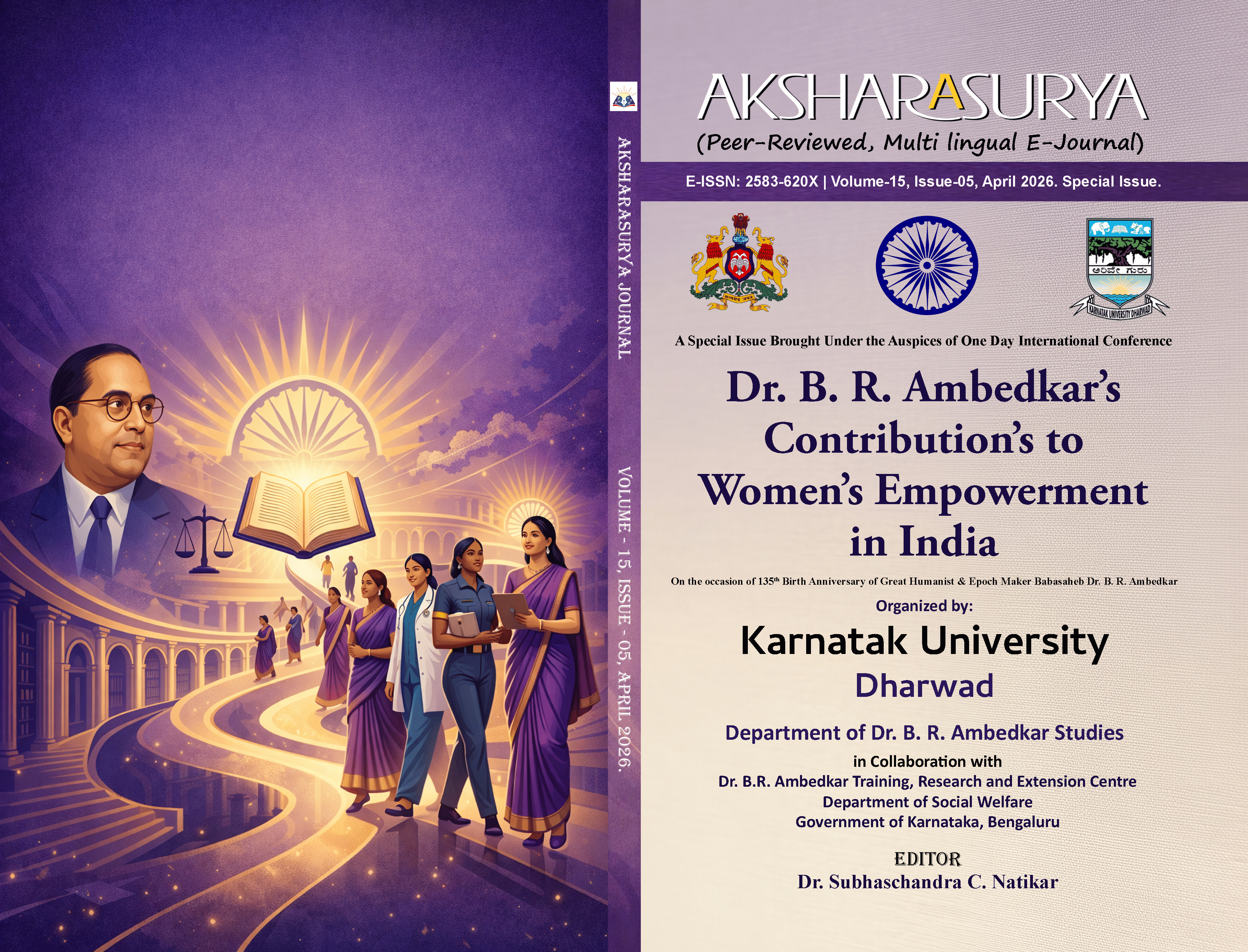
Main Article Content
Abstract
By 2050, older people in India - those sixty and above - are expected to number more than 340 million. Though the Constitution promises fairness, respect, and justice, many seniors still live without support. Especially affected are elders from lower castes, tribal groups, and poor backgrounds. They often deal with being ignored by systems meant to help them. Left out socially, they struggle financially too. Invisible in policies, their voices rarely shape decisions. Looking at this issue today means seeing it through ideas put forward by B.R. Ambedkar. His view of justice demands dismantling rigid hierarchies. It also centers on upholding what the Constitution stands for morally. Only then can society become genuinely equal. Looking at how elders get pushed aside through Ambedkar’s eyes reveals deeper problems than simple neglect. His challenge to Hindu hierarchy, together with a vision where unity holds democracy together, opens new paths forward. Rights for those crushed by power gaps mattered deeply to him - a view that fits today’s aging struggles well. Left unseen, old age hardship ties back to rigid birth-based ranks, male-dominated rules, and profit-first thinking. These were dangers he warned would hollow out fairness if left unchecked. Actual numbers, laws like the 2007 act meant to support seniors, plus flaws in current aid plans help build a fresh approach. One shaped by his ideas places dignity, shared duty, and government answerability at its core. When beliefs about who matters do not shift - along with systems built on outdated assumptions - promises made long ago lose meaning. The dream written into India’s founding charter stays distant unless change runs deep.
Article Details
Section

This work is licensed under a Creative Commons Attribution-NonCommercial-ShareAlike 4.0 International License.
How to Cite
References
Ambedkar, B. R. (1936). Annihilation of caste (Annotated critical ed., 2014). Navayana.
Ambedkar, B. R. (1945). What Congress and Gandhi have done to the untouchables. Thacker & Co.
Ambedkar, B. R. (1949). Constituent Assembly Debates, Vol. XI. Lok Sabha Secretariat.
Government of India. (2007). The Maintenance and Welfare of Parents and Senior Citizens Act, 2007. Ministry of Social Justice and Empowerment.
HelpAge India & UNFPA. (2022). State of elderly in India 2022. HelpAge India.
International Institute for Population Sciences (IIPS). (2021). Longitudinal ageing study in India (LASI), Wave 1, 2017-18. Ministry of Health and Family Welfare.
International Labour Organization (ILO). (2020). World social protection report 2020-22: Social protection at the crossroads-In pursuit of a better future. ILO.
Omvedt, G. (2004). Ambedkar: Towards an enlightened India. Viking/Penguin Books India.
Thorat, S., & Kumar, N. (Eds.). (2008). B.R. Ambedkar: Perspectives on social exclusion and inclusive policies. Oxford University Press.
United Nations Population Fund (UNFPA). (2023). India ageing report 2023: Caring for our elders. UNFPA India.