
Dr. B.R. Ambedkar’s Speeches on Women Empowerment: A Catalyst for Social Justice and Constitutional Equality.
Article Sidebar
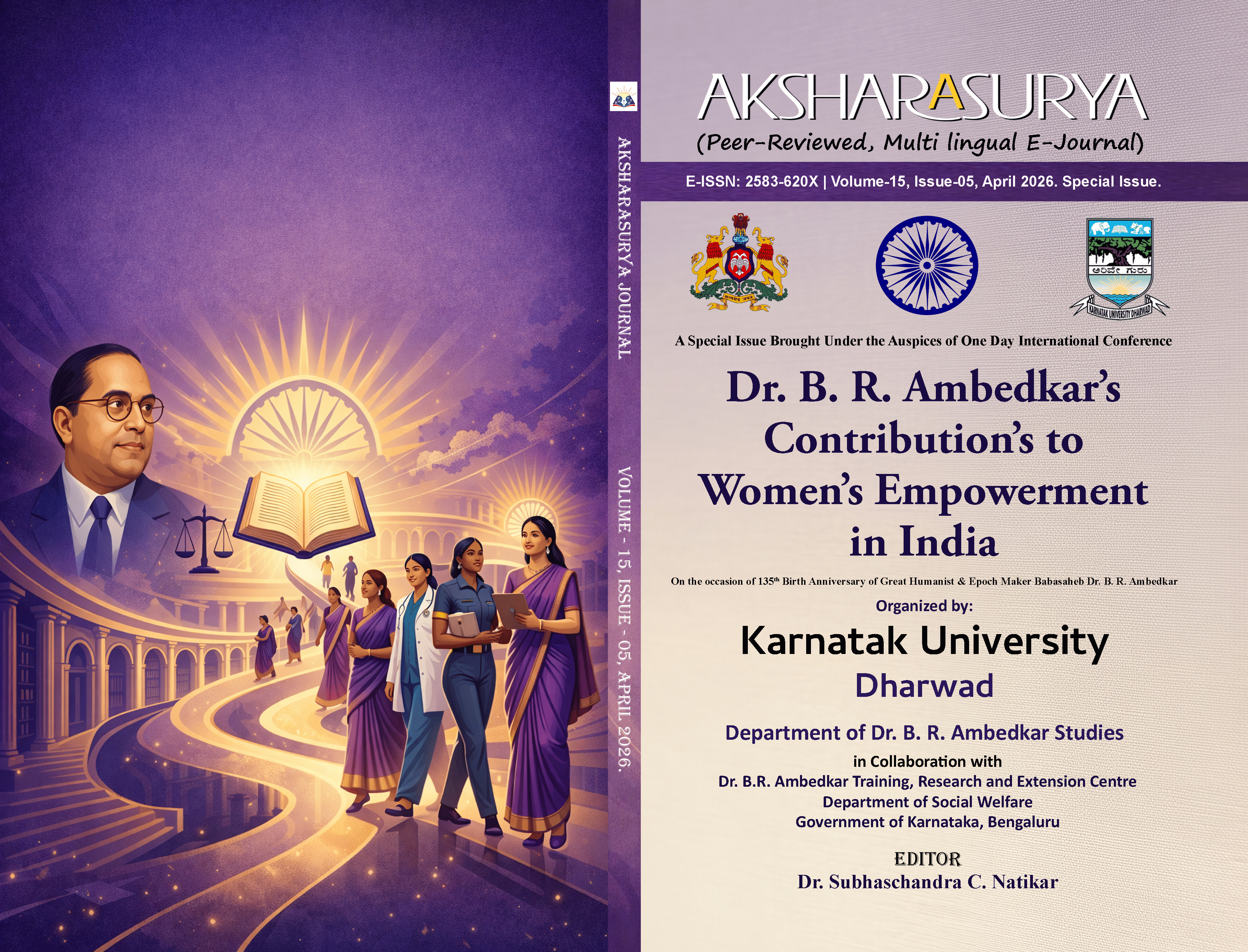
Main Article Content
Abstract
Dr. Bhimrao Ramji Ambedkar, the chief architect of the Indian Constitution and a relentless champion of social justice, viewed women’s empowerment as inseparable from the annihilation of caste and the establishment of true democracy. Through his speeches, particularly at the All-India Depressed Classes Women’s Conference in 1942 and his parliamentary interventions on the Hindu Code Bill (1948–1951), Ambedkar articulated a radical vision of gender equality rooted in education, legal rights, and social reform. This article examines these key speeches, analyzes their core themes-such as the interdependence of caste and gender oppression, the necessity of women’s education and economic independence, and the rejection of patriarchal Hindu legal traditions-and evaluates their enduring legacy in shaping India’s constitutional framework and personal laws. Drawing on primary sources from Dr. Babasaheb Ambedkar: Writings and Speeches (BAWS), the analysis underscores Ambedkar’s insistence that no community or nation can progress without elevating its women.
Article Details
Section

This work is licensed under a Creative Commons Attribution-NonCommercial-ShareAlike 4.0 International License.
How to Cite
References
Ambedkar, B.R. (1942). Speech at the All-India Depressed Classes Women’s Conference, Nagpur, July 20. In Dr. Babasaheb Ambedkar: Writings and Speeches, Vol. 17.
Ambedkar, B.R. (Various dates, 1948–1951). Speeches on the Hindu Code Bill. In Dr. Babasaheb Ambedkar: Writings and Speeches, Vol. 14.
Ambedkar, B.R. (1916). “Castes in India: Their Mechanism, Genesis and Development.” In Dr. Babasaheb Ambedkar: Writings and Speeches, Vol. 1.
Secondary analyses: Gaikwad, S. (2025). “Dr. B.R. Ambedkar: A Women’s Rights Champion.”