
Dr. B. R. Ambedkar’s Unfinished Revolution: Women’s Rights and the Politics of the Hindu Code Bill
Article Sidebar
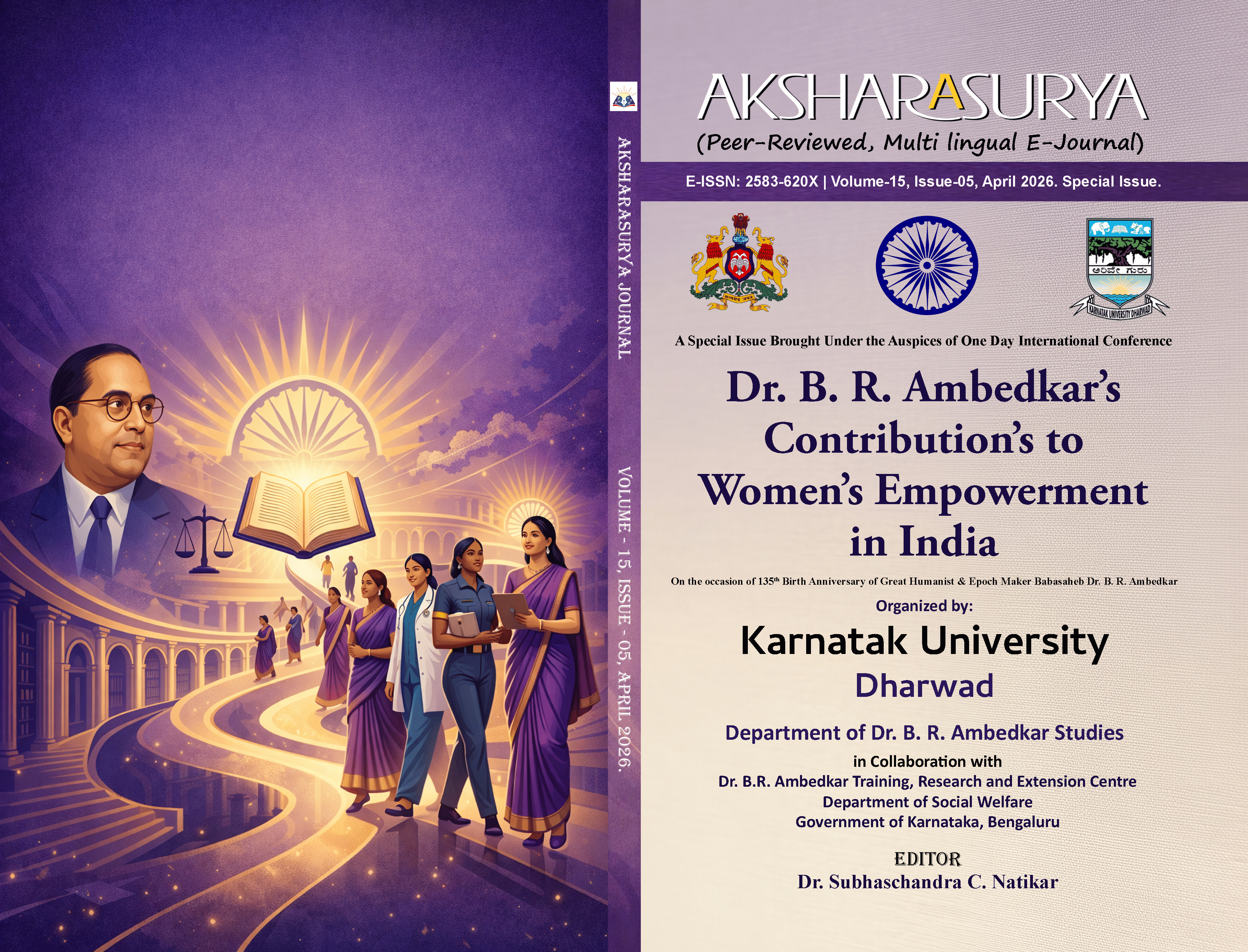
Main Article Content
Abstract
The Hindu Code Bill represents one of the most significant yet contentious attempts to reform personal laws in modern India, particularly in advancing women’s rights within a deeply patriarchal social structure. Introduced under the leadership of B. R. Ambedkar, the Bill sought to transform Hindu personal law by granting women rights to property, inheritance, divorce, and adoption. This paper critically examines the ideological foundations, political resistance, and long-term implications of the Hindu Code Bill. It argues that the Bill was not merely a legal reform but a radical project aimed at dismantling gender inequality rooted in caste and religious traditions. By situating the Bill within Ambedkar’s broader philosophy of social justice, the study highlights its enduring relevance in contemporary debates on gender equality in India.
Article Details
Section

This work is licensed under a Creative Commons Attribution-NonCommercial-ShareAlike 4.0 International License.
How to Cite
References
Ambedkar, B. R. (1948–1951). Speeches and Debates on the Hindu Code Bill.
Agnes, F. (1999). Law and Gender Inequality: The Politics of Women’s Rights in India.
Menski, W. (2003). Hindu Law: Beyond Tradition and Modernity.
Derrett, J. D. M. (1968). Religion, Law and the State in India.
B. R. Ambedkar (1949). Speeches on Hindu Code Bill.
B. R. Ambedkar (1947). States and Minorities.
Agnes, Flavia (1999). Law and Gender Inequality: The Politics of Women’s Rights in India.
Parashar, Archana (1992). Women and Family Law Reform in India.
Government of India (1955–56). Hindu Law Reform Acts.