
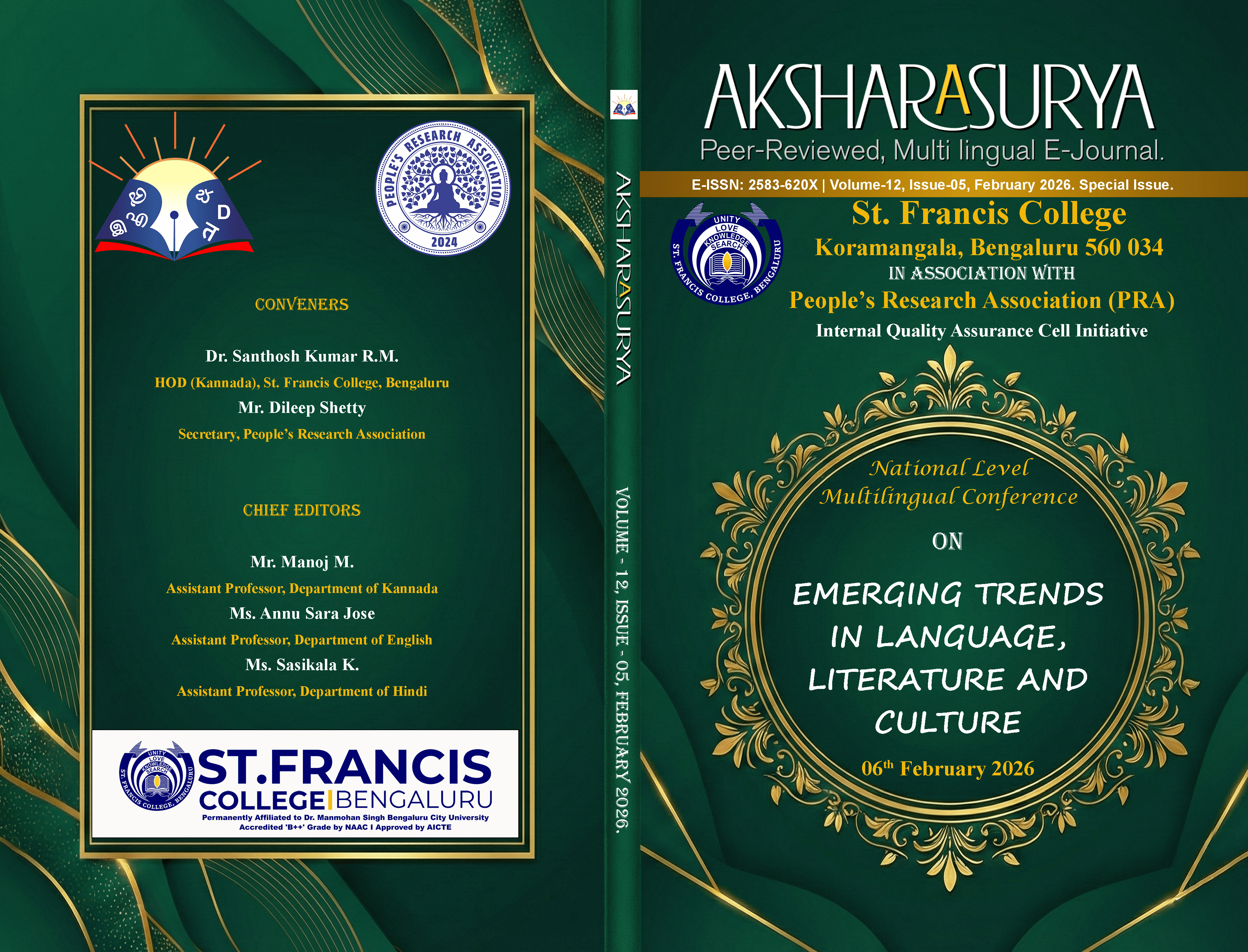
Published: 2026-02-28
Table of Contents
Research Articles
ಏಕವ್ಯಕ್ತಿ ನಾಟಕಗಳ ಇತಿಹಾಸ: ಒಂದು ತಾತ್ವಿಕ ಅಧ್ಯಯನ
01 to 08
ನಾಟಕಕಲೆಯು (Theatre) ಮಾನವನ ಅಂತರಂಗ ಮತ್ತು ಬಹಿರಂಗ ಲೋಕದ ಸಂಕೀರ್ಣ ಸಂಬಂಧವನ್ನು ಪ್ರತಿಬಿಂಬಿಸುವ ಜೀವಂತ ಮಾಧ್ಯಮವಾಗಿದೆ. ಈ ಕಲಾ ಪ್ರಕಾರದ ವಿಕಾಸಯಾತ್ರೆಯಲ್ಲಿ ವಿಭಿನ್ನ ಪ್ರಯೋಗಶೀಲ ರೂಪಗಳು ಅಸ್ತಿತ್ವಕ್ಕೆ ಬಂದಿವೆ. ಏಕವ್ಯಕ್ತಿ ನಾಟಕ (Monologue/One-person Play) ವು ಅವುಗಳಲ್ಲಿ ಅತ್ಯಂತ ವಿಶಿಷ್ಟವಾದ ಪ್ರಕಾರವಾಗಿದ್ದು, ನಟನ ಮನಸ್ಸಿನ ಆಂತರಿಕ ಸಂಭಾಷಣೆ (Internal Dialogue), ಪ್ರಜ್ಞೆ ಮತ್ತು ಸುಪ್ತಪ್ರಜ್ಞೆಯ ಕಲಾತ್ಮಕ ಅಭಿವ್ಯಕ್ತಿಯಾಗಿದೆ. ಇದು ಕೇವಲ ನಟನ ತಾಂತ್ರಿಕ ಕೌಶಲ್ಯ ಪ್ರದರ್ಶನವಲ್ಲ; ಬದಲಾಗಿ ಸಾಹಿತ್ಯ, ಮನೋವಿಜ್ಞಾನ, ಸಮಾಜಶಾಸ್ತ್ರ ಮತ್ತು ತಾತ್ವಿಕ ನೈಜತೆಯ ಸೂಕ್ಷ್ಮ ಸಂಯೋಜನೆಯಾಗಿದೆ. ಈ ಪ್ರಬಂಧವು ಏಕವ್ಯಕ್ತಿ ನಾಟಕದ ತಾತ್ವಿಕ ಉಗಮ, ಅದರ ಜಾಗತಿಕ ವಿಕಾಸದ ಹಂತಗಳು, ಪಾಶ್ಚಾತ್ಯ ಮತ್ತು ಭಾರತೀಯ ರಂಗಭೂಮಿಗಳ ಪರಂಪರೆಯಲ್ಲಿ ಅದರ ಸ್ಥಾನ ಮತ್ತು ವಿಶೇಷವಾಗಿ ಕನ್ನಡ ರಂಗಭೂಮಿಯಲ್ಲಿನ ಮಹತ್ವದ ಪ್ರಯೋಗಗಳು ಹಾಗೂ ಅದರ ಸಮಕಾಲೀನ ಸವಾಲುಗಳ ಕುರಿತು ಆಳವಾದ ವಿಶ್ಲೇಷಣಾತ್ಮಕ ಅಧ್ಯಯನ ನಡೆಸುತ್ತದೆ.
ಭಾಷಾ ತಂತ್ರಜ್ಞಾನ ಮತ್ತು ಕೃತಕ ಬುದ್ಧಿಮತ್ತೆ
09 to 16
ಇಂದಿನ ಆಧುನಿಕ ಯುಗದಲ್ಲಿ ತಂತ್ರಜ್ಞಾನದ ಪ್ರವಾಹವು ವೇಗವಾಗಿ ಸಾಗುತ್ತಿದ್ದು, ಕೃತಕ ಬುದ್ಧಿಮತ್ತೆಯು (Artificial Intelligence) ಭಾಷೆ ಮತ್ತು ಸಾಹಿತ್ಯ ಕ್ಷೇತ್ರಗಳನ್ನು ಆವರಿಸಿಕೊಳ್ಳುತ್ತಿದೆ. ಮನುಷ್ಯನ ಬೌದ್ಧಿಕ ಸಾಮರ್ಥ್ಯವನ್ನು ಮೀರಿ ಬೆಳೆಯುತ್ತಿರುವ ಈ ತಂತ್ರಜ್ಞಾನವು, ವ್ಯಾಕರಣ, ಕವಿತೆ ಮತ್ತು ಕಲೆಗಳ ರಚನೆಯಲ್ಲಿಯೂ ತನ್ನ ಛಾಪು ಮೂಡಿಸುತ್ತಿದೆ. ಯಂತ್ರ ಕಲಿಕೆ ಮತ್ತು ಆಳವಾದ ಕಲಿಕೆಯ ತತ್ವಗಳ ಮೇಲೆ ಕಾರ್ಯನಿರ್ವಹಿಸುವ ಎಐ, ವೈದ್ಯಕೀಯ, ವಾಣಿಜ್ಯ ಮತ್ತು ದೈನಂದಿನ ಜೀವನದಲ್ಲಿ ಕ್ರಾಂತಿಕಾರಿ ಬದಲಾವಣೆಗಳನ್ನು ತಂದಿದೆ. ಇದು ಉದ್ಯೋಗ ನಷ್ಟದಂತಹ ಆತಂಕಗಳನ್ನು ಸೃಷ್ಟಿಸಿದರೂ, ದತ್ತಾಂಶ ವಿಶ್ಲೇಷಣೆ ಮತ್ತು ತಾಂತ್ರಿಕ ಪ್ರಗತಿಯ ಮೂಲಕ ಮಾನವನ ಜೀವನಮಟ್ಟವನ್ನು ಸುಧಾರಿಸುವಲ್ಲಿ ಮಹತ್ತರ ಪಾತ್ರ ವಹಿಸುತ್ತದೆ. ಭಾರತವು ಈ ಜ್ಞಾನಾಧಾರಿತ ಕ್ಷೇತ್ರದಲ್ಲಿ ಜಾಗತಿಕವಾಗಿ ಮುಂಚೂಣಿಗೆ ಬರುವ ಸಾಧ್ಯತೆಗಳನ್ನು ಮತ್ತು ಅದರ ಸವಾಲುಗಳನ್ನು ಇಲ್ಲಿ ಚರ್ಚಿಸಲಾಗಿದೆ.
ಪರಿಸರ ಸಾಹಿತ್ಯ ಮತ್ತು ಹಸಿರು ಚಿಂತನೆ: ಪೂರ್ಣಚಂದ್ರ ತೇಜಸ್ವಿಯವರ ಪರಿಸರ ಜಾಗೃತಿ ಚಿಂತನೆ
17 to 21
ಕನ್ನಡದ ಶ್ರೇಷ್ಠ ಸಾಹಿತಿ ಪೂರ್ಣಚಂದ್ರ ತೇಜಸ್ವಿಯವರು ತಮ್ಮ ಬದುಕನ್ನೇ ಪರಿಸರದ ಪ್ರಯೋಗಶಾಲೆಯನ್ನಾಗಿ ಮಾಡಿಕೊಂಡವರು. ಕೇವಲ ಭಾವನಾತ್ಮಕವಾಗಿರದೆ, ವೈಜ್ಞಾನಿಕ ದೃಷ್ಟಿಕೋನದಿಂದ ಪ್ರಕೃತಿಯನ್ನು ಗ್ರಹಿಸಿದ ಅವರ ವಿಶಿಷ್ಟ ನಿಲುವುಗಳನ್ನು ಇಲ್ಲಿ ಚರ್ಚಿಸಲಾಗಿದೆ. ಸಹ್ಯಾದ್ರಿ ಪರ್ವತ ಶ್ರೇಣಿಗಳ ಮಹತ್ವ, ಮರಗಳ ನಾಶದಿಂದಾಗುವ ಸೂಕ್ಷ್ಮ ಜೀವಿಗಳ ಸಂಕಷ್ಟ ಹಾಗೂ ಅವೈಜ್ಞಾನಿಕ ಅಭಿವೃದ್ಧಿ ಮಾದರಿಗಳ ಕುರಿತು ತೇಜಸ್ವಿ ಎತ್ತಿದ ಧ್ವನಿ ಇಂದಿಗೂ ಪ್ರಸ್ತುತ. ಮೈಸೂರಿನಿಂದ ಮೂಡಿಗೆರೆಗೆ ಸ್ಥಳಾಂತರಗೊಂಡು ಕೃಷಿ ಮತ್ತು ಛಾಯಾಗ್ರಹಣದ ಮೂಲಕ ಪ್ರಕೃತಿಯೊಂದಿಗೆ ಒಂದಾದ ಅವರ ಜೀವನಶೈಲಿ, ಟ್ರೆಕ್ಕಿಂಗ್ ಮತ್ತು ಮೀನುಗಾರಿಕೆಯ ಹಿಂದಿನ ನೈತಿಕತೆಯನ್ನು ಪ್ರಶ್ನಿಸುವ ಪರಿ ಇಲ್ಲಿ ವ್ಯಕ್ತವಾಗಿದೆ. ಮಾನವನ ಅಸ್ತಿತ್ವಕ್ಕೆ ಪ್ರಕೃತಿಯ ಅನಿವಾರ್ಯತೆಯನ್ನು ಸಾರುವ ಅವರ ‘ಹಸಿರು ಚಿಂತನೆ’ ಮತ್ತು ಕೃತಿಗಳು ಯುವ ಪೀಳಿಗೆಗೆ ಪರಿಸರ ಜಾಗೃತಿಯ ದಾರಿದೀಪವಾಗಿವೆ.
ಪ್ರೊಫೆಸರ್ ಎಡ್ಮಂಡ್ ಜೆ.ಬಿ. ಫ್ರಾಂಕ್ರವರ ಕೃತಿ: ‘ದೇವರ ಸೇವಕ ರೇಮಂಡ್ ಎಫ್.ಸಿ. ಮಸ್ಕರೇನ್ಹಸ್ ಅವರ ಜೀವನ ಚಿತ್ರಣ’
22 to 37
ಪ್ರೊಫೆಸರ್ ಎಡ್ಮಂಡ್ ಜೆ.ಬಿ. ಫ್ರಾಂಕ್ ಅವರು ರಚಿಸಿದ ‘ದೇವರ ಸೇವಕ ರೇಮಂಡ್ ಎಫ್.ಸಿ. ಮಸ್ಕರೇನ್ಹಸ್ ಅವರ ಜೀವನ ಚಿತ್ರಣ’ ಕೃತಿಯು ಓದುಗರಿಗೆ ಒಬ್ಬ ಮಹಾನ್ ಚೇತನದ ಸಮಗ್ರ ಹಾಗೂ ಸಾಕ್ಷ್ಯಾಧಾರಿತ ಪರಿಚಯವನ್ನು ಮಾಡಿಕೊಡುತ್ತದೆ. ಕೊಂಕಣಿ ಕಥೋಲಿಕರ ವಲಸೆ, ಟಿಪ್ಪು ಸುಲ್ತಾನನ ಕಾಲದ ಸೆರೆಯಾಳು ಜೀವನ ಮತ್ತು ಮಸ್ಕರೇನ್ಹಸ್ ಕುಟುಂಬದ ಐತಿಹಾಸಿಕ ಹಿನ್ನೆಲೆಯನ್ನು ಇದು ಒಳಗೊಂಡಿದೆ. ಬೆಂದೂರು ಧರ್ಮಕೇಂದ್ರದ ಗುರುವಿನಿಂದ ಮಂಗಳೂರು ಧರ್ಮಕ್ಷೇತ್ರದ ವಿಕರ್ ಜನರಲ್ ಹುದ್ದೆಯವರೆಗಿನ ರೇಮಂಡರ ಪಯಣ, ಬೆಥನಿ ಸಂಸ್ಥೆಯ ಸ್ಥಾಪನೆ ಮತ್ತು ಸ್ತ್ರೀ ಶಿಕ್ಷಣಕ್ಕಾಗಿ ಅವರು ಕೈಗೊಂಡ ಕ್ರಾಂತಿಕಾರಕ ನಿರ್ಧಾರಗಳನ್ನು ಇಲ್ಲಿ ವಿಶ್ಲೇಷಿಸಲಾಗಿದೆ. ಶೈಕ್ಷಣಿಕ, ಸಾಮಾಜಿಕ ಮತ್ತು ಧಾರ್ಮಿಕ ಕ್ಷೇತ್ರಗಳಲ್ಲಿ ಅವರು ನೀಡಿದ ಕೊಡುಗೆ, ಬಡವರ ಏಳಿಗೆಗಾಗಿ ಪಟ್ಟ ಶ್ರಮ ಹಾಗೂ ಅವರ ಸಂತರ ಪದವಿಯ ಪ್ರಕ್ರಿಯೆಯನ್ನು ಈ ವಿಮರ್ಶೆಯು ಅನಾವರಣಗೊಳಿಸುತ್ತದೆ.
ಹಂದ್ರಾಳರ ಕಥೆಗಳಲ್ಲಿ ಗ್ರಾಮ ಸಂಸ್ಕೃತಿ
38 to 46
ಕನ್ನಡದ ಪ್ರಮುಖ ಕಥೆಗಾರರಾದ ಕೇಶವರೆಡ್ಡಿ ಹಂದ್ರಾಳರ ಸಾಹಿತ್ಯದಲ್ಲಿ ಗ್ರಾಮೀಣ ಸಂಸ್ಕೃತಿಯ ಅನನ್ಯತೆ ಮತ್ತು ಸಂಕೀರ್ಣತೆಗಳನ್ನು ಇಲ್ಲಿ ವಿಶ್ಲೇಷಿಸಲಾಗಿದೆ. ಹಂದ್ರಾಳರು ಬಂಡಾಯ-ದಲಿತ ಸಂವೇದನೆಯ ಹಿನ್ನೆಲೆಯಲ್ಲಿ ಗ್ರಾಮೀಣ ಬದುಕಿನ ವಾಸ್ತವ, ಮೌಖಿಕ ಪರಂಪರೆ, ವಿವಾಹ ಪದ್ಧತಿಗಳು ಹಾಗೂ ಆಚರಣೆಗಳನ್ನು ತಮ್ಮ ಕಥೆಗಳಲ್ಲಿ ಸಮರ್ಥವಾಗಿ ಕಟ್ಟಿಕೊಟ್ಟಿದ್ದಾರೆ. ಸ್ವಾತಂತ್ರ್ಯ ನಂತರದ ಭಾರತದ ಗ್ರಾಮೀಣ ಸ್ಥಿತ್ಯಂತರಗಳು, ರಾಜಕೀಯ ದಬ್ಬಾಳಿಕೆ ಹಾಗೂ ಜಾಗತೀಕರಣದ ಅಡಿಯಲ್ಲಿ ನಶಿಸುತ್ತಿರುವ ಮಾನವೀಯ ಸಂಬಂಧಗಳನ್ನು ಇವರ ಕಥೆಗಳು ಪ್ರತಿರೋಧದ ನೆಲೆಯಲ್ಲಿ ಚಿತ್ರಿಸುತ್ತವೆ. ಮಾಸ್ತಿ, ಕುವೆಂಪು ಮತ್ತು ಕಾರಂತರ ಪರಂಪರೆಯನ್ನು ಮುಂದುವರಿಸುವ ಹಂದ್ರಾಳರು, ಹಳ್ಳಿಯ ಬದುಕು ಮತ್ತು ನಗರ ಸಂಸ್ಕೃತಿಗಳ ನಡುವಿನ ಕೊಂಡಿಯನ್ನು ಗುರುತಿಸುತ್ತಾ, ಶೋಷಿತರ ಧ್ವನಿಯಾಗಿ ಹೇಗೆ ಹೊರಹೊಮ್ಮಿದ್ದಾರೆ ಎಂಬುದರ ಕುರಿತು ಇಲ್ಲಿ ಚರ್ಚಿಸಲಾಗಿದೆ.
ಯುಗದ ಸಾಂಸ್ಕೃತಿಕ ಚಿಂತನೆಯಲ್ಲಿ ವಿಶ್ವಮಾನವ ಮತ್ತು ವಿಶ್ವಧರ್ಮ
47 to 54
ಯುಗಗಳ ಸಾಂಸ್ಕೃತಿಕ ಸಂರಚನೆಯಲ್ಲಿ ಮತ್ತು ಪರಿವರ್ತನೆಯಲ್ಲಿ ಮಾನವತ್ವದಿಂದ ಮೃಗೀಯತ್ವದೆಡೆಗೆ, ಮೃಗೀಯತ್ವದಿಂದ ಮಾನವತ್ವದ ಅನೇಕ ಸಂಘರ್ಷಗಳು ನಡೆಯುತ್ತಲೇ ಬಂದಿವೆ. ಭಾಷೆ, ಧರ್ಮ, ಜಾತಿ, ಪ್ರಭುತ್ವ, ರಾಜಕಾರಣಗಳು ಇದರ ಅಸ್ತ್ರಗಳಾಗಿ ಕಂಡಿವೆ. ಇದರಲ್ಲಿ ಧರ್ಮದ ಶ್ರೇಷ್ಠತೆಯು ಮಾನವತೆಯನ್ನು ಬಿಟ್ಟು ಧರ್ಮದ ರಾಜಕಾರಣಕ್ಕೆ ಅಡಿಪಾಯವಾಗಿ ಮತಬ್ಯಾಂಕ್ ಆಗಿ ರೂಪಾಂತರ ಪಡೆದುಕೊಂಡಿದೆ. ಯುದ್ಧದ ಉನ್ಮಾದಗಳು ಧರ್ಮದ ಮುಖೇನ ಹೊಸ ಅರ್ಥವನ್ನು ವ್ಯಾಖ್ಯಾನಿಸಿಕೊಂಡಿವೆ. ಕುವೆಂಪು ಪ್ರಣೀತ ವಿಶ್ವಮಾನವ ಸಂದೇಶದ ಪಂಚ ಮಂತ್ರಗಳು: ಮನುಜಮತ, ವಿಶ್ವಪಥ, ಸರ್ವೋದಯ, ಸಮನ್ವಯ, ಪೂರ್ಣದೃಷ್ಟಿ. ವಿಶ್ವಮಾನವ ಎಂದರೇನು ಎಂಬುದಕ್ಕೆ ಅತ್ಯಂತ ಸ್ಪಷ್ಟ ಉತ್ತರ ನೀಡುತ್ತದೆ. ಆದರೆ ಇದು ದೇಶ, ಕಾಲ, ಶಿಕ್ಷಣಕ್ಕೆ ಪೂರಕವಾಗಿ ಸಾರ್ವತ್ರಿಕವಾಗಿ ಎಲ್ಲಾ ದೇಶಗಳನ್ನು, ಜನರನ್ನು ಮುಟ್ಟುತ್ತಿಲ್ಲ.
ಪ್ರತಿಯೊಂದು ಮಗುವೂ ಹುಟ್ಟುತ್ತಲೆ ವಿಶ್ವಮಾನವ. ಬೆಳೆಯುತ್ತಾ ನಾವು ಅದನ್ನು ಅಲ್ಪಮಾನವನನ್ನಾಗಿ ಮಾಡುತ್ತೇವೆ. ಮತ್ತೆ ಅದನ್ನು ವಿಶ್ವಮಾನವನನ್ನಾಗಿ ಮಾಡುವುದೇ ವಿದ್ಯೆಯ ಕರ್ತವ್ಯವಾಗಬೇಕು. ಹುಟ್ಟುವಾಗ ವಿಶ್ವಮಾನವನಾಗಿಯೆ ಹುಟ್ಟಿದ ಮಗುವನ್ನು ನಾವು ದೇಶ, ಭಾಷೆ, ಮತ, ಜಾತಿ, ಜನಾಂಗ, ವರ್ಣ ಇತ್ಯಾದಿ ಉಪಾಧಿಗಳಿಂದ ಬದ್ಧನನ್ನಾಗಿ ಮಾಡುತ್ತೇವೆ. ಅವೆಲ್ಲವುಗಳಿಂದ ಪಾರಾಗಿ ಅವನನ್ನು ಬುದ್ಧನನ್ನಾಗಿ ಪರಿವರ್ತಿಸುವುದೆ ನಮ್ಮ ವಿದ್ಯೆ, ಸಂಸ್ಕೃತಿ, ನಾಗರಿಕತೆ ಎಲ್ಲದರ ಆದ್ಯ ಕರ್ತವ್ಯವಾಗಬೇಕು. ಪ್ರಪಂಚದ ಮಕ್ಕಳೆಲ್ಲ ಅನಿಕೇತನರಾಗಬೇಕು. ಲೋಕ ಉಳಿದು ಬಾಳಿ ಬದುಕಬೇಕಾದರೆ ಯಾವ ಭಾವನೆಗಳು ಜಗತ್ತಿನಲ್ಲಿ ಎಲ್ಲ ಮಾನವರಿಗೂ ಅನ್ವಯವಾಗಬಹುದೋ ಅಂತಹ ಭಾವನೆ, ಅಂತಹ ದೃಷ್ಟಿ ಬರಿಯ ಯಾವುದೋ ಒಂದು ಜಾತಿಗೆ, ಒಂದು ಮತಕ್ಕೆ, ಗುಂಪಿಗೆ, ಒಂದು ದೇಶಕ್ಕೆ ಮಾತ್ರ ಅನ್ವಯವಾಗುವುದಿಲ್ಲ. ಸರ್ವಕಾಲಕ್ಕೂ ಅನ್ವಯವಾಗುವ ಇವು ಮೂಲ ಮೌಲ್ಯಗಳು. ಇದನ್ನು ವಿಶ್ವಧರ್ಮ ಎನ್ನುತ್ತೇವೆ, ಇವರನ್ನು ವಿಶ್ವಮಾನವರು ಎಂದು ಗುರುತಿಸುತ್ತೇವೆ. ಈ ಮೌಲ್ಯಗಳು ಮಾನವರನ್ನು ಕೂಡಿಸಿ ಬಾಳಿಸುವತ್ತ ನಡೆದಾವು. ಗುಂಪುಗಾರಿಕೆಗೆಂದೂ ಇವು ತೊಡಗುವುದಿಲ್ಲ. ಅದೇನಿದ್ದರೂ ರಾಜಕೀಯದ ಕರ್ಮ. ವ್ಯಕ್ತಿ ಸ್ವಾತಂತ್ರ್ಯವನ್ನು ನೀಡಿಯೂ ಸಮಷ್ಟಿಯ ಉದ್ಧಾರದ ದೃಷ್ಟಿ ಇದರದು. ಈ ದೃಷ್ಟಿಗೆ ವ್ಯಕ್ತಿಗಳೆಷ್ಟೋ ಅಷ್ಟೂ ವ್ಯಕ್ತಿಗಳು ಸಮಷ್ಟಿಯ ವಿಕಾಸಕ್ಕೆ ಸಾಧಕವಾಗುವುದೂ ಸಾಧ್ಯ. ಈ ದರ್ಶನವನ್ನೇ ವಿಶ್ವಮಾನವ ಗೀತೆ ಸಾರುತ್ತದೆ.
ಕನ್ನಡ ಪ್ರವಾಸ ಸಾಹಿತ್ಯದಲ್ಲಿನ ಕಾವ್ಯ ಮತ್ತು ಕಥೆಯ ಸ್ವರೂಪ
55 to 65
ಕನ್ನಡ ಸಾಹಿತ್ಯದ ಪ್ರಮುಖ ಪ್ರಕಾರಗಳಲ್ಲಿ ಒಂದಾದ ಪ್ರವಾಸ ಸಾಹಿತ್ಯವು ಕಾವ್ಯ ಮತ್ತು ಕಥೆಗಳ ಮೂಲಕ ವಿಶಿಷ್ಟವಾದ ಅಭಿವ್ಯಕ್ತಿಯನ್ನು ಪಡೆದುಕೊಂಡಿದೆ. ಪ್ರವಾಸವು ಕೇವಲ ಸ್ಥಳ ವೀಕ್ಷಣೆಯಾಗಿರದೆ, ಅದು ಆಂತರಿಕ ಹಾಗೂ ಬಾಹ್ಯ ಜಗತ್ತಿನ ಅನ್ವೇಷಣೆಯಾಗಿದೆ ಎಂಬುದನ್ನು ಇಲ್ಲಿ ವಿಶ್ಲೇಷಿಸಲಾಗಿದೆ. ಕುವೆಂಪು, ಬೇಂದ್ರೆ, ಜಿ.ಎಸ್.ಎಸ್ ಅವರ ಕಾವ್ಯಗಳಲ್ಲಿ ಪ್ರಕೃತಿ ಮತ್ತು ಭಾವನೆಗಳ ಸಮ್ಮಿಲನವಿದ್ದರೆ, ವಿ. ಸೀತಾರಾಮಯ್ಯ, ತೇಜಸ್ವಿ ಅವರಂತಹ ಲೇಖಕರ ಗದ್ಯ ಬರಹಗಳಲ್ಲಿ ಐತಿಹಾಸಿಕ, ಸಾಂಸ್ಕೃತಿಕ ಹಾಗೂ ಭೌಗೋಳಿಕ ವಿವರಗಳು ಕಥಾರೂಪದಲ್ಲಿ ಅನಾವರಣಗೊಂಡಿವೆ. ತೀರ್ಥಕ್ಷೇತ್ರಗಳ ದರ್ಶನ, ಪರಿಸರ ಪ್ರೇಮ ಮತ್ತು ಜನಜೀವನದ ವೈವಿಧ್ಯವನ್ನು ಪರಿಚಯಿಸುವಲ್ಲಿ ಈ ಸಾಹಿತ್ಯ ಪ್ರಕಾರವು ಮಹತ್ವದ ಪಾತ್ರ ವಹಿಸುತ್ತದೆ. ಓದುಗರಿಗೆ ಮಾಹಿತಿ ಮತ್ತು ಸೌಂದರ್ಯಾನುಭವವನ್ನು ಏಕಕಾಲದಲ್ಲಿ ನೀಡುವ ಪ್ರವಾಸ ಸಾಹಿತ್ಯದ ಸ್ವರೂಪ ಮತ್ತು ವೈಶಿಷ್ಟ್ಯಗಳನ್ನು ಇಲ್ಲಿ ಗುರುತಿಸಲಾಗಿದೆ.
ಭಾಷೆಯ ಮೇಲೆ ಸಾಮಾಜಿಕ ಮಾಧ್ಯಮದ ಪ್ರಭಾವ
66 to 71
ಇಂದಿನ ಡಿಜಿಟಲ್ ಯುಗದಲ್ಲಿ ಸಾಮಾಜಿಕ ಮಾಧ್ಯಮಗಳು ಮಾನವ ಸಂವಹನದ ಪ್ರಮುಖ ಸಾಧನಗಳಾಗಿ ಪರಿಣಮಿಸಿವೆ. ಫೇಸ್ಬುಕ್, ವಾಟ್ಸಾಪ್, ಇನ್ಸ್ಟಾಗ್ರಾಂ, ಎಕ್ಸ್ (ಟ್ವಿಟ್ಟರ್), ಯೂಟ್ಯೂಬ್ ಮುಂತಾದ ಸಾಮಾಜಿಕ ಮಾಧ್ಯಮ ವೇದಿಕೆಗಳು ಭಾಷೆಯ ಬಳಕೆ, ರೂಪ, ಶೈಲಿ ಹಾಗೂ ಅರ್ಥವ್ಯವಸ್ಥೆಯ ಮೇಲೆ ಆಳವಾದ ಪ್ರಭಾವವನ್ನು ಬೀರುತ್ತಿವೆ. ಭಾಷೆ ಎಂದರೆ ಕೇವಲ ಸಂವಹನದ ಸಾಧನವಲ್ಲ; ಅದು ಸಂಸ್ಕೃತಿ, ಚಿಂತನೆ ಮತ್ತು ಸಾಮಾಜಿಕ ಅಸ್ತಿತ್ವದ ಪ್ರತಿಬಿಂಬವೂ ಹೌದು. ಸಾಮಾಜಿಕ ಮಾಧ್ಯಮಗಳ ವ್ಯಾಪಕ ಬಳಕೆಯಿಂದ ಭಾಷೆಯ ಸಾಂಪ್ರದಾಯಿಕ ರೂಪದಲ್ಲಿ ಹಲವು ಬದಲಾವಣೆಗಳು ಕಂಡುಬರುತ್ತಿವೆ. ಸಂಕ್ಷಿಪ್ತ ಪದಗಳು, ಸಂಕ್ಷೇಪಣಗಳು, ಇಮೋಜಿಗಳು, ಹ್ಯಾಶ್ಟ್ಯಾಗ್ಗಳು ಹಾಗೂ ಮಿಶ್ರಭಾಷೆಯ ಬಳಕೆ ದಿನೇ ದಿನೇ ಹೆಚ್ಚಾಗುತ್ತಿದೆ. ಇದರ ಪರಿಣಾಮವಾಗಿ ಭಾಷೆಯ ಶುದ್ಧತೆ, ವ್ಯಾಕರಣಾತ್ಮಕತೆ ಮತ್ತು ಶೈಲಿಯ ಮೇಲಿನ ಗಮನ ಕಡಿಮೆಯಾಗುತ್ತಿರುವುದನ್ನೂ ಗಮನಿಸಬಹುದು.
ಅದರೊಂದಿಗೆ, ಸಾಮಾಜಿಕ ಮಾಧ್ಯಮಗಳು ಭಾಷೆಯನ್ನು ಜನಸಾಮಾನ್ಯರಿಗೆ ಹತ್ತಿರ ಮಾಡುವಲ್ಲಿ ಮಹತ್ವದ ಪಾತ್ರ ವಹಿಸುತ್ತಿವೆ. ಪ್ರಾದೇಶಿಕ ಭಾಷೆಗಳು, ಉಪಭಾಷೆಗಳು ಮತ್ತು ಜನಪದ ಭಾಷೆಗಳು ಹೊಸ ಅಭಿವ್ಯಕ್ತಿಯ ವೇದಿಕೆಯನ್ನು ಪಡೆದುಕೊಳ್ಳುತ್ತಿವೆ. ಯುವಜನತೆ ತಮ್ಮ ಭಾವನೆಗಳು, ಅಭಿಪ್ರಾಯಗಳು ಮತ್ತು ಸೃಜನಶೀಲತೆಯನ್ನು ಭಾಷೆಯ ಹೊಸ ರೂಪಗಳಲ್ಲಿ ವ್ಯಕ್ತಪಡಿಸುತ್ತಿದ್ದಾರೆ. ಇದು ಭಾಷೆಯ ವಿಸ್ತರಣೆ ಮತ್ತು ನವೀಕರಣಕ್ಕೆ ಕಾರಣವಾಗಿದ್ದರೂ, ಒಂದೇ ಸಮಯದಲ್ಲಿ ಭಾಷೆಯ ಮಾನದಂಡಗಳ ಕ್ಷಯದ ಭೀತಿಯನ್ನೂ ಉಂಟುಮಾಡುತ್ತಿದೆ. ಹೀಗಾಗಿ ಸಾಮಾಜಿಕ ಮಾಧ್ಯಮಗಳ ಪ್ರಭಾವವನ್ನು ಭಾಷೆಯ ಅಭಿವೃದ್ಧಿ ಮತ್ತು ಭಾಷಾ ಸಂರಕ್ಷಣೆಯ ದೃಷ್ಟಿಕೋನದಿಂದ ಸಮತೋಲನವಾಗಿ ವಿಶ್ಲೇಷಿಸುವ ಅಗತ್ಯವಿದೆ. ಈ ಅಧ್ಯಯನವು ಸಾಮಾಜಿಕ ಮಾಧ್ಯಮಗಳು ಭಾಷೆಯ ಮೇಲೆ ಬೀರುವ ಧನಾತ್ಮಕ ಹಾಗೂ ನಕಾರಾತ್ಮಕ ಪರಿಣಾಮಗಳನ್ನು ಸಮಗ್ರವಾಗಿ ವಿಶ್ಲೇಷಿಸುವ ಪ್ರಯತ್ನವಾಗಿದೆ.
ಪಾಚಿಗಟ್ಟಿದ ಪಾಗಾರ ಕೃತಿಯಲ್ಲಿ ಮಾತೃಮೂಲೀಯ ನೆಲೆಗಳು
72 to 81
ಭಾರತೀಯ ಸಾಮಾಜಿಕ ಇತಿಹಾಸದಲ್ಲಿ ಕರಾವಳಿಯ ಮಾತೃಮೂಲೀಯ ವ್ಯವಸ್ಥೆ ಮತ್ತು ಅದರ ಸಾಂಸ್ಕೃತಿಕ ಮೌಲ್ಯಗಳು ವಿಶಿಷ್ಟ ಸ್ಥಾನವನ್ನು ಪಡೆದಿವೆ. ಮಿತ್ರಾ ವೆಂಕಟ್ರಾಜ್ ಅವರ ‘ಪಾಚಿಗಟ್ಟಿದ ಪಾಗಾರ’ ಕಾದಂಬರಿಯು ಈ ವ್ಯವಸ್ಥೆಯು ಪಿತೃಸತ್ತಾತ್ಮಕ ಪಲ್ಲಟಗಳಿಗೆ ಒಳಗಾಗುತ್ತಿರುವ ಸಂಕ್ರಮಣ ಕಾಲದ ತಲ್ಲಣಗಳನ್ನು ಸಮರ್ಥವಾಗಿ ಚಿತ್ರಿಸುತ್ತದೆ. ಕುಟುಂಬದ ಕೇಂದ್ರವಾಗಿರುವ ತಾಯಿಯ ಮೌನ, ಸಹನೆ ಮತ್ತು ಆಂತರಿಕ ಸಂಘರ್ಷಗಳು ಇಲ್ಲಿ ಪ್ರಧಾನವಾಗಿ ಚರ್ಚಿತವಾಗಿವೆ. ‘ಪಾಗಾರ’ ಎಂಬುದು ಕೇವಲ ಭೌತಿಕ ಗಡಿಯಾಗಿರದೆ, ಸ್ತ್ರೀ ಸ್ವಾತಂತ್ರ್ಯದ ಮೇಲಿರುವ ಸಾಮಾಜಿಕ ನಿಯಂತ್ರಣದ ಪ್ರಬಲ ರೂಪಕವಾಗಿದೆ ಎಂಬುದನ್ನು ಇಲ್ಲಿ ವಿಶ್ಲೇಷಿಸಲಾಗಿದೆ. ಕರಾವಳಿಯ ಇತರ ಸಾಹಿತ್ಯ ಕೃತಿಗಳೊಂದಿಗೆ ತೌಲನಿಕವಾಗಿ ಪರಿಶೀಲಿಸುತ್ತಾ, ಈ ಕೃತಿಯು ಒಂದು ಸಂಸ್ಕೃತಿಯ ಮೌನ ಇತಿಹಾಸ ಮತ್ತು ಮಹಿಳಾ ಅಸ್ತಿತ್ವದ ಪಲ್ಲಟಗಳನ್ನು ಹೇಗೆ ದಾಖಲಿಸುತ್ತದೆ ಎಂಬುದರ ಮೇಲೆ ಬೆಳಕು ಚೆಲ್ಲಲಾಗಿದೆ. ಮಾತೃಮೂಲೀಯ ನೆಲೆಗಳ ಕುಸಿತ ಮತ್ತು ಸಮಕಾಲೀನ ವಾಸ್ತವದ ಸಂಘರ್ಷವನ್ನು ಅರ್ಥಮಾಡಿಕೊಳ್ಳಲು ಈ ಅಧ್ಯಯನವು ಮಹತ್ವದ್ದಾಗಿದೆ.
ಶಿಕ್ಷಣದಲ್ಲಿ ಭಾಷಾ ವೈವಿಧ್ಯತೆ ಮತ್ತು ಸಾಹಿತ್ಯದ ಪ್ರಭಾವ
82 to 90
ಭಾಷೆ ಮಾನವನ ಸಂವಹನದ ಅಸ್ತ್ರ ಮಾತ್ರವಲ್ಲದೆ ಅಭಿವ್ಯಕ್ತಿಯ ಮೂಲ ಸಾಧನವಾಗಿದ್ದು, ಅದು ಕೇವಲ ಸಂವಹನದ ಸಾಧನವಲ್ಲ, ವ್ಯಕ್ತಿಯ ಚಿಂತನೆ, ಸಂಸ್ಕೃತಿ ಮತ್ತು ಜ್ಞಾನವನ್ನು ರೂಪಿಸುವ ಶಕ್ತಿಯಾಗಿದೆ. ಭಾರತವು ಬಹುಭಾಷಾ ರಾಷ್ಟ್ರವಾಗಿರುವುದರಿಂದ ಶಿಕ್ಷಣ ಕ್ಷೇತ್ರದಲ್ಲಿಯೂ ಭಾಷಾ ವೈವಿಧ್ಯತೆ ಪ್ರಮುಖ ಸ್ಥಾನವನ್ನು ಪಡೆದುಕೊಂಡಿದೆ. ಸಾಹಿತ್ಯವು ಭಾಷೆಯ ಸೃಜನಾತ್ಮಕ ರೂಪವಾಗಿದ್ದು ವಿದ್ಯಾರ್ಥಿಗಳ ವ್ಯಕ್ತಿತ್ವ ವಿಕಸನ, ಭಾವನಾತ್ಮಕ ಬೆಳವಣಿಗೆ ಹಾಗೂ ನೈತಿಕ ಮೌಲ್ಯ ನಿರ್ಮಾಣದಲ್ಲಿ ಮಹತ್ವದ ಪಾತ್ರ ವಹಿಸುತ್ತದೆ. ಯಾವುದೇ ಒಂದು ಪ್ರದೇಶದ ಇತರೆ ವ್ಯವಸ್ಥೆಗಳಂತೆ ನಮ್ಮ ಭಾವನೆಗಳನ್ನು ಬೇರೊಬ್ಬರೊಂದಿಗೆ ಹಂಚಿಕೊಳ್ಳುವಾಗ ಪ್ರತಿಯೊಂದು ಭಾಷೆಗೂ ಅದರದೇ ಆದ ಒಂದು ವ್ಯವಸ್ಥಿತ ಕ್ರಮ ಇರುತ್ತದೆ. ವಿವಿಧ ಜನಾಂಗದವರು ಎಲ್ಲೇ ವಾಸಿಸುತ್ತಿದ್ದರೂ ನಿತ್ಯ ಬಳಸುವ ಭಾಷೆ ಅಲ್ಪ ಸ್ವಲ್ಪ ವ್ಯತ್ಯಾಸವಿದ್ದರೂ ಬಳಕೆಯ ಉಚ್ಚಾರ ಮತ್ತು ಬರವಣಿಗೆಯ ಪದ್ಧತಿ ಏಕರೂಪದ್ದಾಗಿರುತ್ತದೆ. ಸಮಾಜದ ಸದಸ್ಯರ ಮಧ್ಯೆ ಸಂಪರ್ಕ ಸಾಧಿಸುವುದೇ ಭಾಷೆಯ ಪ್ರಮುಖ ಉದ್ದೇಶವಾಗಿದೆ. ಭಾಷೆಯ ಮೂಲಕ ಮನುಷ್ಯ ಸಮಾಜದ ನಡುವೆಯೇ ಕರ್ತವ್ಯ ನಿರ್ವಹಿಸುತ್ತಾನೆ. ವ್ಯಕ್ತಿ ವ್ಯಕ್ತಿಗಳ ಮಧ್ಯೆ ಸಂಪರ್ಕವನ್ನು ಬೆಸೆಯುವುದೇ ಭಾಷೆಯ ಪ್ರಮುಖ ಉದ್ದೇಶವಾಗಿದೆ. ಯಾವುದೇ ಒಂದು ಭಾಷೆ ಕಲಿಯಲು ವಯಸ್ಸಿನ ನಿರ್ಬಂಧವಿಲ್ಲ. ವರ್ತಕರು, ತಾವು ವ್ಯಾಪಾರಕ್ಕಾಗಿ ಹೋದ ಕಡೆ ನೆಲೆಸಿದ ಕಡೆ ಅಲ್ಲಿಯ ಭಾಷೆಯನ್ನು ಬಳಕೆಯಿಂದಲೇ ಕಲಿತು ವ್ಯವಹರಿಸುತ್ತಾರೆ. ಆದ್ದರಿಂದ ಭಾಷೆ ವಂಶದಿಂದ ಬರುವಂತಹದ್ದಲ್ಲ ಕಲಿಕೆಯಿಂದ ಬರುವಂತಹದ್ದು. ಆದ್ದರಿಂದ ಮಾನವ ತಾನಿರುವ ಮನೆಯ, ಪರಿಸರದ ಭಾಷೆಯನ್ನು ಸಹಜವಾಗಿ ಕಲಿಯಬಲ್ಲ, ಮಾತನಾಡಬಲ್ಲ ಎಂದು ಚಾಮ್ಸ್ಕಿ ಮತ್ತು ನಂತರದ ಭಾಷಾ ವಿಜ್ಞಾನಿಗಳು ಅಭಿಪ್ರಾಯ ಪಟ್ಟಿದ್ದಾರೆ. ಈ ಲೇಖನವು ಶಿಕ್ಷಣದಲ್ಲಿ ಭಾಷಾ ವೈವಿಧ್ಯತೆಯ ಅರ್ಥ, ಅದರ ಮಹತ್ವ, ಸಾಹಿತ್ಯದ ಪ್ರಭಾವ ಮತ್ತು ಭವಿಷ್ಯದ ಅವಕಾಶಗಳನ್ನು ಒಳಗೊಂಡಿದೆ.
ಒಟ್ಟಾರೆಯಾಗಿ ಶಿಕ್ಷಣದಲ್ಲಿ ಭಾಷಾ ವೈವಿಧ್ಯತೆ ವಿದ್ಯಾರ್ಥಿಗಳ ಚಿಂತನೆ, ಅಭಿವ್ಯಕ್ತಿ ಮತ್ತು ಸಂಸ್ಕೃತಿಯ ಅರಿವನ್ನು ವಿಸ್ತರಿಸುತ್ತದೆ. ಸಾಹಿತ್ಯವು ಭಾಷೆಯ ಸೌಂದರ್ಯ, ಮೌಲ್ಯಗಳು ಹಾಗೂ ಸಾಮಾಜಿಕ ಅನುಭವಗಳನ್ನು ಪರಿಚಯಿಸುತ್ತದೆ. ಭಾಷಾ ವೈವಿಧ್ಯತೆಯೊಂದಿಗೆ ಸಾಹಿತ್ಯ ಅಧ್ಯಯನವು ಸಮಾವೇಶಿತ ಶಿಕ್ಷಣ, ಸೃಜನಶೀಲತೆ ಮತ್ತು ವಿಮರ್ಶಾತ್ಮಕ ಚಿಂತನೆಗೆ ಉತ್ತೇಜನ ನೀಡುತ್ತದೆ.
The Role of Water in Women and Crime: A Blue Humanities Reading of Waterscapes in Damyanti Biswas’ The Blue Bar
91 to 97
Blue humanities is an interdisciplinary field that explores the relationship between water, human life, culture, history and literature. It portrays water as a symbolic element of memory, trauma, renewal or transformation. It reveals that watery spaces expose women’s insecurity and the violence rooted in society. The paper applies the theory in the analysis of The Blue Bar (2023) by Damyanti Biswas, to examine how water has a deep and symbolic connection with a female character named Tara. As a bar dancer, Tara faces a lot of pressure in her life and struggles to survive in the dangerous urban landscape of Mumbai city. She carries emotional wounds from her past caused by bitter experiences of exploitation and insecurity. However, she constantly tries to rebuild herself by finding moments of stability even in chaotic surroundings. Water helps her to heal by keeping her mind steady and offering her a brief moment of peace and focus. Thus, it becomes a source of calmness and mental clarity for Tara. Just as every coin has two sides, watery spaces also have negative aspects that are portrayed in The Blue Bar. The paper aims to highlight the role of water as a witness to crime, since the novel includes crime scenes set near coastal areas. It attempts to reveal how coastal lines and beaches possess the trace of violence in the novel.
Adaptive Leadership in the Age of Artificial Intelligence: Language, Communication, and Cultural Transformation
98 to 103
The rapid integration of Artificial Intelligence (AI) into organizational and social systems has reshaped leadership practices, particularly in relation to language use, communication processes, and cultural engagement. This paper examines the role of adaptive leadership in managing AI-mediated communication environments characterized by technological disruption, linguistic diversity, and evolving cultural norms. Adaptive leadership enables leaders to respond flexibly to change, balance technological efficiency with human values, and foster inclusive and ethical communication. Using a conceptual and interdisciplinary approach, the study explores how AI-driven language technologies influence leadership discourse, decision-making, and organizational culture. The paper highlights the challenges and opportunities presented by AI in leadership communication and emphasizes the importance of adaptability, cultural sensitivity, and ethical responsibility in the digital era.
The Importance of Yogic Science for Humanity in Today’s Era
104 to 115
The escalating crises of the 21st century - psychological distress, ecological collapse, social fragmentation, lifestyle imbalance, and existential disorientation, underscore a significant disparity between swift technological advancement and the development of inner human consciousness, suggesting a crisis that transcends mere systems to touch upon the essence of consciousness itself. In this framework, yogic science, anchored in the Upanishads, the Bhagavad Gita, and Patanjali’s Yoga Sutras provides a thorough and practical approach to holistic human flourishing by merging physical health, mental regulation, ethical discipline, and spiritual insight.
This study explores the philosophical underpinnings and contemporary significance of yogic science through a detailed analytical and interpretative review of classical Sanskrit texts in conjunction with modern research in psychology, neuroscience, and preventive healthcare. It illustrates how yogic principles such as equanimity, disciplined action, ethical conduct, and self-awareness effectively tackle the fundamental causes of contemporary suffering while resonating with modern notions of emotional regulation, resilience, and wellbeing. Backed by citations from Sanskrit verses, thematic charts, and conceptual frameworks, the analysis emphasizes yogic science as a preventive and transformative human science with considerable potential for incorporation into education, healthcare, environmental ethics, and public policy, thereby providing sustainable avenues for both individual and global wellbeing.
Approaches, Innovative Tools – Technologies for English Language Teaching and Learning
116 to 123
The paper aims to spotlight the best version of English Language Teaching Methods, Advanced Tools, Technologies, and Strategies. Business, Teaching, Medical, Law, Politics, Trading, Media, and Science-Technology spheres include the English language to exhibit ideas, state views, and communicate with suitable terminologies, vocabulary, and forms of sentences with meticulous structures and rules of language and grammar components. Hence, teaching the English language becomes and demands enormous prominence, as it serves to accumulate varieties of components in its own systematic contexts and expressions.
The English language is made up of a unique nature consisting of Symbol, Sound, and Sense, in literal terms known as Graphology, Phonology, and Semantics. Further, it contains Paragraphs, Sentences, Clauses, and much more. To execute verbal communication, Dialects, Diction, Vocabulary, Pronunciation, Phonetics, and Expressions are utilised. Besides, to present written/non-verbal communication components such as spellings, handwriting, grammar, punctuation, structure, and paragraph making are keenly observed. Phraseology for Phrases, Morphology for Words, and Orthography for Spellings are the studies which teach the entire major key factors of the English language. Since many of the in-depth mechanisms are inherited in this language, teaching with effective methods plays a major role; with the aid of advanced tools and technologies, the teaching and learning process develops a strong operative mode.
Urban Fears and Subconscious Surrender to Patriarchal Codes: A Study of Chitra Divakaruni’s Novel Sister of My Heart
124 to 133
In this paper, I discuss the fears of women-only families* living in urban spaces and their subconscious surrender to patriarchal codes to defend themselves from both potential and imaginary urban fears. Chitra Divakaruni’s novel Sister of My Heart deals with the fears of the women-only family of the Chatterjees in the big city Calcutta** and its study provides us important material for the discussion. It is believed that urban spaces with well-built civil security systems liberate women from the clutches of patriarchy, offering liberal living conditions and numerous economic opportunities. But this is not entirely true; women in urban spaces suffer a lot of security problems and face a lot of personal safety issues every day. They frequently undergo humiliations, sexist remarks, threats to violate honor, rape, and other kinds of physical and mental violence in public spaces. This kind of insecure position of women makes their life fearful in urban spaces, and they become helpless many times when civil security systems and other law and order enforcing authorities do not offer effective solutions to the issues. So, women take refuge in patriarchal ways to defend themselves from fears and threats of urban spaces, and these things are not desired by women, but they are helpless and they surrender to patriarchal social codes subconsciously.
Influence of Social Media on Language
134 to 142
In recent years before the advent of the media, traditional observation of grammar, sentence structure, spelling etc. were highly acknowledged and adhered to, especially when it comes to written conversations. During this time, people were measured by their mode of creative writings, composure etc. There was no welcoming of errors that lead to misunderstanding of what one was meant to say. However, with the introduction of media communication in the 20th century, the world of language has witnessed a lot of transformation and changes. Some of those changes include the carving of words, particularly shortcuts, abbreviations and acronyms, emojis, etc. that represent and suit the space (media) through which they are used. During this time people no longer follow the diction that defines what was earlier known as the formal way of communication. Users find it however more suitable to use, because of the impacts it has (easy understanding) in the course of the conversation. Social media platforms such as Facebook, Instagram, Twitter (X), and WhatsApp encourage this rapid and interactive informal communication, leading to noticeable changes in vocabulary, grammar, and writing styles. Owing to this fact, this paper examines the influence of social media on language, with reference to the informal English language used in digital communication. The study employs a descriptive qualitative approach and is particularly based on secondary sources like books, journal articles, and scholarly discussions on language and digital media. It focuses primarily on the key linguistic features commonly found in social media communication, which includes abbreviations, slangs, emojis, informal writing styles, and also, code-mixing. This finding indicates that social media is not a tool that creates division in linguistics, particularly on its strict observance of rules, but as a tool that welcomes creativity, efficiency, and emotional expression in communication while contributing to increasing informalization of language. At the same time, particular concerns are drawn regarding the reduced attention to standard grammar, spelling and formal writing conventions. This paper affirms that social media has in no way threatened English language but functions as a dynamic space where language adapts certain changes that enhance communication among people of different backgrounds. Therefore, understanding these changes does not only help us to understand media communication language alone, but leading us to recognize how language continues to evolve in the digital era. By the end of the study submission, it would suffice to welcome media language rather than gazing at it from the optical point of view as a tool that inflicts injuries to the ever-cherished mode of formal conversation. This is highly important because it enables users to communicate effectively with every group of learners.
Neocolonialism and Linguistic Resistance in Ngugi wa Thiong’o’s Devil on the Cross
143 to 146
Language plays a decisive role in the colonial process, functioning as a primary tool for colonizing the minds of the colonized. Even after the departure of colonial rulers, control is often maintained through linguistic and cultural domination. Language is not an isolated medium; it is inseparably connected with literature, culture, religion, and social life. This paper examines Ngũgĩ wa Thiong’o’s critique of neocolonialism with particular reference to Devil on the Cross, highlighting language as a powerful instrument of resistance. Ngũgĩ’s deliberate shift to indigenous language and oral narrative traditions represents a sustained effort to dismantle neocolonial power structures and to re-centre marginalised communities within postcolonial discourse.
Voicing the Voiceless in Geeta Nagabhushana’s Novel Dhange
147 to 155
The evolution of Dalits in literature’s trajectory reveals its capacity for both revolutionary and reactionary actions. The harsh and cruel reality of the existence of the metaphorical Caliban is reflected in Dalit literature’s themes. This is an effort to produce an entirely novel form of writing representative of Dalit writers who believe they can overcome their exclusion and lack of voice. Due to their long history as victims of patriarchal society, Dalit women still have relatively little freedom concerning human rights. Human torture, rapes, killings, and other murders are often the result of the higher castes’ steadfast resistance to their efforts to seize their rights. These are indications that the subalterns are in threat of being killed again, threats caused by the authority of the upper caste. Horrifying representations of concrete emerge in Dalit alter-texts. The extent of violence against women of Dalit origin remains unrecognized and unheard.
Dalit literature seeks to reveal the evil and hypocrisy of the privileged classes and to protest against the existing system of hierarchy that is based on injustice. A journey from idealism to reality based on real-life experiences must be started promptly. Based on a novel Dhange by Geeta Nagabhushan, a Kannada writer, this article explores the impediments to their freedom and the reasons for their choice to speak up.
Folk Narratives in the Modern Era: Adaptation, Transformation, and Continuity
156 to 169
Myths, legends, folktales, proverbs, riddles, and ballads are all examples of folk narratives that have long served as important reservoirs of cultural memory, social values, and community identity. These stories come from oral tradition and contain the moral values, common imagination, and historical experiences of groups of people. With the rise of modernity, including industrialisation, urbanisation, globalisation, widespread literacy, mass media, and digital technologies, folk literature has evolved a lot in both its form and its purpose. This study analyses the adaptation of folk narratives to contemporary contexts while maintaining their traditional structures, exploring the balance between preservation and innovation in narrative practices.
The study takes an interdisciplinary approach by combining folklore studies, cultural anthropology, and postcolonial literary theory. It looks at how old stories are told in new ways, as in books, movies, TV series, and digital media. The analysis demonstrates that contemporary influences may alter the narrative style and content of stories, although they do not affect the fundamental moral and cultural essence of these narratives. Folk literature continues to function as a vehicle for social education, moral reflection, and artistic engagement, while also addressing contemporary socioeconomic realities.
Modernity has transformed the way people tell and talk about traditional stories. In the past, oral storytelling relied on live performances and group participation; presently, it can be found in books, videos, animations, and on the internet. These modifications preserve the fundamental ideas, moral lessons, and creative patterns, but they also add modern topics like gender equality, caring for the environment, social justice, and political critique. Adaptations of Indian folktales, like Tenali Raman or regional tribal legends, use new episodic structures and character development to show how folk stories may be relevant to modern issues while still being interesting.
The study emphasises the role of folk literature as a means for social critique. Modern adaptations combine humour, satire, and allegory from ancient genres to talk about big social issues including corruption, caste and class hierarchies, and destruction to the environment. Digital technologies and social media make storytelling even more democratic by helping communities keep, change, and share their stories with more people. The mix of old and new technologies and folk customs makes cultural exchange, audience participation, and interactive creation better. This keeps folk literature alive.
In short, the research shows how folk stories are still important today and how they can change and adapt throughout time. Modern influences impact how stories are told, how they are passed down, and what subjects they deal with. However, they also make folk literature richer by offering individuals methods to talk about their culture, reflect about morals, and comment on society. The interplay between adaptation and continuity illustrates that folk literature endures as a vibrant cultural practice, proficient in harmonising tradition and modernity, safeguarding social identity, and cultivating moral imagination in a rapidly evolving context.
Women’s Quest for Self-Identity and Emancipation in Manju Kapur’s Difficult Daughters
170 to 175
Indian women novelists have represented women in varied social, emotional, and psychological roles; however, the postcolonial phase marks a decisive shift in the portrayal of female consciousness and resistance. Writers such as Kamala Markandaya, Nayantara Sahgal, Anita Desai, Shashi Deshpande, Bharati Mukherjee, Githa Hariharan, and Manju Kapur foreground women who challenge patriarchal authority and interrogate traditional gender roles. These writers depict women not merely as passive victims but as individuals striving for autonomy, self-identity, and emancipation within restrictive socio-cultural frameworks.
Manju Kapur’s Difficult Daughters presents a nuanced portrayal of women’s struggles against social conventions, familial expectations, and moral constraints. This paper explores the psychological conflict, emotional turmoil, and existential anxiety of the protagonist Virmati in her quest for self-identity. Set against the backdrop of India’s freedom movement and the traumatic Partition of 1947, the novel draws a symbolic parallel between national liberation and a woman’s personal struggle for freedom. The study argues that Kapur presents emancipation as a complex, painful, and morally ambiguous process rather than a simplistic feminist triumph.
Beyond Ritual and Reform: Psychological Trauma and Widowhood in Ghatashraddha and Nathicharami
176 to 186
Widowhood in Indian cinema has often been shown through societal rules, rituals, or moral judgement, while the emotional and psychological experiences of widowed women remain inconspicuous. This study explores how Kannada cinema symbolises widowhood as a form of psychological trauma shaped by silence and emotional restraint. This paper engages in a comparative analysis of Ghatashraddha and Nathicharami, and explores how grief, isolation, and inner conflict are communicated without dramatic dialogue or spectacle. Using Trauma and Affect Theory, through detailed analysis of the film text, this paper explores how signs of trauma emerge subtly in daily practices and habitual gestures. Ghatashraddha presents widowhood as a condition enforced by rigid social and religious practices, where the community dictates and suppresses a woman’s grief. Nathicharami, set in a contemporary urban context, portrays widowhood as an internal struggle, where emotional pain is privately endured despite apparent social progress. In both films, silence evolves as a powerful cinematic tool which defies clear expression and agency. The paper argues that these films experience grief emotionally rather than viewing it from the sidelines. By avoiding melodrama and focusing on mood, stillness, and daily life, Kannada cinema offers a sensitive way of representing women’s mental health. This paper offers critical reading by showing how cinema can humanize psychological trauma through quiet and compassionate storytelling.
Nature’s Voice: A Comparative Study of Eco-spiritualism in Vachanas and Gieve Patel’s ‘On Killing a Tree’
187 to 194
Literary works are very powerful means to explore human relationships with nature. Literature attempts to rediscover the mystery and wonder of the world. Many poets and writers have tried to establish a meaningful relationship between literature and nature. Vachanas are such literary works written by Sharanas and Sharanes. For them, nature is a principal source of inspiration and spiritual enlightenment. They see nature as a living entity and believe that it is endowed with life, feeling, and purpose. Vachanas explore themes of spirituality, social reform, and human condition, often using nature imagery to convey deeper truths. For Vachanakaras, God prevails in every bit of nature.
On the other hand, Gieve Patel’s poem On Killing a Tree vividly describes the process of killing a tree, highlighting the resilience of the tree and the cruelty of human actions. The powerful images and metaphors convey the violent act of man on nature and the severe consequences of such violent actions.
A comparative study of these works explores the attitude of man towards nature, imagery, metaphor, and environmental messages. The paper also searches for a connection between nature and spirituality, emphasizing the sacredness of nature. The paper brings out the combination of ecological awareness with spiritual practices, promoting harmony with nature.
सिनेमा, नाटक और जनसंस्कृति
195 to 202
दादा साहब फालके ने भारतीय सिनेमा की नींव रखी जो बाद के दशकों में बॉलीवुड की दृश्य-शैली ने व्यापक जन-संस्कृति पर असर डाला। समकालीन सिनेमा कभी-कभी प्रतिरोध और सामाजिक विमर्श का स्थल भी रहा है। डिजिटल युग में यह और जटिल हुआ है। दादा साहब फालके ने राजा हरिश्चन्द्र (1913) फिल्म को बनाया और इन्हें ही ‘भारतीय सिनेमा का जनक’ कहा जाता है। उनकी फिल्में और दृश्य-कथा ने फिल्म को एक लोकप्रिय जन-माध्यम के रूप में स्थापित किया। पारसी थिएटर, लोक-नाट्य और शास्त्रीय नाट्य से प्रेरित कथा-शैलियाँ, गीत-संगीत और भावनात्मक ढाँचे ने हिंदी सिनेमा की ‘म्यूजिकल-ड्रामा’ परंपरा को जन्म दिया। फिल्मी सितारों ने सार्वजनिक पहचान और प्रतीकात्मक नेतृत्व का काम किया। वे फैशन, बोलचाल और सामाजिक आकांक्षाओं के मॉडल बने। स्टार-इमेज का जन-संस्कृति पर दीर्घकालिक प्रभाव है, वे न केवल मनोरंजन देते हैं बल्कि सामाजिक आदर्शों और नैतिक विमर्शों को भी आकार देते हैं। भारतीय लोकप्रिय फिल्में समानांतर रूप से नुकसानदेह रूढ़ियों को प्रतिबिंबित भी करती हैं और चुनौती भी देती हैं। फिल्में सामाजिक विमर्शों का एक प्लेटफ़ॉर्म बन चुकी हैं। जैसे रंग दे बसंती, स्वदेश, चक दे! इंडिया, तारे ज़मीन पर आदि ने नागरिकता, लैंगिकता, शिक्षा और न्याय पर सार्वजनिक बहसें उत्पन्न कीं। लोकप्रिय फिल्में सार्वजनिक मनोवृत्ति और नीति-वार्ता को प्रभावित कर सकती हैं। 1990 के बाद आर्थिक उदारीकरण और ग्लोबल मीडिया के प्रभाव से भारतीय सिनेमा में कॉरपोरेटीकरण, ब्रांडिंग, और वैश्विक मिश्रण की प्रवृत्तियाँ आईं। बॉलीवुड की दृश्य भाषा का व्यापक सामाजिक और व्यापारिक विस्तार जो अन्य जन-दृश्यों पर भी दिखाई देता है।
भाषा पर सामाजिक मीडिया का प्रभाव
203 to 210
सोशल मीडिया आधुनिक विश्व में संचार, शिक्षा और ज्ञान के आदान-प्रदान के एक प्रमुख माध्यम के रूप में उभरा है। इसने भाषा के स्वरूप और प्रयोग पर गहरा प्रभाव डालते हुए क्षेत्रीय भाषाओं को एक वैश्विक मंच प्रदान किया है। भारत के ग्रामीण क्षेत्रों में डिजिटल साक्षरता, कृषि संबंधी जानकारी और ई-गवर्नेंस सेवाओं को जन-जन तक पहुँचाने में सोशल मीडिया की भूमिका अत्यंत महत्वपूर्ण है। कृत्रिम बुद्धिमत्ता (AI), मशीन अनुवाद और वॉयस टेक्नोलॉजी जैसी तकनीकों ने भाषाई बाधाओं को दूर कर मानव और मशीन के बीच संवाद को सुगम बनाया है। तकनीकी प्रगति भाषाई संरक्षण और सामाजिक सशक्तिकरण में कैसे सहायक है, इसका विवेचन यहाँ किया गया है।
आधुनिक हिंदी नाटकों की रंगचेतना और रंगमंच
211 to 217
हिंदी नाटकों और रंगमंच का संबंध पुरातन काल से ही अत्यंत घनिष्ठ रहा है, जो संस्कृत और लोक नाट्य परंपराओं से विकसित होकर आधुनिक काल तक पहुँचा है। पारसी रंगमंच के व्यावसायिक दौर के बाद, भारतेंदु हरिश्चंद्र और जयशंकर प्रसाद ने हिंदी रंगमंच को साहित्यिक और कलात्मक आधार प्रदान किया। स्वतंत्रता के पश्चात, विशेषकर 1950 के बाद, हिंदी नाटकों में युगান্তकारी परिवर्तन आए। मोहन राकेश, धर्मवीर भारती और सुरेंद्र वर्मा जैसे नाटककारों ने पाश्चात्य नाट्य शैलियों (जैसे इब्सन और एब्सर्ड थियेटर) और भारतीय परंपराओं का समन्वय करते हुए ‘आधे-अधूरे’ और ‘अंधा युग’ जैसी कालजयी रचनाएँ दीं। आधुनिक रंगचेतना में नाटक केवल पाठ्य वस्तु न रहकर, रंगमंच की तकनीकी आवश्यकताओं, प्रकाश व्यवस्था और अभिनय के अनुरूप सृजित किए जाने लगे हैं, जिससे नाटककार और रंगकर्मी के बीच का संबंध और अधिक गहरा हुआ है।
भगवान दास मोरवाल जी के उपन्यासों में लोक परम्परा और आधुनिक यथार्थ
218 to 226
समकालीन हिंदी कथा-साहित्य में भगवान दास मोरवाल के उपन्यास लोक परंपरा और आधुनिक यथार्थ के द्वन्द्वात्मक संबंधों को रेखांकित करते हैं। मेवात क्षेत्र की पृष्ठभूमि पर आधारित इन कृतियों में ग्रामीण जीवन, पितृसत्तात्मक ढाँचे और बाज़ारवादी शक्तियों के बीच पिसते आम आदमी की व्यथा का मार्मिक चित्रण मिलता है। यहाँ लोक-संस्कृति, भाषा और रीति-रिवाज केवल परिवेश निर्माण नहीं करते, बल्कि वैश्वीकरण और राजनीतिक भ्रष्टाचार के दौर में अस्मिता और प्रतिरोध का स्वर बन जाते हैं। यह अध्ययन स्पष्ट करता है कि मोरवाल के साहित्य में परंपरा और आधुनिकता के बीच एक निरंतर संवाद और संघर्ष विद्यमान है, जो समाज की विडंबनाओं को उजागर करता है।