
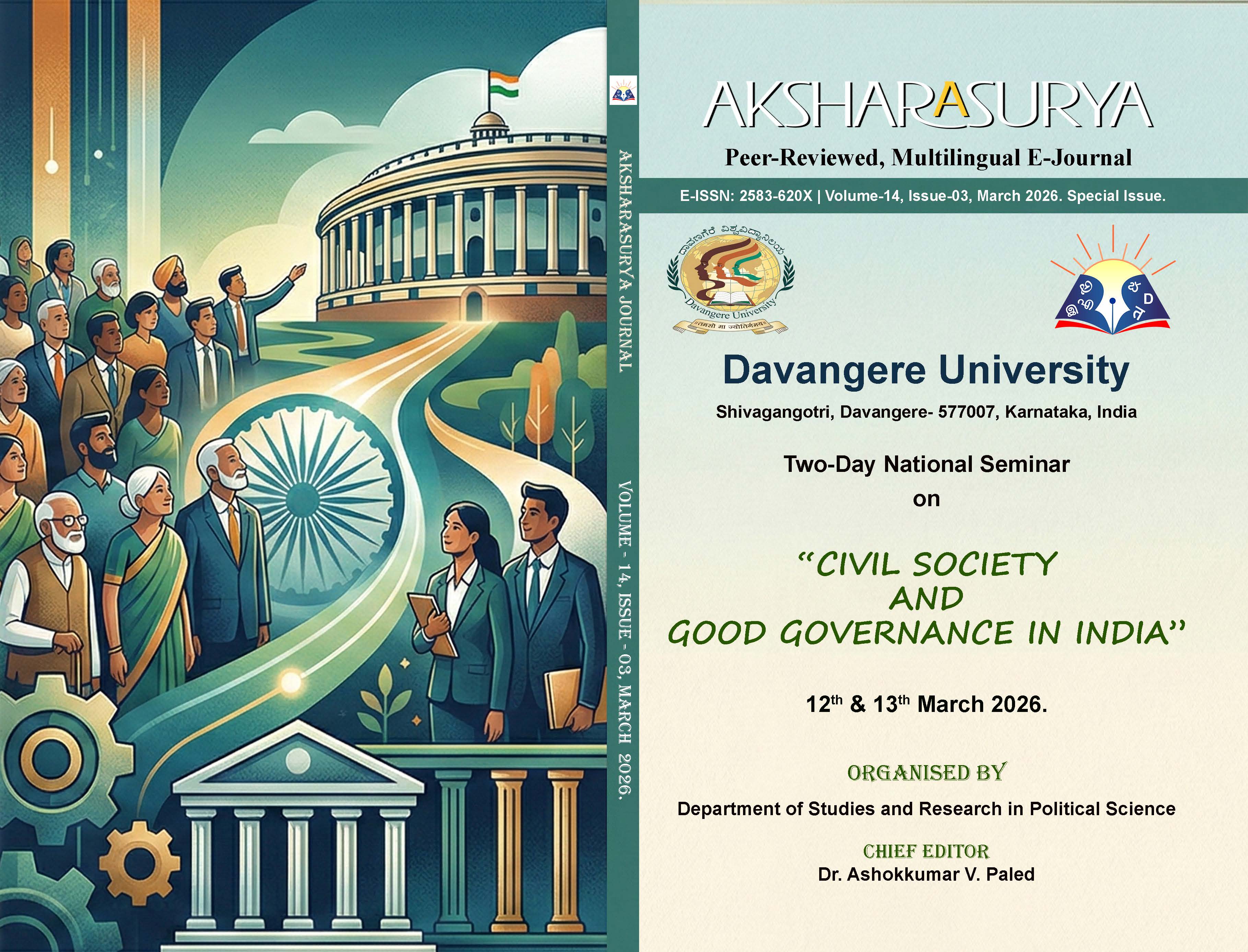
Published: 2026-03-25
Table of Contents
Research Articles
Bharatiya Model of Governance: A Unique Blend of Traditional and Modern Systems
01 to 08
The Bharatiya model of Governance represents a unique harmonious blend of traditional Indian administrative wisdom and modern democratic principles deep-rooted in ancient texts from Vedic texts to the modern law of the land, i.e., Constitution. Traditional Governance emphasized on ethical Governance such as Dharma (Righteous Duty), Raj Dharma (Ethical leadership), Swadeshi (Self-reliance), Decentralised administration, and welfare-oriented state, whereas in contrast, Modern Governance shaped by Constitutional Democracy, Federalism, Global economic integration and Digital Transformation integrates these historical principles with contemporary Political, Economic and Technological Advancements. Despite its rich historical legacy and ongoing policy adaptations, it incorporates certain important elements while adapting to contemporary socio-political realities.
This paper puts light on the Continuity and Transformation of Governance in India. Analysing how the ancient Governance ideals and its civilizational ethos relevance in modern Governance system to meet the Modern Governance Challenges, there remains a need for greater harmonization between tradition and modernity in policy making. Bharatiya governance highlights how India balances tradition with innovations on the technological advancement in Governance aligning with Ancient Governance enriching the Governance Framework that combines this Hybrid model of Governance with cultural values and global aspirations with adopting to best practices reaching its true potentialities.
Social Transformation and Civil Society: Dr.B.R. Ambedkar Perspective
09 to 15
Dr B R Ambedkar was the champion of social justice, he just not work for a particular section he was serve for whole nation by changing the social system. He was struggle for social transformation of traditional hierarchical society into civil society with the aim of brings socio-economic and political equality among the Indians with intention of develops the brotherhood. Ambedkar regarded India is home of social inequality therefore he put his effort to bring constitutional remedies for all sort of inequality and discrimination. Ambedkar provided all kind of equal opportunity in education, rights, power and participation in decision making process in that way Ambedkar real champion of civil society and India must remember Ambedkar is father of civil society of India.
Digital Governance in India: The Role in Enhancing Transparency, Efficiency and Accountability
16 to 24
Digital Governance is also called E-Governance, launched in 2015. It is an important initiative of our Honorable Prime Minister Shri Narendra Modi under the vision of Atmanirbhar Bharat by 2047. E-Governance means using digital information technology and communication technology (ICT) to provide government services. The utilization of ICT and e-governance has great potential to improve government institutions and public service delivery, especially in developing countries. This article examines the role of Digital India in promoting transparency and accountable governance by analyzing key aspects like Aadhaar, UPI (Unified Payments Interface), e-Hospitals, etc. This article provides an outline of E-Governance programs being used in India and the current status of such programs. The E-Governance initiatives are centered on secondary data collected from multiple platforms. The digitization and E-Governance of India have gigantic potential for moderate associations in creating the nation.
Civil Society, Power, and Public Accountability
25 to 32
Democratic accountability is often understood as a function of constitutional design and institutional checks. While these mechanisms remain essential, political experience suggests that formal institutions alone are insufficient to restrain power or ensure responsible governance. Here we see that public accountability is sustained not merely through legal and administrative arrangements, but through the continuous engagement of civil society as a democratic space of vigilance, critique, and moral evaluation.
Here the paper conceptualizes civil society as a sphere situated between state authority and private life, where citizens collectively monitor, question, and respond to the exercise of power. Drawing on classical and modern political thought, it examines how civic associations, social movements, media, and citizen networks contribute to democratic accountability by subjecting authority to public scrutiny. This analysis further considers how digital governance has transformed traditional modes of accountability, expanding opportunities for participation while simultaneously introducing new challenges such as fragmentation, misinformation, and performative activism.
The central argument advanced is that accountability cannot be secured through institutions alone. It requires an active civic sphere capable of translating public concern into sustained political pressure. By foregrounding the relationship between civil society, power and accountability, the paper contributes to contemporary debates on democratic governance and highlights the enduring relevance of civic engagement in preserving democratic legitimacy.
Role of Civil Society in Strengthening Good Governance: Challenges and Opportunities
33 to 41
Civil society has emerged as a critical actor in contemporary governance by complementing state institutions and strengthening democratic processes. This study examines the role of civil society in strengthening good governance, with particular emphasis on accountability, transparency, democratic participation, and its intermediary function between citizens and the state. Adopting a descriptive and analytical qualitative approach, the study is based on secondary data drawn from scholarly literature, policy documents, and reports of international organizations and civil society institutions. The analysis highlights that civil society contributes to good governance through watchdog functions, participatory engagement, rights-based advocacy, and collaborative governance arrangements. However, the study also identifies significant challenges that constrain civil society effectiveness, including funding insecurity, restrictive regulatory environments, organizational and capacity limitations, sectoral fragmentation, and shrinking civic space. At the same time, emerging opportunities such as decentralization reforms, transparency and accountability mechanisms, digital governance tools, increased civic awareness, and state–civil society partnerships have expanded avenues for civic engagement. The study concludes that while structural and political constraints limit the potential of civil society, enabling legal frameworks, institutional support, and strengthened organizational capacity can significantly enhance its contribution to accountable, inclusive, and effective governance.
The Role of Civil Society in E-Governance
42 to 50
E-governance represents the use of information and communication technologies by governments to deliver services, share information, and engage citizens in public decision-making. While technology provides the infrastructure for digital governance, its effectiveness depends largely on social participation and institutional trust. In this context, civil society plays a critical role in shaping, supporting, and sustaining e-governance initiatives. Civil society includes non-governmental organizations, community-based groups, professional associations, advocacy networks, and citizen collectives that operate between the state and the market. Their involvement ensures that e-governance remains citizen-centric rather than purely administrative. Civil society contributes to e-governance by acting as a bridge between governments and citizens, particularly marginalized groups who face barriers such as limited digital literacy, lack of access, or social exclusion. Through awareness campaigns, training programs, and assisted access models, civil society enables broader participation in digital platforms. It also strengthens transparency and accountability by monitoring government portals, analyzing open data, and highlighting gaps in service delivery. These actions help convert digital tools into mechanisms of democratic oversight.
In addition, civil society influences the design and implementation of e-governance policies by participating in consultations and co-creation processes. Their grassroots knowledge improves system usability, inclusiveness, and responsiveness. Civil society also serves as a guardian of digital rights by advocating for privacy, data protection, and ethical use of technology. As governments adopt advanced digital systems, this role becomes increasingly important. The role of civil society in e-governance extends beyond service facilitation. It supports democratic values, social equity, and citizen empowerment in the digital age. By integrating technological innovation with social engagement, civil society helps ensure that e-governance contributes to inclusive and accountable governance.
The Role of Lingayat Organizations and Civil Society in the Socio-Political Transformation of Karnataka (2018–2026)
51 to 58
This study examines the interplay between Lingayat organizations and civil society in Karnataka, focusing on their influence on social reform, electoral politics, and the demand for separate religious status. Rooted in the 12th-century Sharanas movement, Lingayatism has evolved from a reformist spiritual sect into a dominant socio-political force. Through a qualitative analysis of recent movements (2018–2025), including the Basava Culture Campaign, this paper argues that Lingayat Mathas function as “parallel civil society” institutions that bridge the gap between religious identity and secular governance.
From Socialist Realism to Postmodern Scepticism: U.R. Ananthamurthy’s Critique of Civil Society
59 to 66
This article examines the intellectual evolution of Kannada writer U.R. Ananthamurthy, tracing his transition from the “Socialist Realist” optimism of the Pragatisheela movement to a “Postmodern Scepticism” regarding the Indian state and its civil society. Central to this critique is Ananthamurthy’s portrayal of the “English-educated elite” as an administrative and secular vanguard that inadvertently perpetuates a “Colonial Consciousness”. By analyzing the failure of the bureaucrat Satisha in Bara and the rationalist Jagannatha in Bharathipura, the study illustrates how top-down modernity often performs “epistemic violence” against the very subjects it seeks to liberate. Drawing on Ashis Nandy’s theories of the “Intimate Enemy” and S.N. Balagangadhara’s critique of Western categorical dominance, the article argues that Ananthamurthy moves toward a Linguistic Democracy. This model rejects the Upstairs language (Attada Mathu) of the state in favour of the pluralistic, Critical Insider perspective found within the vernacular worlds, suggesting that true democratic participation requires a recovery of the cultural self.
Secular Ethics in Civil Society
67 to 74
Ethics are not absolute in a sense that they are independent of society; they are an invention of human beings. Every invention has its purpose and the purpose of ethics is to provide a stable standard of interpersonal behavior so that society can function smoothly and people can interact in a productive and cooperative way. Human beings are basically social animals so this fulfills a deep instinct and acts as a survival mechanism (since humans survive better through cooperation). Does this mean that ethics are meaningless?
Strengthening Local Democratic Processes Through Women’s Political Empowerment
75 to 81
Democratic institutions derive their legitimacy and effectiveness from inclusive participation and accountable governance. In India, women’s political participation remained limited until the introduction of reservations through the 73rd Constitutional Amendment Act, 1992. This article examines how public participation mechanisms-particularly Panchayati Raj Institutions (PRIs), Gram Sabhas, participatory planning processes, and women’s Self-Help Groups (SHGs)-have contributed to women’s political empowerment and the strengthening of democratic institutions. Using India as the contextual framework, with specific reference to Karnataka and comparative insights from Kerala and Rajasthan, the study analyses the relationship between women’s participation, empowerment outcomes, and institutional performance. Drawing on participatory democracy theory and Amartya Sen’s capability approach, the article conceptualizes empowerment as a multidimensional process involving representation, agency, and transformative capacity. Based on secondary data from government reports and peer-reviewed studies, the analysis shows that women’s participation enhances institutional legitimacy, improves responsiveness in welfare delivery, and strengthens accountability. The study concludes that democratic deepening in India requires moving beyond numerical representation toward meaningful, capacity-supported participation.
Digital Participation and Citizen Engagement in India: An Analytical Study of Democratic Involvement in the Digital Era
82 to 88
Digital participation has emerged as a significant dimension of citizen engagement in India, particularly with the expansion of digital governance initiatives and online civic platforms. While digital technologies have widened access to political information and participatory spaces, their contribution to substantive democratic engagement remains uneven. This article examines the nature, depth and quality of digital participation in India and reflects on what these patterns mean for democratic governance. Drawing on participatory and deliberative democratic theory, the study develops an analytical framework based on three dimensions: modes of participation, depth of engagement and institutional responsiveness. Methodologically, the article adopts a qualitative analytical design supported by secondary quantitative indicators drawn from government reports, policy documents and international governance indices. The analysis reveals that although digital platforms in India have significantly expanded informational access and symbolic participation, deeper and more influential forms of citizen engagement remain constrained by digital inequalities, institutional limitations and uneven feedback mechanisms. The article argues that digital participation should be evaluated not merely in terms of technological adoption or user numbers, but in relation to its capacity to influence decision-making and enhance democratic accountability. By offering an India-focused and theoretically grounded analysis, the study contributes to contemporary debates on digital democracy and provides concrete policy suggestions for strengthening citizen engagement in the digital age.
Strengthening Democratic Institutions: Public Participation, Women’s Participation, and Empowerment
89 to 95
Democratic institutions stay strong when people actually get involved-and the more voices, the better. This paper digs into the real connection between stronger institutions and two big drivers: broad public participation and giving women more power. For a long time, democracies mostly worked from the top down. That left a lot of people feeling left out or underrepresented. But things are changing, especially in India. With the growth of Digital Public Infrastructure (DPI) and new laws like the Nari Shakti Vandana Adhiniyam, the country’s moving toward a more inclusive way of governing. Here, I use both numbers and stories to look at how people vote, how institutions are changing, and how women are showing up in leadership. The main idea? Democracies get more stable when they give real power to groups that have been pushed to the sidelines-especially women. It’s not just about women being seen; it’s about them leading and making decisions. Still, there are hurdles: the digital gender gap, cultural barriers, and even tech-driven harassment keep holding people back. The study shows you need a bottom-up approach-one that brings digital access and gender-sensitive policies together-if you want democracy to last. In the end, what really makes a democracy strong isn’t just getting people to vote. It’s turning voters into people who truly have a stake in the system.
Identity, Expertise and Electoral Mobilisation: Karnataka’s OBC Commissions and the Transformation of OBC Politics in a Regional Democracy
96 to 103
The paper examines how Karnataka Other Backward Classes (OBC) commissions have changed caste identity, professionalized knowledge and mobilisation in electoral politics in a regional democracy. The paper argues based on the connections between the Miller Committee (1918-19) and the Chinnappa Reddy Commission and the post-1995 Karnataka State Commission on Backward Classes that the agencies are not mere technical fact-finding units, but political institutions that stabilise and even disintegrate OBC identities by repackaging them. According to their forms of classification, survey exercises and quota prescriptions, commissions give state certified backwardness which parties translate into electoral politics, especially the majority/subaltern OBC blocs. The article has a mixed methodology as a combination of a documentary analysis of a commission report and legislation and the review of current scholarly research on caste politics and affirmative action. It also entails the secondary analysis of 2015 Socio Economic and Educational Caste (SEEC) Survey and the deliberations of the 32/51 per cent reservation change of OBCs.
Digital Political Participation and Democratic Power in Postmodern Societies
104 to 114
Digital political participation and e-governance have become central to the functioning of democratic systems in postmodern societies, where political power is increasingly dispersed across digital networks rather than concentrated within formal institutions. This theoretical study examines how digitally mediated participation, institutionalized through e-governance frameworks, reshapes democratic power relations. Relying exclusively on secondary data, including international governance indices, policy reports, and documented case studies, the paper critically analyzes both the emancipatory and constraining dimensions of digital participation. Evidence from global e-governance initiatives demonstrates that digital platforms can enhance transparency, administrative efficiency, and citizen access to political processes. However, the study also highlights structural limitations such as digital divides, algorithmic mediation, and the growing influence of non-state digital platforms, which complicate assumptions of democratic deepening. Situated within postmodern political theory, the analysis argues that digitalization does not inherently democratize power but redistributes it through technological architectures and data-driven governance. The paper concludes that the democratic potential of e-governance depends on institutional design, inclusivity, and accountability mechanisms that link participation to substantive decision-making. By offering a conceptual synthesis of existing empirical and theoretical literature, this study contributes to ongoing debates on the future of democracy in digitally mediated political environments.
Role of Civil Society in Strengthening Democratic Governance in India
115 to 121
Civil society occupies a pivotal position in the functioning and consolidation of democratic governance, particularly in plural and developing democracies such as India. Acting as an intermediary between the state and citizens, civil society organizations (CSOs) contribute to democratic deepening by enhancing political participation, ensuring accountability, protecting rights, and promoting social inclusion. In India, civil society has historically played a transformative role-from the nationalist movement to contemporary struggles for transparency, environmental justice, gender equality, and social welfare. This paper examines the role of civil society in strengthening democratic governance in India by analyzing its conceptual foundations, historical evolution, functional contributions, and emerging challenges. It argues that civil society strengthens democratic governance through advocacy, participatory engagement, policy monitoring, and capacity building at the grassroots level. However, the paper also highlights constraints such as regulatory restrictions, shrinking civic space, politicization, and issues of representativeness and accountability within civil society itself. Using a qualitative and analytical approach, supported by secondary sources, the study underscores the need for a collaborative, transparent, and enabling environment to ensure that civil society continues to act as a vital pillar of India’s democratic governance framework.
Democratic Institutions and Decision-Making in India: Recalibrating Authority, Participation, and Accountability
122 to 129
Democratic institutions form the backbone of India’s constitutional governance, mediating between the state and citizens through structured decision-making processes. In a diverse and populous democracy, the quality of decisions taken by institutions such as Parliament, the executive, judiciary, and local self-governments directly affects legitimacy, inclusiveness, and public trust. This paper examines the evolving role of democratic institutions in shaping decision-making in India, focusing on their capacity to balance authority with participation and efficiency with accountability. It explores how constitutional design, institutional autonomy, and participatory mechanisms influence governance outcomes, while also addressing contemporary challenges such as centralization of power, policy complexity, and public disengagement. The study highlights the importance of civil society, decentralization, and digital tools in strengthening institutional responsiveness and transparency. By analysing institutional performance across legislative, executive, judicial, and grassroots levels, the paper argues that democratic decision-making must move beyond procedural formalism toward deliberative and inclusive practices. Strengthening democratic institutions requires not only legal safeguards but also an engaged citizenry and ethical political leadership committed to participatory governance.
Community Role in Waste Management: A Critical Review
130 to 135
The management of waste disposal is one of the most pressing environmental challenges of the modern world. While policies and technologies can provide the structural framework, it is community involvement that plays a crucial role in the success of waste management initiatives. This article explores how active community participation can improve waste disposal practices, emphasizing the importance of education, collective responsibility, and local engagement. The paper reviews key strategies that can be employed to foster a cooperative approach to waste management, highlighting successful examples and outlining the broader environmental and social benefits of community-driven waste disposal efforts. Increased waste production is one of the critical environmental problems worldwide. Optimizing waste management, especially community-based waste management, is considered an efficient solution in addressing this problem. This research uses a literature review approach, where data and information are collected from various sources including scientific journals, articles, research reports, and government documents relevant to community-based waste management. The results show that community involvement and active participation in waste management, environmental awareness education, and incentives are key factors in the success of community-based waste management. In addition, the role of the government is crucial in providing support in the form of favorable regulations, adequate infrastructure, and facilitation of collaboration between the community, government, and private sector. This study also found that the integration of technology in the waste management system contributes to improving the efficiency and effectiveness of the process.
E-Governance Initiatives in India: An Overview
136 to 143
This study explores the role of digital participation in enhancing the effectiveness of E-Governance, with a focus on citizen engagement through online platforms. The research examines the evolution of E-Governance in India, emphasizing how national and state-level initiatives have transformed public service delivery and strengthened citizen-government interaction. By digitizing processes and expanding access to services, these initiatives have improved efficiency, reduced costs, and enhanced citizen satisfaction. The findings suggest that E-Governance has significantly strengthened institutional capacity, fostered citizen participation, and reshaped governance structures. Overall, the study contributes to the literature on digital governance and offers insights for policymakers seeking to leverage technology as a catalyst for democratic transformation and citizen-centric service delivery.
E-Governance in Practice: A Study of Online Public Grievance Redressal in Karnataka
144 to 154
In this paper, we take a closer look at the impressive progress made by the Government of Karnataka in resolving public grievances digitally over the period of time in various departments under the state government. It focuses on the significant impact made on lives of common man by improving the effectiveness, efficiency, transparency, and accountability of governance processes, services, and decision-making. The integrated Public Grievance Redressal System (iPGRS) is an online platform available to the citizens to lodge their grievances to the public authorities on any subject related to service delivery in Karnataka. It was launched on 1st November 2021. It is a single portal connected to more than 40 Department schemes/ services delivered by the Government of Karnataka. It discusses how efficient iPGRS in the redressal of public grievances. This research article evaluates the performance and effectiveness of IPGRS–Janaspandana in Karnataka during the period 2024–2025.
Legal and Operational Challenges in Contemporary Governance and Business: Structural Tensions, Regulatory Complexity and Strategic Adaptation
155 to 163
The contemporary regulatory and institutional environment is characterized by an unprecedented convergence of legal complexity and operational vulnerability. Globalization, technological transformation, cross-border commerce, and evolving governance norms have reshaped the relationship between legal compliance and operational functionality. Organizations today must operate within multilayered legal frameworks while maintaining efficiency, innovation, and competitiveness. This research article examines the structural tensions between legal mandates and operational realities, focusing on regulatory fragmentation, jurisdictional conflicts, technological disruption, corporate governance obligations, and crisis management liabilities. Through doctrinal analysis, comparative institutional review, and policy evaluation, the article explores major regulatory developments including the General Data Protection Regulation, the Sarbanes-Oxley Act, and multilateral trade governance under the World Trade Organization. The study argues that legal-operational misalignment constitutes one of the defining governance challenges of the twenty-first century and proposes an integrated compliance and risk-based regulatory model to enhance institutional resilience.
ಭಾರತದ ಸೈಬರ್ ಕಾನೂನು ಚೌಕಟ್ಟು: ಉದಯೋನ್ಮುಖ ಸೈಬರ್ ಅಪರಾಧಗಳು ಮತ್ತು ತಾಂತ್ರಿಕ ಸವಾಲುಗಳ ಕಾನೂನುಬದ್ಧ ವಿಶ್ಲೇಷಣೆ
164 to 175
ಡಿಜಿಟಲ್ ಕ್ರಾಂತಿಯು ಭಾರತದ ಸಾಮಾಜಿಕ-ಆರ್ಥಿಕ ಸ್ವರೂಪವನ್ನು ಮೂಲಭೂತವಾಗಿ ಬದಲಾಯಿಸಿದೆ, ವ್ಯವಹಾರಗಳು ಮತ್ತು ಸಂವಹನಗಳನ್ನು ಭೌತಿಕ ಸ್ಥಳಗಳಿಂದ ವರ್ಚುವಲ್ ಜಗತ್ತಿಗೆ ವರ್ಗಾಯಿಸಿದೆ. ಈ ಬದಲಾವಣೆಯು ಎಲೆಕ್ಟ್ರಾನಿಕ್ ವಾಣಿಜ್ಯ, ಡಿಜಿಟಲ್ ಸಹಿಗಳು ಮತ್ತು ಹೆಚ್ಚುತ್ತಿರುವ ಸೈಬರ್ ಅಪರಾಧಗಳನ್ನು ನಿಯಂತ್ರಿಸಲು ಬಲವಾದ ಕಾನೂನು ಚೌಕಟ್ಟನ್ನು ಅನಿವಾರ್ಯವಾಗಿಸಿದೆ. ಈ ಪ್ರಬಂಧವು ಭಾರತದಲ್ಲಿ ಸೈಬರ್ ಕಾನೂನಿನ ವಿಕಸನವನ್ನು ಸಮಗ್ರವಾಗಿ ವಿಶ್ಲೇಷಿಸುತ್ತದೆ, ಮುಖ್ಯವಾಗಿ ಮಾಹಿತಿ ತಂತ್ರಜ್ಞಾನ (IT) ಕಾಯ್ದೆ 2000 ಮತ್ತು ಅದರ 2008ರ ತಿದ್ದುಪಡಿಗಳ ಮೇಲೆ ಕೇಂದ್ರೀಕರಿಸುತ್ತದೆ. ಇದಲ್ಲದೆ, ಡಿಜಿಟಲ್ ವೈಯಕ್ತಿಕ ದತ್ತಾಂಶ ಸಂರಕ್ಷಣಾ (DPDP) ಕಾಯ್ದೆ 2023ರ ಪರಿಣಾಮಕಾರಿ ಪ್ರಭಾವ ಮತ್ತು ಕೃತಕ ಬುದ್ಧಿಮತ್ತೆ (AI) ಹಾಗೂ ಡೀಪ್ಫೇಕ್ಗಳಿಂದ ಉಂಟಾಗುತ್ತಿರುವ ಸವಾಲುಗಳನ್ನು ಇದು ಪರಿಶೀಲಿಸುತ್ತದೆ. ನ್ಯಾಯಾಂಗ ವ್ಯಾಖ್ಯಾನಗಳ ಜೊತೆಗೆ ಕಾನೂನು ನಿಬಂಧನೆಗಳನ್ನು ಮೌಲ್ಯಮಾಪನ ಮಾಡುವ ಮೂಲಕ, ಈ ಅಧ್ಯಯನವು ಕಾನೂನು ತಂತ್ರಜ್ಞಾನ-ಕೇಂದ್ರಿತದಿಂದ ಹಕ್ಕು-ಆಧಾರಿತ ಚೌಕಟ್ಟಿನತ್ತ ಹೇಗೆ ಬದಲಾಗಿದೆ ಎಂಬುದನ್ನು ಎತ್ತಿ ತೋರಿಸುತ್ತದೆ. ಭಾರತವು ಡಿಜಿಟಲ್ ಶಾಸನದಲ್ಲಿ ಗಮನಾರ್ಹ ಪ್ರಗತಿಯನ್ನು ಸಾಧಿಸಿದ್ದರೂ, ಪ್ರಸ್ತುತ ಡಿಜಿಟಲ್ ವ್ಯವಸ್ಥೆಯ ಸಂಕೀರ್ಣತೆಗಳನ್ನು ಎದುರಿಸಲು ಕ್ರಿಯಾತ್ಮಕ ಮತ್ತು ವಿಶೇಷ ಸೈಬರ್ ಭದ್ರತಾ ಕಾನೂನು ಅತ್ಯಗತ್ಯ ಎಂದು ಈ ಅಧ್ಯಯನವು ತೀರ್ಮಾನಿಸುತ್ತದೆ.
ಭಾರತದಲ್ಲಿ ಉತ್ತಮ ಆಡಳಿತವನ್ನು ರೂಪಿಸುವಲ್ಲಿ ನಾಗರಿಕ ಸಮಾಜದ ಪಾತ್ರ: ಸವಾಲುಗಳು ಮತ್ತು ಅವಕಾಶಗಳ ಒಂದು ವಿಶ್ಲೇಷಣೆ
176 to 182
ಈ ಸಂಶೋಧನಾ ಲೇಖನವು ಭಾರತದ ಪ್ರಜಾಪ್ರಭುತ್ವ ವ್ಯವಸ್ಥೆಯಲ್ಲಿ ‘ನಾಗರಿಕ ಸಮಾಜ’ (Civil Society) ಉತ್ತಮ ಆಡಳಿತವನ್ನು (Good Governance) ರೂಪಿಸುವಲ್ಲಿ ವಹಿಸುವ ನಿರ್ಣಾಯಕ ಪಾತ್ರವನ್ನು ವಿಶ್ಲೇಷಿಸುತ್ತದೆ. ನಾಗರಿಕ ಸಮಾಜದ ಸಂಘಟನೆಗಳು, ಸರ್ಕಾರ ಮತ್ತು ಸಾರ್ವಜನಿಕರ ನಡುವೆ ಕೊಂಡಿಯಾಗಿ ಕಾರ್ಯನಿರ್ವಹಿಸುತ್ತವೆ. ಈ ಲೇಖನವು ಪಾರದರ್ಶಕತೆ, ಹೊಣೆಗಾರಿಕೆ ಮತ್ತು ಒಳಗೊಳ್ಳುವಿಕೆಯನ್ನು ಉತ್ತೇಜಿಸುವಲ್ಲಿ ಈ ಸಂಸ್ಥೆಗಳಿಗಿರುವ ಅವಕಾಶಗಳನ್ನು ಗುರುತಿಸುತ್ತದೆ. ಅದೇ ಸಮಯದಲ್ಲಿ, ಇವುಗಳು ಎದುರಿಸುತ್ತಿರುವ ಹಣಕಾಸಿನ ಮಿತಿಗಳು, ಕಟ್ಟುನಿಟ್ಟಾದ ನಿಯಂತ್ರಕ ಕಾನೂನುಗಳು ಮತ್ತು ರಾಜಕೀಯ ಹಸ್ತಕ್ಷೇಪದಂತಹ ಪ್ರಮುಖ ಸವಾಲುಗಳನ್ನು ಇದು ಚರ್ಚಿಸುತ್ತದೆ. ಅಂತಿಮವಾಗಿ, ಭಾರತದ ಆಡಳಿತಾತ್ಮಕ ಚೌಕಟ್ಟನ್ನು ಬಲಪಡಿಸಲು ನಾಗರಿಕ ಸಮಾಜ ಮತ್ತು ಸರ್ಕಾರದ ನಡುವೆ ಸಹಕಾರಿ ಸಂಬಂಧದ ಅಗತ್ಯತೆಯನ್ನು ಈ ಪ್ರಬಂಧವು ಒತ್ತಿಹೇಳುತ್ತದೆ.
ಮಾನವ ಹಕ್ಕುಗಳ ರಕ್ಷಣೆಯಲ್ಲಿ ನಾಗರಿಕ ಸಮಾಜದ ಸಂಘಟನೆಗಳ ಪಾತ್ರ: ಒಂದು ವಿಶ್ಲೇಷಣೆ
183 to 193
“ನಾಗರಿಕ ಸಮಾಜವು ಸ್ವಯಂಸೇವಾ ನಾಗರಿಕ ಮತ್ತು ಸಾಮಾಜಿಕ ಸಂಸ್ಥೆಗಳ ಸಮಗ್ರತೆಯನ್ನು ಒಳಗೊಂಡಿದೆ. ಇವು ರಾಜ್ಯದ ಬಲಪ್ರಯೋಗದ ಆಧಾರಿತ ವ್ಯವಸ್ಥೆಗಳಿಗಿಂತ ಭಿನ್ನವಾಗಿ, ಕಾರ್ಯನಿರ್ವಹಿಸುವ ಸಮಾಜದ ಆಧಾರವನ್ನು ರೂಪಿಸುತ್ತವೆ (ರಾಜ್ಯದಲ್ಲಿ ಯಾವುದೇ ರಾಜಕೀಯ ವ್ಯವಸ್ಥೆ ಇರಲಿ) ಹಾಗೂ ಮಾರುಕಟ್ಟೆಯ ವಾಣಿಜ್ಯ ಸಂಸ್ಥೆಗಳಿಂದ ವಿಭಿನ್ನವಾಗಿರುತ್ತವೆ” ಎಂದು ಯುಎನ್ಡಿಪಿ ವಿವರಿಸುವಂತೆ ಈ ನಾಗರಿಕ ಸಮಾಜದ ಸಂಸ್ಥೆಗಳಲ್ಲಿ ಸಮುದಾಯ ಸಂಘಗಳು, ಸಂಶೋಧನಾ ಸಂಸ್ಥೆಗಳು, ಎನ್ಜಿಒಗಳು, ಸಾಂಸ್ಕೃತಿಕ ಸಂಘಗಳು, ವೃತ್ತಿಪರ ಸಂಘಟನೆಗಳು, ಧಾರ್ಮಿಕ ಗುಂಪುಗಳು ಮತ್ತು ಇತರೆ ಸಂಘಗಳು ಸೇರಿವೆ.
ಮಾನವ ಹಕ್ಕುಗಳು ಎಂದರೆ ಮಾನವನಾಗಿ ಜನಿಸಿದ್ದರಿಂದ ಪಡೆದ ಸೌಲಭ್ಯಗಳು. ಯಾವುದೇ ಜಾತಿ, ಲಿಂಗ, ಧರ್ಮ ಹಾಗೂ ಜನ್ಮಸ್ಥಳವನ್ನು ಆಧರಿಸಿ ಸೌಲಭ್ಯಗಳನ್ನು ನೀಡದೇ ಎಲ್ಲಾ ಮಾನವರಿಗೂ ಅನ್ವಯಿಸಲ್ಪಡುತ್ತವೆ. ಪ್ರತಿಯೊಬ್ಬ ವ್ಯಕ್ತಿಯ ಸರ್ವತೋಮುಖ ಬೆಳವಣಿಗೆಯೇ ಮಾನವ ಹಕ್ಕುಗಳ ತಳಹದಿಯಾಗಿದೆ. ಪ್ರಜಾಪ್ರಭುತ್ವ ವ್ಯವಸ್ಥೆಯ ಯಶಸ್ಸಿಗೆ ಆಧಾರವಾಗಿರುವ ಎಲ್ಲರಿಗೂ ಸಮಾನತೆ, ಸ್ವಾತಂತ್ರ್ಯ, ಶೋಷಣೆಯ ವಿರುದ್ಧ ಹೋರಾಡುವ ಹಕ್ಕು, ಜೀವಿಸುವ ಹಕ್ಕು, ಸ್ವಯಂ ರಕ್ಷಣೆಯ ಹಕ್ಕು, ಧಾರ್ಮಿಕ, ಶೈಕ್ಷಣಿಕ ಮತ್ತು ಸಾಂಸ್ಕೃತಿಕ, ಉದ್ಯೋಗದ ಹಕ್ಕುಗಳನ್ನು ಭಾರತದ ಸಂವಿಧಾನದ 3ನೇ ಭಾಗದಲ್ಲಿ ಮೂಲಭೂತ ಹಕ್ಕುಗಳು ಎಂದು ಅಡಕಗೊಳಿಸಿ ಎಲ್ಲಾ ಪ್ರಜೆಗಳಿಗೂ ಅವು ದೊರೆಯುವಂತೆ ಮಾಡಲಾಗಿದೆ. ಇದರ ಜೊತೆಯಲ್ಲಿ 1993ರಲ್ಲಿ ರಾಷ್ಟ್ರೀಯ ಮಾನವ ಹಕ್ಕುಗಳ ಆಯೋಗವನ್ನು ಸ್ಥಾಪಿಸಿ, ತದನಂತರ ರಾಜ್ಯಗಳ ಮಾನವ ಹಕ್ಕುಗಳ ಆಯೋಗ, ರಾಷ್ಟ್ರೀಯ ಮಹಿಳಾ ಹಕ್ಕುಗಳ ಆಯೋಗ, ರಾಜ್ಯಗಳ ಮಹಿಳಾ ಹಕ್ಕುಗಳ ಆಯೋಗ, ರಾಷ್ಟ್ರೀಯ ಮಕ್ಕಳ ಹಕ್ಕುಗಳ ಆಯೋಗ, ರಾಜ್ಯಗಳ ಮಕ್ಕಳ ಹಕ್ಕುಗಳ ಆಯೋಗ, ಇತರೆ ಆಯೋಗಗಳನ್ನು ಸ್ಥಾಪನೆ ಮಾಡಲಾಗಿದೆ. ಆದಾಗ್ಯೂ ಭಾರತದಲ್ಲಿ ಸಾಮಾಜಿಕ ಅಸಮಾನತೆ, ಜಾತಿ-ಲಿಂಗ ಭೇದಭಾವ, ಪೊಲೀಸ್ ದೌರ್ಜನ್ಯ ಮತ್ತು ಆಡಳಿತಾತ್ಮಕ ನಿರ್ಲಕ್ಷ್ಯದಿಂದ ಮಾನವ ಹಕ್ಕುಗಳ ಉಲ್ಲಂಘನೆಯು ನಿರಂತರವಾಗಿ ನಡೆಯುತ್ತಿರುವುದರಿಂದ ಮಾನವ ಹಕ್ಕುಗಳ ರಕ್ಷಣೆಗೆ ಮತ್ತು ಎಲ್ಲಾ ರಂಗಗಳಲ್ಲಿಯೂ ಸಮಾನತೆಯ ಸಾಧನೆಗೆ ನಾಗರಿಕ ಸಮಾಜದ ಸಂಘಟನೆಗಳು ಅಗತ್ಯ ಮತ್ತು ಮಹತ್ವದ ಪಾತ್ರವನ್ನು ನಿರ್ವಹಿಸುತ್ತವೆ. ವಿಶ್ವಸಂಸ್ಥೆಯ ಸಾಮಾನ್ಯ ಸಭೆಯ ಅಧ್ಯಕ್ಷರಾಗಿದ್ದ ಸರ್ಜಾನ್ ಕರೀಮ್ “ಎಲ್ಲರಿಗೂ ಮಾನವ ಹಕ್ಕುಗಳನ್ನು ಸಾಧಿಸುವ ಗುರಿ ಮಹತ್ವಾಕಾಂಕ್ಷೆಯದಾದರೂ, ನಾಗರಿಕ ಸಮಾಜದ ಸಂಘಟನೆಗಳ ಸಹಭಾಗಿತ್ವದ ಮೂಲಕ ಸಾಧ್ಯವಾಗುತ್ತದೆ” ಎಂದು ಹೇಳಿದ್ದಾರೆ. ಈ ಲೇಖನವು ಭಾರತದಲ್ಲಿ ಮಾನವ ಹಕ್ಕುಗಳ ರಕ್ಷಣೆಗಾಗಿ ಸಾರ್ವಜನಿಕ ಹಿತಾಸಕ್ತಿ ಮೊಕದ್ದಮೆ, ಹಕ್ಕು ಉಲ್ಲಂಘನೆಗಳ ವರದಿ, ಜಾಗೃತಿ ಕಾರ್ಯಕ್ರಮಗಳು, ಕಾನೂನು ನೆರವು ಮತ್ತು ಜನತೆಯ ಮೇಲ್ವಿಚಾರಣೆಯ ಕ್ರಮಗಳ ಮತ್ತು “ಅರುಣಾ ಶಾನಭಾಗ್” ಪ್ರಕರಣದಲ್ಲಿ ನಾಗರಿಕ ಸಮಾಜದ ಸಂಘಟನೆಗಳು ಹೇಗೆ ಪ್ರಭಾವವನ್ನು ಬೀರಿವೆ ಎಂಬುದನ್ನು ವಿಶ್ಲೇಷಿಸಲಾಗಿದೆ. ಇಷ್ಟೆಲ್ಲಾ ಕ್ರಮಗಳನ್ನು ತೆಗೆದುಕೊಂಡರೂ ಹಣಕಾಸಿನ ನಿರ್ಬಂಧಗಳು, ರಾಜಕೀಯ ಒತ್ತಡ, ಕಾನೂನು ನಿಯಂತ್ರಣಗಳು ಮತ್ತು ಭಯಭೀತಿಯಂತಹ ಪರಿಸ್ಥಿತಿಯ ಸವಾಲುಗಳಿಂದ ಮಾನವ ಹಕ್ಕುಗಳನ್ನು ರಕ್ಷಿಸುವಲ್ಲಿ ಈ ಸಂಘಟನೆಗಳ ಕಾರ್ಯಕ್ಷಮತೆಯನ್ನು ಕುಂಠಿತಗೊಳಿಸುತ್ತಿವೆ. ಈ ಸವಾಲುಗಳನ್ನು ಸಮರ್ಥವಾಗಿ ನಿಭಾಯಿಸುವ ಮೂಲಕ ಮಾತ್ರ ಭಾರತದಲ್ಲಿ ಮಾನವ ಹಕ್ಕುಗಳನ್ನು ರಕ್ಷಣೆ ಮಾಡಬಹುದು.
ನಾಗರಿಕ ಸಮಾಜದಲ್ಲಿ ಮಹಿಳಾ ರಾಜಕೀಯ ಭಾಗವಹಿಸುವಿಕೆ ಮತ್ತು ಸಬಲೀಕರಣ
194 to 203
ನಾಗರಿಕ ಸಮಾಜದಲ್ಲಿ ಮಹಿಳೆಯರ ರಾಜಕೀಯ ಭಾಗವಹಿಸುವಿಕೆ ಮತ್ತು ಸಬಲೀಕರಣವು ಕೇವಲ ಲಿಂಗ ಸಮಾನತೆಯ ವಿಷಯವಲ್ಲ, ಅದು ಸದೃಢ ಪ್ರಜಾಪ್ರಭುತ್ವದ ಅಡಿಪಾಯವಾಗಿದೆ. ರಾಜಕೀಯ ವ್ಯವಹಾರಗಳಲ್ಲಿ ನಾಗರಿಕರ ಸಕ್ರಿಯ ಭಾಗವಹಿಸುವಿಕೆಯು ಪ್ರಜಾಪ್ರಭುತ್ವದ ರಚನೆಯನ್ನು ಬಲಪಡಿಸುತ್ತದೆ. ರಾಜಕೀಯ ಭಾಗವಹಿಸುವಿಕೆಯು ಪ್ರಜಾಪ್ರಭುತ್ವ ವ್ಯವಸ್ಥೆಯ ವಿಶಿಷ್ಟ ಲಕ್ಷಣವಾಗಿದ್ದು ಅದರ ಪರಿಣಾಮಕಾರಿತ್ವವು ಅದರ ಎಲ್ಲಾ ನಾಗರಿಕರಿಗೆ ಸಮಾನ ಮತ್ತು ಪರಿಣಾಮಕಾರಿ ಭಾಗವಹಿಸುವಿಕೆಯನ್ನು ಎಷ್ಟರಮಟ್ಟಿಗೆ ಒದಗಿಸಲಾಗಿದೆ ಎಂಬುದರ ಮೇಲೆ ಅವಲಂಬಿತವಾಗಿರುತ್ತದೆ. ಮಹಿಳಾ ಸಬಲೀಕರಣವು ಇಂದು ಬಹು ಆಯಾಮದ ಪರಿಕಲ್ಪನೆಯಾಗಿ ರೂಪಗೊಂಡಿದ್ದು, ಸಮಾಜದ ಅಭಿವೃದ್ಧಿ ಪ್ರಕ್ರಿಯೆಯಲ್ಲಿ ಮಹತ್ವದ ಪಾತ್ರ ನಿರ್ವಹಿಸುತ್ತದೆ. ಮಹಿಳೆಯರು ತಮ್ಮ ಜೀವನದ ನಿರ್ಧಾರಗಳನ್ನು ತಾವೇ ತೆಗೆದುಕೊಳ್ಳುವಂತೆ ಅವರಿಗೆ ಶಕ್ತಿ ತುಂಬುವ ಪ್ರಕ್ರಿಯೆ ಮಾತ್ರ ಸಬಲೀಕರಣವಲ್ಲ; ಬದಲಾಗಿ ಸಾಮಾಜಿಕವಾಗಿ, ಶೈಕ್ಷಣಿಕವಾಗಿ, ರಾಜಕೀಯವಾಗಿ, ಆರ್ಥಿಕವಾಗಿ, ಉದ್ಯೋಗ, ಆರೋಗ್ಯ ಮೊದಲಾದ ಎಲ್ಲಾ ಕ್ಷೇತ್ರಗಳಲ್ಲಿಯೂ ಮಹಿಳೆಯರನ್ನು ಪುರುಷನಷ್ಟೇ ಸಮಬಲರನ್ನಾಗಿಸುವುದೇ ಮಹಿಳಾ ಸಬಲೀಕರಣವೆನಿಸಿಕೊಳ್ಳುತ್ತದೆ. ನಾಗರಿಕ ಸಮಾಜವು ತನ್ನೆಲ್ಲ ನಾಗರಿಕರಿಗೆ ಯಾವುದೇ ವರ್ಗ ಭೇದವಿಲ್ಲದೆ ಸಮಾನ ಹಕ್ಕು ಮತ್ತು ಅವಕಾಶಗಳನ್ನು ಒದಗಿಸುವಂಥದ್ದು. ಇದು ಸರ್ಕಾರೇತರ ಸಂಘಟನೆಗಳ ಸಮೂಹವಾಗಿದ್ದು, ನಾಗರಿಕರ ಕುಂದು ಕೊರತೆಗಳನ್ನು ಸರ್ಕಾರದ ಎದುರು ತಂದು ಅವುಗಳನ್ನು ಪರಿಹರಿಸುವಂತೆ ಒತ್ತಡ ಹೇರುತ್ತದೆ. ಮುಕ್ತ ಅವಕಾಶಗಳನ್ನು ನೀಡುವ ಮೂಲಕ ಎಲ್ಲರನ್ನು ಸಬಲೀಕರಣದತ್ತ ಮುನ್ನಡೆಸುವ ಕೆಲಸ ಮಾಡುತ್ತದೆ. ಜಾನ್ ಲಾಕ್ರವರು ‘ನಾಗರಿಕ ಸಮಾಜವು ಸಾಮಾಜಿಕ ಒಪ್ಪಂದದ ಪದವಾಗಿ ವ್ಯಕ್ತಿಗಳ ನೈಸರ್ಗಿಕ ಹಕ್ಕುಗಳನ್ನು ರಕ್ಷಿಸಲು ಉಂಟಾದ ವ್ಯವಸ್ಥೆಯಾಗಿದೆ’ ಎಂದಿದ್ದಾರೆ.
ನಾಗರಿಕ ಸಮಾಜವು ಸರ್ಕಾರದ ಹೊರತಾಗಿ ಕಾರ್ಯ ನಿರ್ವಹಿಸುವ ಸಾಮಾಜಿಕ ಸಂಘಟನೆಗಳು, ಸ್ವಯಂ ಸೇವಾ ಸಂಸ್ಥೆಗಳು, ಮಹಿಳಾ ಸಂಘಟನೆಗಳು, ಕಾರ್ಮಿಕ ಸಂಘಟನೆಗಳು, ಮಾಧ್ಯಮಗಳು, ಜನಾಂದೋಲನಗಳು ಇತ್ಯಾದಿಗಳ ಸಮೂಹವಾಗಿದೆ. ಈ ನಾಗರಿಕ ಸಮಾಜವು ಮಹಿಳೆಯರ ಧ್ವನಿಯನ್ನು ರಾಜಕೀಯ ವ್ಯವಸ್ಥೆಯತ್ತ ಕೊಂಡೊಯ್ಯುವ ಸೇತುವೆಯಂತೆ ಕಾರ್ಯ ನಿರ್ವಹಿಸುತ್ತದೆ. ನಾಗರಿಕ ಸಮಾಜದ ಸಂಸ್ಥೆಗಳು ಮಹಿಳೆಯರಿಗೆ ತರಬೇತಿ, ಕಾನೂನಿನ ಅರಿವು ಮತ್ತು ನೆರವು, ರಾಜಕೀಯ ಜ್ಞಾನ ಮತ್ತು ಸಾಮಾಜಿಕ ಜಾಲಗಳನ್ನು ಒದಗಿಸುವ ಮೂಲಕ ಅವರನ್ನು ಸಬಲೀಕರಿಸುತ್ತವೆ. ಮಹಿಳಾ ಸಬಲೀಕರಣದಲ್ಲಿ ಸಕ್ರಿಯ ರಾಜಕೀಯ ಭಾಗವಹಿಸುವಿಕೆಯು ಮಹತ್ವಪೂರ್ಣವಾಗಿದ್ದು, ಅವರ ರಾಜಕೀಯ ಭಾಗವಹಿಸುವಿಕೆಯನ್ನು ಹೆಚ್ಚಿಸುವ ಸಲುವಾಗಿ ರಾಜಕೀಯ ಅವಕಾಶಗಳನ್ನು, ಹಕ್ಕುಗಳನ್ನು, ರಾಜಕೀಯ ಮೀಸಲಾತಿಯನ್ನು ಸಂವಿಧಾನಬದ್ಧವಾಗಿ ನೀಡಲಾಗಿದೆ. ವಿಕಸಿತ ಭಾರತವನ್ನು ಸಾಧಿಸುವ ಪ್ರೇರಕ ಶಕ್ತಿಯಾಗಿ ಮಹಿಳೆಯರ ಸಕ್ರಿಯ ರಾಜಕೀಯ ಭಾಗವಹಿಸುವಿಕೆ ಮತ್ತು ಸಬಲೀಕರಣವು ಮಹತ್ವದ ಸ್ಥಾನ ಪಡೆಯುತ್ತದೆ. “ಪ್ರಧಾನಿ ನರೇಂದ್ರ ಮೋದಿಯವರು ವಿಕಸಿತ ಭಾರತದ ದೃಷ್ಟಿಕೋನಕ್ಕೆ ಮಹಿಳೆಯರ ಸಂಪೂರ್ಣ ಮತ್ತು ಸಮಾನ ಒಳಗೊಳ್ಳುವಿಕೆಯ ಅಗತ್ಯವಿದೆ ಎಂದಿದ್ದಾರೆ.”
ಬೆಂಗಳೂರು ನಗರದಲ್ಲಿ ನಗರ ತ್ಯಾಜ್ಯ ನಿರ್ವಹಣಾ ನೀತಿಗಳು ಮತ್ತು ನಾಗರಿಕರ ಭಾಗವಹಿಸುವಿಕೆ: ಒಂದು ವಿಶ್ಲೇಷಣೆ
204 to 211
ವೇಗದ ನಗರೀಕರಣ ಮತ್ತು ಜನಸಂಖ್ಯೆಯ ಬೆಳವಣಿಗೆಯು ಭಾರತದ ಮಹಾನಗರಗಳಲ್ಲಿ ಘನತ್ಯಾಜ್ಯ ನಿರ್ವಹಣೆಯ ಸವಾಲನ್ನು ತೀವ್ರಗೊಳಿಸಿದೆ. ಭಾರತದ ‘ಸಿಲಿಕಾನ್ ವ್ಯಾಲಿ’ ಎಂದು ಕರೆಯಲ್ಪಡುವ ಬೆಂಗಳೂರು, ವೇಗವಾಗಿ ಬೆಳೆಯುತ್ತಿರುವ ನಗರವಾಗಿದೆ. ಈ ನಗರೀಕರಣದ ಜೊತೆಗೆ, ತ್ಯಾಜ್ಯ ನಿರ್ವಹಣೆಯು ಒಂದು ಗಂಭೀರ ಸವಾಲಾಗಿ ಪರಿಣಮಿಸಿದೆ. ಪ್ರತಿದಿನ ಗಣನೀಯ ಪ್ರಮಾಣದ ಘನತ್ಯಾಜ್ಯವನ್ನು ಉತ್ಪಾದಿಸುತ್ತಿದೆ, ಈ ಸಂಶೋಧನಾ ಲೇಖನವು ಬೃಹತ್ ಬೆಂಗಳೂರು ಮಹಾನಗರ ಪಾಲಿಕೆ ಅಳವಡಿಸಿಕೊಂಡಿರುವ ತ್ಯಾಜ್ಯ ನಿರ್ವಹಣಾ ನೀತಿಗಳು ಮತ್ತು ಈ ಪ್ರಕ್ರಿಯೆಯಲ್ಲಿ ನಾಗರಿಕರ ಮತ್ತು ಸಮುದಾಯದ ಪಾಲ್ಗೊಳ್ಳುವಿಕೆಯ ಮಹತ್ವವನ್ನು ಪರಿಶೀಲಿಸುತ್ತದೆ. “ಕಸದ ನಗರ” ಎಂಬ ಹಣೆಪಟ್ಟಿಯನ್ನು ಕಳಚಲು ನ್ಯಾಯಾಲಯದ ಆದೇಶಗಳು, “2 ಬಿನ್ 1 ಬ್ಯಾಗ್” ನಂತಹ ನೀತಿಗಳು ಮತ್ತು ಸ್ಥಳೀಯ ನಿವಾಸಿಗಳ ಕ್ಷೇಮಾಭಿವೃದ್ಧಿ ಸಂಘಗಳ ಪಾತ್ರವನ್ನು ಈ ಅಧ್ಯಯನವು ಎತ್ತಿ ತೋರಿಸುತ್ತದೆ. ವಿಕೇಂದ್ರೀಕೃತ ತ್ಯಾಜ್ಯ ನಿರ್ವಹಣೆಯಲ್ಲಿ ನಾಗರಿಕರ ಸಕ್ರಿಯ ಭಾಗವಹಿಸುವಿಕೆಯು ಯಶಸ್ಸಿನ ಕೀಲಿ ಎಂಬುದು ಈ ಅಧ್ಯಯನದ ಪ್ರಮುಖ ಕಂಡುಕೊಳ್ಳುವಿಕೆಯಾಗಿದೆ. ಈ ಅಧ್ಯಯನವು ಬೆಂಗಳೂರಿನ ತ್ಯಾಜ್ಯ ನಿರ್ವಹಣಾ ನೀತಿಗಳನ್ನು ಪರಿಶೀಲಿಸುತ್ತದೆ ಮತ್ತು ಅವುಗಳ ಅನುಷ್ಠಾನದಲ್ಲಿ ನಾಗರಿಕರ ಪಾತ್ರವನ್ನು ವಿಶ್ಲೇಷಿಸುತ್ತದೆ.