
Strengthening Democratic Institutions: Public Participation, Women’s Participation, and Empowerment
Article Sidebar
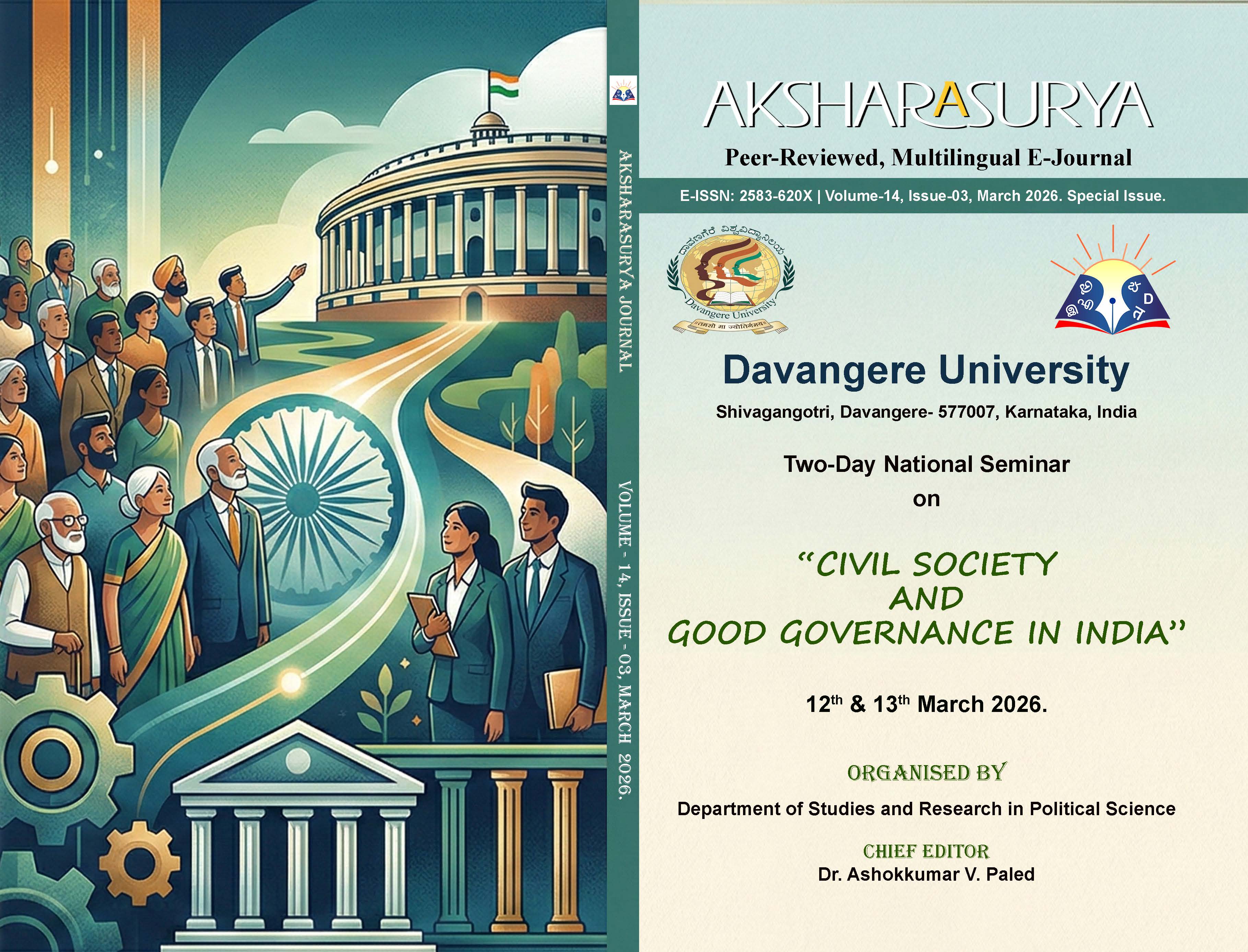
Main Article Content
Abstract
Democratic institutions stay strong when people actually get involved-and the more voices, the better. This paper digs into the real connection between stronger institutions and two big drivers: broad public participation and giving women more power. For a long time, democracies mostly worked from the top down. That left a lot of people feeling left out or underrepresented. But things are changing, especially in India. With the growth of Digital Public Infrastructure (DPI) and new laws like the Nari Shakti Vandana Adhiniyam, the country’s moving toward a more inclusive way of governing. Here, I use both numbers and stories to look at how people vote, how institutions are changing, and how women are showing up in leadership. The main idea? Democracies get more stable when they give real power to groups that have been pushed to the sidelines-especially women. It’s not just about women being seen; it’s about them leading and making decisions. Still, there are hurdles: the digital gender gap, cultural barriers, and even tech-driven harassment keep holding people back. The study shows you need a bottom-up approach-one that brings digital access and gender-sensitive policies together-if you want democracy to last. In the end, what really makes a democracy strong isn’t just getting people to vote. It’s turning voters into people who truly have a stake in the system.
Article Details
Section

This work is licensed under a Creative Commons Attribution-NonCommercial-ShareAlike 4.0 International License.
How to Cite
References
Beaman, L., Duflo, E., Pande, R., & Topalova, P. (2012). Female leadership raises aspirations and educational attainment for girls. Science, 335(6068), 582–586.
Chattopadhyay, R., & Duflo, E. (2004). Women as policy makers: Evidence from a randomized policy experiment in India. Econometrica, 72(5), 1409–1443.
Election Commission of India. (2025). Statistical report on general elections 2024. New Delhi.
Narayanan, S. (2024). Digital democracy in India: Challenges and opportunities. Cambridge University Press.
Sen, A. (1999). Development as freedom. Oxford University Press.
World Bank. (2025). World development report: Institutions for the 21st century. Washington, DC.