
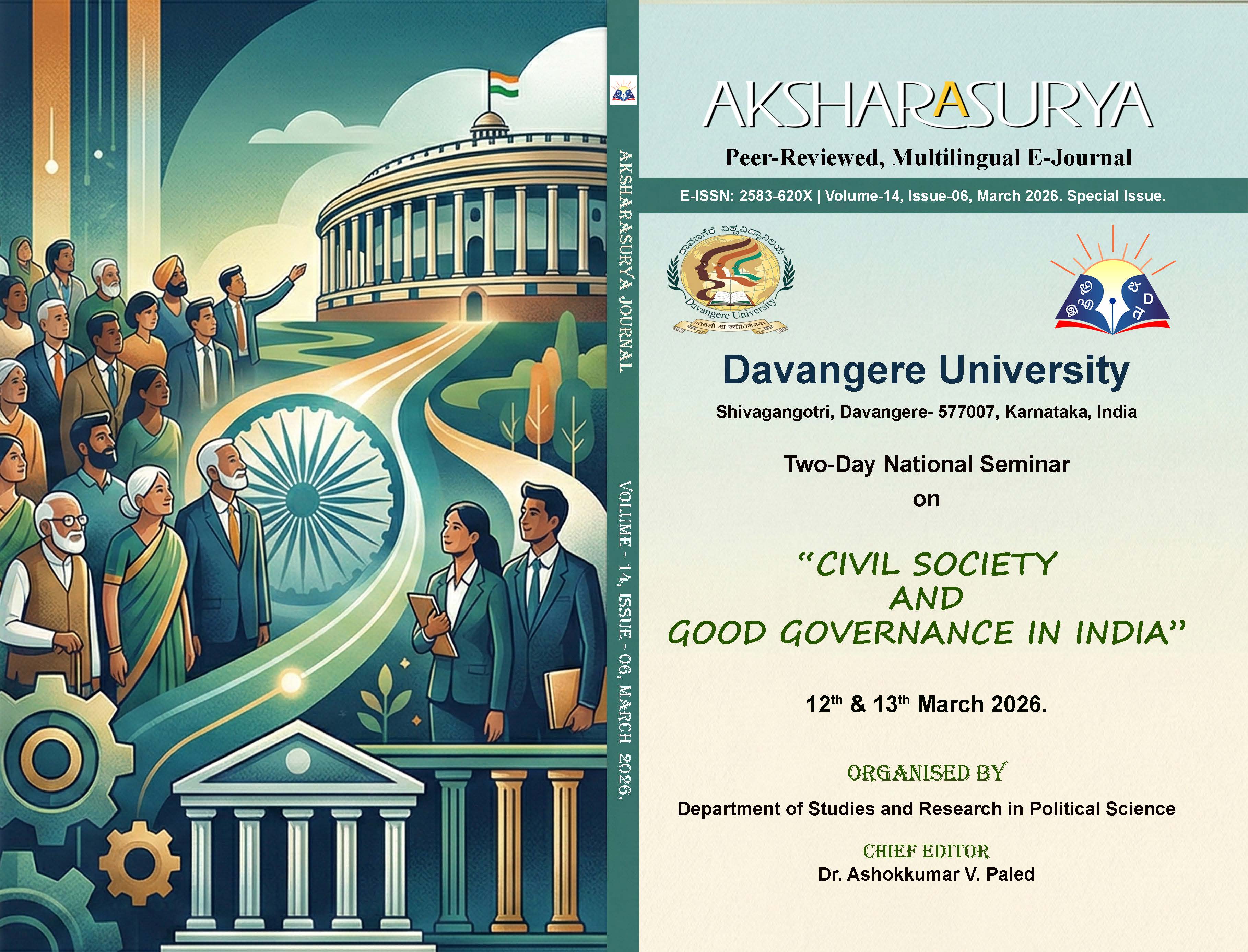
Published: 2026-03-25
Table of Contents
Research Articles
Civil Society’s Role in Bridging the Digital Divide in E-Governance Initiatives
01 to 10
The rapid expansion of e-governance has transformed the way governments deliver public services, enhance administrative efficiency, and promote transparency. However, unequal access to digital technologies, limited digital literacy, and socio-economic disparities have created a digital divide that restricts the participation of large sections of the population. In this context, civil society plays a critical role in ensuring that e-governance initiatives are inclusive and accessible to all citizens. Civil society organizations act as intermediaries between the state and marginalized communities, helping translate complex digital systems into usable and meaningful tools for everyday governance. Through grassroots engagement, civil society supports awareness generation and digital literacy, enabling citizens to understand and use online government platforms. These organizations address barriers related to language, gender, disability, geography, and income by designing context-specific interventions. Civil society also contributes to building trust in digital governance by fostering transparency and encouraging citizen participation. By advocating for inclusive policy design, they ensure that the concerns of underrepresented groups are reflected in e-governance frameworks.
In addition, civil society facilitates access to digital infrastructure through community centers, shared resources, and mobile outreach initiatives. Their role extends to monitoring implementation, identifying exclusionary practices, and holding governments accountable for equitable service delivery. Civil society also promotes the responsible use of digital technologies by raising awareness about digital rights, data privacy, and accountability mechanisms. By integrating technological innovation with social inclusion, civil society helps prevent e-governance from becoming a tool that benefits only digitally privileged groups. Instead, it transforms digital governance into a participatory and rights-based process. The involvement of civil society is therefore essential for bridging the digital divide and ensuring that e-governance contributes to democratic deepening and social equity.
Civic Engagement and National Pride: A Vedantic Blueprint for Modern India
11 to 17
This article analyzes Swami Vivekananda’s Vedantic Blueprint as a foundational model for civic responsibility and national consciousness in contemporary India. Distinct from forms of nationalism grounded in territorial sovereignty or contractual political arrangements, Vivekananda’s approach is ontological in character, emphasizing the awakening of Atma-Shakti (inner self-power) and the overcoming of collective psychological weakness. By integrating the metaphysical insights of the Upanishads with the practical demands of public life, he transformed “Hermetic Vedanta” into what he termed “Practical Vedanta.”
The study investigates how his ideas of Daridra Narayana - recognizing the Divine in the poor - and man-making education reconceptualize citizenship as both a spiritual discipline and an ethical commitment to social service. It further explores Vivekananda’s notion of Missionary Nationalism, suggesting that his vision transcends exclusionary or xenophobic nationalism by situating India’s cultural regeneration within a broader commitment to global harmony, embodied in the ideal of Vasudhaiva Kutumbakam (the world as one family).
In conclusion, the article argues that Vivekananda’s Vedantic framework offers a compelling alternative to neoliberal individualism and residual colonial consciousness, proposing instead a model of citizenship that is integrated, compassionate, and globally oriented.
Civil Society and Good Governance Challenges
18 to 25
Civil society represents an autonomous sphere of social life that exists between the state and the economy, encompassing organizations like NGOs, trade unions, charities, and grassroots groups. It plays a vital role in societal development by enhancing the rule of law, promoting gender equality, protecting rights, and supporting good governance. Historically, philosophers like Plato, Aristotle, Locke, and Marx have shaped the concept of civil society, linking it to democracy, governance, and societal transformation. Civil society fosters democratic participation, provides a platform for public discourse, and acts as a safeguard against authoritarianism. It complements state structures by addressing human development challenges, empowering communities, and ensuring transparency and accountability in governance. Civil society also plays a critical role in political transformation, acting as a catalyst for change and a stabilizing force during transitions to democracy. It helps governments identify societal problems, reduces political alienation, and promotes institutional development. However, civil society can also destabilize states if it becomes polarized, radicalized, or overly demanding, potentially undermining democracy and governance. Group polarization within civil society can intensify societal divisions, reducing trust and solidarity. Civil society relies on the state for legal frameworks that ensure civil rights, equity, and protection for weaker groups. While civil society can challenge authoritarian regimes and democratic governments, its impact depends on the type of state, the phase of political transformation, and its ability to self-regulate. A balanced and reflexive civil society is crucial to prevent societal fragmentation, maintain equality, and foster inclusivity, trust, and cooperation.
Young Voters’ Participation In Politics: A Study Of The 2024 Karnataka Parliamentary Elections
26 to 35
This study investigates the influence of social media on young voters’ political opinions and participation, with a focus on how digital platforms shape political engagement among this demographic. Utilizing a sample of 75 young voters from Chitradurga District, Karnataka, the research employs a series of data analyses to explore various aspects of political awareness and social media impact. The Chi-Square Test reveals a significant association between higher political awareness and increased voting participation, indicating that greater awareness correlates with higher engagement in elections. The ANOVA analysis further demonstrates a significant effect of social media on shaping political opinions and discussions, with a p-value of 0.005, highlighting the critical role of social media in influencing young voters. The findings highlight that social media not only enhances political awareness but also significantly affects political attitudes and participation. This research contributes to understanding the role of digital platforms in contemporary political engagement, emphasizing the need for targeted strategies to leverage social media for fostering informed and active voter participation.
Role of Civil Society in Promoting Transparency and Accountability in India
36 to 44
The concept of civil society has undergone significant evolution within the framework of international governance debates over the decades. In the Indian context, particularly during the past decades considerable prominence and influence have been attained by the Civil Society movement in shaping the governance process. Civil Society refers to voluntary organization and associations, which operate independently from the government and market but influence the Public Policy and decisions. Transparency and accountability are major fundamental principles of good governance which ensure awareness and openness in the decision making process and are answerable to the public.
Transparency and accountability matter in governance to reduce corruption, enhance public trust, ensure responsible use of public funds, to improve policy effectiveness and strengthen democracy. Civil society promotes transparency and accountability as a watchdog over government institutions. Through mechanisms such as the Right to Information (RTI), Public Interest Litigation (PIL), media engagement, monitoring of public schemes, and advocacy for responsiveness, transparency and accountability are strengthened.
Civil Society an autonomous body which plays an accountability crucial role in promoting transparency in India. It is an indispensable part for a governance and democratic country like India. It not only monitors but also enhances integral integrity which contributes towards good governance. An examination of the conceptual foundation, contributions, challenges, and future prospects of civil society in advancing transparency and accountability in India is undertaken in this paper.
Digital Communication and Social Interaction in Civil Society: A Review
45 to 53
Digital Communication has become a central force shaping social interaction in India, influencing how individuals connect, express themselves, and participate in society. The rapid growth of mobile technology, affordable internet access, and widespread use of digital platforms has transformed communication from traditional face-to-face and print-based forms to instant, technology-mediated interaction. Messaging applications, social media platforms, video calls, and online communities now play a key role in everyday social life across urban and rural settings. In the Indian context, digital communication has expanded social networks beyond geographical and social boundaries. Families separated by migration remain connected through constant online interaction, while friendships and professional relationships are increasingly formed and maintained in digital spaces. Social media has enabled individuals to share opinions, cultural practices, and personal experiences with wider audiences, contributing to greater visibility and participation in public discourse. At the same time, digital platforms have become important spaces for cultural expression, education, and civic engagement.
However, this transformation has also introduced challenges. The shift toward online interaction has altered the nature of interpersonal relationships, sometimes reducing the depth of communication. Issues such as misinformation, online conflict, privacy concerns, and unequal access to digital resources continue to affect social interaction. Differences in digital literacy across age groups, regions, and socio-economic backgrounds shape how individuals experience and use digital communication. Overall, digital communication in India reflects both continuity and change. While traditional social values and relationships remain significant, they are increasingly mediated through digital tools. The interaction between technology and society continues to evolve, making digital communication a powerful influence on social behavior, cultural practices, and collective life in contemporary India.
Women’s Representation in Karnataka State Politics: Social Attitudes, Challenges and Opportunities
54 to 60
This study examines the behavior of society towards women representatives in Karnataka state politics, focusing on their positions in political leadership and participation in the legislative process. Existing studies highlight that women’s issues are rarely prioritized, and societal attitudes often shape the extent of women’s political representation. This paper explores the dynamics of social perceptions of women’s leadership, analyzing both the challenges and opportunities faced by women in politics. It identifies notable obstacles to progress in increasing women’s representation and argues that societal support plays a crucial role in promoting women’s leadership within the Karnataka Legislative Assembly. Furthermore, the study investigates the role of political parties in selecting and supporting capable women leaders. Employing a mixed-methods approach, the research draws on secondary sources to conduct a quantitative analysis of election data and qualitative insights from women politicians in Karnataka. The article ultimately evaluates the impact of women’s political leadership and representation on women’s empowerment and development in the state, with a specific focus on the Karnataka Legislative Assembly.
Urban Waste Management in India: Challenges, Policy Framework, and Sustainable Strategies for the Future
61 to 68
Abstract: Rapid urbanization, industrialization, and changing consumption patterns have significantly increased municipal solid waste generation in India. Urban local bodies face severe challenges in managing waste efficiently due to inadequate infrastructure, financial constraints, weak governance, and lack of public participation. This research article examines the current status of urban waste management in India, identifies major challenges, evaluates policy interventions, and proposes sustainable strategies for improvement. The study adopts a descriptive analytical approach using secondary data from government reports, academic literature, and policy documents. The findings reveal that despite policy initiatives such as the Solid Waste Management Rules (2016) and the Swachh Bharat Mission, significant gaps remain in waste segregation, treatment capacity, and institutional coordination. The article concludes that integrated waste management approaches combining technological innovation, community participation, decentralized systems, and stronger governance mechanisms are essential for sustainable urban development in India.
Evaluating the Role of Social Media in Democratic Deliberation: A Study
69 to 79
Social media has emerged as a powerful communication platform influencing democratic engagement, political awareness, and public discourse. This study examines its role as a tool for democracy among college students of KLE’s Lingaraj College. A descriptive survey method was adopted, and primary data were collected from 130 students through a structured questionnaire. The data were analyzed using SPSS with percentage analysis, mean scores, and standard deviation. Findings reveal widespread use of platforms such as WhatsApp and Instagram, with smartphones as the primary access device. Students primarily used social media for academic communication and information sharing, while many also followed political news. Most respondents perceived social media as beneficial for democracy by enhancing political awareness and civic discussion. However, concerns about misinformation and unreliable content highlight its dual role in democratic societies.
Women Empowerment And Gender Equality: A Global Perspective
80 to 87
Gender equality remains a critical issue across the globe, influencing social, economic, and political development. This article explores the current state of gender equality from a global perspective, examining progress, persistent challenges, and regional disparities. Drawing on data from international organizations such as the United Nations World Economic Forum, the study highlights advancements in women’s education and workforce participation while underscoring enduring gaps in leadership roles, wage equality, and access to healthcare and legal rights. The analysis also considers the intersectionality of gender with factors such as race, class, and geography, emphasizing the need for inclusive policies and global cooperation. Ultimately, achieving gender equality is not only a matter of justice and human rights but a prerequisite for sustainable development and peace. Gender equality is a very important thing needed for the development of a country. Gender equality has been convincingly appeared to invigorate economic growth, which is crucial for low-income countries. Gender equality among women and men alludes to equivalent rights. Obligations and open doors for women and men and boys and girls, fairness doesn’t imply that women and men will become the same however that women and men’s privileges, duties, and openings won’t rely upon whether they are brought into the world male or female.
Empowering Rural Communities through CSOs and Technology
88 to 96
The term “civil society” has gained prominence as a way to describe the network of social institutions that exist independently of the home, the private market, and government control. As noted by Salamon et al. (1999), these entities are generally defined by their non-profit status, voluntary participation, and self-governing structures.
This sector encompasses a diverse array of Civil Society Organizations (CSOs), such as Charitable foundations, Community and athletic clubs, Political organizations, and Faith-based groups. In rural settings, CSOs are particularly vital; they form the essential social framework of a community and often step in to provide services or advocacy where the state and the private sector have failed to meet local needs. While digital innovation has the power to revolutionize how these organizations operate and connect with their members—much like it has for businesses and government agencies—CSOs are frequently overlooked in global metrics that track digital advancement. This chapter explores the definition of civil society and its function within rural areas, examines the various hurdles and advantages associated with digital transformation for CSOs, and evaluates current methods used to quantify digital integration within the sector.
The Dynamics of Women’s Political Empowerment in India: Developments, Barriers and Future Pathways
97 to 105
Women’s political empowerment in India has evolved significantly since independence, marked by increased representation, legal reforms and grassroots leadership. Despite these gains, entrenched socio-cultural norms, institutional barriers and economic disparities continue to hinder full political participation. This article examines the historical trajectory of women’s political empowerment in India, identifies persistent challenges, and outlines pathways for strengthening women’s engagement in governance and public decision-making. Through a combination of historical evidence, policy analysis, and contemporary socio-political trends, this paper highlights both achievements and unresolved gaps in India’s democratic landscape.
Basavanna’s Principles and Their Impact on Democratic Governance in Modern Karnataka: A Public Perception Study
106 to 115
The philosophy of Basavanna based on equality, social justice and ethical government has been used in the Karnataka socio-political discourse. The concept of participatory and inclusive governance is stressed in his ideas of Kayaka (dignity of labour), Dasoha (social sharing), and anti-caste hierarchy. This paper investigates the social attitude in terms of the applicable principles of Basavanna in the modern democratic governance in the selected districts of North Karnataka. The study is descriptive as the empirical design and relies on primary data that was gathered on 120 respondents using a structured questionnaire. A purposive sampling method was used to facilitate representation in terms of age, education and social groups. Percentage analysis and mean score analysis were the methods of data analysis to evaluate the perceptions on equality, transparency and social justice and participatory governance. The results have indicated that most of the respondents believe that the concepts of Basavanna are very applicable in the contemporary democratic administration, specifically the need to advance social peace and moral leadership. Nevertheless, gaps between the philosophy and the practical political application are also reported by the respondents. This paper concludes that the philosophy of Basavanna is a major normative guideline to enhancing democratic governance in Karnataka.
ತ್ಯಾಜ್ಯ ನಿರ್ವಹಣೆಯಲ್ಲಿ ಜನಸಹಭಾಗಿತ್ವ: ಒಂದು ಅಧ್ಯಯನ
116 to 125
ನಗರೀಕರಣ ಮತ್ತು ಜನಸಂಖ್ಯೆ ವೃದ್ಧಿಯ ಪರಿಣಾಮವಾಗಿ ನಗರ ಪ್ರದೇಶಗಳಲ್ಲಿ ತ್ಯಾಜ್ಯ ಉತ್ಪಾದನೆಯ ಪ್ರಮಾಣ ಹೆಚ್ಚಾಗುತ್ತಿದ್ದು, ಇದು ಸಾರ್ವಜನಿಕ ಆರೋಗ್ಯ ಮತ್ತು ಜೀವನಮಟ್ಟದ ಮೇಲೆ ಗಂಭೀರ ಪರಿಣಾಮ ಬೀರುತ್ತಿದೆ. ವಿಶೇಷವಾಗಿ ಗೃಹ ತ್ಯಾಜ್ಯ ನಿರ್ವಹಣೆಯಲ್ಲಿ ಜನಸಹಭಾಗಿತ್ವದ ಕೊರತೆ ತ್ಯಾಜ್ಯ ಸಮಸ್ಯೆಯನ್ನು ಮತ್ತಷ್ಟು ಸಂಕೀರ್ಣಗೊಳಿಸುತ್ತಿದೆ. ಈ ಹಿನ್ನೆಲೆಯಲ್ಲಿ ತ್ಯಾಜ್ಯ ನಿರ್ವಹಣೆಯಲ್ಲಿ ಸಮುದಾಯದ ಸಕ್ರಿಯ ಭಾಗವಹಿಸುವಿಕೆಯ ಮಹತ್ವವನ್ನು ಅಧ್ಯಯನ ಮಾಡುವುದೇ ಈ ಸಂಶೋಧನೆಯ ಉದ್ದೇಶವಾಗಿದೆ.
ತ್ಯಾಜ್ಯ ನಿರ್ವಹಣೆ ಐದು ಹಂತಗಳನ್ನು ಒಳಗೊಂಡಿದೆ: ತ್ಯಾಜ್ಯ ಸಂಗ್ರಹಣೆ, ಕಸದ ಸಂಗ್ರಹ, ತ್ಯಾಜ್ಯ ತೆರವು, ಕಸದ ಸಾರಿಗೆ ಮತ್ತು ಅಂತಿಮ ತ್ಯಾಜ್ಯ ಸಂಸ್ಕರಣೆ. ಈ ಅಧ್ಯಯನವು ತ್ಯಾಜ್ಯ ನಿರ್ವಹಣೆಯ ಯೋಜನೆಯಿಂದ ಹಿಡಿದು ಅಂತಿಮ ವಿಲೇವಾರಿವರೆಗಿನ ಕಾರ್ಯಾಚರಣಾತ್ಮಕ ಅಂಶಗಳೊಂದಿಗೆ ಜನಸಹಭಾಗಿತ್ವದ ಪಾತ್ರವನ್ನು ವಿಶ್ಲೇಷಿಸುತ್ತದೆ. ಅಧ್ಯಯನವು ಗುಣಾತ್ಮಕ ಸಂಶೋಧನಾ ವಿಧಾನವನ್ನು ಅನುಸರಿಸಿ ಅನ್ವೇಷಣಾತ್ಮಕ ಸಂಶೋಧನಾ ವಿನ್ಯಾಸವನ್ನು ಬಳಸಿದೆ.
ಅಧ್ಯಯನದ ಫಲಿತಾಂಶಗಳು ಸಮುದಾಯದವರಿಗೆ ತ್ಯಾಜ್ಯ ಸಂಸ್ಕರಣೆ ಕುರಿತು ಮೂಲಭೂತ ಜ್ಞಾನ ಇದ್ದರೂ, ಅದರ ಪ್ರಾಯೋಗಿಕ ಅನುಷ್ಠಾನ ದಿನನಿತ್ಯದ ಜೀವನದಲ್ಲಿ ಕಡಿಮೆಯಾಗಿದೆ ಎಂಬುದನ್ನು ತೋರಿಸುತ್ತವೆ. ಇನ್ನೂ ಅನೇಕರು ಜೈವಿಕ ಮತ್ತು ಅಜೈವಿಕ ತ್ಯಾಜ್ಯವನ್ನು ಪ್ರತ್ಯೇಕಿಸುವ ಅಭ್ಯಾಸವನ್ನು ಪಾಲಿಸುತ್ತಿಲ್ಲ. ಆದರೆ ಧನಾತ್ಮಕ ಬೆಳವಣಿಗೆಯಾಗಿ, ನಗರ ಸಮುದಾಯಗಳು ಗೃಹ ತ್ಯಾಜ್ಯವನ್ನು ಸುಡುವ ಅಭ್ಯಾಸವನ್ನು ತ್ಯಜಿಸಿ, ತ್ಯಾಜ್ಯವನ್ನು ಅಂತಿಮ ವಿಲೇವಾರಿ ಕೇಂದ್ರಗಳಿಗೆ ಸಾಗಿಸುತ್ತಿರುವುದು ಗಮನಾರ್ಹವಾಗಿದೆ.
ಈ ಅಧ್ಯಯನವು ಸಾಮಾಜಿಕ ಬಂಡವಾಳ ಸಿದ್ಧಾಂತ ಮತ್ತು ಸಮಗ್ರ ತ್ಯಾಜ್ಯ ನಿರ್ವಹಣಾ ಮಾದರಿಯನ್ನು ಸಿದ್ಧಾಂತಾತ್ಮಕ ಚೌಕಟ್ಟಾಗಿ ಬಳಸಿದೆ. ಸಿಂಗಪುರ, ಜಪಾನ್, ನೆದರ್ಲ್ಯಾಂಡ್ಸ್, ಉಗಾಂಡಾ, ಫಿಲಿಪೈನ್ಸ್, ಥೈಲ್ಯಾಂಡ್ ಮತ್ತು ಭಾರತದಂತಹ ದೇಶಗಳ ಅನುಭವಗಳು ಜನಸಹಭಾಗಿತ್ವ ಮತ್ತು ಸರ್ಕಾರದ ಸಹಕಾರದಿಂದ ತ್ಯಾಜ್ಯ ನಿರ್ವಹಣೆ ಯಶಸ್ವಿಯಾಗುತ್ತದೆ ಎಂಬುದನ್ನು ಸ್ಪಷ್ಟಪಡಿಸುತ್ತವೆ. ಅಧ್ಯಯನದ ಮುಖ್ಯ ನಿರ್ಣಯವೆಂದರೆ, ಸರ್ಕಾರ ಮತ್ತು ಸಮುದಾಯದ ನಡುವಿನ ಸಹಕಾರ ಹಾಗೂ ಜನಸಹಭಾಗಿತ್ವವೇ ಪರಿಣಾಮಕಾರಿ ಮತ್ತು ಸ್ಥಿರ ತ್ಯಾಜ್ಯ ನಿರ್ವಹಣೆಯ ಪ್ರಮುಖ ಅಂಶವಾಗಿದೆ.
ಸಾಂವಿಧಾನಿಕ ಮೌಲ್ಯವಾಗಿ ಒಳಗೊಳ್ಳುವಿಕೆ: ವಿಶೇಷವಾಗಿ ಶೋಷಿತ ವರ್ಗಗಳ ಒಳಗೊಳ್ಳುವಿಕೆಗೆ ಸಂಬಂಧಿಸಿದಂತೆ
126 to 135
ಪ್ರಜಾಪ್ರಭುತ್ವದ ಯಶಸ್ಸು, ದೇಶದ ಸಮಸ್ತ ಪ್ರಜೆಗಳ ಒಳಗೊಳ್ಳುವಿಕೆಯನ್ನು ಆಧರಿಸಿರುತ್ತದೆ. ಭಾರತೀಯ ಸಮಾಜದ ಇತಿಹಾಸವನ್ನು ಅವಲೋಕಿಸಿದಾಗ ಕೆಲವೊಂದು ವರ್ಗಗಳು ಮಾತ್ರ ಸಾಮಾಜಿಕವಾಗಿ, ರಾಜಕೀಯವಾಗಿ ಮತ್ತು ಆರ್ಥಿಕವಾಗಿ ಶಕ್ತವಾಗಿದ್ದು, ಆ ವರ್ಗಗಳು ಮಾತ್ರ ಆಡಳಿತದಲ್ಲಿ ಸಕ್ರಿಯವಾಗಿ ಭಾಗವಹಿಸಿರುವುದನ್ನು ಕಾಣುತ್ತೇವೆ. ಇಂತಹ ಸೀಮಿತ ಒಳಗೊಳ್ಳುವಿಕೆಯಿಂದ ಸಂವಿಧಾನದ ಆಶಯಗಳನ್ನು ಸಾಕಾರಗೊಳಿಸಲು ಸಾಧ್ಯವಿಲ್ಲ. ಈ ಲೇಖನವು ಶೋಷಿತ ವರ್ಗಗಳ ಒಳಗೊಳ್ಳುವಿಕೆಗೆ ಸಂಬಂಧಿಸಿದ ವಿವಿಧ ಆಯಾಮಗಳನ್ನು ವಿಶ್ಲೇಷಿಸುವ ಗುರಿಯನ್ನು ಹೊಂದಿದೆ. ಭಾರತ ಸಂವಿಧಾನದ ಪ್ರಸ್ತಾವನೆಯಲ್ಲಿ ಪ್ರಜೆಗಳ ಒಳಗೊಳ್ಳುವಿಕೆಗೆ ಸಂಬಂಧಿಸಿದಂತೆ ಭಾರತದ ಪ್ರಜೆಗಳು ಅಧಿಕಾರ ಮೂಲ ಎಂಬ ವಿಷಯವನ್ನು, ಹಾಗೂ ನ್ಯಾಯ, ಸ್ವಾತಂತ್ರ್ಯ, ಸಮಾನತೆ ಮುಂತಾದ ಮೌಲ್ಯಗಳನ್ನು ಉಲ್ಲೇಖಿಸಲಾಗಿದೆ. ಸಂವಿಧಾನ ಜಾರಿಗೆ ಬಂದು 75 ವರ್ಷಗಳಾಗಿದ್ದರೂ ಸಹ ಪ್ರಜಾಪ್ರಭುತ್ವದಲ್ಲಿ ಶೋಷಿತ ವರ್ಗಗಳ ಒಳಗೊಳ್ಳುವಿಕೆಯು ನಮಗೆ ಸಂಪೂರ್ಣವಾಗಿ ಕಂಡುಬರುವುದಿಲ್ಲ. ಈ ಹಿನ್ನೆಲೆಯಲ್ಲಿ ಈ ಲೇಖನದಲ್ಲಿ ಶೋಷಿತ ವರ್ಗಗಳ ಒಳಗೊಳ್ಳುವಿಕೆಗೆ ಸಂಬಂಧಿಸಿದಂತೆ ನಮ್ಮ ಸಂವಿಧಾನದಲ್ಲಿರುವ ಅಂಶಗಳನ್ನು, ಕಳೆದ 75 ವರ್ಷಗಳಲ್ಲಿ ಮಾಡಿರುವ ಸಂವಿಧಾನ ತಿದ್ದುಪಡಿಗಳನ್ನು ಹಾಗೂ ಸರ್ಕಾರ ಈ ವಿಷಯವಾಗಿ ಕೈಗೊಂಡ ಕ್ರಮಗಳ ಬಗ್ಗೆ, ಒಳಗೊಳ್ಳುವಿಕೆಯ ಮೇಲೆ ಈ ಎಲ್ಲಾ ಅಂಶಗಳ ಪ್ರಭಾವ, ಸಮಕಾಲೀನ ರಾಜಕೀಯ ಮತ್ತು ಸಾಮಾಜಿಕ ಸನ್ನಿವೇಶದಲ್ಲಿ ಒಳಗೊಳ್ಳುವಿಕೆಗೆ ಇರುವ ಸವಾಲುಗಳು ಹಾಗೂ ಪರಿಹಾರೋಪಾಯಗಳ ಬಗ್ಗೆ ಚರ್ಚೆ ಮಾಡಲಾಗಿದೆ.
ಇ-ಆಡಳಿತ ಮತ್ತು ನಾಗರಿಕ ಸಮಾಜ: ಉತ್ತಮ ಆಡಳಿತದ ನವ ದಿಕ್ಕು
136 to 145
ಇ-ಆಡಳಿತವು (ಇ-ಗವರ್ನೆನ್ಸ್) ಸರ್ಕಾರದ ಸೇವೆಗಳು ಮತ್ತು ಮಾಹಿತಿಯನ್ನು ಡಿಜಿಟಲ್ ತಂತ್ರಜ್ಞಾನಗಳ ಮೂಲಕ ನಾಗರಿಕರಿಗೆ ಸುಲಭ, ವೇಗವಾದ ಮತ್ತು ಪಾರದರ್ಶಕ ರೀತಿಯಲ್ಲಿ ಒದಗಿಸುವ ವ್ಯವಸ್ಥೆಯಾಗಿದೆ. ಭಾರತದಲ್ಲಿ ಡಿಜಿಟಲ್ ಇಂಡಿಯಾ ಮತ್ತು ನ್ಯಾಷನಲ್ ಇ-ಗವರ್ನೆನ್ಸ್ ಪ್ಲಾನ್ನಂತಹ ಕಾರ್ಯಕ್ರಮಗಳು ಆಡಳಿತವನ್ನು ಡಿಜಿಟಲ್ ದಿಕ್ಕಿನಲ್ಲಿ ರೂಪಾಂತರಗೊಳಿಸಿವೆ. ಈ ಪರಿವರ್ತನೆಯಲ್ಲಿ ನಾಗರಿಕ ಸಮಾಜವು ಸರ್ಕಾರ ಮತ್ತು ಜನರ ನಡುವೆ ಸೇತುವೆಯಾಗಿ ಕಾರ್ಯನಿರ್ವಹಿಸಿ, ಜಾಗೃತಿ ನಿರ್ಮಾಣ, ಡಿಜಿಟಲ್ ಸಾಕ್ಷರತೆ ವೃದ್ಧಿ, ನೀತಿ ರೂಪಣೆಯಲ್ಲಿ ಪಾಲ್ಗೊಳ್ಳುವಿಕೆ ಹಾಗೂ ಸಾಮಾಜಿಕ ನಿಗಾವಳಿ ಮೂಲಕ ಪಾರದರ್ಶಕತೆಯನ್ನು ಉತ್ತೇಜಿಸುತ್ತದೆ. ಈ ಲೇಖನವು ಇ-ಆಡಳಿತದ ಯಶಸ್ಸಿನಲ್ಲಿ ನಾಗರಿಕ ಸಮಾಜದ ಪಾತ್ರವನ್ನು ವಿಶ್ಲೇಷಿಸಿ, ಡಿಜಿಟಲ್ ಅಂತರ ಕಡಿಮೆ ಮಾಡುವುದು, ಸೇವೆಗಳ ಗುಣಮಟ್ಟ ಸುಧಾರಿಸುವುದು ಮತ್ತು ಜನಪಾಲ್ಗೊಳ್ಳುವಿಕೆಯನ್ನು ಹೆಚ್ಚಿಸುವುದು ಹೇಗೆ ಸಾಧ್ಯವೆಂಬುದನ್ನು ವಿವರಿಸುತ್ತದೆ. ಜೊತೆಗೆ, ಸಹಭಾಗಿತ್ವದ ಆಡಳಿತ ಮಾದರಿಯ ಅಗತ್ಯವನ್ನು ಒತ್ತಿಹೇಳುತ್ತದೆ. ಅಂತಿಮವಾಗಿ, ಇ-ಆಡಳಿತವು ಕೇವಲ ತಂತ್ರಜ್ಞಾನ ಆಧಾರಿತ ವ್ಯವಸ್ಥೆಯಲ್ಲ; ಅದು ನಾಗರಿಕರ ಸಕ್ರಿಯ ಪಾಲ್ಗೊಳ್ಳುವಿಕೆಯಿಂದ ಮಾತ್ರ ಸಾರ್ಥಕವಾಗುವ ಪ್ರಜಾಪ್ರಭುತ್ವದ ಸಾಧನವಾಗಿದೆ.
ಮಹಿಳೆಯರ ಭಾಗವಹಿಸುವಿಕೆ ಮತ್ತು ಸಬಲೀಕರಣದ ಮೂಲಕ ಪ್ರಜಾಸತ್ತಾತ್ಮಕ ಸಂಸ್ಥೆಗಳ ಬಲಪಡಿಸುವಿಕೆ: ವಿಮರ್ಶಾತ್ಮಕ ಅಧ್ಯಯನ
146 to 154
ಮಹಿಳೆಯರ ರಾಜಕೀಯ ಭಾಗವಹಿಸುವಿಕೆ ಮತ್ತು ಸಬಲೀಕರಣವು ಪ್ರಜಾಸತ್ತಾತ್ಮಕ ಸಂಸ್ಥೆಗಳ ಬಲಪಡಿಸುವಿಕೆಯಲ್ಲಿ ಬಹುಮುಖ್ಯವಾದ ಪರಿಣಾಮವನ್ನು ಬೀರುತ್ತದೆ. ಪ್ರಜಾಸತ್ತಾತ್ಮಕ ವ್ಯವಸ್ಥೆಯ ಗುಣಮಟ್ಟವು ಕೇವಲ ಚುನಾವಣೆಗಳಿಂದ ಅಲ್ಲ, ಸಮಾನ ಪ್ರತಿನಿಧಿತ್ವ, ಅರ್ಥಪೂರ್ಣ ಪಾಲ್ಗೊಳ್ಳುವಿಕೆ, ಉತ್ತರದಾಯಿತ್ವ ಮತ್ತು ಪಾರದರ್ಶಕತೆಗಳಿಂದ ನಿರ್ಧರಿಸಲಾಗುತ್ತದೆ. ಭಾರತ ಸಂವಿಧಾನವು ಲಿಂಗಸಮಾನತೆಯನ್ನು ಒಪ್ಪಿಕೊಂಡಿದ್ದು, ನಮ್ಮ ಸಂಸತ್ತು 1993ರಲ್ಲಿ ಸಂವಿಧಾನಕ್ಕೆ 73ನೆಯ ಮತ್ತು 74ನೆಯ ತಿದ್ದುಪಡಿಯನ್ನು ಕ್ರಮವಾಗಿ ತರುವ ಮೂಲಕ ಮಹಿಳೆಯರಿಗೆ ಗ್ರಾಮೀಣ ಮತ್ತು ನಗರ ಸಂಬಂಧಿತ ಸ್ಥಳೀಯ ಸಂಸ್ಥೆಗಳಲ್ಲಿ ಸೂಕ್ತವಾದ ಪ್ರಾತಿನಿಧ್ಯವನ್ನು ಮೀಸಲಾತಿಯ ಆಧಾರಿತವಾಗಿಯೇ ನೀಡಲಾಗಿರುತ್ತದೆ. ಇದರಿಂದ ಮಹಿಳಾ ಜನಸಮುದಾಯಕ್ಕೆ ಸಂಖ್ಯಾತ್ಮಕವಾಗಿ ಪ್ರತಿನಿಧಿತ್ವ ಹೆಚ್ಚಾಗಿದ್ದರೂ, ಗುಣಾತ್ಮಕ ಸಬಲೀಕರಣವೂ ಅಗತ್ಯವಿದೆ. ಮಹಿಳಾ ನಾಯಕತ್ವವು ನೀತಿ ರೂಪಣೆ, ಸಾರ್ವಜನಿಕ ಸಂಪನ್ಮೂಲ ಬಳಕೆ, ಪಾರದರ್ಶಕ ಆಡಳಿತ ಮತ್ತು ಸಾಮಾಜಿಕ ನ್ಯಾಯವನ್ನು ಉತ್ತೇಜಿಸುತ್ತದೆ. ಗ್ರಾಮ, ತಾಲೂಕು, ನಗರ ಸಂಸ್ಥೆಗಳಲ್ಲಿ ಮಹಿಳೆಯ ನಿರ್ಧಾರ ಸಾಮರ್ಥ್ಯವು ಆರೋಗ್ಯ, ಶಿಕ್ಷಣ ಮತ್ತು ಮೂಲಭೂತ ಸೌಕರ್ಯಗಳ ಅಭಿವೃದ್ಧಿಗೆ ಪ್ರಮುಖ ಪಾತ್ರ ವಹಿಸುತ್ತದೆ. ಈ ಸಬಲೀಕರಣಕ್ಕೆ ಪ್ರಾಕ್ಸಿ ರಾಜಕಾರಣ, ಪಿತೃತ್ವ, ಆರ್ಥಿಕ ಅವಲಂಬನೆ, ರಾಜಕೀಯ ಹಿಂಸಾಚಾರ ಮತ್ತು ಶೈಕ್ಷಣಿಕ ಮಿತಿಗಳು ಅಡ್ಡಿಯಾಗುತ್ತವೆ. ಅವುಗಳನ್ನು ದಾಟಲು ನಾಯಕತ್ವ ತರಬೇತಿ, ಕಾನೂನು ಜಾಗೃತಿ, ಆರ್ಥಿಕ ಸ್ವಾವಲಂಬನೆ ಮತ್ತು ಸಾಮಾಜಿಕ ಮನೋಭಾವ ಬದಲಾವಣೆ ಅಗತ್ಯ. ಒಟ್ಟಾರೆ, ಮಹಿಳೆಯರ ಸಕ್ರಿಯ ಹಾಗೂ ಅರ್ಥಪೂರ್ಣ ಭಾಗವಹಿಸುವಿಕೆ ಇಲ್ಲದೆ ಪ್ರಜಾಸತ್ತಾತ್ಮಕ ಸಂಸ್ಥೆಗಳ ಬಲಪಡಿಸುವಿಕೆ ಸಾಧ್ಯವಿಲ್ಲ; ಮಹಿಳಾ ಸಬಲೀಕರಣವು ಸಮಗ್ರ, ಒಳಗೊಂಡ ಮತ್ತು ಜವಾಬ್ದಾರಿಯುತ ಪ್ರಜಾಸತ್ತಾತ್ಮಕ ವ್ಯವಸ್ಥೆಯ ಮೂಲ ಶಕ್ತಿಯಾಗಿದೆ.
ಸಾರ್ವಜನಿಕ ಭಾಗವಹಿಸುವಿಕೆ, ಮಹಿಳಾ ಭಾಗವಹಿಸುವಿಕೆ ಮತ್ತು ಸಬಲೀಕರಣ
155 to 161
ಪ್ರಜಾಪ್ರಭುತ್ವ ವ್ಯವಸ್ಥೆಯ ಯಶಸ್ಸು ಕೇವಲ ಚುನಾವಣಾ ರಾಜಕೀಯಕ್ಕೆ ಸೀಮಿತವಾಗಿಲ್ಲ, ಬದಲಿಗೆ ಆಡಳಿತ ಪ್ರಕ್ರಿಯೆಯಲ್ಲಿ ನಾಗರಿಕರ ಸಕ್ರಿಯ ಪಾಲ್ಗೊಳ್ಳುವಿಕೆಯನ್ನು ಅವಲಂಬಿಸಿದೆ. ವಿಶೇಷವಾಗಿ, ಸಮಾಜದ ಅರ್ಧಭಾಗದಷ್ಟಿರುವ ಮಹಿಳೆಯರು ಸಾರ್ವಜನಿಕ ಕ್ಷೇತ್ರಗಳಲ್ಲಿ ಮತ್ತು ನಿರ್ಧಾರ ತೆಗೆದುಕೊಳ್ಳುವ ಪ್ರಕ್ರಿಯೆಗಳಲ್ಲಿ ಎಷ್ಟರ ಮಟ್ಟಿಗೆ ತೊಡಗಿಸಿಕೊಂಡಿದ್ದಾರೆ ಎಂಬುದು ಅಭಿವೃದ್ಧಿಯ ಪ್ರಮುಖ ಮಾನದಂಡವಾಗಿದೆ. ಈ ಸಂಶೋಧನಾ ಪ್ರಬಂಧವು ಸಾರ್ವಜನಿಕ ಭಾಗವಹಿಸುವಿಕೆ ಮತ್ತು ಮಹಿಳಾ ಸಬಲೀಕರಣದ ನಡುವಿನ ಸಂಬಂಧವನ್ನು ವಿಶ್ಲೇಷಿಸುವ ಉದ್ದೇಶವನ್ನು ಹೊಂದಿದೆ. ಮಹಿಳೆಯರು ಕೇವಲ ಫಲಾನುಭವಿಗಳಾಗಿ ಉಳಿಯದೆ, ಅಭಿವೃದ್ಧಿಯ ಪಾಲುದಾರರಾಗಿ ಹೇಗೆ ಬದಲಾಗುತ್ತಿದ್ದಾರೆ ಎಂಬುದನ್ನು ಇದು ಪರಿಶೀಲಿಸುತ್ತದೆ. ಈ ಅಧ್ಯಯನವು ವಿವರಣಾತ್ಮಕ ಮತ್ತು ವಿಶ್ಲೇಷಣಾತ್ಮಕ ವಿಧಾನವನ್ನು ಅಳವಡಿಸಿಕೊಂಡಿದ್ದು, ದ್ವಿತೀಯ ಹಂತದ ದತ್ತಾಂಶಗಳು ಮತ್ತು ಪ್ರಸ್ತುತ ಸಾಹಿತ್ಯದ ವಿಮರ್ಶೆಯನ್ನು ಆಧರಿಸಿದೆ. ಅಧ್ಯಯನದ ಫಲಿತಾಂಶಗಳು ಸೂಚಿಸುವಂತೆ, 73 ಮತ್ತು 74ನೇ ತಿದ್ದುಪಡಿಯಂತಹ ಸಾಂವಿಧಾನಿಕ ಕ್ರಮಗಳು ಮಹಿಳೆಯರಿಗೆ ರಾಜಕೀಯ ಪ್ರವೇಶವನ್ನು ಒದಗಿಸಿವೆಯಾದರೂ, ಸಾಮಾಜಿಕ ಮತ್ತು ಸಾಂಸ್ಕೃತಿಕ ಅಡೆತಡೆಗಳು ಅವರ ಪರಿಣಾಮಕಾರಿ ಭಾಗವಹಿಸುವಿಕೆಯನ್ನು ಕುಂಠಿತಗೊಳಿಸಿವೆ. ‘ನಾಮಮಾತ್ರದ ಪಾಲ್ಗೊಳ್ಳುವಿಕೆ’ಯಿಂದ (Tokenism) ‘ಅರ್ಥಪೂರ್ಣ ಸಬಲೀಕರಣ’ದ ಕಡೆಗೆ ಸಾಗಲು ಇನ್ನೂ ಹೆಚ್ಚಿನ ರಚನಾತ್ಮಕ ಬದಲಾವಣೆಗಳ ಅಗತ್ಯವಿದೆ ಎಂದು ಅಧ್ಯಯನವು ಕಂಡುಕೊಂಡಿದೆ. ಮಹಿಳಾ ಸಬಲೀಕರಣವು ಕೇವಲ ಮೀಸಲಾತಿಯಿಂದ ಸಾಧ್ಯವಿಲ್ಲ, ಅದಕ್ಕೆ ಶಿಕ್ಷಣ, ಆರ್ಥಿಕ ಸ್ವಾತಂತ್ರ್ಯ ಮತ್ತು ಸಾಮಾಜಿಕ ಜಾಗೃತಿಯ ಅಗತ್ಯವಿದೆ ಎಂದು ಈ ಪ್ರಬಂಧವು ಪ್ರತಿಪಾದಿಸುತ್ತದೆ.
ಪಂಚಾಯತರಾಜ್ ವ್ಯವಸ್ಥೆಯಲ್ಲಿ ದಲಿತ ರಾಜಕೀಯ ಪ್ರತಿನಿಧಿಗಳ ಭಾಗವಹಿಸುವಿಕೆ (ಚಿತ್ರದುರ್ಗ ಜಿಲ್ಲೆಯ ಒಂದು ಅಧ್ಯಯನ)
162 to 167
ನನ್ನ ಸಂಶೋಧನಾ ಲೇಖನವಾದ “ಪಂಚಾಯತರಾಜ್ ವ್ಯವಸ್ಥೆಯಲ್ಲಿ ದಲಿತ ರಾಜಕೀಯ ಪ್ರತಿನಿಧಿಗಳ ಭಾಗವಹಿಸುವಿಕೆ (ವಿಶೇಷವಾಗಿ ಚಿತ್ರದುರ್ಗ ಜಿಲ್ಲೆಯ ಒಂದು ಅಧ್ಯಯನ)” ಎಂಬ ವಿಷಯಕ್ಕೆ ಸಂಬಂಧಿಸಿದಂತೆ ಭಾರತ ಸಂವಿಧಾನದಲ್ಲಿ ಪ್ರತಿಯೊಬ್ಬ ವ್ಯಕ್ತಿಗೂ ಮೂಲಭೂತ ಹಕ್ಕುಗಳನ್ನು ಅನುಭವಿಸುವ ಅವಕಾಶಗಳನ್ನು ನೀಡಿದ್ದು. ಪ್ರಮುಖವಾಗಿ ಸಾಮಾಜಿಕವಾಗಿ, ಶೈಕ್ಷಣಿಕವಾಗಿ, ಆರ್ಥಿಕವಾಗಿ ಮತ್ತು ರಾಜಕೀಯವಾಗಿ ಹಿಂದುಳಿದ ದಲಿತ ಸಮುದಾಯದ ಸಾಮಾಜಿಕ ವರ್ಗಗಳಾದ ಪರಿಶಿಷ್ಟ ಜಾತಿ, ಪರಿಶಿಷ್ಟ ಪಂಗಡ ಹಾಗೂ ಮಹಿಳೆಯರು ಅಲೆಮಾರಿ, ಅರೆ ಅಲೆಮಾರಿ ಮತ್ತು ವಿಮುಕ್ತ ಬುಡಕಟ್ಟುಗಳು ರಾಜಕೀಯದಿಂದ ದೂರ ಉಳಿದಿವೆ. ಕಾರಣ ರಾಜಕೀಯ ಅರಿವಿನ ಕೊರತೆ, ಆರ್ಥಿಕ ಸಮಸ್ಯೆಗಳು, ಹಾಗೂ ಇತರೆ ಪ್ರಬಲ ಜಾತಿ ಸಮುದಾಯಗಳ ಪಾತ್ರ. ಮತದಾರರು ಮತ್ತು ಪ್ರತಿನಿಧಿಗಳು ರಾಜಕೀಯ ಭಾಗವಹಿಸುವಿಕೆಯಲ್ಲಿ ಹಿಂದುಳಿದಿರುವುದು. ನನ್ನ ಅಧ್ಯಯನದಲ್ಲಿ ಕಂಡುಬಂದಿದೆ ಆದ್ದರಿಂದ ನನ್ನ ಲೇಖನವು ಚಿತ್ರದುರ್ಗ ಜಿಲ್ಲೆಯ ಪಂಚಾಯತ್ ರಾಜ್ ವ್ಯವಸ್ಥೆಯಲ್ಲಿ ದಲಿತ ರಾಜಕೀಯ ಪ್ರತಿನಿಧಿಗಳ ಪಾತ್ರದ ಕುರಿತು ತಿಳಿಸಲಾಗಿದೆ. ಜೊತೆಗೆ ಸಂಶೋಧನಾ ಮೂಲಗಳಾದ ಪ್ರಾಥಮಿಕ ಮತ್ತು ಮಾಧ್ಯಮಿಕ ಮಾಹಿತಿಯ ಮೂಲಗಳಿಂದ ಮಾಹಿತಿಯನ್ನು ಸಂಗ್ರಹಿಸಲಾಗಿದೆ.
ಕರ್ನಾಟಕದ ಉನ್ನತ ಶಿಕ್ಷಣದಲ್ಲಿ ಇ-ಆಡಳಿತ ಸುಧಾರಣೆಗಳು: ಒಂದು ವಿಶ್ಲೇಷಣೆ
168 to 173
ಪ್ರಸ್ತುತ ಲೇಖನವು ಕರ್ನಾಟಕದ ಉನ್ನತ ಶಿಕ್ಷಣ ಕ್ಷೇತ್ರದಲ್ಲಿನ ಇ-ಆಡಳಿತ ಸುಧಾರಣೆಗಳನ್ನು, ವಿಶೇಷವಾಗಿ ‘ಏಕೀಕೃತ ವಿಶ್ವವಿದ್ಯಾಲಯ ಮತ್ತು ಕಾಲೇಜು ನಿರ್ವಹಣಾ ವ್ಯವಸ್ಥೆಯ’ (UUCMS) ಅನುಷ್ಠಾನ ಮತ್ತು ಅದರ ಪ್ರಭಾವಗಳನ್ನು ವಿಶ್ಲೇಷಿಸುತ್ತದೆ. ಪ್ರವೇಶಾತಿ, ಶೈಕ್ಷಣಿಕ ನಿರ್ವಹಣೆ, ಪರೀಕ್ಷೆ ಮತ್ತು ಮಾನವ ಸಂಪನ್ಮೂಲಗಳನ್ನು ಒಂದೇ ಕೇಂದ್ರೀಕೃತ ವೇದಿಕೆಯಡಿ ತರುವ ಮೂಲಕ ಉನ್ನತ ಶಿಕ್ಷಣದ ಸಂಪೂರ್ಣ ಆಡಳಿತವನ್ನು ಡಿಜಿಟಲೀಕರಣಗೊಳಿಸುವುದು ಈ ಯೋಜನೆಯ ಪ್ರಮುಖ ಉದ್ದೇಶವಾಗಿದೆ. ಇದು ಕಾಗದರಹಿತ ಆಡಳಿತದ ಮೂಲಕ ಪಾರದರ್ಶಕತೆಯನ್ನು ಹೆಚ್ಚಿಸಿ, ವಿಳಂಬ ಮತ್ತು ಭ್ರಷ್ಟಾಚಾರವನ್ನು ಕಡಿಮೆ ಮಾಡುವಲ್ಲಿ ಮಹತ್ವದ ಹೆಜ್ಜೆ ಇಟ್ಟಿದೆ. ಆದರೆ, ತಾಂತ್ರಿಕ ದೋಷಗಳು, ಸರ್ವರ್ ಸಮಸ್ಯೆಗಳು, ಗ್ರಾಮೀಣ ಭಾಗದ ಡಿಜಿಟಲ್ ಅಂತರ ಮತ್ತು ಸಿಬ್ಬಂದಿಗೆ ತರಬೇತಿಯ ಕೊರತೆಯಂತಹ ಗಂಭೀರ ಸವಾಲುಗಳನ್ನು ಈ ವ್ಯವಸ್ಥೆ ಎದುರಿಸುತ್ತಿದೆ. ಸಹಾಯವಾಣಿ ಸ್ಥಾಪನೆ, ಆಫ್ಲೈನ್ ಸೌಲಭ್ಯ ಮತ್ತು ನಿರಂತರ ತರಬೇತಿಯ ಮೂಲಕ ಈ ಲೋಪಗಳನ್ನು ಸರಿಪಡಿಸಿ, ವ್ಯವಸ್ಥೆಯನ್ನು ಹೆಚ್ಚು ಪರಿಣಾಮಕಾರಿಯಾಗಿಸುವ ಅಗತ್ಯವನ್ನು ಲೇಖನವು ಒತ್ತಿಹೇಳುತ್ತದೆ.
ಕಲ್ಯಾಣ ಕರ್ನಾಟಕದ ಅಭಿವೃದ್ಧಿಗೆ ಉತ್ತಮ ಆಡಳಿತದ ಅಗತ್ಯತೆ
174 to 183
ಕಲ್ಯಾಣ ಕರ್ನಾಟಕದ ಅಭಿವೃದ್ಧಿಗಾಗಿ ಸ್ವಾತಂತ್ರ್ಯ ನಂತರದ ತರುವಾಯ ಈ ಪ್ರದೇಶದ ಹಿಂದುಳಿದಿರುವಿಕೆಯನ್ನು ಕಂಡುಕೊಳ್ಳಲು ಕರ್ನಾಟಕ ಸರ್ಕಾರ ಮತ್ತು ಭಾರತ ಸರ್ಕಾರ ಹಲವಾರು ಸಮಿತಿಗಳನ್ನು ರಚಿಸಿದ್ದು ಅವುಗಳಲ್ಲಿ ಡಾ. ಡಿ ಎಂ ನಂಜುಂಡಪ್ಪ ಮತ್ತು ಎಂ ಗೋವಿಂದ ರಾವ್ ಸಮಿತಿಗಳು ಹಲವಾರು ಅಂಕಿ ಸಂಖ್ಯೆಗಳ ಮೂಲಕ ಈ ಪ್ರದೇಶವು ಇನ್ನೂ ಅಭಿವೃದ್ಧಿಯಲ್ಲಿ ಹಿಂದುಳಿದಿರುವುದನ್ನು ಕಂಡುಕೊಂಡಿವೆ. ಕಲ್ಯಾಣ ಕರ್ನಾಟಕದ ಅಭಿವೃದ್ಧಿಗಾಗಿ ಮತ್ತು ಪ್ರಾದೇಶಿಕ ಅಸಮತೋಲನವನ್ನು ಕಡಿಮೆ ಮಾಡಲು ಕರ್ನಾಟಕ ಸರಕಾರವು ಹಲವಾರು ಅಭಿವೃದ್ಧಿ ಯೋಜನೆಗಳು, ವಿಶೇಷ ಅನುದಾನಗಳನ್ನು ಬಳಸಿಕೊಂಡಿರುತ್ತದೆ. ತದನಂತರದಲ್ಲಿ ಡಾ. ಡಿ ಎಂ ನಂಜುಂಡಪ್ಪ ಸಮಿತಿಯ ವರದಿ ಅನ್ವಯ ಕಲ್ಯಾಣ ಕರ್ನಾಟಕದ ಅಭಿವೃದ್ಧಿಗಾಗಿ ವಿಶೇಷ ಅಭಿವೃದ್ಧಿ ಯೋಜನೆಯನ್ನು ಹಮ್ಮಿಕೊಳ್ಳಲಾಗಿದೆ. ಇಷ್ಟೆಲ್ಲ ಅಭಿವೃದ್ಧಿ ಯೋಜನೆಗಳು ಖರ್ಚು ವೆಚ್ಚಗಳನ್ನು ಮಾಡಿದರೂ ಸಹ ಈ ಪ್ರದೇಶದ ಅಭಿವೃದ್ಧಿ ನಿರೀಕ್ಷಿತ ಪ್ರಮಾಣದಲ್ಲಿ ಆಗಲಿಲ್ಲ. ಆ ಕಾರಣದಿಂದಾಗಿ 2014ರಲ್ಲಿ 371 ಜೆ ವಿಧಿಯನ್ನು ಸಂವಿಧಾನಬದ್ಧವಾಗಿ ಅನುಷ್ಠಾನಗೊಳಿಸಲಾಗಿದ್ದು, ಈ ಅನುಚ್ಛೇದ ಅಡಿಯಲ್ಲಿ ಈ ಭಾಗದ ಅಭಿವೃದ್ಧಿಗಾಗಿ ಕಲ್ಯಾಣ ಕರ್ನಾಟಕ ಪ್ರದೇಶ ಅಭಿವೃದ್ಧಿ ಮಂಡಳಿ ರಚಿಸಲಾಗಿದ್ದು ಮತ್ತು ಈ ಪ್ರದೇಶದ ಜನರಿಗೆ ಉದ್ಯೋಗ ಮತ್ತು ಶಿಕ್ಷಣದಲ್ಲಿ ಮೀಸಲಾತಿ ಅವಕಾಶಗಳನ್ನು ಕಲ್ಪಿಸಲಾಗಿದೆ. ಇಷ್ಟೆಲ್ಲ ಅಭಿವೃದ್ಧಿ ಯೋಜನೆಗಳು ಖರ್ಚು ವೆಚ್ಚಗಳನ್ನು ಮಾಡಿದರೂ ಸಹ ಈ ಪ್ರದೇಶದ ಅಭಿವೃದ್ಧಿ ನಿರೀಕ್ಷಿತ ಪ್ರಮಾಣದಲ್ಲಿ ಆಗಲಿಲ್ಲ. ಈ ಕಾರಣಗಳಿಂದಾಗಿ ಕಲ್ಯಾಣ ಕರ್ನಾಟಕದ ಅಭಿವೃದ್ಧಿಗೆ ಉತ್ತಮ ಆಡಳಿತವು ಮಾರ್ಗೋಪಾಯವಾಗಿದೆ.