
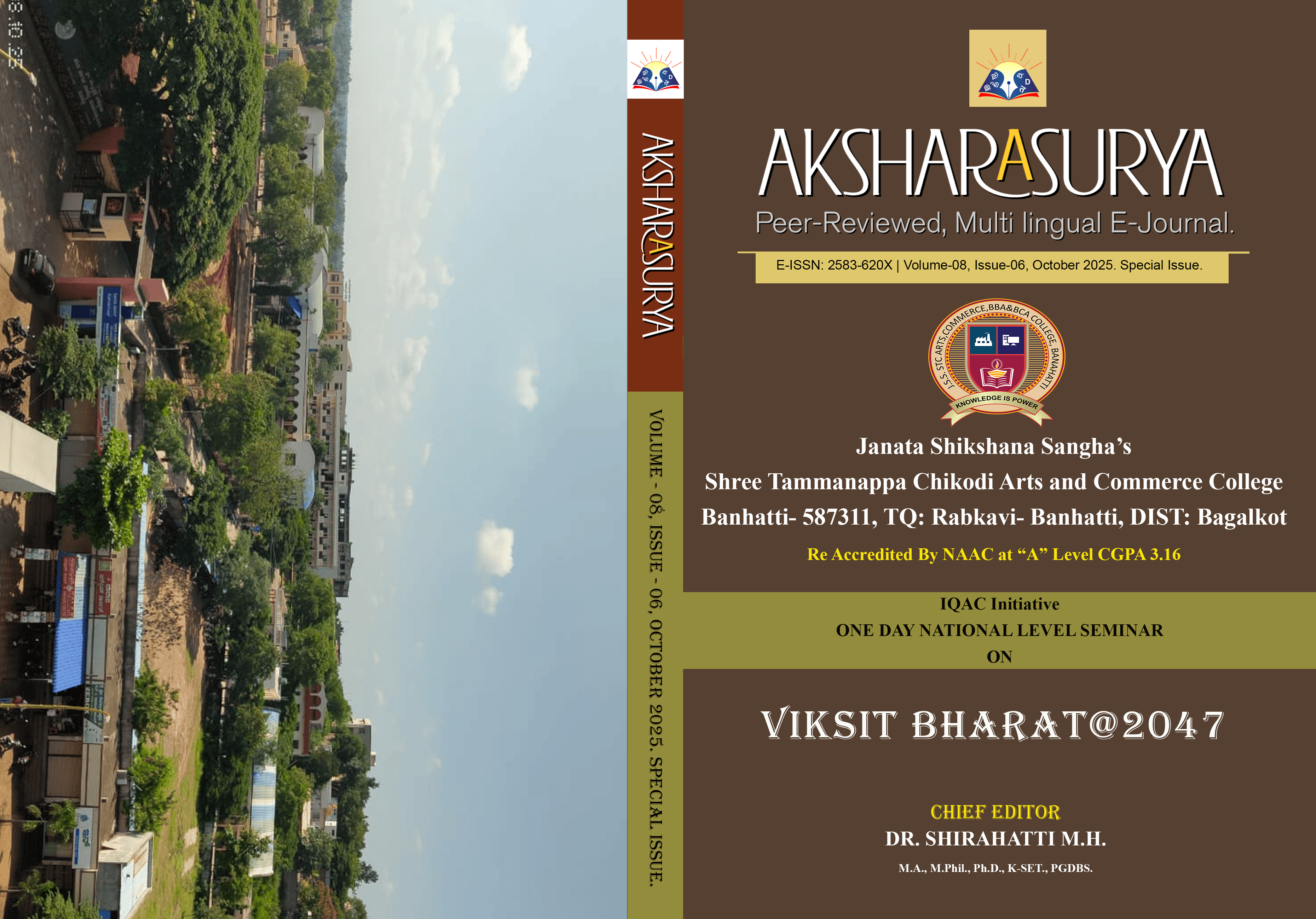
Published: 2025-10-25
Table of Contents
Research Articles
The Election Commission of India and the Regulation and Administration of Electoral Politics: A Review
01 to 06
The Election Commission of India (ECI) is one of the most significant constitutional bodies entrusted with ensuring free, fair, and transparent elections in the world’s largest democracy. Since its inception in 1950, the ECI has acted as the guardian of democratic values by regulating electoral processes, overseeing political parties, and safeguarding voters’ rights. This article examines the role of the ECI in regulating and administering electoral politics in India. It evaluates the institutional framework, legal provisions, and mechanisms through which the Commission functions. Furthermore, it reviews challenges such as money power, muscle power, criminalization of politics, fake news, and electoral malpractices, alongside recent innovations like electronic voting machines (EVMs), Voter Verifiable Paper Audit Trails (VVPAT), and digital voter outreach. The study employs a qualitative and descriptive methodology, drawing upon constitutional provisions, secondary literature, government reports, and recent case studies. Findings reveal that while the ECI has emerged as a credible institution, it faces mounting challenges in ensuring electoral integrity amidst changing political dynamics. The article concludes by suggesting reforms such as strengthening the autonomy of the Commission, enhancing transparency in campaign finance, stricter enforcement of the Model Code of Conduct (MCC), and increased voter awareness initiatives.
The Dynamics of Indian Federalism: A Legal Analysis
07 to 15
Federalism in India has undergone significant transformation since its inception, influenced by constitutional amendments, judicial pronouncements, political dynamics, and economic reforms. The evolving nature of Indian federalism reflects the changing balance of power between the Union and the states, driven by administrative restructuring, fiscal federalism, and regional aspirations. While the Constitution of India establishes a quasi-federal structure, recent trends indicate a shift toward a more centralized approach, raising concerns over state autonomy and cooperative federalism. This paper critically examines the evolving dimensions of Indian federalism, focusing on legal frameworks, case laws, and policy changes that shape its trajectory. It also explores the impact of key legislations and governance models on the federal structure, addressing challenges such as fiscal imbalances, inter-state disputes, and the role of regional parties. By analyzing recent developments, this study aims to contribute to the discourse on India’s federal identity and the need for a more balanced and inclusive approach to federal governance.
Indian Democracy and Contemporary Challenges: An Assessment through the Lens of Dr. B.R. Ambedkar
16 to 23
This analytical research paper assesses the contemporary challenges facing Indian democracy, utilising the critical framework established by Dr B.R. Ambedkar, the father of the Indian Constitution. The study specifically evaluates the impact of recent political issues, including executive overreach, institutional erosion, and rising socio-economic polarisation, against Ambedkar’s three core warnings: the necessity of achieving social democracy, the danger of hero-worship in politics, and the abandonment of the ‘Grammar of Anarchy.’ Findings suggest that India’s established democracy is under considerable strain. The accumulation of political power has systematically compromised constitutional institutions, leading to legislative complacency and strategic judicial retreat. Simultaneously, the failure to address entrenched socio-economic inequalities and the rise of institutionalised majoritarianism have undermined the requisite foundation of social democracy and fraternity.
Political Representation of Women in India
24 to 30
Women’s participation in politics is a substance for democratic representation and gender equality. Regardless of global progress, women remain underrepresented in political institutions, and barriers like social norms, systemic challenges, and limited access to resources hamper their participation. Despite constitutional guarantees of equality and significant women’s participation at the grassroots level, representation in higher legislative bodies the Lok Sabha and State Assemblies remains persistently low. This article investigates the status and dynamics of political representation of women in India, a crucial metric for evaluating the health and inclusivity of the world’s largest democracy. The study employs a qualitative and quantitative review to map the historical trajectory of women’s entry into politics, analyze the effect of assigned reservations at the local level (73rd and 74th Constitutional Amendments), and critically examine the complex socio-cultural and institutional challenges that impede equitable representation. Findings highlight a striking disparity between local and national representation and underscore the urgent need for systemic reforms, including the implementation of the Women’s Reservation Bill, to ensure a truly representative and gender-just political landscape.
Electoral Reforms in India: A Case study reviews the Electoral Reforms after Independence and past 2020
31 to 37
Electoral reforms in India play a vital role in shaping the democratic landscape of India while giving Indian citizens free, fair and transparent elections. Over the past years India has witnessed continuous changes in its legislative, judicial and institutional interventions to address electoral malpractices, loopholes and strengthening democratic integrity through strong reforms. This case study reviews examines key electoral reforms after Independence and past 2020 focusing on their effectiveness in enhancing transparency, lessen the influence of money and man power and improving voter participation with transparency. The paper analysis the role of the Election Commission of India in constructive reforms such as Electronic Voting Machines (EVMs), Voter Verified Paper Audit Trail (VVPAT), and stricter enforcement of the Model Code of Conduct (MCC). This paper also evaluates judicial pronouncements on candidate disclosures, criminalization of politics, and electoral disqualifications. Additionally, the study surrounds new technological interventions, voter awareness actions and policy measures aimed to bring increasing electoral participation. During this study we find much significant progress has been made by Indian Governance such as electoral fraud, vote-buying, false data, misinformation and the regulation of political funding continue to pose concerns. This paper reviews global best practices adopted and check their applicability within the Indian electoral system. By desperately connecting these developments the study provides insights into the strengths and limitations of existing electoral reforms and highlights areas requiring further future policy interventions and legislative action.
Electoral Reforms for a New India: Democracy at 100 Years of Independence
38 to 47
India’s journey through a century of independence has been deeply intertwined with the evolution of its democratic institutions and electoral mechanisms. Despite being the world’s largest democracy, persistent structural, legal, and institutional challenges continue to undermine the integrity, inclusiveness, and credibility of India’s electoral system. This paper examines the critical need for electoral reforms in the contemporary era, especially in the context of India’s centenary of independence. Drawing on secondary sources, constitutional provisions, judicial pronouncements, and reports by commissions, this qualitative study outlines the major bottlenecks in India’s electoral democracy, evaluates past reform efforts, and proposes a roadmap for future change. Key findings suggest that strengthening institutional autonomy, enhancing transparency in political funding, synchronizing elections, adopting advanced technology prudently, and reforming internal party democracy are vital. The limitations of this study stem from its reliance on secondary literature and lack of primary field data. Nevertheless, the paper offers a coherent set of recommendations to revitalize Indian democracy in its second century.
The Election Commission of India and the Regulation and Administration of Electoral Politics: A Review
48 to 52
Since India’s independence, the Election Commission has been central to the administration and regulation of electoral politics. Over time, especially since the 1990s, its scope and authority have expanded significantly. This article employs multiple case studies to examine the Commission’s regulatory developments in contemporary Indian politics. It explores efforts to oversee the timing, conduct, and reporting of elections, alongside initiatives to regulate voter, candidate, and party engagement. The paper evaluates the impact of these legislative measures on electoral practices in India. Despite the political implications of its decisions, the Election Commission has maintained a reputation for independence, enabling it to intervene effectively in electoral administration. The study aims to assess the Commission’s effectiveness, organizational structure, and its role in extending constitutional provisions, ultimately highlighting its function as a politically neutral body that safeguards democratic processes.
India In the Way of Viksat Bharat@ 2047
53 to 60
In the present context since 2014 government takes various initiatives inform of E-Governance has simplified a citizen interface with the government. to ensure closeness with government the government thrive to ensure benchmarking of service quality. The central government e-governance model has benefited in bringing transparency and openness to government process. To achieve the ends of Viksit Bharat @20247 it adopted of e- version 7.0 has created paperless offices in all departments in the central secretaries. In 2023, the Centralized Public Grievances Redress and Monitoring System (CPGRAMS)helped redress 21 lakh citizen grievances. In 2024 with three months from January to March it helped 9.5 lakh citizens to redress their problems. the best manifestation of Maximum Governance Minimum Government policy is a digitally empowered citizens and digitally transformed institution which is essential for development and speed disposal of public affairs.
Building Vikasit Bharat 2047: Governance, Institutions, And Citizen Empowerment
61 to 68
India’s aspiration of becoming a developed nation by 2047, which depends on the pillars of good governance, institutional effectiveness, and citizen empowerment. This paper explores the transformative role of governance reforms and digitalisation in strengthening state capacity, improving service delivery, and fostering inclusivity. Key initiatives such as Digital India, Aadhaar-enabled Direct Benefit Transfers, PRAGATI, and the Aspirational Districts Programme highlight how technology-driven governance has enhanced transparency, accountability, and efficiency. Simultaneously, institutional reforms through measures like the Right to Information Act, e-Courts, Mission Karma yogi, and Ayushman Bharat underscore the government’s commitment to citizen-centric governance, social equity, and sustainable development. The study also examines the behavioural response of youth. India’s demographic dividend towards these reforms, reflecting their aspirations for transparency, innovation, and opportunities in a digital economy. By assessing the impact of these reforms on fiscal federalism, service delivery, and human development outcomes, the paper argues that strong governance and resilient institutions are indispensable for achieving the vision of Vika sit Bharat 2047.
Karnataka Beyond the Three-Language Formula: Shaping India’s Multicultural Future, Viksit Bharat@2047
69 to 74
India has always been known for the diversity, which has become the beauty of the country. In this linguistic diversity is also notable. India came up with THE THREE LANGUAGE FORMULA in the year 1968 focusing on bringing a balance between preserving different regional languages in the country and strengthening Hindi as a link language and English for global access. Even after having this idea for nearly seven decades, it has faced repeated disagreements, with states like Tamil Nadu outright rejecting it and others negotiating their own interpretations. In this larger debate, Karnataka has recently shifted towards a TWO-LANGUAGE policy, which has become a national discussion again.
This paper examines Karnataka as a case study to explore how India’s Multi-lingual future can be reimagined, as the country moving towards 2047 which marks the 100 years of independence. By revisiting historical events like linguistic state principle [1956] and the strong resistance shown by PERIYAR who warned Hindi domination would lead to cultural slavery and destroy equality among Indians. Here the paper sheds light on policy choice within a wider historical and political framework. And it also talks about international perspectives from UNESCO [2003] statement.
Participatipatory Democracy and Citizen’s Involvement
75 to 81
Democracy stands on people’s participation, civilians’ active participation is the strength of the democratic form of government. It highlights extensive, direct public participation in state decision making as in cooperation of standardizing ideal and set of institutional practice. This paper highlighted foremost academic traditions like classical participatory approaches, “strong democracy”, and empowered participatory administration, reviews observed indication from influential cases, deliberates devices linking participation to deliberation, capacity building, redistribution, and outlines an experimental design to evaluate participatory reforms. The analysis treasures well considered participatory institutions can increase civilian involvement, improve public goods targeting, and reinforce democratic rightfulness, nevertheless effects vary by institutional design, context, and scale. Policy implications and directions for further research are offered.
New Forms of Identity Politics in Karnataka: The Role of Social Media
82 to 88
This research paper examines the emergence of digital identity politics in Karnataka, India, highlighting the transformative yet polarizing impact of social media platforms such as Twitter, WhatsApp, Facebook, YouTube, and Instagram. Historically rooted in caste hierarchies, linguistic pride, and religious pluralism, identity politics in Karnataka has shifted into a new phase where digital platforms amplify voices, shape narratives, and mobilize communities. Through case studies such as the Hijab controversy, Lingayat religious identity movement, Dalit activism, and Cauvery River disputes, the paper evaluates how online spaces simultaneously empower marginalized groups and fuel polarization. The analysis situates Karnataka’s digital political transformations in the broader context of India’s democratic discourse while assessing policy challenges related to misinformation, algorithmic biases, and governance. Findings suggest that while social media democratizes representation, unregulated digital ecosystems undermine social cohesion. The paper argues for inclusive digital literacy, participatory governance, and transparent regulatory frameworks to balance empowerment with stability in Karnataka’s democratic evolution.
Youth, Federalism, And Democratic Deepening in The Viksit Bharat Framework
89 to 95
India’s youth represent the country’s greatest strength, with a vibrant and dynamic generation driving the vision of making India a developed nation by 2047. Youth have the power to change the nation. Young minds will be fresher and more innovative which helps in the progress of the country.
India’s Aspiration of becoming a Vikas it Bharat (developed nation) by 2047 depends on a robust federalism system and a vibrant democracy anchored in citizen’s participation with over 65% of its population below the age of 35. India’s youth constitute a powerful force in shaping democratic practices and strengthening federal governance.
This Article investigates the role of youth in federalism and democratic deepening using the Vikas it Bharat frame work 2047 vision as a conceptual study it draws on the theories of participatory democracy, a cooperative federalism and youth political engagement to examine how young citizens contribute to democratic reliance and developmental aspirations. The paper concludes by offering policy directions to institutionalize youth participation in India’s democratic and federal journey towards 2047.
Participatory Democracy in India
96 to 104
Abstract: Participatory democracy in India represents an evolving democratic ethos where citizens play a direct and active role in the decision-making processes beyond periodic elections. Rooted in the principles of decentralization and inclusion, participatory democracy seeks to empower people at the grassroots level through mechanisms like Gram Sabhas, local self-governance institutions (Panchayati Raj), public consultations, and social audits. India’s constitutional framework, particularly the 73rd and 74th Amendments, institutionalized this democratic model by devolving power and resources to local bodies. Despite significant strides, challenges such as political apathy, lack of awareness, bureaucratic hurdles, and socio-economic inequalities continue to hinder effective participation. However, digital platforms, civil society movements, and increased civic engagement are reshaping democratic participation in contemporary India. This paper explores the historical evolution, institutional frameworks, key practices, challenges, and future prospects of participatory democracy in India, emphasizing its critical role in deepening democratic governance and ensuring accountability and inclusiveness.
Deepening Democracy for Viksit Bharat 2047: The Case of Bihar’s Special Intensive Revision and the Future of Electoral Inclusion
105 to 111
As India approaches the centenary of its independence in 2047, the realization of a Viksit Bharat is contingent upon the deepening of democratic processes through comprehensive electoral reforms. This paper examines the pivotal role of electoral inclusion in strengthening democracy, with a specific focus on Bihar’s Special Intensive Revision (SIR) exercise as a representative case study. Bihar’s diverse demographic and socio-political complexities provide a critical context for assessing efforts aimed at enhancing the accuracy and inclusivity of electoral rolls. The SIR initiative sought to systematically update voter lists, addressing issues of exclusion and inaccuracies to ensure universal suffrage. Through a detailed analysis of the implementation, achievements, and challenges of the SIR, this study elucidates the significance of meticulous electoral management in fostering greater voter participation and safeguarding electoral integrity. Looking forward, the paper underscores the necessity of sustained reforms—including the integration of technology and expanded voter education—to promote inclusive and transparent electoral practices across India. Bihar’s experience offers valuable insights into the future trajectory of electoral reforms necessary for consolidating democracy and achieving the vision of Viksit Bharat by 2047
Ecological Modernization and Inclusive Growth: Rethinking Development Paradigms for Viksit Bharat 2047
112 to 119
India’s aspiration of Viksit Bharat 2047 requires development strategies that balance rapid economic growth with environmental sustainability and social equity. This paper examines Ecological Modernization (EM) as a framework for achieving inclusive growth using secondary data drawn from academic literature, government reports, policy documents, and international case studies. EM reconceptualizes environmental protection not as a constraint but as an opportunity for technological innovation, institutional reform, and green industrial development. Analysis indicates that clean technologies, circular economy practices, and green infrastructure can enhance productivity, employment, and environmental quality. However, technology-led green transitions may exacerbate regional and occupational inequalities if social safeguards are absent. Skills development, social protection, and targeted regional interventions are therefore essential to ensure inclusivity. The study proposes a policy framework encompassing green industrial policy, inclusive labor measures, decentralized governance, and fiscal instruments that internalize environmental costs. Secondary data evidence suggests that EM, when integrated with pro-poor redistribution and participatory governance, can provide a development pathway that is both environmentally resilient and socially just. The findings offer actionable insights for policymakers, scholars, and development practitioners. Overall, this research highlights the potential of EM to guide India toward a sustainable and inclusive Viksit Bharat 2047.
ವಿಕಸಿತ ಭಾರತ್@2047 ನಿರ್ಮಾಣದಲ್ಲಿ ಪಂಚಾಯತ್ ರಾಜ್ ಸಂಸ್ಥೆಗಳ ಪಾತ್ರ
120 to 125
ಈ ಲೇಖನವು “ವಿಕಸಿತ ಭಾರತ್ @2047 ನಿರ್ಮಾಣದಲ್ಲಿ ಪಂಚಾಯತ್ ರಾಜ್ ಸಂಸ್ಥೆಗಳ ಪಾತ್ರ”ವನ್ನು ವಿಶ್ಲೇಷಿಸುತ್ತದೆ. 73ನೇ ಸಂವಿಧಾನ ತಿದ್ದುಪಡಿ ನಂತರ ಪಂಚಾಯತ್ ರಾಜ್ ಸಂಸ್ಥೆಗಳು ಗ್ರಾಮೀಣ ಪ್ರಜಾಸತ್ತಾತ್ಮಕತೆಯ ಕೇಂದ್ರೀಯ ಅಂಗಗಳಾಗಿ ಪರಿಣಮಿಸಿವೆ. ಇವು ಗ್ರಾಮ ಸಭೆಗಳ ಮೂಲಕ ನಾಗರಿಕರ ನೇರ ಭಾಗವಹಿಸುವಿಕೆ, ಮಹಿಳಾ ಹಾಗೂ ಹಿಂದುಳಿದ ವರ್ಗಗಳ ಸಬಲೀಕರಣ, ಮತ್ತು ಎಂ.ಜಿ.ಎನ್.ಆರ್.ಇ.ಜಿ.ಎಸ್., ಜಲ್ ಜೀವನ್ ಮಿಷನ್, ಸ್ವಚ್ಛ ಭಾರತ್ ಮುಂತಾದ ಯೋಜನೆಗಳ ಯಶಸ್ವಿ ಜಾರಿಗೆ ವೇದಿಕೆಯಾಗಿ ಕೆಲಸ ಮಾಡುತ್ತಿವೆ. ಗ್ರಾಮೀಣ ಮೂಲಸೌಕರ್ಯ, ಆರೋಗ್ಯ, ಶಿಕ್ಷಣ ಮತ್ತು ಕೃಷಿ ಅಭಿವೃದ್ಧಿಯಲ್ಲಿ ಪಿ.ಆರ್.ಐ.ಗಳು ಪ್ರಮುಖ ಪಾತ್ರವಹಿಸುತ್ತಿವೆ. ಆದಾಗ್ಯೂ ಆರ್ಥಿಕ ದೌರ್ಬಲ್ಯ, ಸಾಮರ್ಥ್ಯ ಕೊರತೆ, ರಾಜಕೀಯ ಹಸ್ತಕ್ಷೇಪ ಮತ್ತು ಡಿಜಿಟಲ್ ಅಸಮಾನತೆ ಸವಾಲುಗಳಾಗಿ ಉಳಿದಿವೆ. 2047ರ ವೇಳೆಗೆ ವಿಕಸಿತ ಭಾರತ ಸಾಧಿಸಲು ಪಿ.ಆರ್.ಐ.ಗಳ ಅಧಿಕಾರ ವಹಿವಾಟು, ಆರ್ಥಿಕ ಸ್ವಾಯತ್ತತೆ, ಸಾಮರ್ಥ್ಯ ನಿರ್ಮಾಣ ಮತ್ತು ನಾಗರಿಕರ ಸಕ್ರಿಯ ಭಾಗವಹಿಸುವಿಕೆ ಅಗತ್ಯ. ಬಲವಾದ ಪಂಚಾಯತ್ ರಾಜ್ ವ್ಯವಸ್ಥೆಯೇ ಸಮಾವೇಶಿತ ಮತ್ತು ಸ್ಥಿರಾಭಿವೃದ್ಧಿ ಭಾರತಕ್ಕಾಗಿ ಮೂಲಭೂತ ಆಧಾರವಾಗಲಿದೆ.
ಡಿಜಿಟಲ್ ಪ್ರಜಾಸತ್ತಾತ್ಮಕತೆ ಮತ್ತು ಇ-ಆಡಳಿತ: ವಿಕಸಿತ ಭಾರತ್@2047
126 to 130
ಈ ಲೇಖನವು “ಡಿಜಿಟಲ್ ಪ್ರಜಾಸತ್ತಾತ್ಮಕತೆ ಮತ್ತು ಇ-ಆಡಳಿತ: ವಿಕಸಿತ ಭಾರತ್ @2047” ಎಂಬ ವಿಷಯವನ್ನು ವಿಶ್ಲೇಷಿಸುತ್ತದೆ. ಡಿಜಿಟಲ್ ತಂತ್ರಜ್ಞಾನ ನಾಗರಿಕರ ಭಾಗವಹಿಸುವಿಕೆ, ಪಾರದರ್ಶಕತೆ ಮತ್ತು ಜವಾಬ್ದಾರಿತ್ವವನ್ನು ಬಲಪಡಿಸುತ್ತಿದೆ. ಡಿಜಿಟಲ್ ಇಂಡಿಯಾ, DBT, CSCs, ಡಿಜಿ ಲಾಕರ್ ಮುಂತಾದ ಯೋಜನೆಗಳು ಆಡಳಿತ ಸುಧಾರಣೆಗೆ ಸಹಕಾರಿಯಾಗಿವೆ. ಆದರೆ ಡಿಜಿಟಲ್ ಡಿವೈಡ್, ಸೈಬರ್ ಅಪಾಯಗಳು ಮತ್ತು ಡೇಟಾ ಗೌಪ್ಯತೆ ಸವಾಲುಗಳಾಗಿ ಉಳಿದಿವೆ. ಇವುಗಳನ್ನು ನಿವಾರಿಸಿದರೆ, 2047ರ ಹೊತ್ತಿಗೆ ಭಾರತವು ಸಮಾವೇಶಿತ ಮತ್ತು ಪ್ರತಿಕ್ರಿಯಾಶೀಲ ಡಿಜಿಟಲ್ ಪ್ರಜಾಸತ್ತಾತ್ಮಕ ಮಾದರಿಯನ್ನಾಗಿ ರೂಪುಗೊಳ್ಳಬಹುದು.
ಕರ್ನಾಟಕ ಏಕೀಕರಣ ಚಳುವಳಿಯಲ್ಲಿ ಮುಂಬೈ ಕರ್ನಾಟಕದ ಪಾತ್ರ: ಒಂದು ಐತಿಹಾಸಿಕ ವಿಶ್ಲೇಷಣೆ
131 to 139
ಕರ್ನಾಟಕದ ಏಕೀಕರಣ ಎಂಬ ಮಹಾನ್ ಕಾರ್ಯದಲ್ಲಿ ನಾಡಿನ ಎಲ್ಲ ಭಾಗದ ಹೋರಾಟಗಾರರು, ಸಂಘ-ಸಂಸ್ಥೆಗಳು, ಪತ್ರಿಕೆಗಳು ಭಾಗವಹಿಸಿದ್ದರೂ, ಏಕೀಕರಣ ಚಳುವಳಿಯಲ್ಲಿ ಮುಂಚೂಣಿ ನಾಯಕತ್ವವನ್ನು ಮತ್ತು ಆರಂಭಿಕ ಹೋರಾಟವನ್ನು ಮುಂಬೈ ಕರ್ನಾಟಕದ ನಾಯಕರುಗಳು ಮತ್ತು ಸಂಘಸಂಸ್ಥೆಗಳು ವಹಿಸಿವೆ. ಮೈಸೂರು ಭಾಗದ ಜನತೆ ಮಹಾರಾಜರ ಆಡಳಿತದ ಅನುಕೂಲತೆಗಳನ್ನು ಮತ್ತು ಭಾಷಾ ಅಸ್ಮಿತೆಯ ಕೊರತೆಯನ್ನು ಅನುಭವಿಸದಿರುವುದೇ ಆ ಭಾಗದಲ್ಲಿ ಏಕೀಕರಣ ಚಳುವಳಿ ಪ್ರಾರಂಭದಲ್ಲಿ ಬೆಳೆದು ಬರದಿರುವುದಕ್ಕೆ ಕಾರಣವಾಗಿದ್ದು, ಆಲೂರು ವೆಂಕಟರಾಯರು ಹೇಳುವಂತೆ, “ಮೈಸೂರು ಸಂಸ್ಥಾನದ ಜನತೆ ತಾಯಿಯ ತೊಡೆಯ ಮೇಲೆ ಮಲಗಿ ಹಾಲು ಕುಡಿದವರು. ಆದ್ದರಿಂದ ಅವರಿಗೆ ಕರ್ನಾಟಕದ ಏಕೀಕರಣದ ಕಲ್ಪನೆ ಇರಲು ಸಾಧ್ಯವಿಲ್ಲʼʼ ಎಂದು ಹೇಳಿದರು. ಮುಂದೆ 1927 ರಲ್ಲಿ ರಾಜಕೀಯ ನಾಯಕರು ಮತ್ತು ಗಣ್ಯರ ಸಹಿ ಪಡೆದು ಕರ್ನಾಟಕ ಏಕೀಕರಣದ ಸಾರ್ವತ್ರಿಕ ಮನವಿಗೆ ಸಹಿ ಮಾಡಿದ ಬಹುತೇಕರು ಮುಂಬೈ ಕರ್ನಾಟಕ ಭಾಗದವರೇ ಆಗಿದ್ದರು. ಒಟ್ಟಿನಲ್ಲಿ ತಮ್ಮ ಭಾಷೆ, ಸಾಹಿತ್ಯ, ಸಂಸ್ಕೃತಿ, ಪರಂಪರೆ ಮತ್ತು ಅಸ್ಮಿತೆಗಾಗಿ ಕನ್ನಡಿಗರು ಹೋರಾಡಿದ್ದು, ಈ ಹೋರಾಟಕ್ಕೆ ನಾಂದಿ ಹಾಕಿ ಏಕೀಕೃತ ಕರ್ನಾಟಕದ ರಚನೆಗೆ ಪ್ರಮುಖ ಕೊಡುಗೆಯನ್ನು ಮುಂಬೈ ಕರ್ನಾಟಕ ವಹಿಸಿರುವುದನ್ನು ನೋಡಬಹುದು.
ಉತ್ತರ ಕರ್ನಾಟಕದ ಪ್ರತ್ಯೇಕತೆಯ ಬೇಡಿಕೆ: ಸಾಧ್ಯತೆ ಮತ್ತು ಸವಾಲುಗಳು
140 to 147
ಸ್ವಾತಂತ್ರ್ಯದ ನಂತರ ಭಾರತದಲ್ಲಿದ್ದ ನೂರಾರು ದೇಶೀಯ ಸಂಸ್ಥಾನಗಳನ್ನು ಭಾರತದ ಒಕ್ಕೂಟದೊಂದಿಗೆ ಸೇರಿಸಲು ಭಾರತ ಸರ್ಕಾರ ನೀತಿ ನಿರೂಪಣೆಗಳನ್ನು ಕೈಗೊಂಡು, ಸರ್ದಾರ್ ವಲ್ಲಭಭಾಯ್ ಪಟೇಲರವರ ನೇತೃತ್ವದಲ್ಲಿ ಸ್ಟೇಟ್ಸ್ ಮಿನಿಸ್ಟ್ರಿಯನ್ನು ರಚಿಸಲಾಯಿತು. ಅದರಂತೆ ವಿ. ಪಿ. ಮೆನನ್ ರವರ ಸಹಾಯ ಮತ್ತು ಸಲಹೆಯನ್ನು ಪಡೆದು ಪಟೇಲರು ಬಹುತೇಕ ದೇಶೀಯ ಸಂಸ್ಥಾನಗಳನ್ನು ಒಕ್ಕೂಟದಲ್ಲಿ ವಿಲೀನಗೊಳಿಸಿದರು. ಇದು ಒಂದು ಭಾಗವಾದರೆ, ಕರ್ನಾಟಕವು ಸಾಮಾಜಿಕವಾಗಿ, ಆರ್ಥಿಕವಾಗಿ, ರಾಜಕೀಯವಾಗಿ ಹಾಗೂ ಇತರೆ ಎಲ್ಲ ಕ್ಷೇತ್ರಗಳಲ್ಲಿ ಅಸಮತೋಲನದಿಂದ ಕೂಡಿದ ವಿವಿಧ ರಾಜಕೀಯ ಹಿತಾಸಕ್ತಿಗಳನ್ನು ಒಳಗೊಂಡು ತನ್ನದೇ ಆದ ವಿಶಿಷ್ಟ ಆಡಳಿತ ವ್ಯವಸ್ಥೆಯನ್ನು ಹೊಂದಿದ್ದ ಪ್ರದೇಶಗಳ ಸೇರ್ಪಡೆಯೊಂದಿಗೆ ಒಂದು ಸಮಗ್ರ ರಾಜ್ಯವಾಗಿ ರೂಪಗೊಂಡಿರುವುದನ್ನು ಕಾಣಬಹುದು. ಕರ್ನಾಟಕ ರಚನೆಯಾಗುವುದಕ್ಕಿಂತ ಮೊದಲೇ ಅಲ್ಲಿ ಅತ್ಯಂತ ತೀವ್ರವಾದ ಪ್ರಾದೇಶಿಕ ಅಸಮತೋಲನಗಳು ಪ್ರಮುಖವಾಗಿ ಆ ಅಸ್ತಿತ್ವಕ್ಕೆ ಬಂದಿರುವುದು ವಿಪರ್ಯಾಸವೇ ಹೌದು. ವಿಶ್ವದ ಎಲ್ಲ ರಾಷ್ಟ್ರಗಳಲ್ಲಿ ಪ್ರಾದೇಶಿಕ ಸಂಶೋಧನೆ ಎಂಬ ಪರಿಕಲ್ಪನೆಯ ಚಿಂತನೆಗಳು ಕಾಣಸಿಗುತ್ತವೆ. ಅದರಂತೆ ಭಾರತದಲ್ಲಿಯೂ ಈ ಅಂಶವು ಕೆಲವೊಂದು ರಾಜ್ಯಗಳ ಪಾರಂಪರಿಕ ಐತಿಹಾಸಿಕ ಹಿನ್ನೆಲೆಯಿಂದ ತಿಳಿಯುತ್ತದೆ. ಕರ್ನಾಟಕದಲ್ಲಿನ ಪ್ರಾದೇಶಿಕ ಅಸಮತೋಲನದ ಮೂಲಗಳನ್ನು ಗಮನಿಸಿದಾಗ, ಮುಖ್ಯವಾಗಿ ಕರ್ನಾಟಕವು ಉತ್ತರ ಕರ್ನಾಟಕ ಮತ್ತು ದಕ್ಷಿಣ ಕರ್ನಾಟಕಗಳಾಗಿ ವಿಭಜಿಸಿಕೊಂಡು ಆಧುನಿಕತೆಯ ಅಭಿವೃದ್ಧಿಯನ್ನು ಮುಂದಿಟ್ಟುಕೊಂಡು ಉತ್ತರ ಕರ್ನಾಟಕದಲ್ಲಿ ಇಂದು ಪ್ರತ್ಯೇಕತೆಯ ಕೂಗು ಕೇಳಿ ಬರುತ್ತಿರುವುದು ಗಮನಾರ್ಹವಾಗಿದೆ. ಏಕೀಕೃತ ಕರ್ನಾಟಕವಾಗಿ ಆರು ದಶಕಗಳೇ ಕಳೆದರೂ ಸಹ ಉತ್ತರ ಕರ್ನಾಟಕದ ಅಭಿವೃದ್ಧಿಗೆ ಸಲ್ಲಬೇಕಾದ ನ್ಯಾಯಯುತ ಸೌಲಭ್ಯಗಳು ದೊರೆಯದೆ, ಸರ್ಕಾರದ ಮಲತಾಯಿ ಧೋರಣೆಯ ನೀತಿಗಳಿಗೆ ಒಳಗಾಗಿ ನಿರ್ಲಕ್ಷ್ಯಗೊಂಡಿದೆ. ಹಾಗೂ ಉತ್ತರ ಕರ್ನಾಟಕದಲ್ಲಿ ಪ್ರಾರಂಭವಾದ ಅನೇಕ ಪ್ರಾಧಿಕಾರಗಳು ರಾಜಕೀಯ ನಾಯಕರುಗಳ ಮೂಲಕ ಉತ್ತರ ಕರ್ನಾಟಕದ ಅಭಿವೃದ್ಧಿಯ ಪಾಲಾಗದೆ, ಅವೆಲ್ಲವೂ ಕೇವಲ ರಾಜಕಾರಣಿಗಳ ಜನಪ್ರಿಯತೆಗೆ ಅಸ್ತ್ರವಾಗುತ್ತಿವೆಯೇ? ಎಂಬುದು ಒಂದು ಕಡೆಯಾದರೆ, ಮತ್ತೊಂದು ಕಡೆ ಉತ್ತರ ಕರ್ನಾಟಕ ಅಭಿವೃದ್ಧಿಯ ಹೆಸರಿನಲ್ಲಿ ಆಯಾ ಪ್ರಾಧಿಕಾರಗಳ ಆಶಯಗಳಲ್ಲಿನ ನಂಬಿಕೆಯೂ ಅದರ ನೀತಿಗಳ ಅನುಷ್ಠಾನದಲ್ಲಿ ಇರಲಿಲ್ಲವೇ? ಪ್ರಾದೇಶಿಕವಾದ ಅಭಿವೃದ್ಧಿಯನ್ನು ತರಲು ಸರ್ಕಾರ ತಂದಿರುವ ನೀತಿಗಳು ಉತ್ತರ ಕರ್ನಾಟಕದ ಜನರಿಗೆ ಪೂರಕವಾಗಿಲ್ಲವೇ? ಎಂಬ ಕೆಲವು ಪ್ರಶ್ನೆಗಳೊಂದಿಗೆ ಉತ್ತರ ಕರ್ನಾಟಕದ ಜನರ ಬೇಡಿಕೆಯಾದ ಪ್ರತ್ಯೇಕತೆ ಅಥವಾ ಪ್ರತ್ಯೇಕ ರಾಜ್ಯದ ಬೇಡಿಕೆಯ ಸಾಧ್ಯತೆ ಮತ್ತು ಸವಾಲುಗಳ ಕುರಿತಾದ ಅಧ್ಯಯನವೇ ಪ್ರಸ್ತುತ ಲೇಖನದ ಭಾಗವಾಗಿದೆ.
Linguistic Harmony and National Integration: Policy Perspectives 2047
148 to 154
In today’s rapidly globalizing world, linguistic diversity often presents challenges to national cohesion and integration. This research paper examines the intricate relationship between linguistic harmony and national integration, with a particular focus on policy perspectives that could be adopted by nations by the year 2047. We explore the historical context, relevant theories, and current policies surrounding language use in various regions, emphasizing the implications for national identity and social unity. Through a comprehensive literature review, we identify best practices and recommend strategies that may foster linguistic harmony and, in turn, enhance national integration. The paper concludes by highlighting the essential role of policymakers in shaping inclusive language policies to achieve societal harmony. Linguistic harmony is a critical element in fostering national integration, particularly in multilingual nations. This paper explores the relationship between linguistic unity and national cohesion in the context of current and future policy directions, particularly through 2047. As countries strive for integration amidst diversity, ensuring linguistic harmony emerges as a key consideration. This study highlights the significance of language policies in fostering national unity, identifying challenges and proposing strategic frameworks to enhance linguistic integration for a harmonious society.
The Role of Language, Literature in Nation Building and Cultural Consciousness
155 to 161
Language is a system of sounds, words and rules used by humans to communicate ideas, emo-tions and thoughts. It includes written and spoken communication (expressing ideas, feelings), social interaction (building relationships, culture) knowledge sharing (education, science, history), Identity formation (national, cultural, personal identity). Literature is the creative and artistic ex-pression of human experience through language. It includes poems, novels, short stories, dramas, essays, and other artistic writings. Literature is not just about words- it reflects culture, history, imagination, and emotions. Language is the tool, and literature is the artistic product. Without language, literature cannot exist, without literature, language lacks depth and beauty. Both, are preserves culture and traditions and it creates awareness and shapes values of a nation. Literature plays a vital and multifaceted role in building a nation and shaping its cultural consciousness Lit-erature plays a profound and multifaceted role in nation-building and the cultivation of cultural consciousness. Across history and cultures, it has been both a mirror and a maker of collective identity, offering tools for reflection, resistance, and renewal.
The Role of Literature in Nation Building and Cultural Consciousness
162 to 170
Defining literature is a challenging task because it is a field as old as human civilization and co-vers a vast range of human knowledge. The term is broad, encompassing nearly all aspects of the human condition, including traditions, culture, social relations, political ideologies, and moral be-haviours,etc. Writings that have artistic or intellectual merit, such as essays, plays, poems, novels, and other creative expressions, are called literature. It includes a wide range of works that use language and storytelling devices to examine issues, present concepts, and evoke emotions. Hu-man experience is often reflected in literature, which provides insights into the intricacies of soci-ety, culture, and the human condition. It serves a number of purposes, including social criticism, cultural preservation, education, and entertainment. Literature plays a complex and significant role in the development of a nation. A nation’s identity and collective consciousness are shaped by its literature, which acts as a mirror reflecting the cultural, social, and political landscape of that country. Literature transmits and preserves the histories, values, and beliefs that unite people through narrative, poetry, and prose. Literature has the power to inspire reflection, challenge norms, and foster compassion, ultimately contributing to a more harmonious and inclusive socie-ty. This highlights the significant role literature plays in nation-building, empowering individuals, promoting education, and bridging cultural divides. A nation’s literary heritage is deeply inter-twined with its identity, as literature influences the development of a shared language and shapes the nation’s narrative.
Imagined Communities and Cultural Memory: The Role of Literature in Shaping National Identity and Collective Consciousness
171 to 183
Based on foundational concepts such as Benedict Anderson’s Imagined Communities, Jan and Aleida Assmann’s distinction between communicative and cultural memory, and Maurice Halbwachs’ theory of collective memory, alongside the latest research on digital memory formation (for instance, a shift from mnemonic objects to mnemonic assemblages in the digital age of collective memory, along with ethnographic studies and the phenomenon of “ruinated futurity” in the Dongbei literary renaissance in text above) this paper argues that literature preserves national identity by narrativizing shared pasts and symbols, gives voice to marginalised or silenced histories, enables intergenerational and transnational memory transmission, mediates between hegemonic official narratives and plural cultural identities, re-drawing the conceptual boundaries of inclusion and exclusion through myth, epic, and testimony, and despite also being remediated through multimedia and digital screens that provide broader input, agency, and reach, shaping imagined communities and collective consciousness in post-colonial, multicultural, and globalized contexts, so that national identity becomes rooted simultaneously in material culture and cultural memory and continually negotiated in reaction to contemporary socio-technical and political forces, and this dialectic also reflects literature’s crucial role in not only preserving identity but also fostering reflection, critique, and renewal among heterogeneous publics in the 21st century.
Role of Literature in Nation Building and Cultural Consciousness
184 to 190
Literature, encompassing a wide range of creative forms such as poetry, drama, fiction, and essays, serves as a powerful medium for expressing artistic vision and intellectual thought. More than mere storytelling, it engages deeply with the emotional, philosophical, and social dimensions of human life. Literature reflects the values, struggles, and aspirations of a society, offering insight into its cultural identity and collective consciousness.In the context of nation-building, literature plays a vital and multifaceted role. It acts as both a repository and transmitter of cultural memory, shaping national identity through language, symbolism, and narrative. By preserving historical experiences and articulating shared ideals, literature helps forge a sense of unity and belonging among diverse communities. It also challenges dominant ideologies, provokes critical reflection, and promotes empathy across social and cultural divides—fostering a more inclusive and cohesive society.Moreover, literature contributes to the standardization and development of national languages, which are essential components in the construction of modern nation-states. As such, the literary tradition of a country is deeply intertwined with its political and linguistic evolution. The transformative potential of literature in the process of nation-building, emphasizing its ability to educate, empower, and unify. Far from being a passive reflection of society, literature actively shapes the moral, cultural, and intellectual foundations upon which nations are built.
Role of Literature in Nation Building and Cultural Consciousness
191 to 195
This paper explores the profound and multifaceted role of literature in the processes of nation-building and the cultivation of cultural consciousness. By examining historical and contemporary examples from diverse geopolitical contexts, this study argues that literature is not merely a reflection of a society, but an active agent in shaping its identity, values, and collective memory. The research analyzes how literary works, including epics, novels, poetry, and plays, have been used to create shared myths, historical narratives, and a sense of belonging among disparate communities. It investigates the ways in which literary figures have often served as national spokespersons and moral compasses, articulating aspirations and critiquing social ills. Furthermore, the paper delves into how literature preserves and transmits cultural traditions, languages, and unique worldviews, thereby fostering a distinct cultural consciousness. The conclusion highlights literature’s enduring capacity to not only unify a nation but also to challenge hegemonic narratives, ensuring a dynamic and self-critical national identity.