
The Election Commission of India and the Regulation and Administration of Electoral Politics: A Review
Article Sidebar
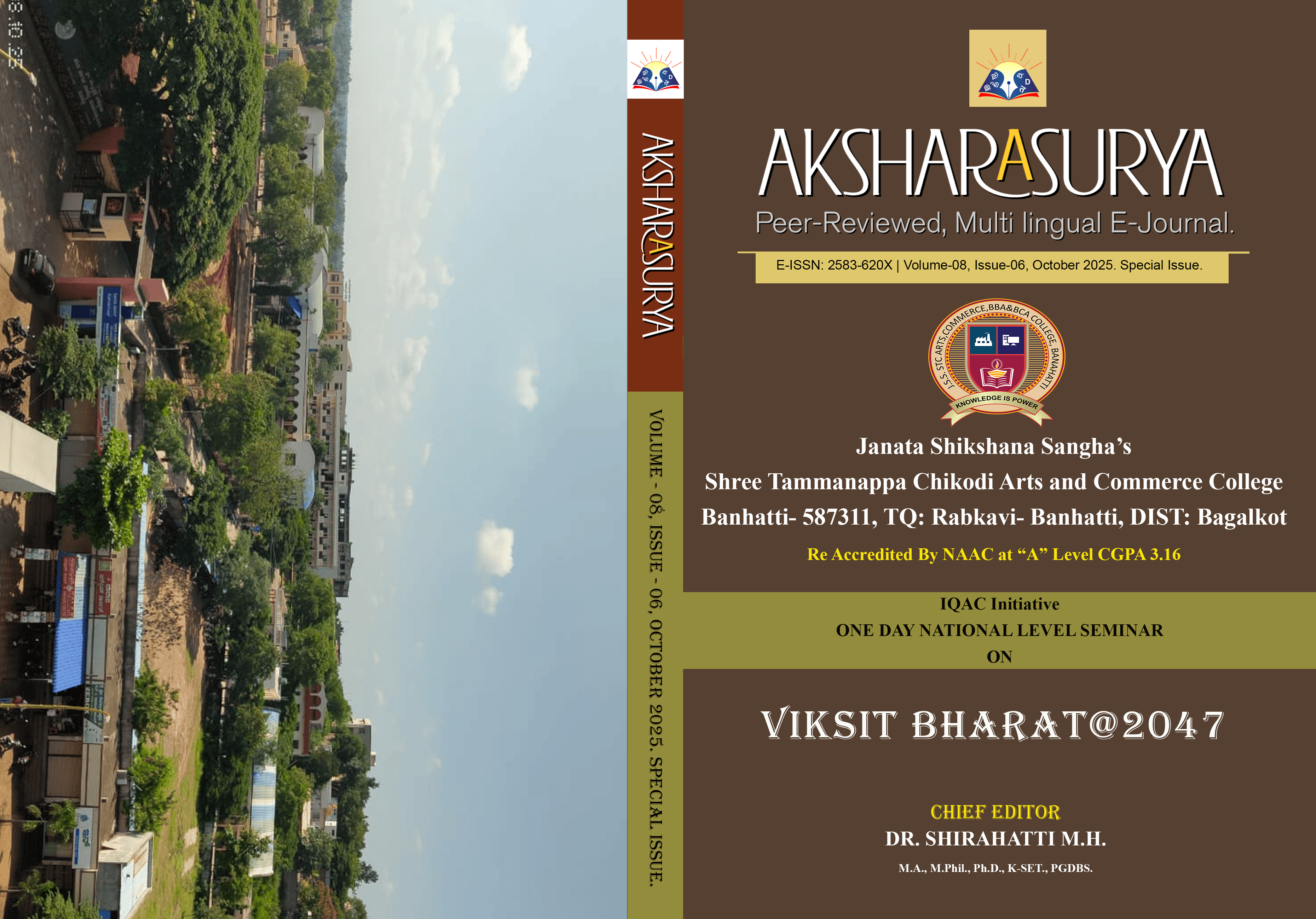
Main Article Content
Abstract
Since India’s independence, the Election Commission has been central to the administration and regulation of electoral politics. Over time, especially since the 1990s, its scope and authority have expanded significantly. This article employs multiple case studies to examine the Commission’s regulatory developments in contemporary Indian politics. It explores efforts to oversee the timing, conduct, and reporting of elections, alongside initiatives to regulate voter, candidate, and party engagement. The paper evaluates the impact of these legislative measures on electoral practices in India. Despite the political implications of its decisions, the Election Commission has maintained a reputation for independence, enabling it to intervene effectively in electoral administration. The study aims to assess the Commission’s effectiveness, organizational structure, and its role in extending constitutional provisions, ultimately highlighting its function as a politically neutral body that safeguards democratic processes.
Article Details
Section

This work is licensed under a Creative Commons Attribution-NonCommercial-ShareAlike 4.0 International License.
How to Cite
References
McMillan, A. (2012). The Election Commission of India and the regulation and administration of electoral politics. Elect. Law J. Rules, Polit. Policy. [https://doi.org/10.1089/elj.2011.0134] (https://doi.org/10.1089/elj.2011.0134)
Review Index. (2017). Perspectives in Politics. [https://doi.org/10.1017/s1537592717003115] (https://doi.org/10.1017/s1537592717003115)
Sridharan, E., & Vaishnav, M. (2017). Election Commission of India. In Rethinking Public Institutions in India.
Balamuthia, K. P., Udayakumar, R., Parameswari, D., & Mugunthan, S. N. (2013). Highly secured online voting system over network. Indian Journal of Science and Technology.
Merolla, J. L., & Zechmeister, E. J. (2013). Democracy at Risk.
Halim, N., Yount, K. M., Cunningham, S. A., & Pande, R. P. (2016). Women’s political empowerment and investments in primary schooling in India. Social Indicators Research. [https://doi.org/10.1007/s11205-015-0870-4] (https://doi.org/10.1007/s11205-015-0870-4)
Halim, N., Yount, K. M., & Cunningham, S. (2016). Do scheduled caste and scheduled tribe women legislators reduce gender-caste gaps in primary schooling? Social Science Research.