
Artificial Intelligence, Indian Democracy and Governance: Opportunities, Challenges and Ethical Concerns
Article Sidebar
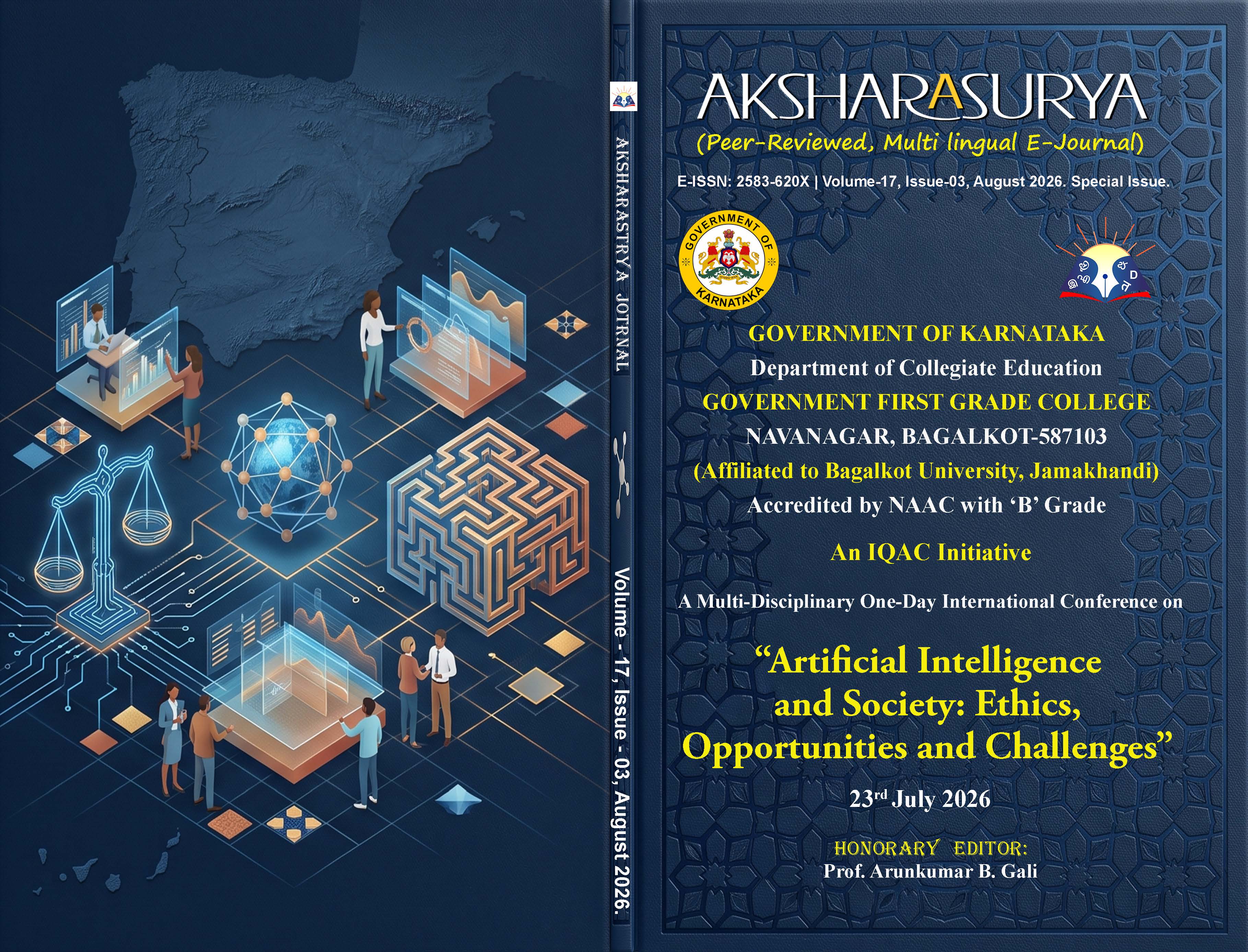
Main Article Content
Abstract
Artificial Intelligence (AI) is increasingly shaping governance structures across the world. In India, the rapid expansion of digital infrastructure, data ecosystems, and e-governance initiatives has accelerated the integration of AI technologies in public administration and policymaking. As the world’s largest democracy, India presents a unique case for examining the intersection of technological innovation and democratic governance. AI has the potential to enhance efficiency, transparency, accountability, and evidence-based policymaking. However, it also raises critical concerns related to privacy, algorithmic bias, surveillance, misinformation, and the ethical implications of automated decision-making in democratic systems. This paper examines the role of Artificial Intelligence in transforming democratic governance in India. It explores the emerging applications of AI in areas such as public service delivery, smart governance, welfare distribution, digital identity systems, and electoral politics. The study argues that AI-driven governance mechanisms can significantly improve administrative efficiency and enable governments to respond more effectively to complex policy challenges. Through data analytics and predictive governance models, AI tools allow policymakers to make informed decisions based on large-scale datasets. Despite these opportunities, the integration of AI into democratic systems also creates risks that could undermine democratic values if not properly regulated. Algorithmic bias can reinforce social inequalities, while the use of AI in political communication may contribute to the spread of misinformation and manipulation of voter behavior. Furthermore, the expansion of data-driven governance raises concerns about privacy, surveillance, and the absence of comprehensive regulatory frameworks governing AI technologies. The paper argues that responsible AI governance requires a balanced approach that promotes technological innovation while safeguarding democratic principles. It emphasizes the importance of transparent regulatory frameworks, ethical guidelines, algorithmic accountability, and strong data protection laws. By developing inclusive and responsible AI governance mechanisms, India can harness the benefits of AI while protecting democratic institutions and citizen rights.
Article Details
Issue
Section

This work is licensed under a Creative Commons Attribution-NonCommercial-ShareAlike 4.0 International License.
How to Cite
References
Floridi, L., Cowls, J., Beltrametti, M., Chatila, R., Chazerand, P., Dignum, V., ...&Schafer, B. (2018). AI4People-An ethical framework for a good AI society. Minds and Machines, 28(4), 689–707.
Government of India. (2020). National Strategy for Artificial Intelligence. NITI Aayog.
O’Neil, C. (2016). Weapons of math destruction: How big data increases inequality and threatens democracy. Crown Publishing.
Organisation for Economic Co-operation and Development (OECD). (2021). Artificial Intelligence in the Public Sector.
Sunstein, C. R. (2018). #Republic: Divided democracy in the age of social media. Princeton University Press.
World Economic Forum. (2023). The future of jobs report.