
Bridging Citizens and State: The Pivotal Role of Civil Societies in Indian Democracy
Article Sidebar
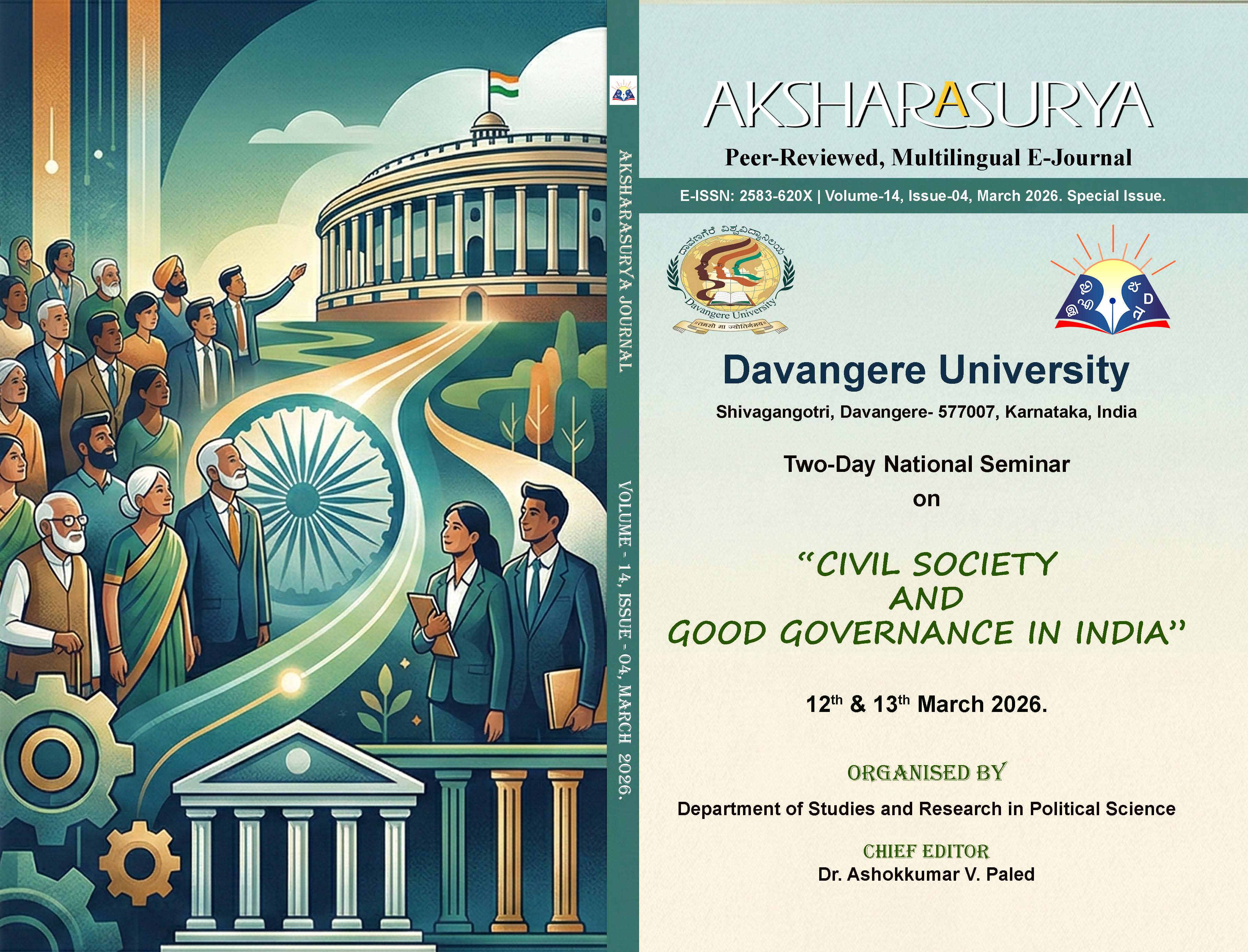
Main Article Content
Abstract
Civil society acts as a crucial bridge in Indian democracy, linking citizens to state institutions through mobilization, oversight, and policy influence. This article examines its pivotal roles in enhancing participation, enforcing transparency, and advancing rights, drawing on cases like the Right to Information (RTI) campaign, Narmada Bachao Andolan, and Kerala’s Gram Sabhas. Despite challenges such as Foreign Contribution Regulation Act (FCRA) restrictions and political pressures, civil society sustains democratic vitality amid inequality and polarization. Findings highlight the need for enabling policies to strengthen this bridge, ensuring inclusive governance for India’s 1.4 billion citizens. The analysis underscores civil society’s indispensable function in preventing institutional erosion and promoting participatory democracy.
Article Details
Section

This work is licensed under a Creative Commons Attribution-NonCommercial-ShareAlike 4.0 International License.
How to Cite
References
Austin, G. (1999). The Indian constitution: Cornerstone of a nation. Oxford University Press.
Guha, R. (2007). India after Gandhi: The history of the world’s largest democracy. Harper Collins.
Hardiman, D. (1984). Peasant nationalists of Gujarat: Kheda district, 1917-1934. Oxford University Press.
Heller, P. (2001). The labor of development: Workers and the transformation of capitalism in Kerala, India. Cornell University Press.
Jayal, N. G. (2021). Citizenship and its discontents: An Indian history. Harvard University Press.
Jenkins, R., & Manor, J. (2000). Civil society and governance: A research study in India.
Kaviraj, S., & Khilnani, S. (Eds.). (2001). Civil society: History and possibilities. Cambridge University Press.
Mazdoor Kisan Shakti Sangathan. (n.d.). About MKSS. https://mkssindia.org/pages/aboutus.html
Nilekani, R. (2022, March 20). Emerging challenges for civil society organisations. The India Forum. https://www.theindiaforum.in/article/emerging-challenges-civil-society-organisations
Nilekani, R., & Kulkarni, V. (2022). Giving back: The transformative power of philanthropy in India. Penguin India.
Oommen, T. K. (2004). Civil society, democracy and nation: A historical perspective. In G. Shah (Ed.), Civil society in Indian democracies (pp. 37-58). Rawat Publications.
Oxfam India. (n.d.). Civil society and policymaking in India. https://www.oxfamindia.org/sites/default/files/WP7-Civil-Scty-n-plcy-mkg-in-India.pdf
Roy, A., & Dey, N. (2015). The RTI story: Power to the people. Rupa Publications.
Shah, A. (2018). Nightmarch: Among India’s revolutionary guerrillas. Hurst Publishers.
Varshney, A. (2013). Battles half won: India’s impossible democracy. Penguin Viking.