
The Impact of E-Governance on Mass Media and Digital Activism
Article Sidebar
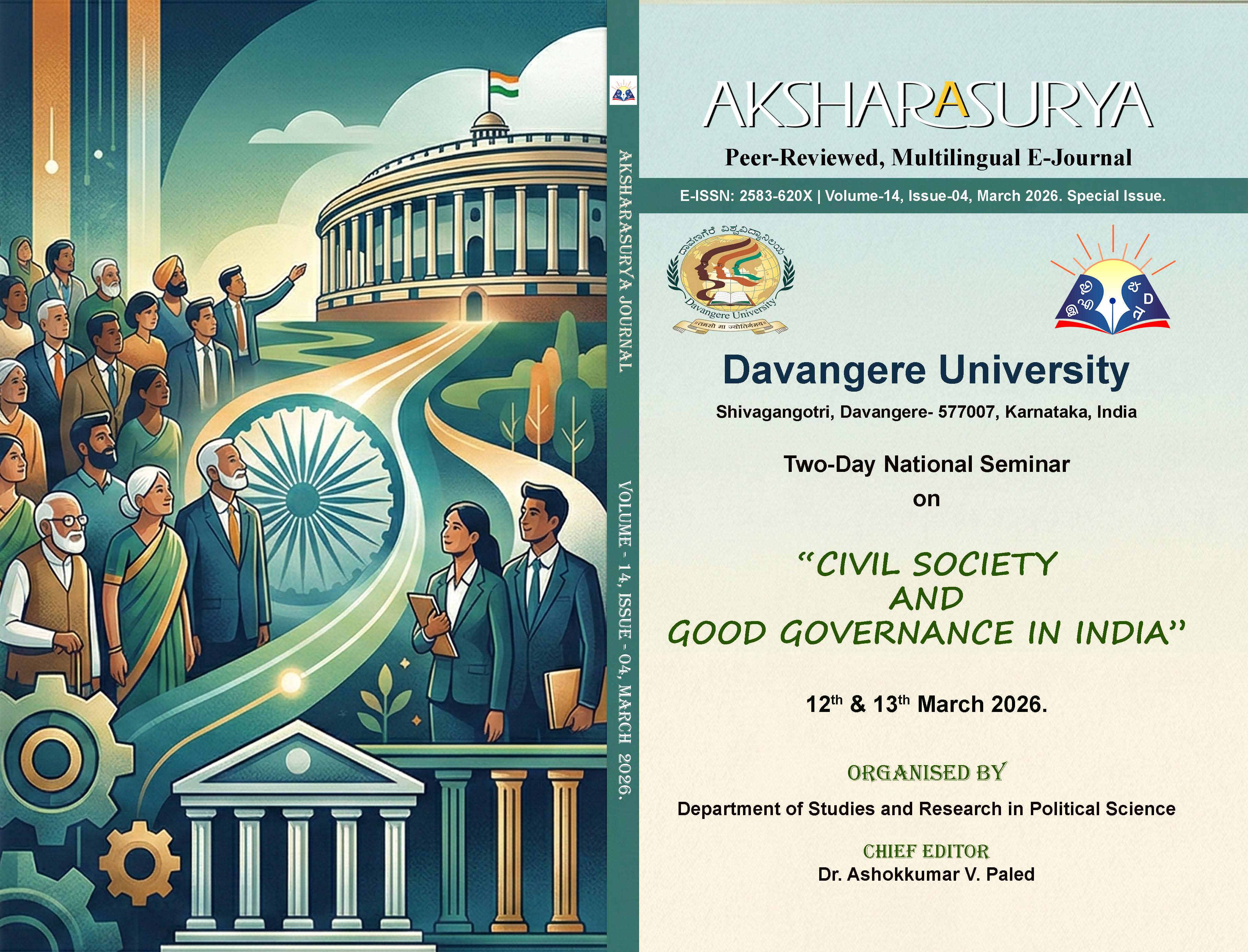
Main Article Content
Abstract
E-governance has reshaped the relationship between the state, mass media, and citizens by integrating digital technologies into public administration and service delivery. Through online portals, open data systems, digital identity frameworks, and social media engagement, governments now communicate in faster and more direct ways. This shift has altered how news is produced, distributed, and consumed. Journalists increasingly rely on official digital databases, real-time updates, and publicly accessible records to investigate policies and evaluate institutional performance. As a result, reporting has become more data-driven and interactive.
The rise of e-governance has also strengthened digital activism. Citizens and civil society groups can access policy documents, budget data, and grievance platforms without traditional bureaucratic barriers. Online petitions, participatory forums, and public consultation portals encourage civic engagement beyond physical spaces. Social media platforms such as Facebook and Twitter amplify these engagements, enabling activists to mobilize support and influence public debate. Mass media often bridges online activism and wider audiences by reporting on digital campaigns and policy responses.
At the same time, the expansion of digital governance raises questions about regulation, surveillance, and digital divides. Unequal access to technology may limit participation, while data collection practices can affect privacy and freedom of expression. The impact of e-governance on media and activism therefore depends on transparency, digital literacy, and institutional safeguards. When supported by open data and accountability mechanisms, e-governance can deepen democratic participation. When constrained by restrictive policies, it may narrow the space for independent journalism and civic action. E-governance represents both an opportunity and a challenge for contemporary media systems and digitally mediated activism.
Article Details
Section

This work is licensed under a Creative Commons Attribution-NonCommercial-ShareAlike 4.0 International License.
How to Cite
References
Bhatnagar, S. (2004). E-government: From vision to implementation – A practical guide with case studies. SAGE Publications India.
Misra, D. C. (2007). E-governance: Concepts and case studies. Prentice Hall of India.
Palvia, S. C. J., & Sharma, S. S. (2007). E-government and e-governance: Definitions, domain framework and status around the world. Foundations of E-government, 1–12.
Prasad, R. (2012). E-governance and rural development in India. New Century Publications.
Saxena, K. B. C. (2005). Towards excellence in e-governance. International Journal of Public Sector Management, 18(6), 498–513.