
AI, Sustainable Development & Good Governance: Opportunities and Challenges in an Indian Scenario
Article Sidebar
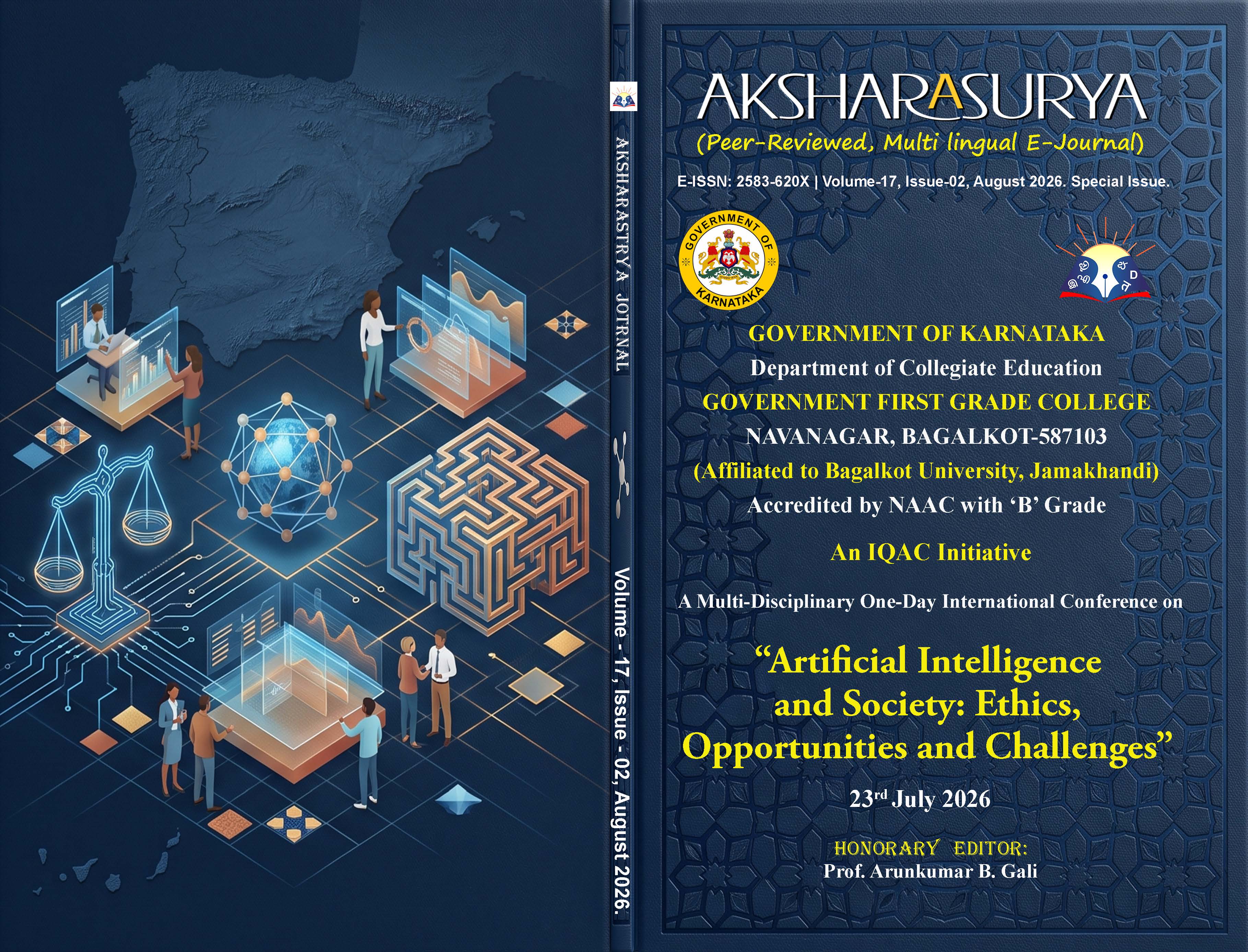
Main Article Content
Abstract
Artificial Intelligence (AI) is emerging as a transformative force capable of accelerating sustainable development and strengthening good governance in India. As a rapidly developing economy with vast demographic diversity, India can leverage AI to address structural challenges in healthcare, education, agriculture, urban planning, environmental management, and public administration. AI-enabled predictive analytics, precision agriculture, personalized learning systems, smart infrastructure, and digital governance platforms have the potential to enhance efficiency, transparency, accountability, and citizen-centric service delivery.
By supporting data-driven policymaking and targeted welfare implementation, AI can contribute significantly to achieving the Sustainable Development Goals (SDGs) while promoting inclusive growth. However, the adoption of AI in India also presents critical challenges. Persistent digital divides, inadequate data quality, infrastructure gaps, skill shortages, ethical concerns, algorithmic bias, privacy risks, and the absence of comprehensive regulatory frameworks may hinder equitable implementation. Moreover, the environmental footprint of large-scale AI systems raises sustainability concerns. This paper examines the opportunities and risks associated with AI deployment in India’s governance and development landscape. It argues that a balanced, ethical, and inclusive AI strategy-supported by robust data governance, capacity building, and citizen participation-is essential for harnessing AI as a catalyst for sustainable and accountable governance in India.
Article Details
Issue
Section

This work is licensed under a Creative Commons Attribution-NonCommercial-ShareAlike 4.0 International License.
How to Cite
References
NITI Aayog (2018). National Strategy for Artificial Intelligence: #AIforAll. Government of India.
NITI Aayog (2021). Responsible AI for All: Approach Document. Government of India.
Ministry of Electronics and Information Technology (2023). India AI Mission Framework. Government of India.
United Nations (2015). Transforming Our World: The 2030 Agenda for Sustainable Development.
United Nations Development Programme (2021). Artificial Intelligence for Sustainable Development.
World Economic Forum (2018). Harnessing Artificial Intelligence for the Earth.
Organisation for Economic Co-operation and Development (2019). OECD Principles on Artificial Intelligence.
Government of India (2023). Digital Personal Data Protection Act.
World Bank (2022). Digital Development and Governance Reports.
UNESCO (2021). Recommendation on the Ethics of Artificial Intelligence.