
Empowering Language Learners Through AI-Based Tools: A Pedagogical Perspective
Article Sidebar
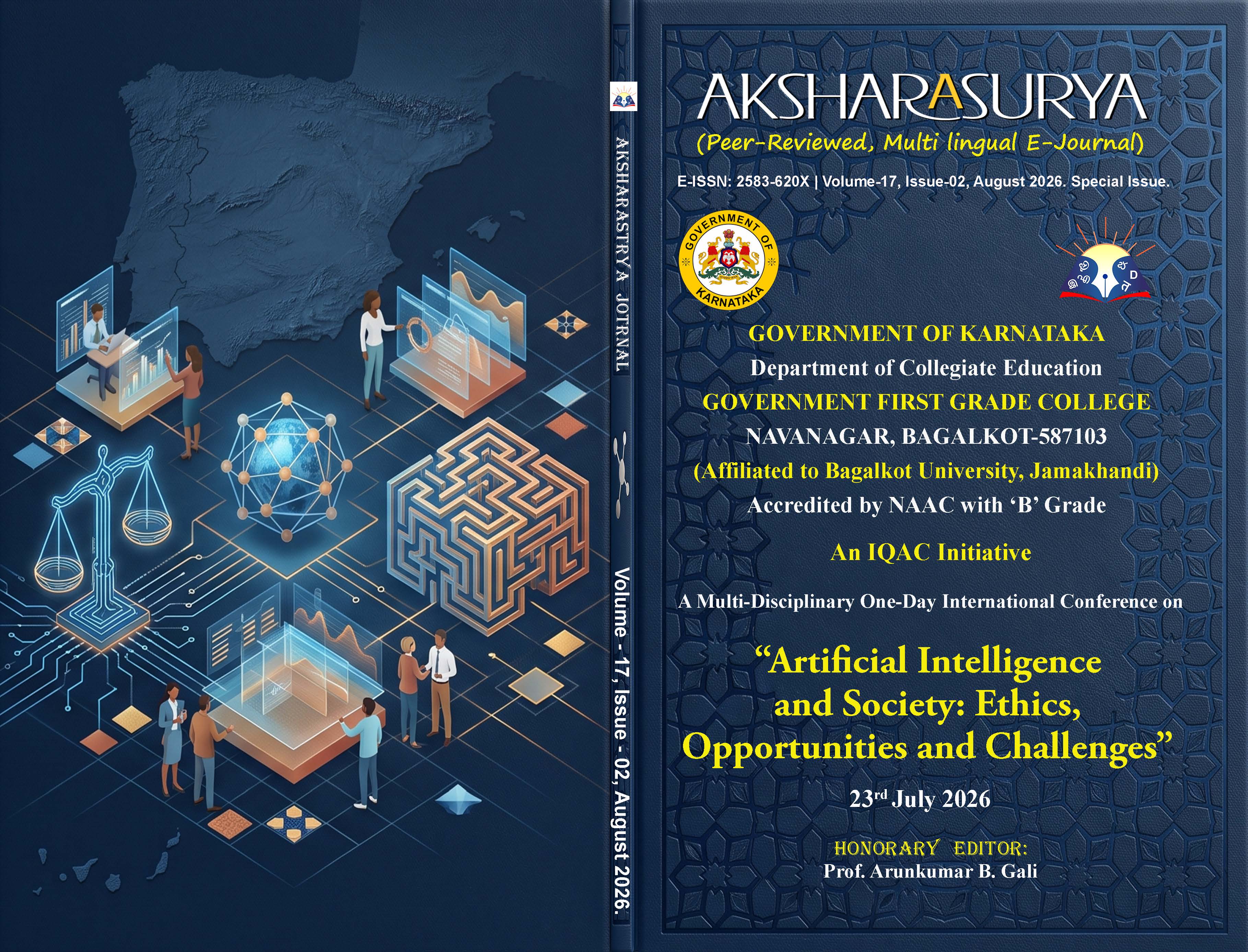
Main Article Content
Abstract
Artificial Intelligence (AI) has become a powerful enabler in contemporary language education, offering innovative tools that support learner autonomy, engagement, and communicative competence. AI-based tools such as intelligent tutoring systems, adaptive learning platforms, speech recognition software, and conversational agents are increasingly used to personalize learning experiences and provide continuous feedback. From a pedagogical perspective, these tools have the potential to empower language learners by shifting control of learning from teacher-centered instruction to learner-centered, self-regulated practices. This paper examines how AI-based tools contribute to learner empowerment in language education by enhancing access, personalization, confidence, and communicative practice. It also critically analyzes pedagogical challenges related to ethical use, over-dependence on technology, cultural limitations, and the changing role of teachers. The paper argues that AI should be integrated as a supportive pedagogical partner rather than a substitute for human interaction, ensuring that language learning remains meaningful, inclusive, and socially grounded.
Article Details
Issue
Section

This work is licensed under a Creative Commons Attribution-NonCommercial-ShareAlike 4.0 International License.
How to Cite
References
Benson, P. (2013). Teaching and researching autonomy in language learning. Routledge.
Godwin-Jones, R. (2022). Emerging technologies and language learning: Artificial intelligence. Language Learning & Technology, 26(3), 1–7.
Holmes, W., Bialik, M., & Fadel, C. (2019). Artificial intelligence in education: Promises and implications for teaching and learning. Center for Curriculum Redesign.
Kukulska-Hulme, A., & Shield, L. (2008). An overview of mobile assisted language learning. ReCALL, 20(3), 271–289.
Luckin, R. (2018). Machine learning and human intelligence: The future of education for the 21st century. UCL Press.
O’Neill, E., & Russell, A. (2023). Ethical considerations in AI-supported language education. Computers & Education, 194, 104676.
UNESCO. (2021). AI and education: Guidance for policy-makers. UNESCO Publishing.