
Building Ethical AI Systems for Competitive Advantage in Commerce
Article Sidebar
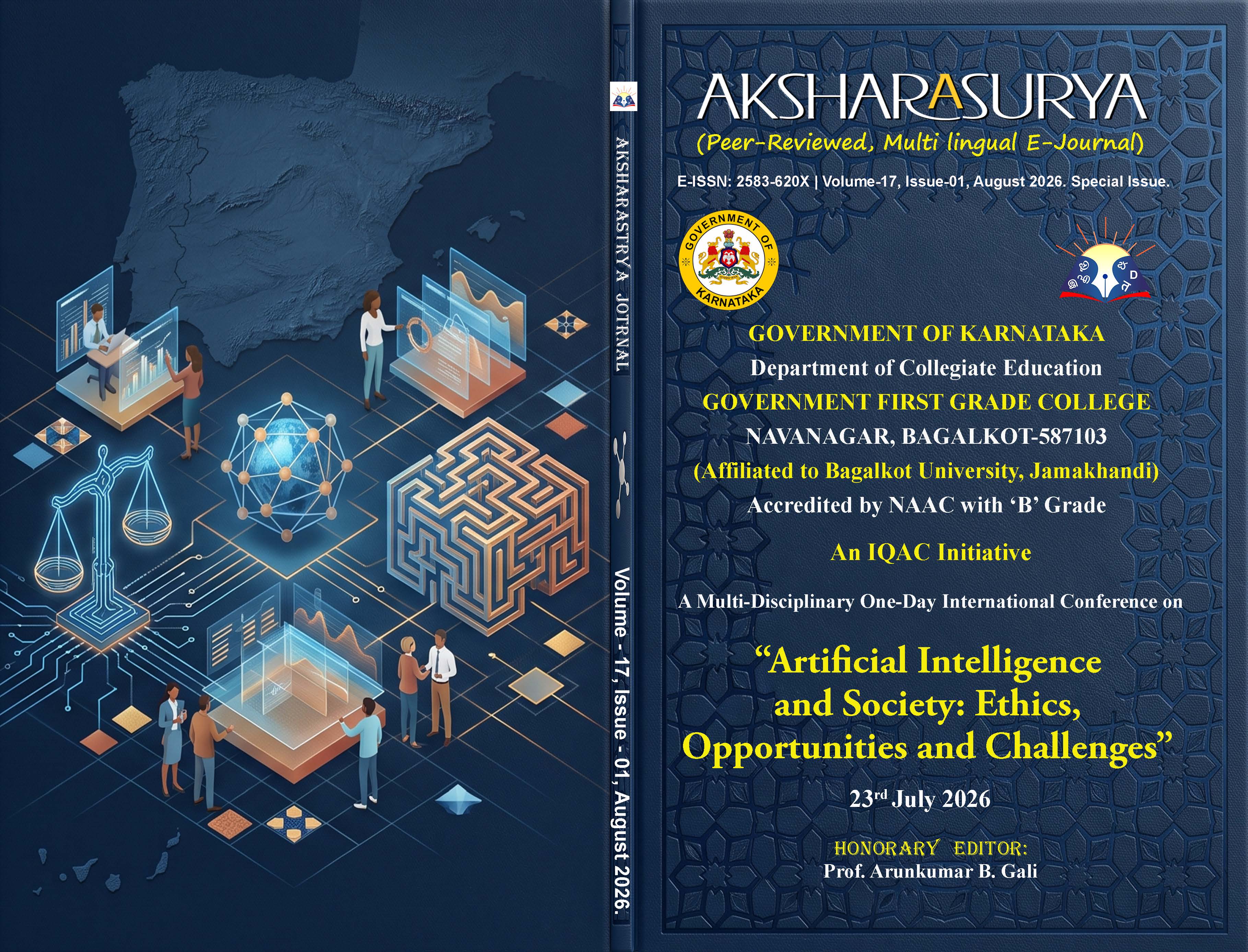
Main Article Content
Abstract
Artificial Intelligence (AI) is increasingly shaping modern commerce by enhancing operational efficiency, improving customer engagement, and enabling data-driven decision-making. However, alongside these benefits arise ethical concerns such as privacy violations, algorithmic bias, lack of transparency, and accountability challenges. This study examines how ethical AI systems contribute to sustainable competitive advantage in commerce. Through a qualitative review of secondary sources and conceptual analysis, the article explores ethical frameworks, governance strategies, and business implications of responsible AI adoption. The findings indicate that organizations integrating ethical AI principles experience improved customer trust, stronger brand reputation, and reduced regulatory risks. Ethical AI is therefore positioned as a strategic asset rather than a limitation. The study concludes that embedding ethical standards in AI development is essential for long-term commercial sustainability.
Article Details
Issue
Section

This work is licensed under a Creative Commons Attribution-NonCommercial-ShareAlike 4.0 International License.
How to Cite
References
Floridi, L., Cowls, J., Beltrametti, M., Chatila, R., Chazerand, P., Dignum, V., … & Schafer, B. (2018). AI4People-An ethical framework for a good AI society: Opportunities, risks, principles, and recommendations. Minds and Machines, 28(4), 689–707. https://doi.org/10.1007/s11023-018-9482-5
Jobin, A., Ienca, M., & Vayena, E. (2019). The global landscape of AI ethics guidelines. Nature Machine Intelligence, 1(9), 389–399. https://doi.org/10.1038/s42256-019-0088-2
Mittelstadt, B. D. (2019). Principles alone cannot guarantee ethical AI. Nature Machine Intelligence, 1(11), 501–507. https://doi.org/10.1038/s42256-019-0114-z
Taddeo, M., & Floridi, L. (2019). How AI can be a force for good. Science, 361(6404), 751–752. https://doi.org/10.1126/science.aau2820
West, D. M. (2019). The future of work: Robots, AI, and automation (2nd ed.). Brookings Institution Press.
Davenport, T. H., & Ronanki, R. (2020). Artificial intelligence for the real world. Harvard Business Review, 98(1), 108–116.
Binns, R. (2020). Fairness in machine learning: Lessons from political philosophy. Journal of Machine Learning Research, 21(169), 1–47.
Raji, I. D., & Buolamwini, J. (2021). Actionable auditing: Investigating the impact of publicly naming biased performance results of commercial AI products. Proceedings of the AAAI/ACM Conference on AI, Ethics, and Society, 429–440.
Jobin, A., & Hurst, S. (2022). Public trust and ethical AI: Evidence from consumer surveys. Ethics and Information Technology, 24(1), 213–230.
Deloitte. (2022). Ethical AI in business: Building trust through responsible innovation. Deloitte Insights. https://www2.deloitte.com
European Commission. (2023). Regulation of Artificial Intelligence Act. Publications Office of the European Union.
Mikalef, P., Krogstie, J., & Pappas, I. O. (2023). Ethical AI and digital transformation in organizations. Information & Management, 60(3), 103648.
Zhou, Q., & Kapoor, G. (2024). Ensuring algorithmic fairness: Methods and applications in commerce. Journal of Business Ethics, 175(2), 331–349.
Lee, M. K., & Kizilcec, R. (2025). AI transparency and consumer behavior: A longitudinal study. Journal of Consumer Research. Advance online publication. https://doi.org/10.1093/jcr/ucac025