
Women’s Rights in the Hindu Code Bill
Article Sidebar
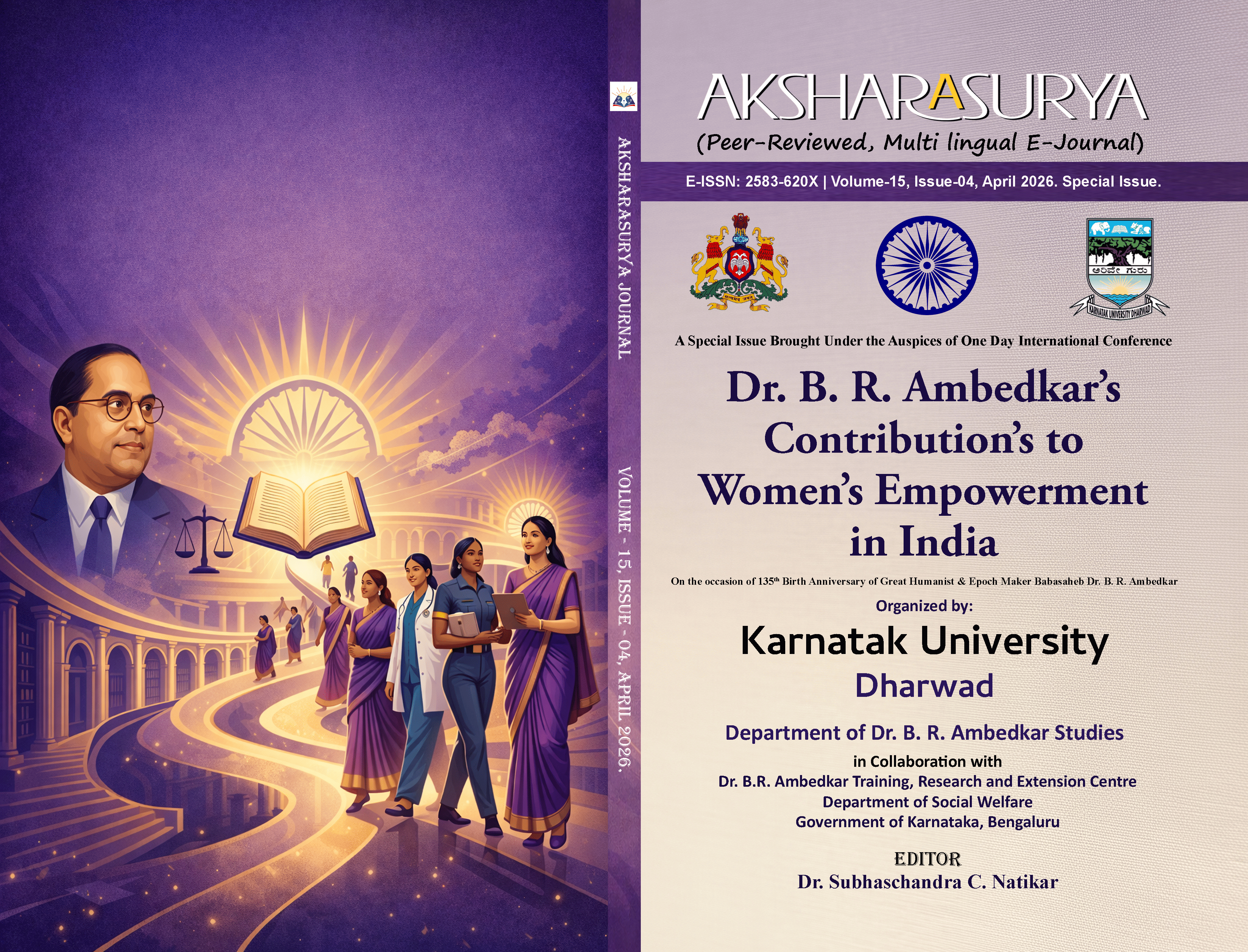
Main Article Content
Abstract
This paper examines the Hindu Code Bill as a landmark legal reform for women’s rights and gender equality in post-independence India. Spearheaded by Dr. B.R. Ambedkar, the Bill sought to dismantle patriarchal pre-independence laws that denied Hindu women basic rights to property, marriage, divorce, and adoption. Despite fierce conservative opposition that led to the legislation being split into four separate Acts (Marriage, Succession, Minority and Guardianship, and Adoptions and Maintenance), it fundamentally transformed India’s legal landscape. The reforms established legal equality, banned polygamy, and granted inheritance rights, laying the essential groundwork for modern gender justice and women’s empowerment.
Article Details
Section

This work is licensed under a Creative Commons Attribution-NonCommercial-ShareAlike 4.0 International License.
How to Cite
References
Agnes, F. (2001). Law and gender inequality: The politics of women’s rights in India. Oxford University Press.
Ambedkar, B. R. (1995). Dr. Babasaheb Ambedkar: Writings and speeches (Vol. 14). Education Department, Government of Maharashtra.
Derrett, J. D. M. (1999). Hindu law: Past and present. A. Mukherjee & Co.
Parashar, A. (1992). Women and family law reform in India: Uniform civil code and gender equality. Sage Publications.
Som, R. (1994). Jawaharlal Nehru and the Hindu Code: A victory of symbol over substance? Modern Asian Studies, 28(1), 165–194.