
Social Reforms in India: Pathways to Equality and Inclusion
Article Sidebar
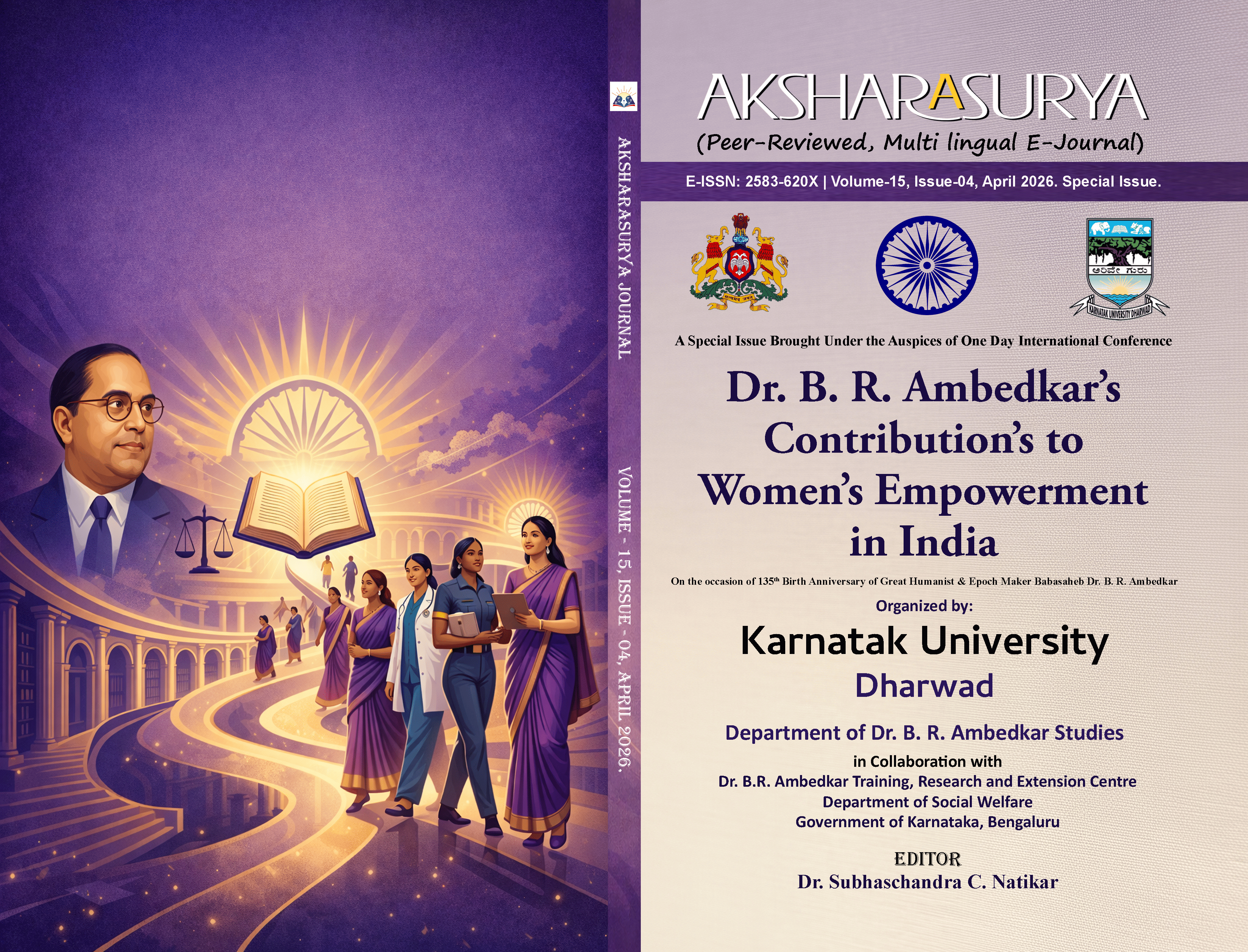
Main Article Content
Abstract
Social reforms in India have played a crucial role in transforming a deeply stratified society into a more inclusive and democratic one. These reforms have addressed inequalities related to caste, gender, religion, and class, aiming to ensure justice, dignity, and equal opportunities for all individuals. This article examines the evolution, significance, and impact of social reform movements in India. It highlights how these reforms have contributed to the ideals of equality and inclusion, while also addressing the challenges that persist in contemporary society.
Article Details
Section

This work is licensed under a Creative Commons Attribution-NonCommercial-ShareAlike 4.0 International License.
How to Cite
References
Ambedkar, B. R. (1936). Annihilation of caste. Navayana Publishing.
Ambedkar, B. R. (1945). What Congress and Gandhi have done to the untouchables. Thacker & Co.
Government of India. (2020). National Education Policy 2020. Ministry of Education.
Hulakund, Prashant (2026), Social Research and Statistics, Sri Siddhalingeshwar Prakashana, Kalaburagi
Hulakund, Prashant (2025), Social Thinkers, Sri Siddhalingeshwar Prakashana, Kalaburagi
Hulakund, Prashant (2025), Social Stratification, Sri Siddhalingeshwar Prakashana, Kalaburagi
Hulakund, Prashant (2025), The Study of Indian Society, Sri Siddhalingeshwar Prakashana, Kalaburagi
Hulakund, Prashant (2025), Society in Karnataka, Sri Siddhalingeshwar Prakashana, Kalaburagi
Kumar, V. (2017). Social reform movements in India. Indian Journal of Social Studies, 5(2), 45–52.
Nussbaum, M. C. (2000). Women and human development: The capabilities approach. Cambridge University Press.
Omvedt, G. (2004). Ambedkar: Towards an enlightened India. Penguin Books.
Rawls, J. (1971). A theory of justice. Harvard University Press.
Sen, A. (1999). Development as freedom. Oxford University Press.
Sharma, S. (2015). Social change and reform movements in India. Journal of Sociology, 10(1), 12–20.
UNDP. (2019). Human development report 2019. United Nations Development Programme.