
Dr. B. R. Ambedkar’s Contribution to Women Empowerment in India: A Study of Legal Reforms
Article Sidebar
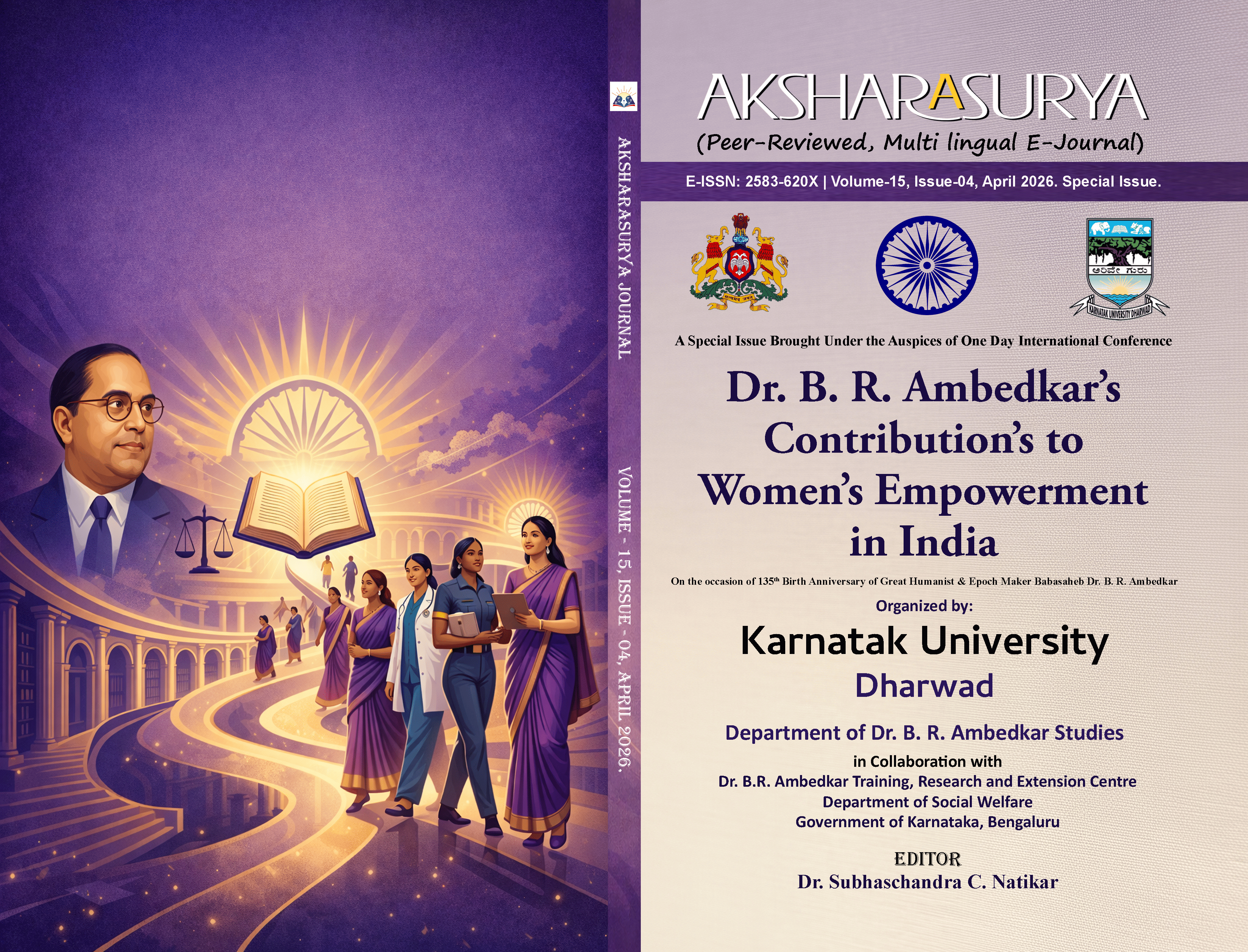
Main Article Content
Abstract
B. R. Ambedkar played a transformative and pioneering role in shaping modern India through his relentless struggle for social justice, equality, and human dignity. Among his many contributions, his efforts toward women’s empowerment stand out as deeply progressive and far ahead of his time. In a society dominated by rigid patriarchal norms and discriminatory practices, Ambedkar recognized that the upliftment of women was essential for the overall development of the nation. This paper examines his contributions to women’s rights, focusing particularly on constitutional safeguards, legal reforms such as the Hindu Code Bill, and his broader social vision. It highlights how Ambedkar’s ideas and actions laid the foundation for gender equality in India and continue to influence contemporary discussions on women’s rights.
Article Details
Section

This work is licensed under a Creative Commons Attribution-NonCommercial-ShareAlike 4.0 International License.
How to Cite
References
B. R. Ambedkar. (1948). The Hindu Code Bill (Draft). Government of India.
Government of India. (1950). The Constitution of India. Government of India.
Keer, D. (1990). Dr. Ambedkar: Life and mission. Popular Prakashan.
Omvedt, G. (2004). Ambedkar: Towards an enlightened India. Penguin Books India.
Hindu Minority and Guardianship Act. (1956). Government of India.
Hindu Adoptions and Maintenance Act. (1956). Government of India.
Zelliot, E. (1992). From untouchable to Dalit: Essays on the Ambedkar movement. Manohar Publishers.