
Global Communication and Identity in Midnight’s Children
Article Sidebar
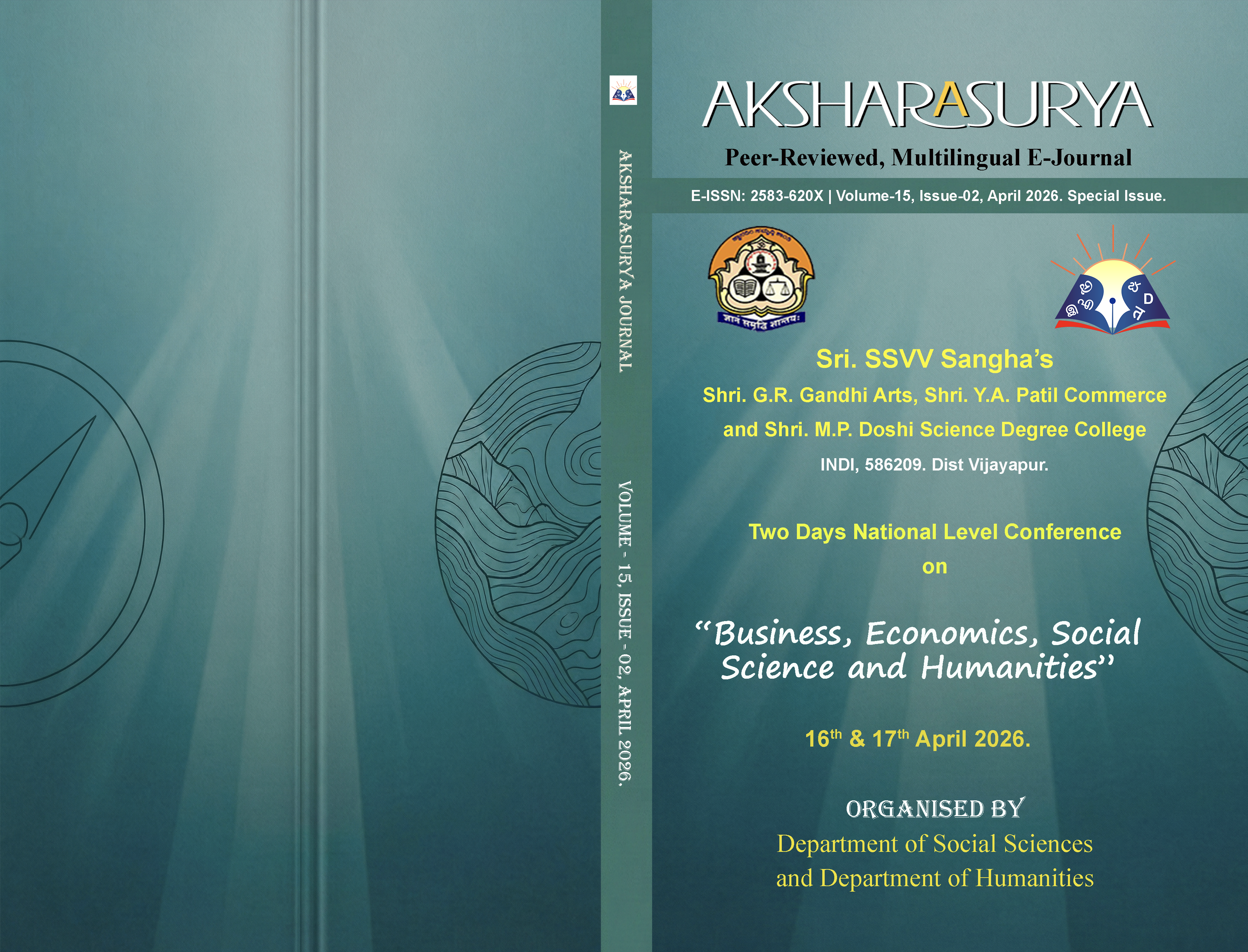
Main Article Content
Abstract
This paper examines the relationship between global communication and identity formation in Midnight’s Children by Salman Rushdie. The novel presents postcolonial India as a space where language, history, and personal identity intersect with global influences. Through the protagonist Saleem Sinai, Rushdie explores how English functions as a medium of global communication while simultaneously shaping fragmented identities. The study argues that the novel reflects the complexities of postcolonial identity in a globalized world, where communication transcends national boundaries but creates tensions between tradition and modernity.
Article Details
Section

This work is licensed under a Creative Commons Attribution-NonCommercial-ShareAlike 4.0 International License.
How to Cite
References
Appadurai, A. (1996). Modernity at large: Cultural dimensions of globalization. University of Minnesota Press.
Bhabha, H. K. (1994). The location of culture. Routledge.
Hall, S. (1990). Cultural identity and diaspora. In J. Rutherford (Ed.), Identity: Community, culture, difference (pp. 222–237). Lawrence & Wishart.
Rushdie, S. (1981). Midnight’s children. Jonathan Cape.