
Dr. B. R. Ambedkar and the Hindu Code Bill: A Constitutional Breakthrough for Women's Empowerment in India
Article Sidebar
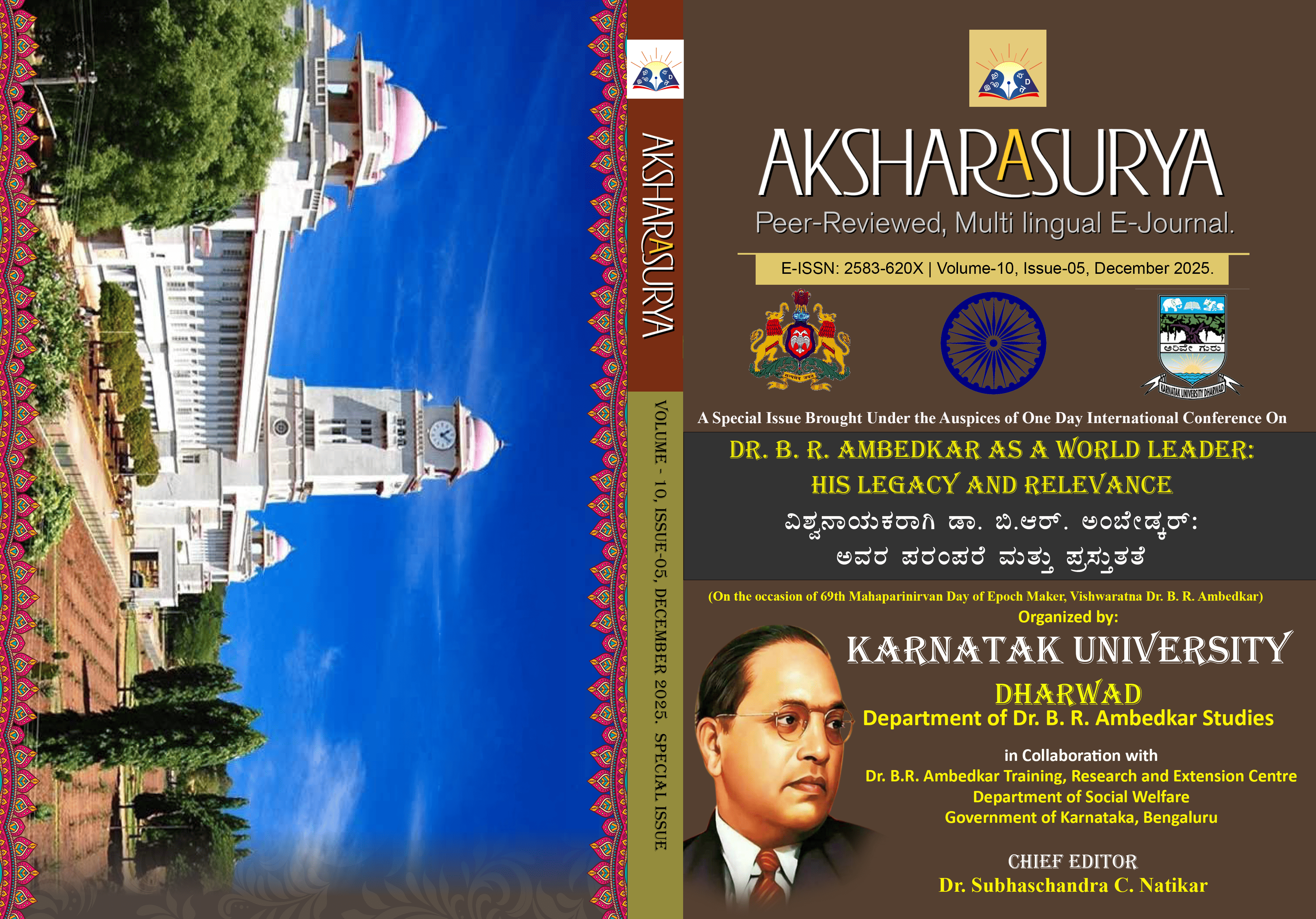
Main Article Content
Abstract
This study examines Dr. B. R. Ambedkar's pioneering role in advancing women's rights through the Hindu Code Bill, one of the most ambitious gender-equality reforms of early independent India. Anchored in feminist and constitutional philosophy, Ambedkar's legislative project sought to dismantle entrenched patriarchal structures by granting Hindu women equal rights in marriage, divorce, property, inheritance, guardianship, and adoption. Although the Bill faced significant socio-political resistance and was only partially enacted following Ambedkar's resignation, its core principles were eventually realized through the Hindu Marriage Act (1955), Hindu Succession Act (1956), Hindu Minority and Guardianship Act (1956), and Hindu Adoptions and Maintenance Act (1956). Using historical, legal, and socio-economic analysis, this paper evaluates the transformative impact of these reforms on women's lives. Empirical indicators—from literacy and higher education to property ownership and political participation—demonstrate sustained improvements aligned with Ambedkar's vision of social democracy. The study identifies persistent challenges in achieving substantive gender equality and proposes policy measures grounded in Ambedkar's feminist jurisprudence. Overall, the paper reaffirms the constitutional significance and contemporary relevance of Ambedkar's Hindu Code Bill as a foundational milestone in India's pursuit of gender justice.
Article Details
Section

This work is licensed under a Creative Commons Attribution-NonCommercial-ShareAlike 4.0 International License.
How to Cite
References
Ambedkar, B. R. Writings and Speeches, Vol. 14. Government of Maharashtra, 1995.
Austin, Granville. The Indian Constitution: Cornerstone of a Nation. Oxford University Press, 1966.
Jaffrelot, Christophe. Dr.Ambedkar and Untouchability: Analysing and Fighting Caste. Permanent Black, 2005.
Keer, Dhananjay. Dr.Ambedkar: Life and Mission. Popular Prakashan, 1990.
Kohli, Atul. Democracy and Discontent: India's Growing Crisis of Governability. Cambridge University Press, 1990.
Panikkar, K. N. “The Hindu Code Bill and the Politics of Gender.” Social Scientist, vol. 37, no. 9/10, 2009.
Rao, Anupama. The Caste Question: Dalits and the Politics of Modern India. University of California Press, 2009.
Sen, Amartya. The Argumentative Indian. Penguin, 2005.
Sharma, J. “Ambedkar and the Politics of Law Reform.” Economic and Political Weekly, 2013.
Zelliot, Eleanor. Ambedkar's World: The Making of Babasaheb and the Dalit Movement. Navayana, 2013.
The Hindu Marriage Act, 1955.
The Hindu Succession Act, 1956.
The Hindu Minority and Guardianship Act, 1956.
The Hindu Adoptions and Maintenance Act, 1956.
Constituent Assembly Debates: Official Reports (1946–1950). Government of India.