
Haji Usman Sait of Bengaluru: The Pivotal Role of Khilafat Stalwart in Karnataka’s Nationalist Awakening
Article Sidebar
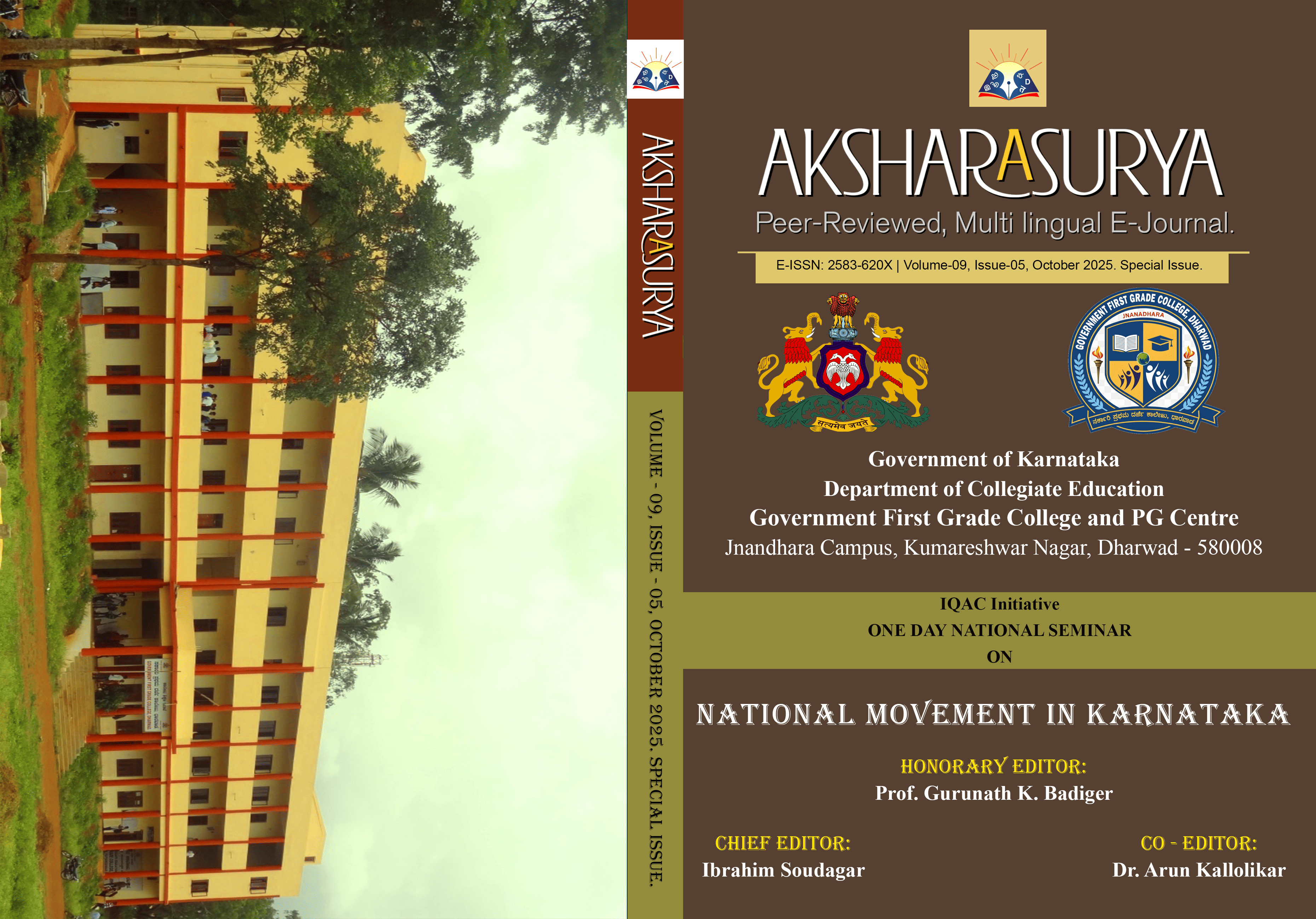
Main Article Content
Abstract
This paper examines the critical yet understudied role of Haji Usman Sait, a prominent merchant and president of the Bengaluru Khilafat Committee, in catalysing the Non-Cooperation Movement in Karnataka. While mainstream narratives of the freedom struggle in the region often highlight Congress leaders, this study argues that Sait’s leadership was instrumental in the initial mass mobilization of the early 1920s. As a key financier, organizer, and bridge between communities, he transformed the Khilafat agitation into a powerful force for nationalist action. Drawing from contemporary newspapers and historical accounts, this study reconstructs Sait’s multifaceted contributions from organizing large-scale protests and funding movement activities to fostering Hindu-Muslim unity. It concludes that figures like Haji Usman Sait were grassroots architects of Gandhian mass movements in Karnataka, and their erasure from mainstream historiography reflects a significant gap in acknowledging the diverse coalitions that defined India’s struggle for freedom.
Article Details
Section

This work is licensed under a Creative Commons Attribution-NonCommercial-ShareAlike 4.0 International License.
How to Cite
References
Ahamed, Syed Naseer. The Immortals. Azad House of Publication, 2014.
Hasan, Fazlul. Bangalore Through the Centuries. Historical Publications Bangalore, 1970.
“21 Doors & a Fiery Spirit.” Bangalore Mirror, 12 May 2014,
Haji Usman Sait: ‘Cash Bag of Indian National Congress’.” Heritage Times, 1 Aug. 2021, https://www.heritagetimes.in/khilafat-wale-haji-usman-sait-cash-bag-of-indian-national-congress.