
Social Mobility, Education and Empowerment in Indian Society
Article Sidebar
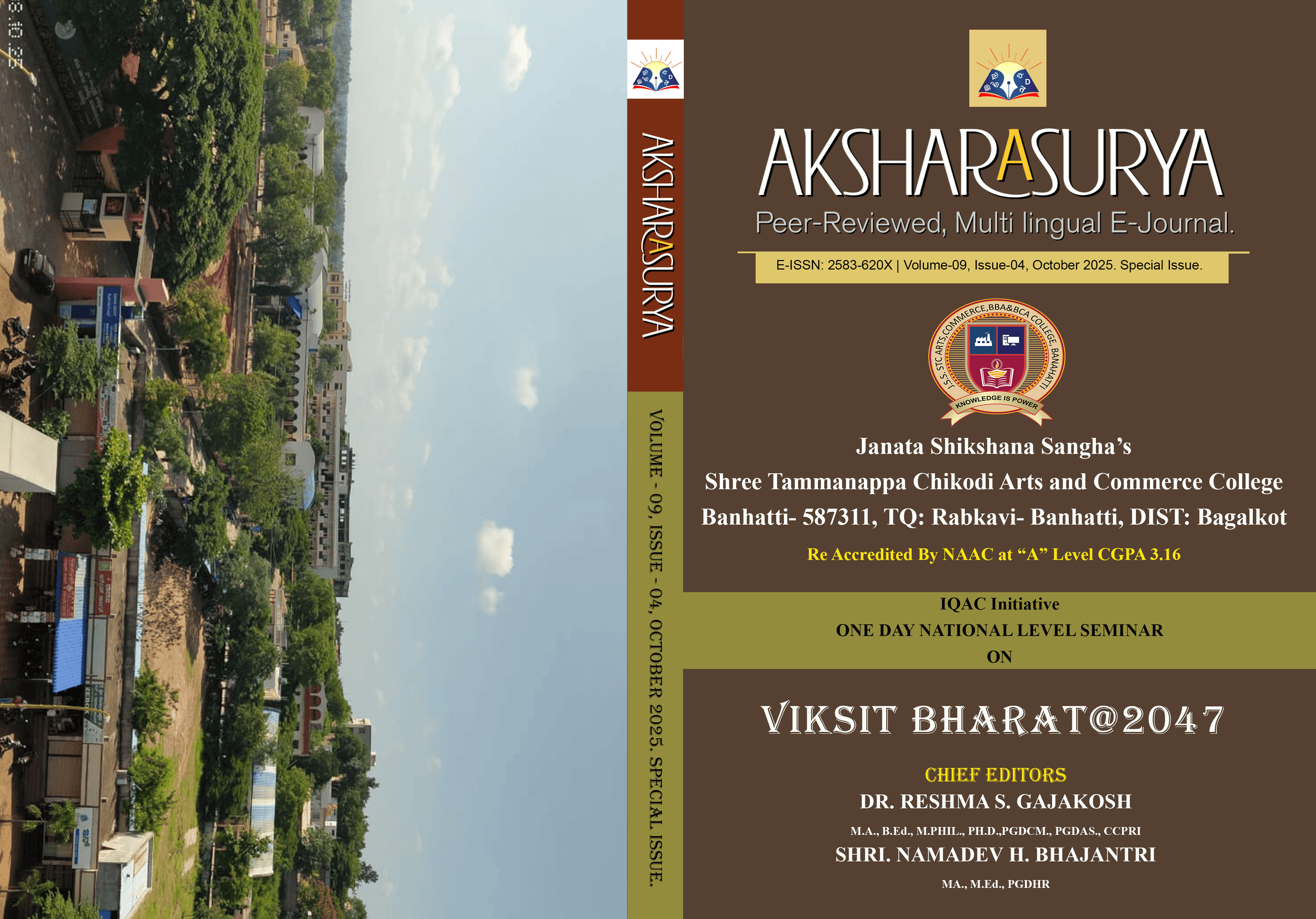
Main Article Content
Abstract
This article explores the critical interplay of social mobility, education, and empowerment in the context of Indian society. Historically constrained by the rigid caste system and deep-seated inequalities, India views education as the single most powerful instrument of change. It functions as the primary vehicle for both vertical and intergenerational mobility, enabling individuals to transcend traditional barriers of class, caste, and gender. Empowerment—social, economic, and political—is simultaneously a goal and a process, ensuring that marginalized groups, including SCs, STs, OBCs, and women, gain agency and access to opportunities. While constitutional safeguards, modern education, and globalization have fostered significant progress and the rise of a new middle class, challenges like unequal quality of education, the digital divide, and persistent discrimination continue to limit equitable advancement. The interconnectedness of these three pillars is foundational to achieving a truly just and egalitarian Indian society.
Article Details
Section

This work is licensed under a Creative Commons Attribution-NonCommercial-ShareAlike 4.0 International License.
How to Cite
References
Ambedkar, B. R. (1945). Annihilation of Caste. Mumbai: Government of Maharashtra.
Bottomore, T. B. (1993). Sociology: A Guide to Problems and Literature. New Delhi: S. Chand.
Dube, S. C. (1990). Indian Society. New Delhi: National Book Trust.
Kumar, Krishna. (1991). Political Agenda of Education: A Study of Colonialist and Nationalist Ideas. New Delhi: Sage Publications.
Sen, Amartya. (1999). Development as Freedom. New Delhi: Oxford University Press.
Srinivas, M. N. (1962). Caste in Modern India and Other Essays. Bombay: Asia Publishing House.
Shah, Ghanshyam. (2002). Social Movements and the State. New Delhi: Sage Publications.
Nair, Janaki. (2005). Women and Law in Colonial India: A Social History. New Delhi: Kali for Women.
National Sample Survey Organisation (NSSO). (2021). Household Social Consumption on Education in India. Ministry of Statistics and Programme Implementation, Government of India.
National Policy on Education (1968, 1986, 1992, and 2020). Ministry of Education, Government of India.
Planning Commission of India. (2013). Twelfth Five Year Plan: Inclusive Growth. Government of India.
UNESCO. (2015). Education for All Global Monitoring Report. Paris: UNESCO.
Desai, Sonalde & Vanneman, Reeve (2011). India Human Development Survey-II. University of Maryland & National Council of Applied Economic Research.