
Eco- Criticism in Saint Tukaram and William Wordsworth Poetry: A Comparative Study
Article Sidebar
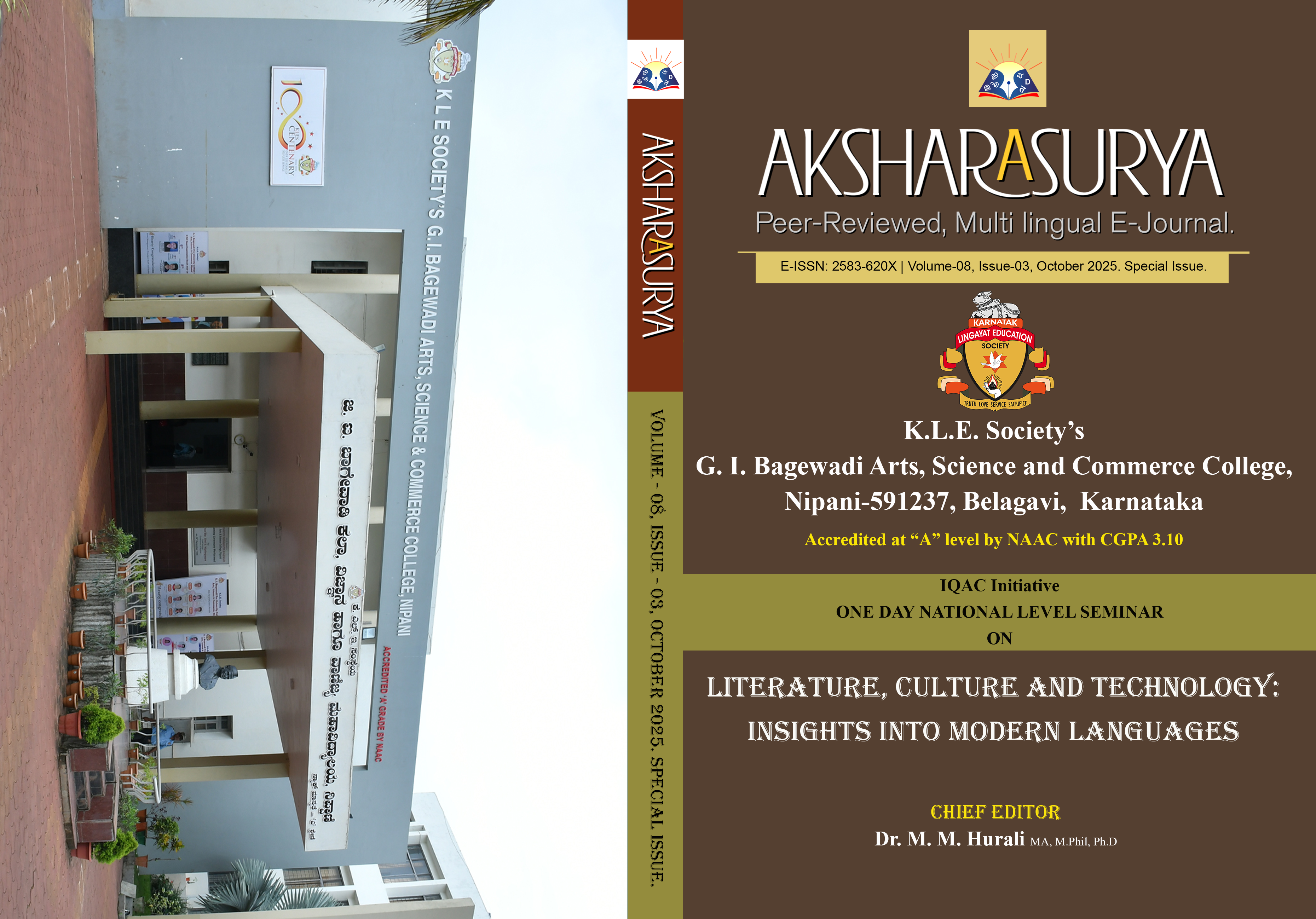
Main Article Content
Abstract
This paper explores the ecocritical perspectives in the poetry of Saint Tukaram and William Wordsworth, examining how both poets represent nature and its relationship with human life. Ecocriticism studies the connection between literature and the environment, emphasizing how literary works reflect ecological awareness and respect for nature. Saint Tukaram a 17th-century Marathi saint-poet presents nature as a divine creation, using simple, rural imagery in his abhangas to teach devotion, harmony, and equality. William Wordsworth, a leading English Romantic poet, portrays nature as a teacher, source of joy, and spiritual guide, emphasizing personal reflection, emotional growth, and moral insight. A comparative study reveals that while Tukaram’s poetry emphasizes devotional reverence and ethical living in harmony with nature, Wordsworth highlights the inspirational, restorative, and educational aspects of the natural world. Both poets, however, underline the sacredness and intrinsic value of nature, showing that humans are deeply connected to the environment. This study demonstrates how ecocritical reading enriches our understanding of literary engagement with nature across cultures and periods.
Article Details
Section

This work is licensed under a Creative Commons Attribution-NonCommercial-ShareAlike 4.0 International License.
How to Cite
References
Glotfelty, Cheryll, and Harold Fromm. editors. (1996). The Ecocriticism Reader: Landmarks in Literary Ecology. University of Georgia Press.
Buell, Lawrence. (1995). The Environmental Imagination: Thoreau, Nature Writing, and the Formation of American Culture. Harvard University Press,
Gadgil, Madhav. (2001). Nature and Poetry in Indian Literature. Orient Blackswan.
Tukaram, Saint. (2003). Abhangas of Saint Tukaram. Translated by Dilip Chitre, Penguin Books.
Wordsworth, William. (1994) Selected Poems. Edited by Stephen Gill, Penguin Classics.