
Indian Diasporic Literature and Modernity
Article Sidebar
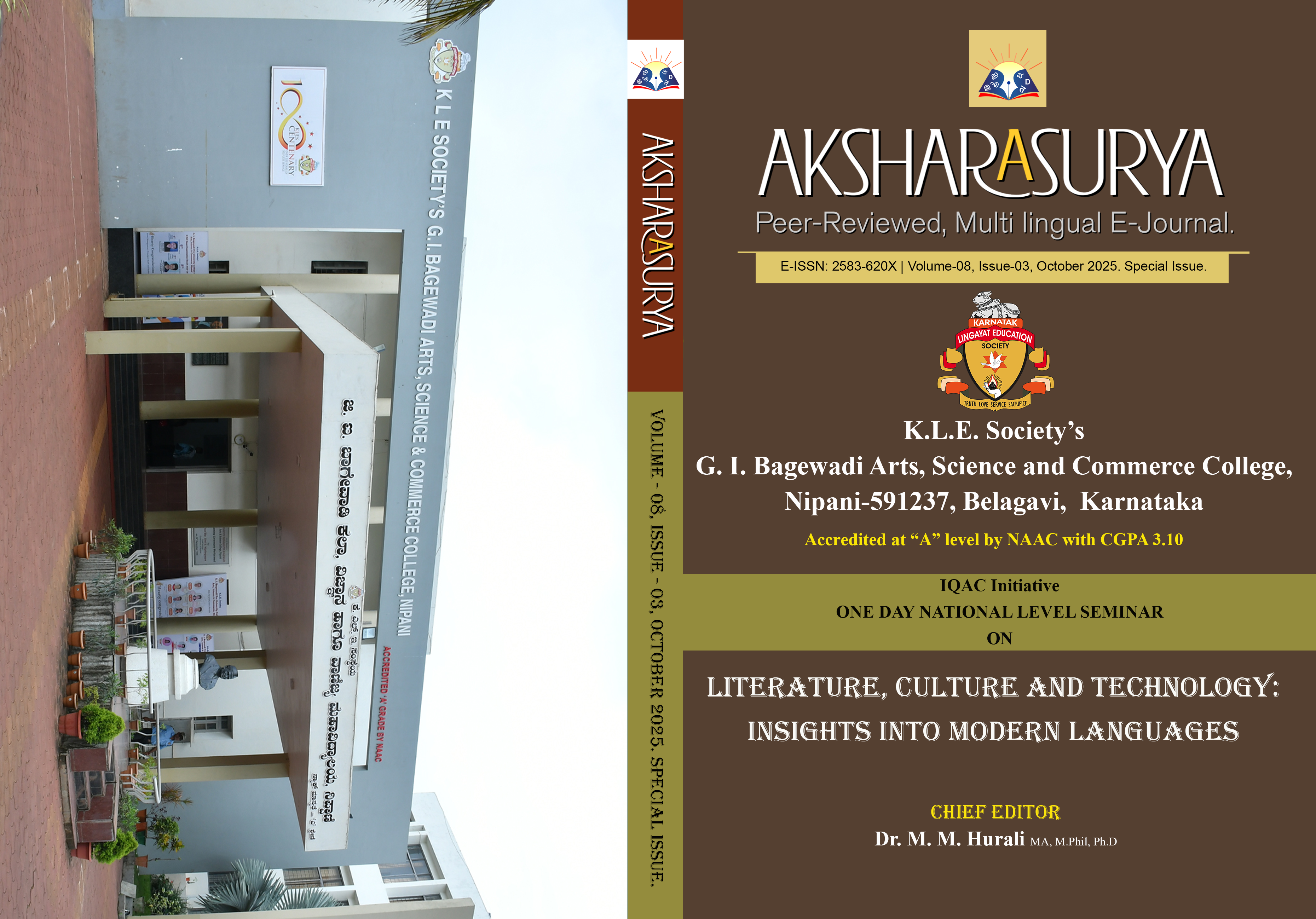
Main Article Content
Abstract
Modern Indian literature has evolved in close interaction with migration, cultural exchange, and global modernity. Sandeep Pathak and R. K. Dhawan’s edited volume, Modern Indian Literature: Diaspora, Travel and Culture (2020), highlights the centrality of the diaspora in shaping contemporary Indian literary sensibilities. Diasporic writers such as Salman Rushdie, Jhumpa Lahiri, Kiran Desai, Vikram Seth, Bharati Mukherjee, Amitav Ghosh, Meena Alexander, and Chitra Banerjee Divakaruni explore themes of identity, hybridity, nostalgia, language, and globalization, situating their works within transnational spaces. These authors not only articulate the complexities of life between multiple geographies but also redefine Indian literature as culturally diverse, globally aware, and inherently modern This paper examines how diasporic narratives function as a lens to understand modern Indian consciousness, exploring how migration, memory, language, and cultural negotiation collectively shape literary modernity.
Article Details
Section

This work is licensed under a Creative Commons Attribution-NonCommercial-ShareAlike 4.0 International License.
How to Cite
References
Pathak, Sandeep, and R. K. Dhawan 2020, editors. Modern Indian Literature: Diaspora, Travel and Culture. Prestige Books International.
Rushdie, Salman,1981. Midnight’s Children. Jonathan Cape.
Lahiri, Jhumpa 2023, The Namesake. Houghton Mifflin.
Desai, Kiran, 2006, The Inheritance of Loss. Penguin.
Mukherjee, Bharati. Jasmine, 1989. Grove Press.
Seth, Vikram 1993, A Suitable Boy. HarperCollins.
Ghosh, Amitav, 1988, The Shadow Lines. Ravi Dayal Publisher.