
Digital Dimensions: Reimagining Language and Literature in the Age of Technology
Article Sidebar
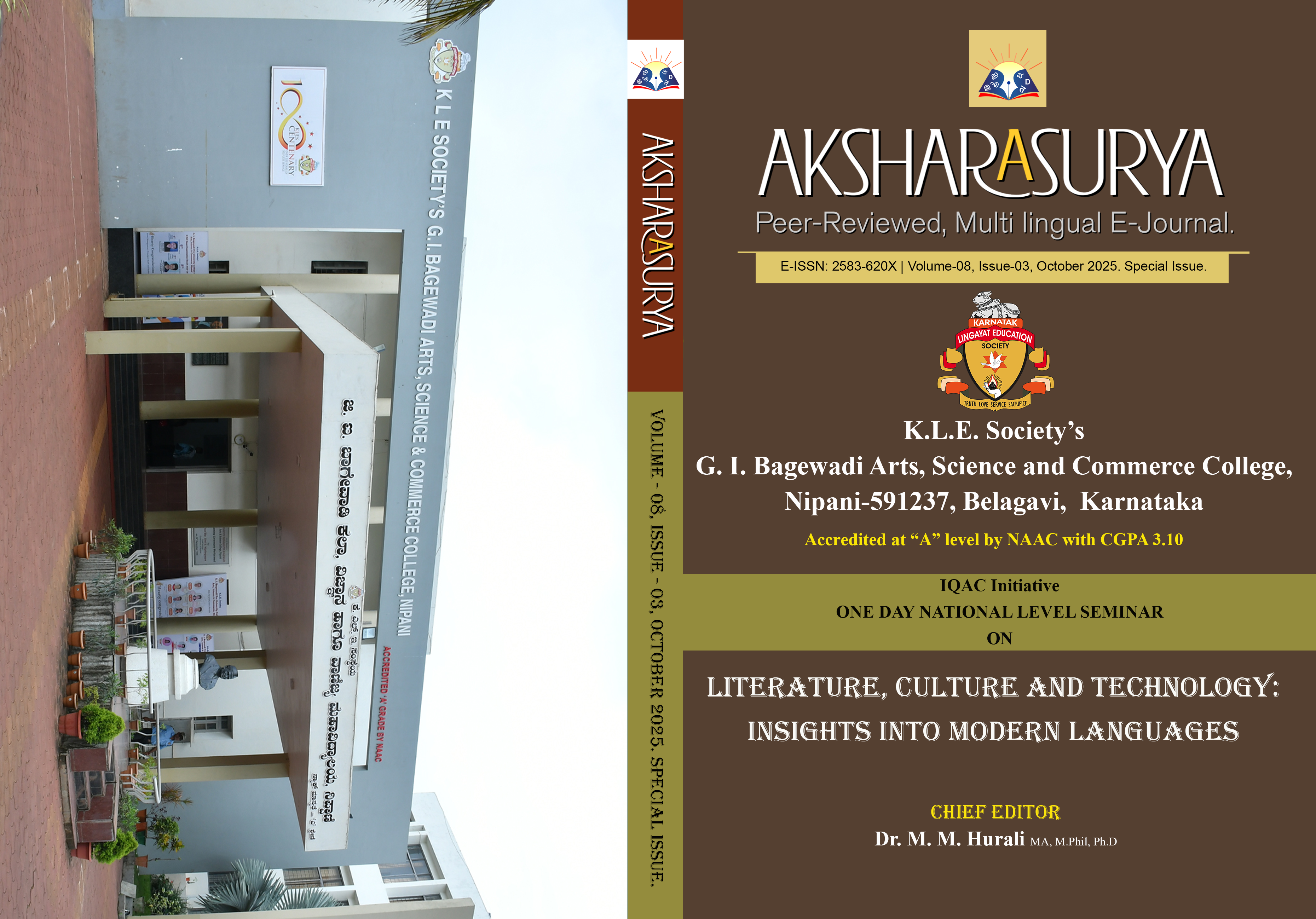
Main Article Content
Abstract
The emergence of digital technologies has profoundly transformed the way humans communicate, learn, and create. Language and literature, traditionally bound to oral traditions and printed texts, are increasingly influenced by digital tools, platforms, and artificial intelligence. This paper examines how technology reshapes language learning, literary creation, and scholarly research. It highlights opportunities such as global access, interactive storytelling, and preservation of cultural heritage, while also addressing challenges like over-reliance on automated tools and superficial engagement with texts. By considering both practical applications and theoretical implications, this study argues that technology does not replace traditional methods but instead expands the possibilities for experiencing, analyzing, and sharing language and literature in contemporary society.
Article Details
Section

This work is licensed under a Creative Commons Attribution-NonCommercial-ShareAlike 4.0 International License.
How to Cite
References
Carr, N. (2011). The shallows: What the Internet is doing to our brains. W. W. Norton & Company.
Floridi, L., & Chiriatti, M. (2020). GPT-3: Its nature, scope, limits, and consequences. Minds and Machines, 30(4), 681–694. https://doi.org/10.1007/s11023-020-09548-1
Godwin-Jones, R. (2018). Using mobile technology to develop language skills and cultural understanding. Language Learning & Technology, 22(3), 3–11. https://doi.org/10.10125/44639
Jockers, M. L. (2017). Text analysis with R for students of literature. Springer.
Moretti, F. (2013). Distant reading. Verso Books.
Unsworth, J. (2019). Digital humanities and the preservation of cultural heritage. Digital Scholarship in the Humanities, 34(2), 203–215. https://doi.org/10.1093/llc/fqy059
Warschauer, M. (2010). Inviting change in CALL: Learning from errors. CALICO Journal, 27(3), 483–495. https://doi.org/10.11139/cj.27.3.483-495