
Eco-Social Justice: B. R. Ambedkar's Understanding of Caste, Environment and Sustainable Development in India
Article Sidebar
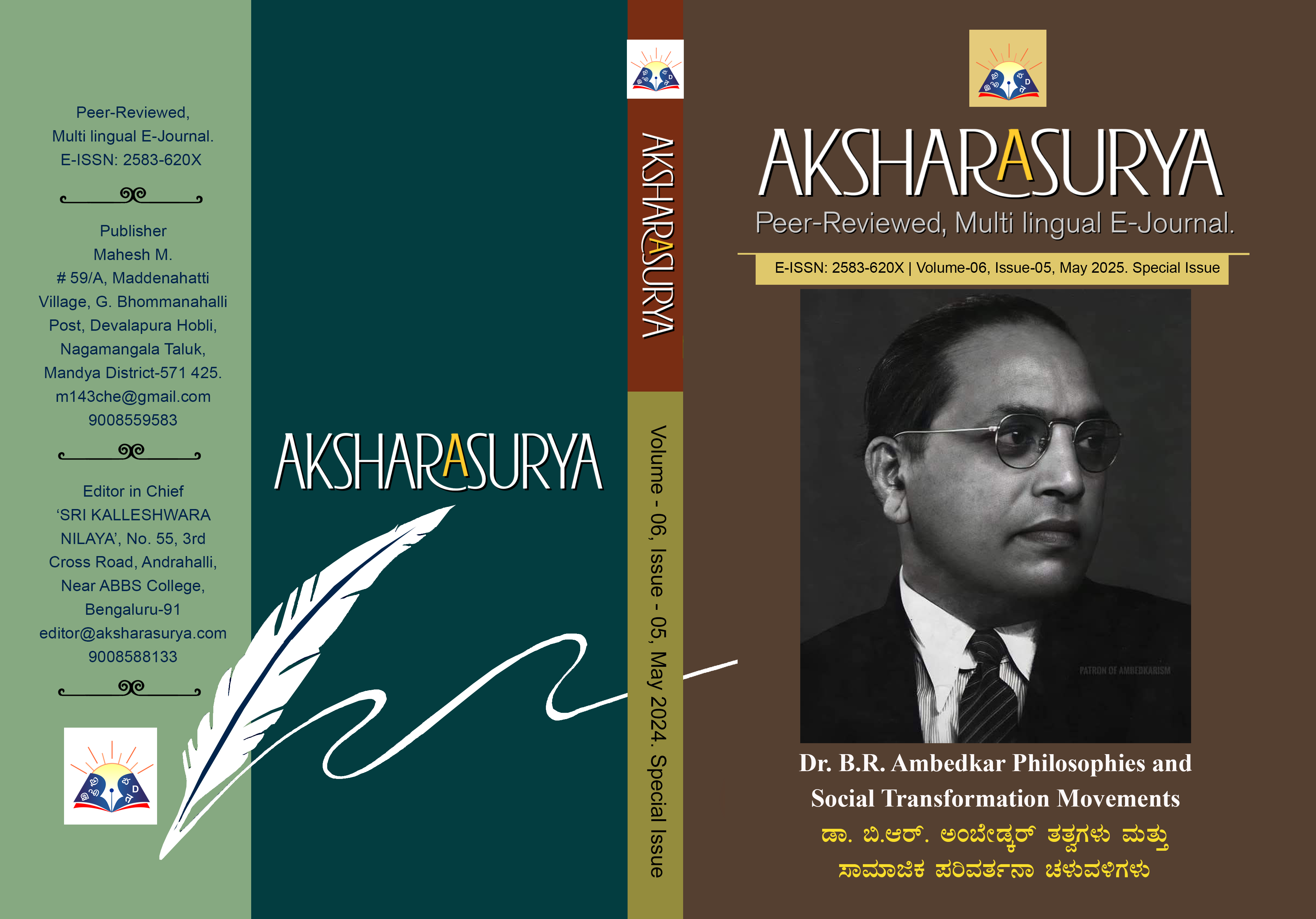
Main Article Content
Abstract
This article considers as the intersection of caste, nature and sustainable development in the philosophy of justice of B. R. Ambedkar. It as argues about the environmental degradation in India is intimately linked with caste-based discrimination and that Ambedkar's emphasis on social and economic rights are a key to eco social justice. By examining Ambedkar's views on land reforms, water rights, workers' rights and moral living through Buddhism. This study brings his contributions to words contemporary environmental theory to the forefront. Ambedkar's emphasis on state intervention and redistribution of resources is consistent with the values of environmental justice in terms of enhancing equal access to natural resources. His conception of Navayana Buddhism also presents an ethical framework for sustainability based on the non-violence and the compassion. This paper also discusses policy implications, it's the need for caste-sensitive environmental governance in order to promote inclusive and equitable sustainability practice has been emphasized. By incorporating Ambedkarite ethics are related to this work calls for a wider model of climate justice that is attuned to the socio-economic inequalities are that contextualize environmental experience in India.
Article Details
Section

This work is licensed under a Creative Commons Attribution-NonCommercial-ShareAlike 4.0 International License.
How to Cite
References
Ambedkar B. R., (1945), What Congress and Gandhi Have Done to the Untouchables, Thacker & Co. Ltd.
Ambedkar B. R., (1946), The Annihilation of Caste, Government of India Publications.
Ambedkar B. R., (1948), The Buddha and His Dhamma, Siddharth College Publications.
Chakrabarty D., (2009), The Climate of History in a Planetary Age, The University of Chicago Press.
Guha R., (1989), The Unquiet Woods: Ecological Change and Peasant Resistance in the Himalaya, Oxford University Press.
Rawls J., (1971), A Theory of Justice, Harvard University Press. Shiva V., (1988), Staying Alive: Women, Ecology, and Development, Zed Books.
Omvedt G., (1994), Dalits and the Democratic Revolution: Dr. Ambedkar and the Dalit Movement in Colonial India, SAGE Publications.
Martinez-Alier J., (2002), The Environmentalism of the Poor: A Study of Ecological Conflicts and Valuation, Edward Elgar Publishing.