
Surveillance Democracy and Citizen Power in Digital India
Article Sidebar
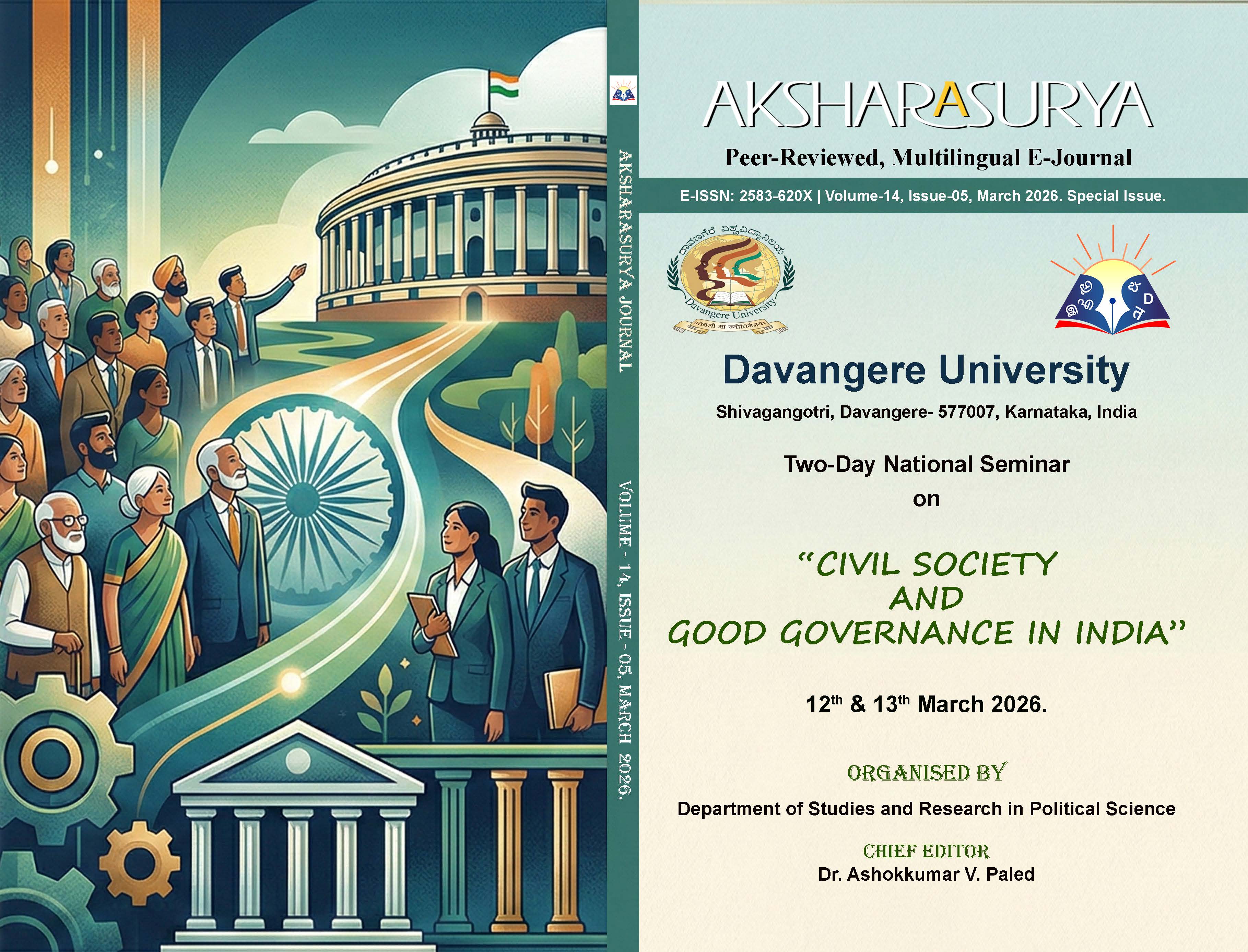
Main Article Content
Abstract
The expansion of digital governance in India has transformed the relationship between the state and citizens, creating new configurations of democratic participation, accountability, and control. Initiatives such as Aadhaar, Digital India, and digital payment infrastructures have enhanced administrative efficiency, transparency, and service delivery, integrating citizens into data-driven governance systems. However, these developments have simultaneously expanded the state’s capacity for surveillance, reshaping the nature of citizen power and democratic autonomy. Drawing on political theory, particularly Michel Foucault’s concepts of surveillance and governmentality, this paper examines the emergence of surveillance democracy in Digital India. It argues that digital governance produces a paradoxical condition in which citizens are both empowered through improved access to services and subjected to continuous monitoring through technological infrastructures. This dual transformation alters traditional democratic relationships by creating asymmetrical informational power between the state and citizens. The paper reconceptualizes citizen power in the context of surveillance-based governance, emphasizing the need to critically evaluate the democratic implications of digital transformation. By situating India within broader theoretical debates on surveillance and democracy, the study contributes to understanding how digital governance redefines democratic agency, civil society autonomy, and state authority in contemporary political systems.
Article Details
Section

This work is licensed under a Creative Commons Attribution-NonCommercial-ShareAlike 4.0 International License.
How to Cite
References
Amoore, L. (2020). Cloud ethics: Algorithms and the attributes of ourselves and others. Duke University Press.
Bhatnagar, S. (2014). Public service delivery: Role of information and communication technology in improving governance and development impact. Sage Publications.
Castells, M. (2012). Networks of outrage and hope: Social movements in the Internet age. Polity Press.
Dahl, R. A. (1989). Democracy and its critics. Yale University Press.
Deleuze, G. (1992). Postscript on the societies of control. October, 59, 3–7. https://doi.org/10.2307/778828
Florini, A. (2007). The right to know: Transparency for an open world. Columbia University Press.
Foucault, M. (1977). Discipline and punish: The birth of the prison. Pantheon Books.
Foucault, M. (1991). Governmentality. In G. Burchell, C. Gordon, & P. Miller (Eds.), The Foucault effect: Studies in governmentality (pp. 87–104). University of Chicago Press.
Foucault, M. (2008). The birth of biopolitics: Lectures at the Collège de France, 1978–1979. Palgrave Macmillan.
Freedom House. (2023). Freedom on the Net 2023: India. https://freedomhouse.org
Justice K. S. Puttaswamy (Retd.) v. Union of India, (2017). Supreme Court of India, Writ Petition (Civil) No. 494 of 2012.