
Silence and Suppression: Feminist Perspectives in Shashi Deshpande’s Novel
Article Sidebar
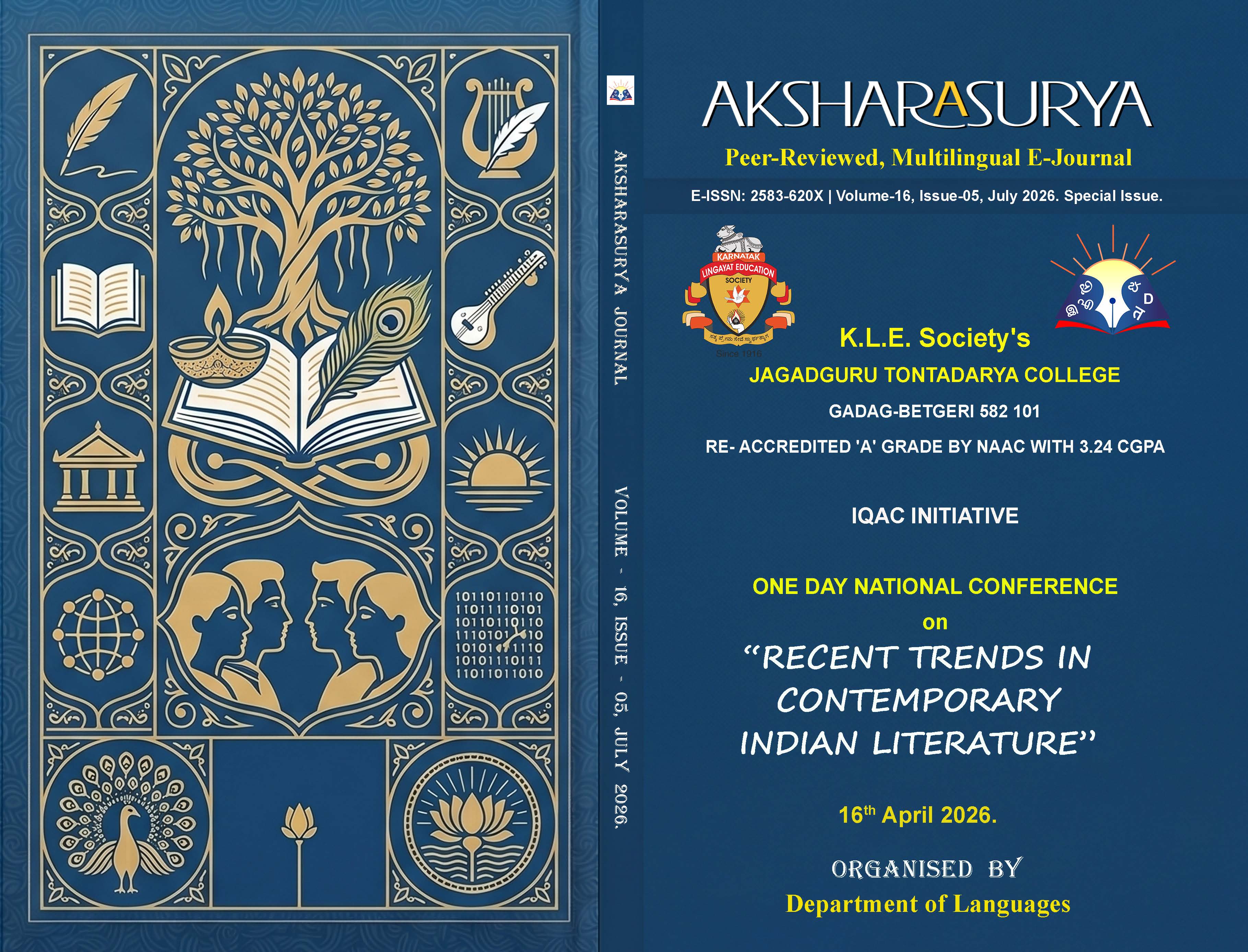
Main Article Content
Abstract
This paper examines the impact of patriarchal marriage on women’s freedom through a feminist lens, with particular reference to That Long Silence by Shashi Deshpande. The novel portrays the life of Jaya, a middle-class woman whose identity is gradually shaped and constrained by the expectations of marriage. It argues that patriarchal marriage functions as a limiting structure, suppressing women’s voices, autonomy, and individuality. Jaya’s prolonged silence becomes a symbol of the emotional and psychological oppression experienced by women within marital relationships. Conditioned to be submissive and accommodating, she internalizes societal norms that prioritize male authority, resulting in a loss of self-expression and identity. The study highlights how marriage, rather than offering companionship, often enforces conformity and restricts women’s freedom. Through a critical analysis of Jaya’s experiences, it reveals the mechanisms through which patriarchal values operate within domestic spaces, reinforcing gender inequality. Finally, the paper emphasizes the necessity of breaking this silence as an act of resistance and self-realization, advocating for women’s autonomy and self-expression as essential steps toward reclaiming freedom both within and beyond the institution of marriage.
Article Details
Section

This work is licensed under a Creative Commons Attribution-NonCommercial-ShareAlike 4.0 International License.
How to Cite
References
Deshpande, Shashi. That Long Silence. Penguin Books, 1988.
de Beauvoir, Simone. The Second Sex. Translated by H. M. Parshley, Vintage Books, 1949.
Friedan, Betty. The Feminine Mystique. W.W. Norton & Company, 1963.
Millett, Kate. Sexual Politics. University of Illinois Press, 1970.
Showalter, Elaine. A Literature of Their Own: British Women Novelists from Brontë to Lessing. Princeton University Press, 1977.
Bala, Suman. Women in the Novels of Shashi Deshpande. Khosla Publishing House, 2001.