
Reconfiguring Indian Feminist Theory Through Ambedkarite Lens
Article Sidebar
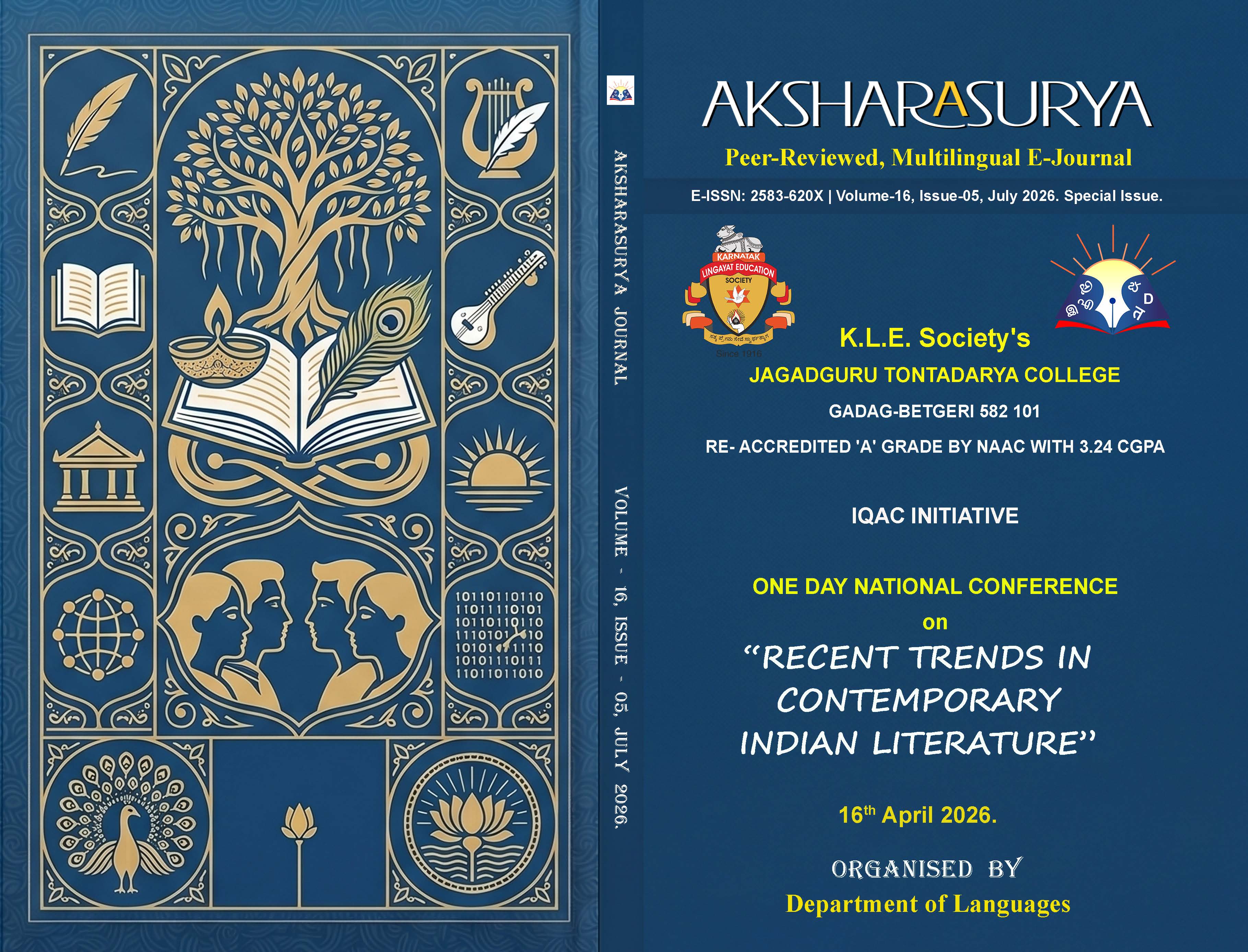
Main Article Content
Abstract
The paper examines how mainstream Indian feminist thoughts are flawed in the epistemic formation itself. The paper situates women’s liberation within the broader project of dismantling caste and class hierarchies. It argues that unlike earlier feminist movements in India, which largely focused on reform within existing social structures, Ambedkar identified caste as the foundational mechanism of women’s oppression. Through a critical analysis of his writings, legislative interventions, and socio-political activism, the paper demonstrates that Ambedkar’s feminist vision is inseparable from his critique of Brahmanical patriarchy. It further contrasts his approach with nineteenth- and early twentieth-century reformist and nationalist feminisms, which often failed to interrogate structural inequalities. Drawing on scholars such as Uma Chakravarti, Sharmila Rege, Gopal Guru, and Gail Omvedt, the paper situates Ambedkar as a foundational thinker of Dalit feminism and intersectional critique in India. It concludes by critically examining why, despite significant legal and political interventions, the goals of women’s emancipation and annihilation of caste remain only partially realized.
Article Details
Section

This work is licensed under a Creative Commons Attribution-NonCommercial-ShareAlike 4.0 International License.
How to Cite
References
Ambedkar, B. R. 1916. Castes in India: Their Mechanism, Genesis and Development.
Ambedkar, B. R. 1936. Annihilation of Caste.
Chakravarti, Uma. 2003. Gendering Caste: Through a Feminist Lens. New Delhi: Stree.
Guru, Gopal. 1995. “Dalit Women Talk Differently.” Economic and Political Weekly 30 (41/42): 2548–2550.
Omvedt, Gail. 1994. Dalits and the Democratic Revolution. New Delhi: Sage.
Omvedt, Gail. 2004. Ambedkar: Towards an Enlightened India. New Delhi: Penguin.
Rege, Sharmila. 1998. “Dalit Women Talk Differently.” Economic and Political Weekly.
Rege, Sharmila. 2006. Writing Caste/Writing Gender: Narrating Dalit Women’s Testimonies. New Delhi: Zubaan.