
Dr. B. R. Ambedkar and Women’s Rights: A Critical and Analytical Study
Article Sidebar
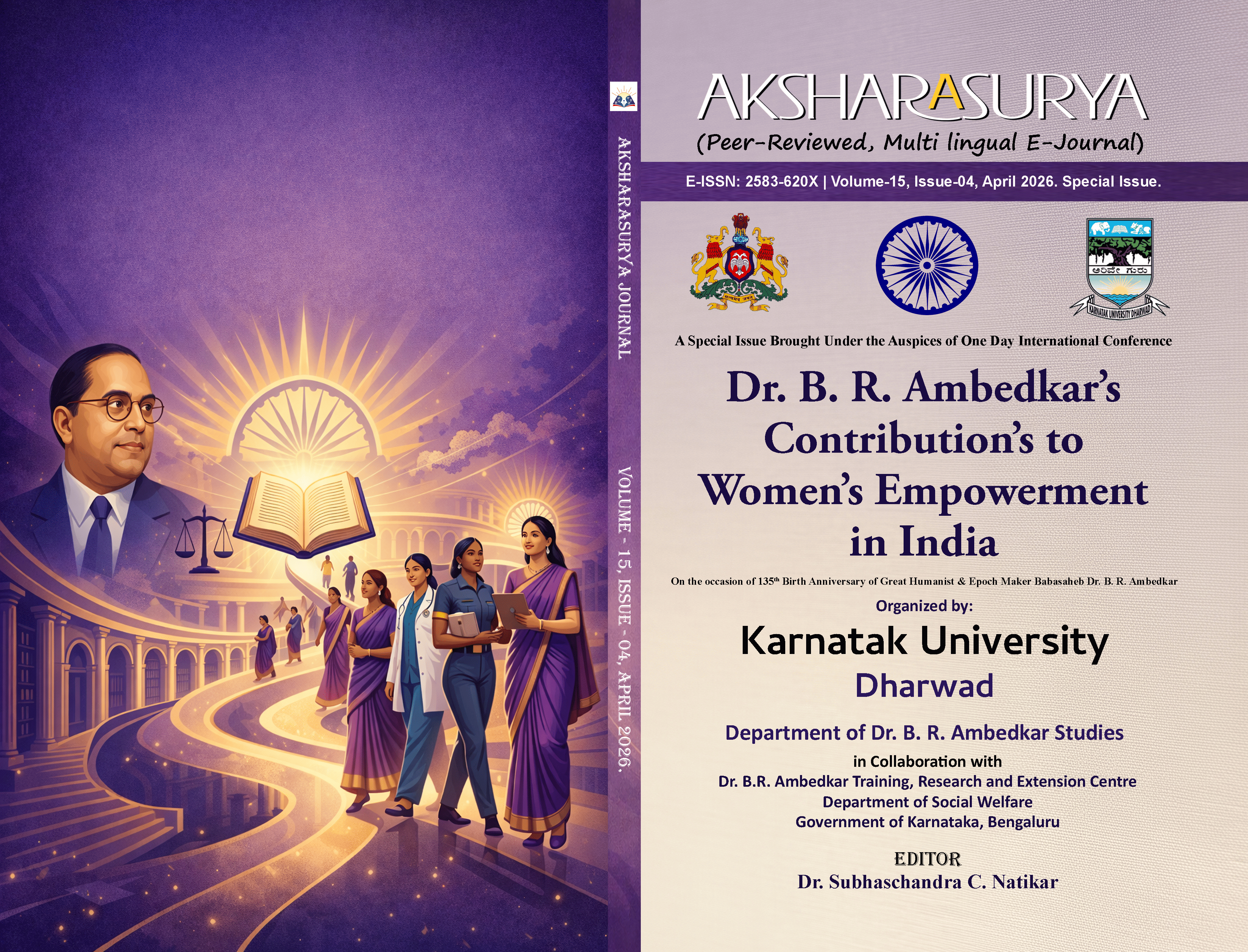
Main Article Content
Abstract
Dr. Bhimrao Ramji Ambedkar, a principal architect of the Indian Constitution and a leading social reformer, played a transformative role in advocating for women’s rights in India. His contributions went beyond legal frameworks, extending into social, economic, and educational reforms aimed at dismantling deeply entrenched patriarchal and caste-based inequalities. This paper critically examines Ambedkar’s views on women’s oppression, his critique of religious and social institutions, and his legislative efforts, particularly the Hindu Code Bill. It also evaluates the contemporary relevance of his ideas in addressing ongoing gender disparities. The study adopts a qualitative approach, relying on secondary sources, including Ambedkar’s writings and scholarly analyses. The findings suggest that Ambedkar’s vision of gender equality remains foundational to modern feminist discourse in India.
Article Details
Section

This work is licensed under a Creative Commons Attribution-NonCommercial-ShareAlike 4.0 International License.
How to Cite
References
Ambedkar, B. R. (1946). Who were the Shudras? Bombay: Thacker & Co.
Ambedkar, B. R. (1948). The untouchables: Who were they and why they became untouchables? New Delhi: Amrit Book Company.
Ambedkar, B. R. (1950). The rise and fall of Hindu women. Bombay: Dr. Ambedkar Publication Society.
Ambedkar, B. R. (2014). Annihilation of caste. New Delhi: Navayana.
Guru, G. (1995). Dalit women talk differently. Economic and Political Weekly, 30(41/42), 2548–2550.
Jadhav, N. (2005). Dr. Ambedkar: Economic thoughts and philosophy. New Delhi: Deep & Deep Publications.
Keer, D. (1990). Dr. Ambedkar: Life and mission. Mumbai: Popular Prakashan.
Omvedt, G. (2004). Ambedkar: Towards an enlightened India. New Delhi: Penguin Books.
Rege, S. (2013). Against the madness of Manu: B.R. Ambedkar’s writings on Brahmanical patriarchy. New Delhi: Navayana.
Tharu, S., & Niranjana, T. (1999). Problems for a contemporary theory of gender. Social Scientist, 27(1/2), 93–117.