
Dr. B.R. Ambedkar and Nelson Mandela’s Humanistic Activism: A Comparative Study
Article Sidebar
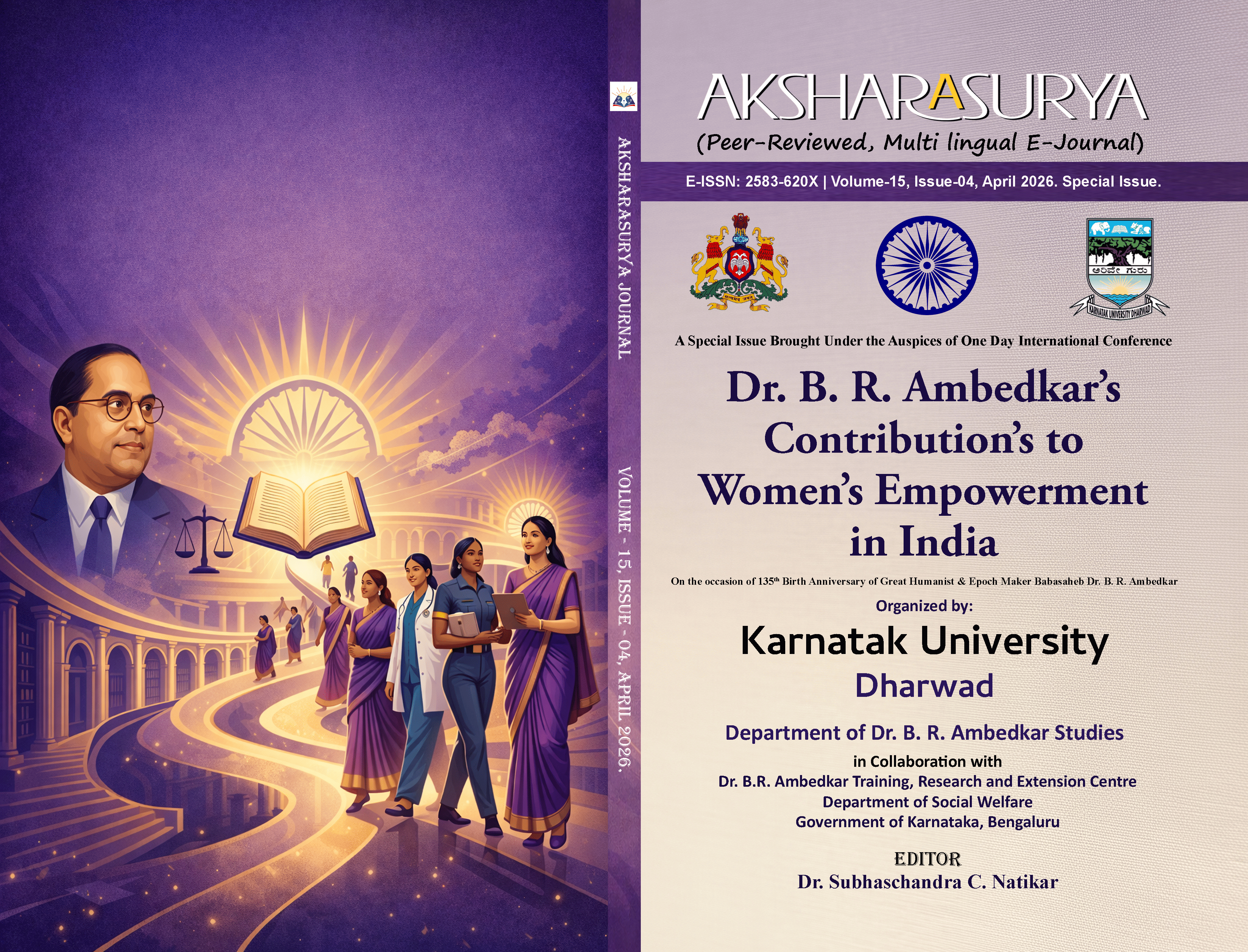
Main Article Content
Abstract
This research article explores the humanistic activism of Dr. B.R. Ambedkar and Nelson Mandela, two leaders who fought systemic oppression in India and South Africa. Dr. Ambedkar’s activism centered on annihilating caste and assertion for equality in constitutional democracy, while Nelson Mandela’s struggle dismantled the apartheid system and emphasized reconciliation through Ubuntu. Though their strategies differed-Ambedkar relied on law and education, Nelson Mandela on forgiveness and unity-both leaders envisioned societies rooted in dignity and justice. Their comparative legacies highlight complementary models of social justice: structural transformation and moral reconciliation.
Article Details
Section

This work is licensed under a Creative Commons Attribution-NonCommercial-ShareAlike 4.0 International License.
How to Cite
References
Ambedkar, B.R. Annihilation of Caste. Navayana, 2014.
Ambedkar, B.R. The Buddha and His Dhamma. Oxford University Press, 2011.
Benageri, Mohan, and V. Basil Hans. “Dr. B.R. Ambedkar and Social Justice.” Srinivas University Journal, 2025.
Debnath, Debashis. “Babasaheb Dr. B.R. Ambedkar’s Human Rights Movement and Contemporary Issues.” Man in India, vol. 104, no. 1–2, 2024, pp. 77–92.
Gaikwad, Rohit Sudhakar. “Dr. B.R. Ambedkar’s Philosophy of Humanism and Its Relevance in the Present Indian Situation.” Res Militaris, 2023.
Kharat, Dharmaji. “Dr. Bhimrao R. Ambedkar and Nelson R. Mandela: The Similarities and Contrast in the Movement of Two Icons.” Pune Research, 2024.
Mandela, Nelson. Long Walk to Freedom. Little, Brown and Company, 1994.
Tundawala, Moiz, and Salmoli Choudhuri. “Ambedkar’s Liberty Concept in Comparative Constitutional Thought.” Indian Yearbook of Comparative Law, Oxford Academic, 2018.
Tutu, Desmond. No Future Without Forgiveness. Doubleday, 1999.
Zelliot, Eleanor. Ambedkar’s World: The Making of Babasaheb and the Dalit Movement. Navayana, 2013.