
The Impact of the British Raj on the Growth of Public Libraries in India
Article Sidebar
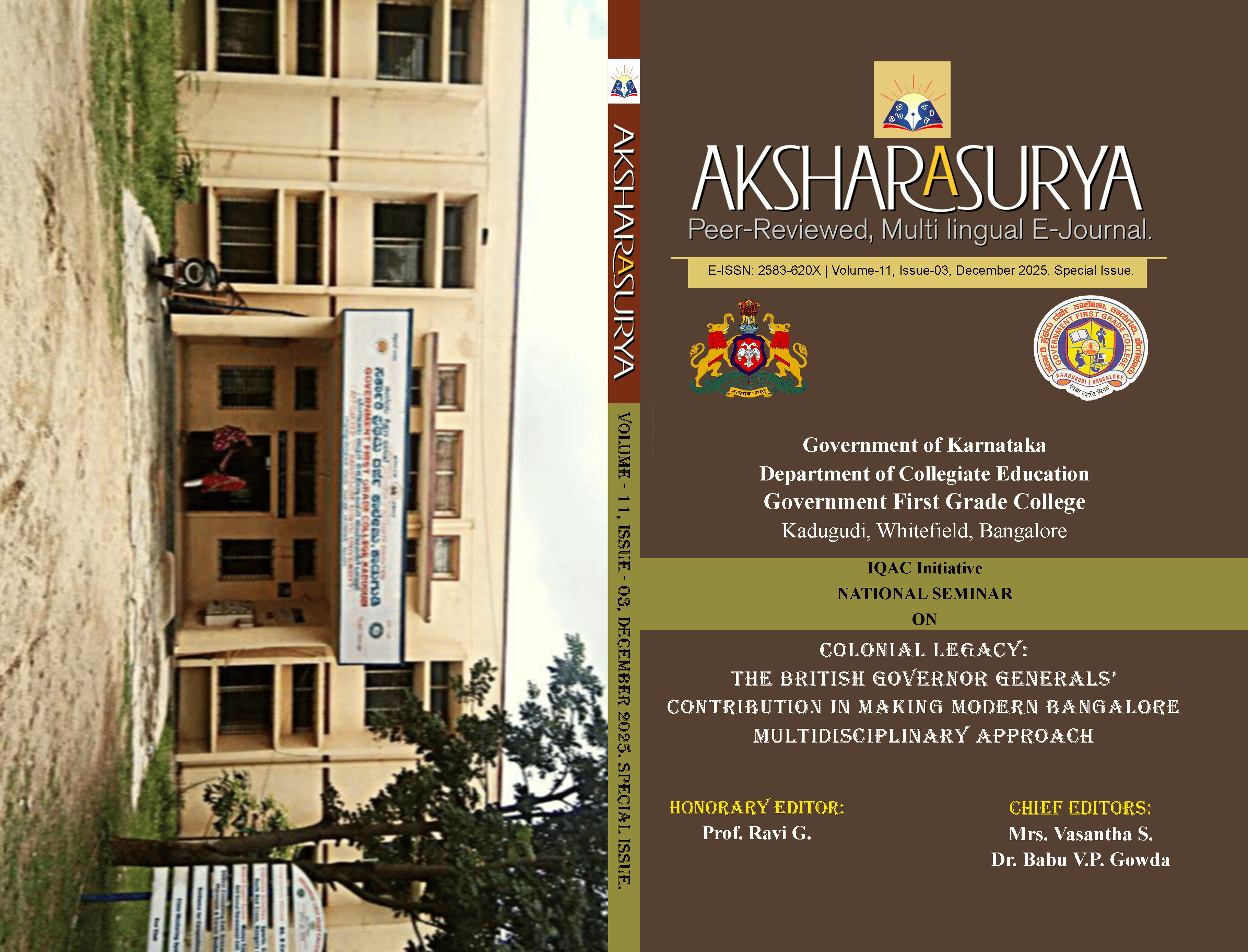
Main Article Content
Abstract
This research examines how British control influenced the development of public libraries in India. While focusing on colonial administration, it demonstrates the shift from knowledge being stored only for privileged groups toward setups designed for wider access to education. Through old archives, government papers, along academic sources, the analysis follows library changes - from hand-copied texts to today's locally rooted hubs.
The British helped set up structured library systems via places like the Calcutta Public Library back in 1836, along with the Bombay offshoot of the Royal Asiatic Society, and then later the Connemara Public Library by 1896. While built at first mainly for colonial goals and pushing English learning, over time, they turned into hubs where ideas flowed freely, sparking broader social thinking. These reading spots grew into key areas that boosted reading skills, introduced fresh ways of teaching, and also fueled political thought and a sense of national identity across India.
The study shows British impact brought changes in sorting books, organizing shelves, or managing libraries - yet it quietly sparked later laws and opened doors for public use. Oddly enough, something meant to tighten the colonial grip ended up giving people power by spreading information. Libraries set up under British rule still affect how India runs its library network now - even as hubs for learning, digital reach, and neighborhood growth.
Article Details
Section

This work is licensed under a Creative Commons Attribution-NonCommercial-ShareAlike 4.0 International License.
How to Cite
References
Kaur, R., & Singh, P. (2019). Library usage patterns among students in Indian public libraries. International Journal of Library and Information Studies, 9(1), 23–34.
Maurya, K.K. (2016). Role of Public Libraries in the Development of Society. International Journal of Library Science, 14(2), 101–108.
Mishra, S. (2022). Public Libraries and Lifelong Learning in Democratic India. Journal of Information and Knowledge Management, 20(4), 57–66.
Shivakumara, H. C., & Sampath Kumar, B. T. (2018). Use of public libraries by students: A study of user behavior. Library Philosophy and Practice, 2018(2145), 1–12.
Vinayara, R. (n.d.). Public Libraries as Community Learning Hubs in Modern India (IPLM Report). Indian Public Library Movement (IPLM), New Delhi.
Das, A. K. (2015). Legacy of the Bengal Renaissance in Public Library Development in India. IFLA Journal, 41(4), 370-380.
Kumar, S. (2006). A Journey of Rural Library Movement in India: Retrospect and Prospects. Journal of Information and Knowledge, 43(3), 295-306.
INFLIBNET Centre. (2013). Public Library Scenario in India. Gandhinagar: Information and Library Network Centre.
Riyar, K. (2024). Development of Libraries in India: Analysis. Research Review International Journal of Multidisciplinary, 9(3), 142–150.
Mishra, S. (2022). Public Libraries and Lifelong Learning in Democratic India. Journal of Information and Knowledge Management, 20(4), 57–66.
Ranganathan, S.R. (1931). The Five Laws of Library Science. Madras Library Association.