
Linguistic Transformations Driven by Social Media Platforms
Article Sidebar
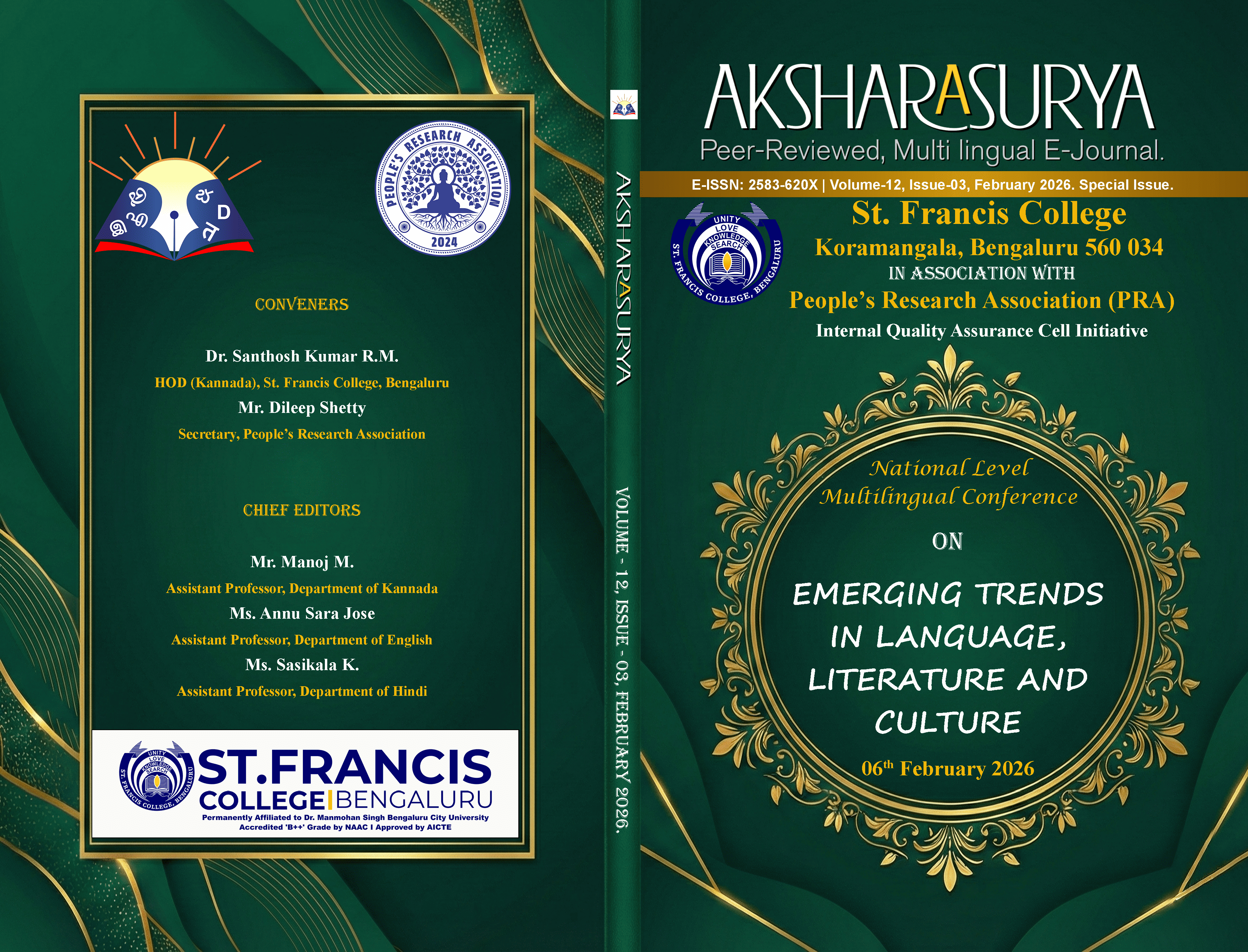
Main Article Content
Abstract
Social media platforms have significantly altered contemporary language practices by reshaping how individuals communicate, interact, and construct meaning. Platforms such as WhatsApp, Instagram, X (formerly Twitter), and Facebook encourage communication that is rapid, informal, interactive, and highly multimodal. As a result, language on social media blends features of spoken and written discourse with digital symbols such as emojis, hashtags, memes, and abbreviations. These features not only save time and space but also convey tone, emotion, stance, and identity. At the same time, social media facilitates the rapid circulation of words across cultures and languages, resulting in hybrid linguistic forms and new varieties of slang. While these changes promote creativity and inclusivity, they also raise concerns regarding their influence on academic and professional communication, particularly in relation to grammar, spelling, and formality. Both the positive and negative linguistic impacts of social media demonstrate that digital communication does not weaken language but accelerates its natural evolution. The study highlights the need for contextual awareness and adaptive language skills in an increasingly digital world.
Article Details
Section

This work is licensed under a Creative Commons Attribution-NonCommercial-ShareAlike 4.0 International License.
How to Cite
References
Crystal, D. (2011). Internet linguistics: A student guide. Routledge.
Herring, S. C. (2013). Discourse in Web 2.0: Familiar, reconfigured, and emergent. In D. Tannen & A. M. Trester (Eds.), Discourse 2.0: Language and new media (pp. 1-25). Georgetown University Press.
Tagliamonte, S. (2016). So sick or so cool? The language of youth on the internet. Oxford University Press.
Thurlow, C., Lengel, L., & Tomic, A. (2004). Computer mediated communication: Social interaction and the internet. SAGE Publications.