
Crossing Borders: Globalization and the Transformation of English Literature
Article Sidebar
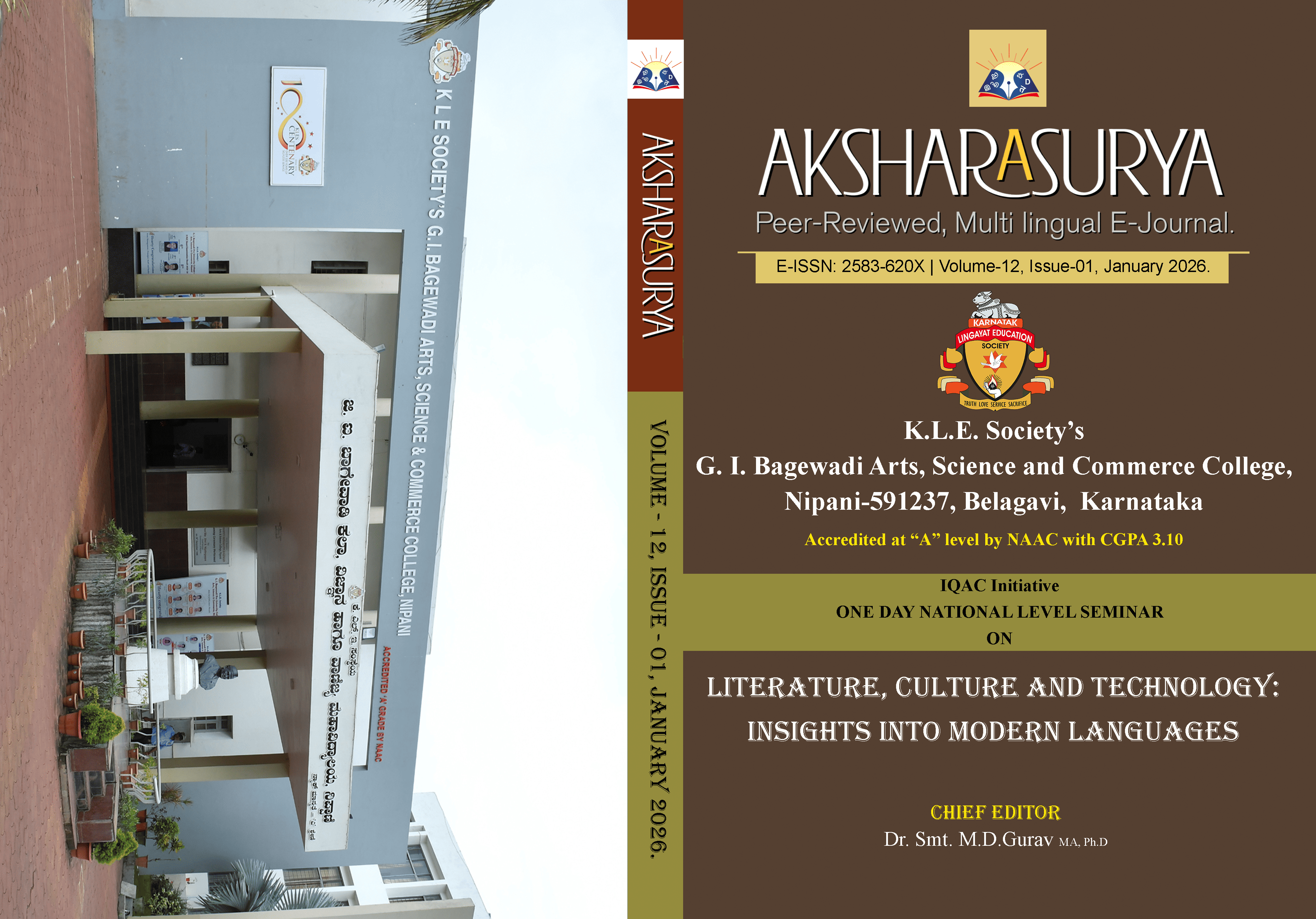
Main Article Content
Abstract
This paper explores the impact of globalization on English literature, focusing on how cross-cultural exchanges, migration, and technological interconnectedness have reshaped literary production and reception. It argues that globalization has both expanded English literature into a global phenomenon and challenged the dominance of traditional Anglo-centric canons. By examining postcolonial narratives, diasporic writing, and transnational literary markets, the paper shows how English literature has become a space for negotiating identity, hybridity, and cultural memory. While globalization has democratized access to publishing and diversified literary voices, it also raises concerns about homogenization and commodification. Ultimately, the paper suggests that globalization has not diminished English literature but has reconfigured it into a vibrant, polyphonic field reflecting the complexities of a globalized world.
Article Details
Section

This work is licensed under a Creative Commons Attribution-NonCommercial-ShareAlike 4.0 International License.
How to Cite
References
Ashcroft, Bill, Gareth Griffiths, and Helen Tiffin.( 1989). The Empire Writes Back: Theory and Practice in Post-Colonial Literatures. Routledge,
Damrosch, David.( 2003). What Is World Literature? Princeton UP,
Hall, Stuart. “Cultural Identity and Diaspora.” Identity: Community, Culture, Difference, edited by Jonathan Rutherford, Lawrence & Wishart, 1990, pp. 222–237.
Huggan, Graham. The Postcolonial Exotic: Marketing the Margins. Routledge, 2001.
Murray, Simone. The Digital Literary Sphere: Reading, Writing, and Selling Books in the Internet Era. Johns Hopkins UP, 2018.
Rushdie, Salman. Midnight’s Children. Jonathan Cape, 1981.
Smith, Zadie. White Teeth. Hamish Hamilton, 2000.
Lahiri, Jhumpa. The Namesake. Houghton Mifflin Harcourt, 2003.
Adichie, Chimamanda Ngozi. Americanah. Alfred A. Knopf, 2013.
Roy, Arundhati. The God of Small Things. IndiaInk, 1997.